Butler's Pantry Addition Ideas and Cost in Palm Beach County
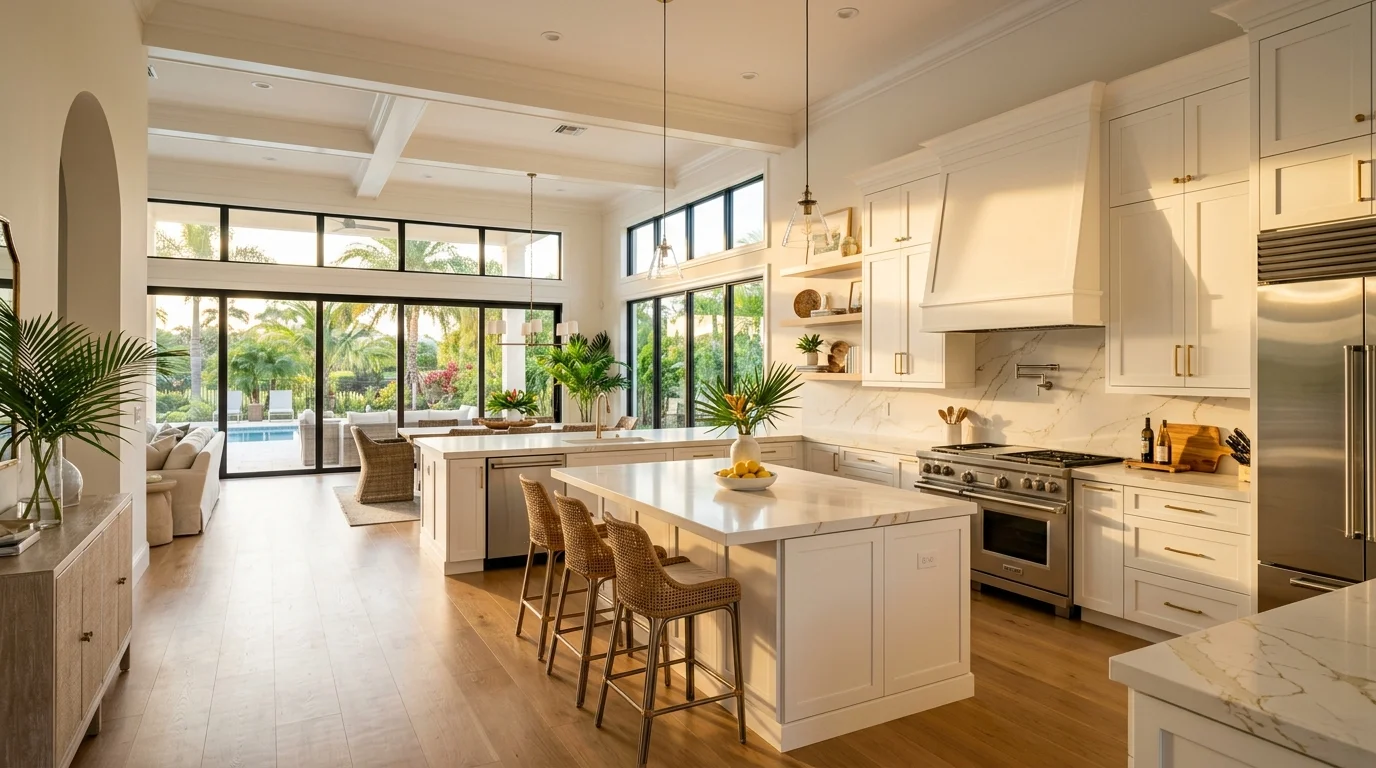
A butler pantry addition in Palm Beach County homes has become the gold standard for luxury kitchen design. These dedicated prep and storage spaces bridge the gap between your main kitchen and dining areas, creating both functionality and elegance that Wellington and Boca Raton homeowners expect. Our team sees this feature requested in 8 out of 10 high-end kitchen renovations across South Florida.
The butler pantry serves multiple purposes in today's homes. It hides prep work during entertaining, stores small appliances that clutter countertops, and provides additional storage for dishes, glassware, and serving pieces. In Jupiter's waterfront properties and Delray Beach estates, these spaces often become the command center for catering and large gatherings.
Smart planning makes all the difference. The best butler pantry addition palm beach county projects start with understanding your specific needs, available space, and how the addition connects to your existing kitchen flow.
Layout Options That Work
Location determines everything in butler pantry design. We prefer positioning these spaces between the kitchen and dining room, creating natural traffic flow for entertaining. The galley layout works best for narrow spaces—think 6 to 8 feet wide with counters on both sides.
L-shaped configurations suit corner locations perfectly. You get maximum storage with corner cabinet solutions and can include a small sink for beverage prep or quick cleanup. The corner approach also allows for a coffee station or wine storage without interfering with main kitchen workflow.
Walk-through pantries create the most dramatic impact. These spaces feel like separate rooms while maintaining connection to both kitchen and dining areas. We recommend minimum 8-foot width for comfortable two-person use during party prep.
Single-wall layouts work when space is limited. Focus on vertical storage with floor-to-ceiling cabinets. Include pull-out drawers in lower cabinets for easy access to heavy serving pieces. This approach maximizes storage in tight spaces while keeping costs reasonable.
Cabinetry Choices for Maximum Impact
Cabinet selection drives both function and aesthetics in butler pantries. Shaker style cabinets remain our top recommendation for Palm Beach County homes. The clean lines work with both traditional and contemporary design schemes.
Full-extension drawer slides are non-negotiable. You need access to items stored in the back of deep cabinets. Soft-close hinges prevent slamming and protect your investment over time. These details separate quality installations from basic builder-grade work.
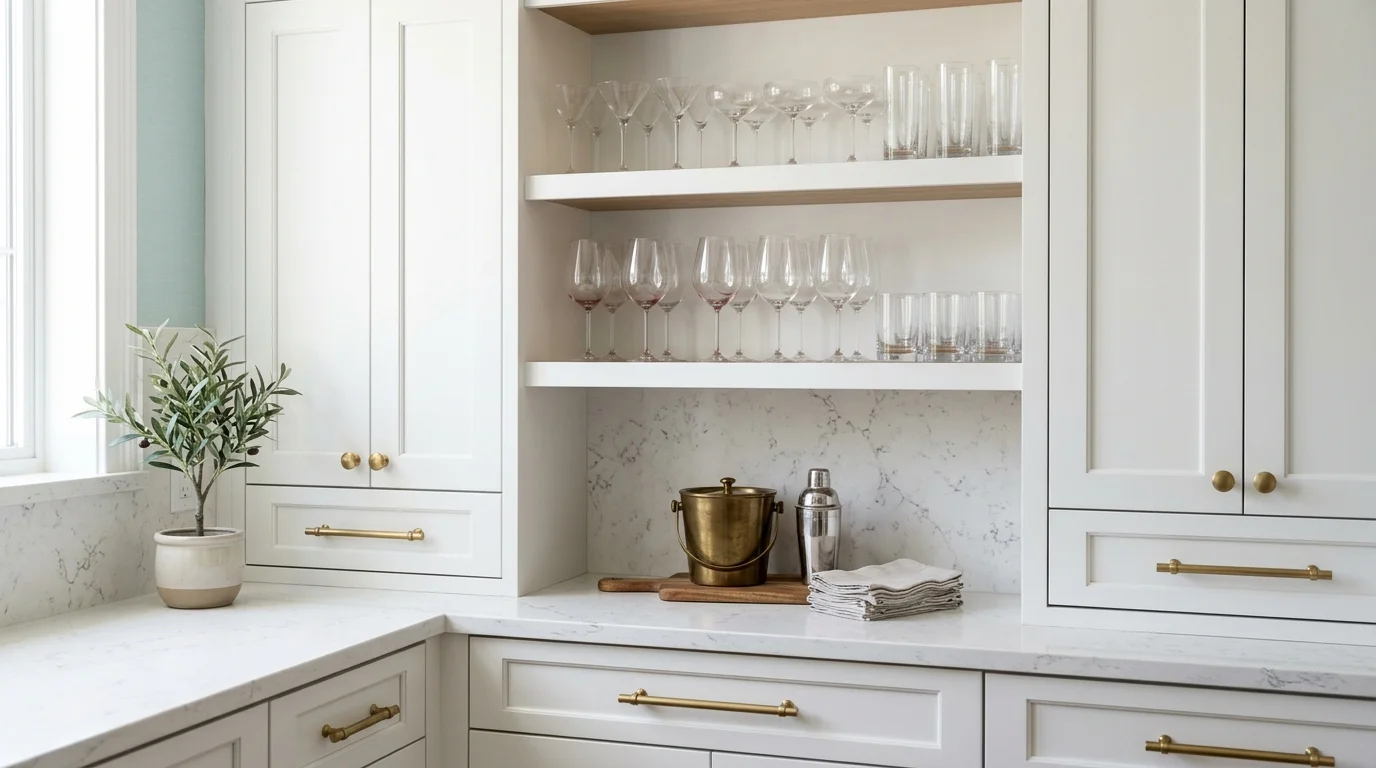
Glass-front upper cabinets showcase dishware while keeping items dust-free. We recommend interior lighting for display areas—LED strips create beautiful ambiance during evening entertaining. Mix glass doors with solid ones to hide less attractive items like small appliances or bulk storage.
Consider contrasting cabinet colors to define the butler pantry as a separate space. Navy blue or deep green lowers with white uppers create sophisticated contrast. This approach works especially well in open-concept layouts where the pantry remains visible from main living areas.
Storage accessories make ordinary cabinets extraordinary. Pull-out spice racks, tray dividers, and lazy susans in corner cabinets maximize every cubic inch. Our crew installs specialized organizers for wine bottles, stemware, and serving platters based on your entertaining style.
Countertop Materials That Add Value
Countertop selection balances durability with aesthetics. Quartz dominates Palm Beach County butler pantries for good reason. It resists stains from wine and food prep while requiring minimal maintenance. Colors like Calacatta Gold and Statuario mimic natural marble without the worry.
Natural marble creates undeniable luxury but requires more care. Carrara and Calacatta work beautifully for display and light prep work. We recommend sealing every six months and immediate cleanup of acidic spills. The investment pays off in resale value for high-end properties.
Granite remains popular for its durability and unique patterns. Choose edge profiles that complement your kitchen counters for design continuity. Ogee and dupont edges add elegance, while straight edges keep costs reasonable.
Consider different materials for different functions. A marble section for pastry work, quartz for general prep, and butcher block for casual serving creates zones within the space. This approach adds visual interest while optimizing functionality.
ROI Factors for Palm Beach County
Smart butler pantry additions deliver strong return on investment in luxury markets. Location within Palm Beach County affects ROI significantly. Wellington and Jupiter properties with larger lots can accommodate more extensive additions, justifying higher investment levels.
Size matters for resale value. We recommend minimum 50 square feet for meaningful impact. Smaller spaces feel like large closets rather than functional rooms. The sweet spot ranges from 80 to 120 square feet—large enough for serious entertaining prep without overwhelming the home's proportions.
Quality finishes drive buyer perception. Cheap hardware and basic cabinets undermine the luxury positioning these spaces require. Investment in quality cabinet hardware and professional installation pays dividends in market appeal.
Integration with existing kitchen design prevents the addition from feeling tacked-on. Matching cabinet styles, complementary hardware finishes, and coordinated lighting create seamless transitions. Buyers notice these details during showings.
Electrical planning affects long-term value. Include sufficient outlets for small appliances, under-cabinet lighting, and potential wine refrigeration. Plan for 20-amp circuits to handle multiple appliances simultaneously. This infrastructure supports various uses over time.
Cost Guide
Butler pantry addition costs vary significantly based on size, finishes, and structural requirements. Our team prices projects based on current Palm Beach County market rates and local permitting requirements.
Premium features increase costs significantly. Wine refrigeration adds $2,000 to $5,000 depending on capacity and brand. Built-in espresso machines range from $3,000 to $8,000 installed. Custom glass displays with interior lighting add $1,500 to $3,000 per section.
Timeline affects pricing too. Rush projects during peak season cost 10-15% more due to contractor availability. Plan projects during slower summer months for better rates and faster completion.
South Florida Considerations
Humidity control becomes critical in butler pantries storing wine, linens, or electronics. We recommend dedicated HVAC zones for additions over 100 square feet. Proper ventilation prevents moisture buildup that damages cabinets and contents.
Hurricane preparedness influences design decisions. Glass-front cabinets need impact-resistant glazing in coastal areas. Secure storage for valuable dishware and glassware protects investments during storm season. Consider lower cabinet storage for heavy items to prevent damage from shaking.
Termite prevention starts with proper construction techniques. We use pressure-treated lumber for any wood touching concrete or masonry. Proper flashing and moisture barriers prevent the conditions termites need to establish colonies.
Florida Building Code requirements affect electrical and structural work. GFCI outlets are mandatory near any water source. Hurricane strapping may be required for additions depending on location and local amendments. Our team handles all permitting to ensure compliance.
Year-round entertaining in South Florida means these spaces get heavy use. Choose durable finishes that withstand constant activity. Avoid materials that show wear quickly or require frequent maintenance. Florida Building Code compliance ensures your addition meets current safety and efficiency standards.
Consider connection to open kitchen layouts popular in South Florida homes. The butler pantry should feel integrated rather than isolated. Sight lines and traffic flow matter more in open-concept designs where spaces remain visible from living areas.