Bathroom Floor Tile Ideas for Palm Beach County Homes
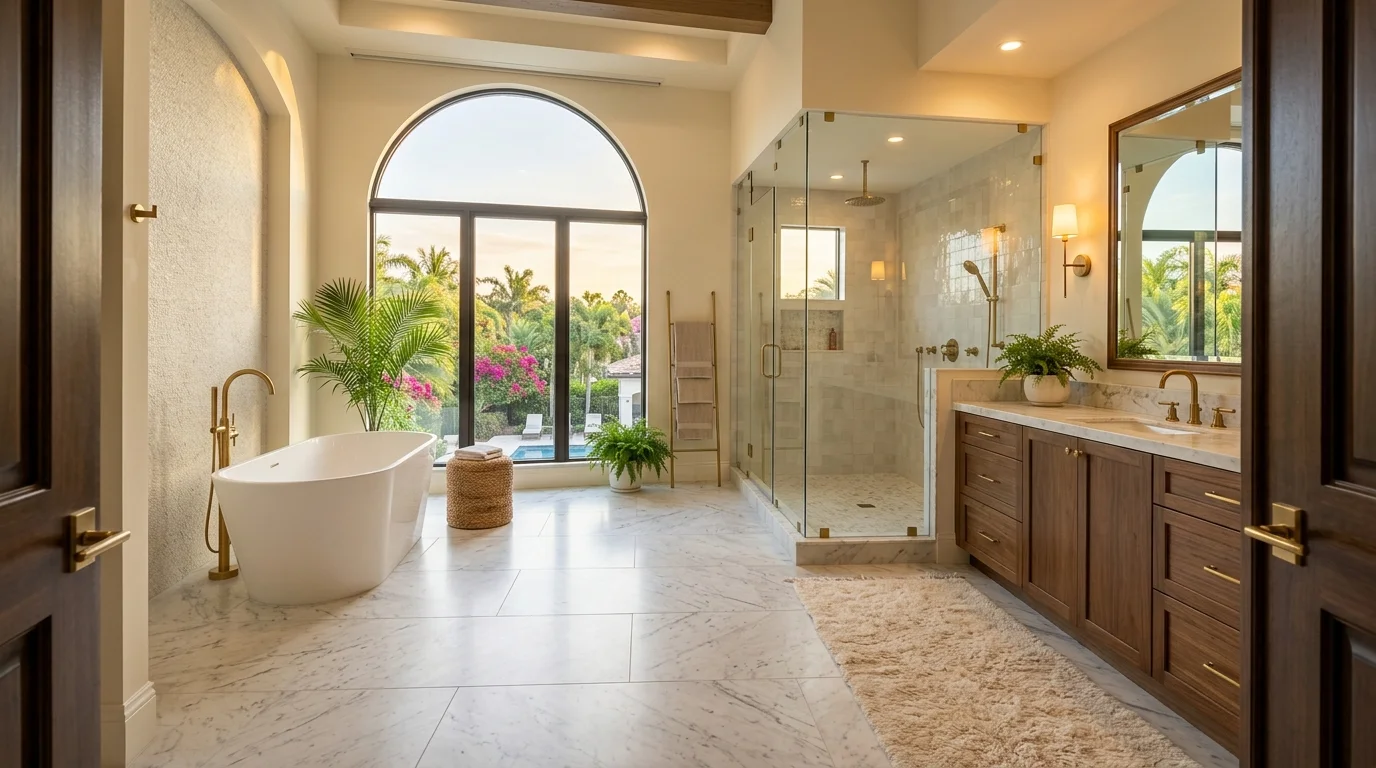
Choosing the right bathroom floor tile ideas for your Palm Beach County home means balancing style, safety, and Florida's unique climate demands. We've installed thousands of bathroom floors across Boca Raton, Delray Beach, Wellington, and Jupiter, and the wrong choice shows up fast in our humid environment. Slip-resistant ratings matter. Water absorption rates matter more than most homeowners realize. Pattern selection can make a cramped guest bath feel spacious or turn a master suite into a design disaster.
After 15 years installing bathroom remodels in Palm Beach County, we've learned which materials thrive in South Florida and which ones crack, stain, or become slippery death traps within two years. Skip the Pinterest trends that don't work here. Focus on what actually performs.
Best Bathroom Floor Tile Materials
Porcelain Tile Dominates for Good Reason
Porcelain handles Florida humidity like no other material. Water absorption under 0.5% means your subfloor stays dry even when your teenager floods the bathroom. We recommend large format porcelain, 12x24 or 24x24, for most Palm Beach County bathrooms. Fewer grout lines mean easier maintenance and cleaner sight lines.
Wood-look porcelain has replaced actual wood flooring in 80% of our bathroom projects. The technology has reached the point where clients can't tell the difference until they touch it. Brands like Daltile and Florida Tile offer convincing grain patterns without the warping issues that plague real wood in our climate.
Natural Stone: Beautiful but Demanding
Travertine and marble look stunning in luxury bathrooms, but they require religious sealing schedules in South Florida. We see too many homeowners who love the look but hate the maintenance. Limestone is even worse, it etches from acidic cleaners and develops permanent water spots.
If you're set on natural stone, stick with denser materials like granite or quartzite. They handle moisture better and resist staining. Expect to reseal annually instead of every 3-5 years like in drier climates.
Ceramic Tile: Budget-Friendly with Limitations
Standard ceramic tile costs 30-50% less than porcelain, making it attractive for guest bathrooms and powder rooms. The higher water absorption rate (3-7%) makes it less ideal for full baths with tubs and showers. We use ceramic in powder room renovations where moisture exposure stays minimal.
Popular Patterns and Layout Ideas
Large Format Tiles Maximize Space
Small bathrooms in older Palm Beach County homes benefit enormously from large tiles. A 5x8 guest bath feels twice as big with 24x24 tiles versus traditional 12x12 squares. The continuous surface creates visual flow instead of choppy interruptions.
We typically run large format tiles straight-set (grid pattern) or in a brick/offset pattern. Diagonal layouts can work in spacious master baths but make narrow bathrooms feel cramped and waste more material on cuts.
Plank Tiles Create Length
Wood-look plank tiles work magic in long, narrow bathrooms common in Wellington townhomes and Boca Raton condos. Running 8x48 planks parallel to the longest wall extends the space visually. Herringbone patterns with planks add texture but require skilled installation to look right.
Mosaic and Small Format Accents
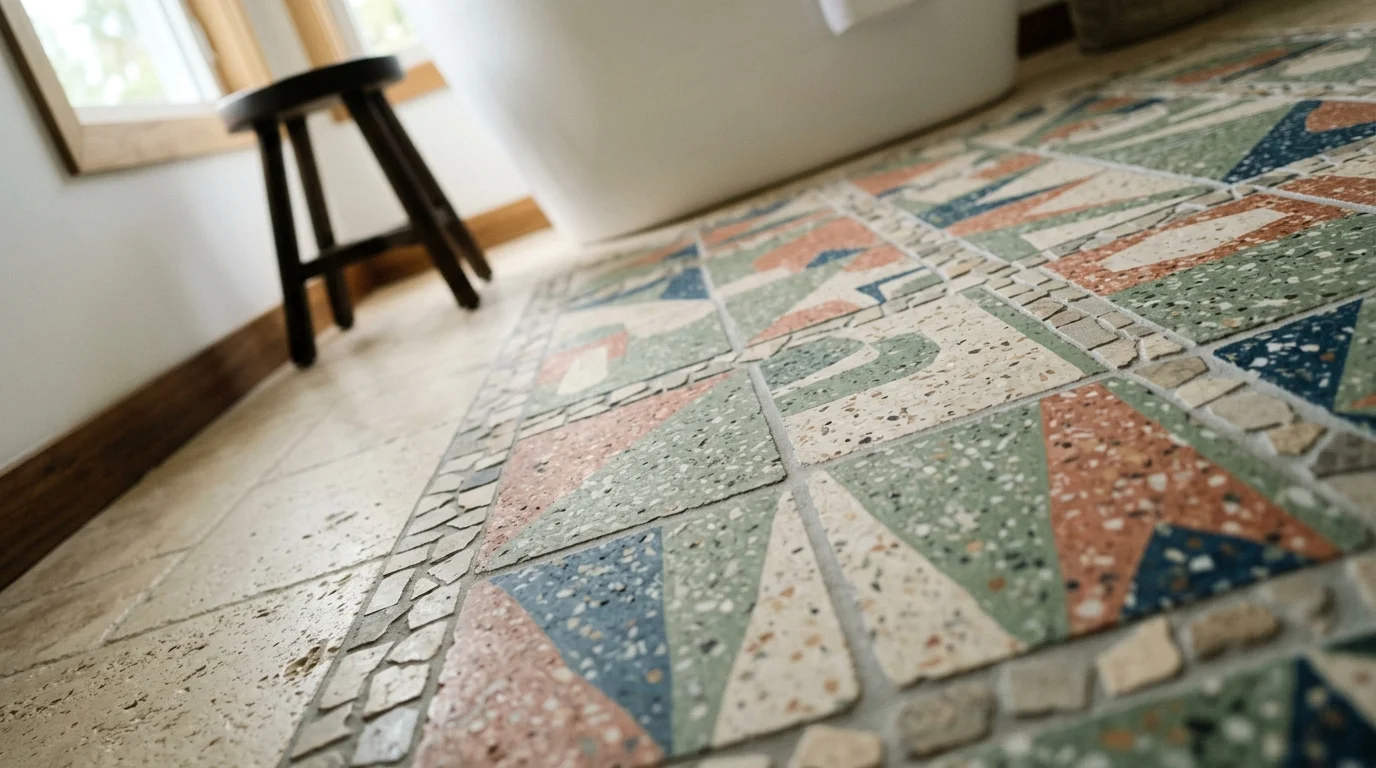
Penny tiles, hexagons, and small format mosaics work better as accents than full floor coverage in South Florida. The extensive grout lines become maintenance nightmares in humid conditions. We use them for shower floors where slip resistance matters more than cleaning ease, or as border accents around larger tiles.
Slip Resistance and Safety Ratings
Understanding DCOF Ratings
The Dynamic Coefficient of Friction (DCOF) measures how slippery a tile becomes when wet. The Americans with Disabilities Act requires a minimum DCOF of 0.42 for level surfaces that get wet. We recommend 0.50 or higher for bathroom floors to provide extra safety margin.
Polished tiles look gorgeous but typically rate below 0.30 DCOF when wet. Save them for walls where safety isn't a concern. Textured, matte, or honed finishes provide better grip without sacrificing style.
Surface Textures That Work
Slight texture beats heavy texture for bathroom floors. Deep grooves and raised patterns trap soap scum and become cleaning nightmares. Look for tiles with subtle surface variation, enough grip for wet feet but smooth enough for easy maintenance.
R9 or R10 slip resistance ratings (European standard) work well for residential bathrooms. R11 and higher become too aggressive for bare feet and difficult to clean properly.
Grout Lines and Safety
Narrow grout lines (1/16" to 1/8") provide some slip resistance while staying manageable to clean. Wide grout lines create trip hazards and collect grime. Epoxy grout resists staining and mold better than traditional cement grout in Florida's humidity.
Heated Floor Compatibility
Electric vs. Hydronic Systems
Electric radiant floor heating makes sense in Palm Beach County bathrooms during our brief "winter" months. Hydronic systems require too much infrastructure for the limited seasonal use we get here. Most clients want heated floors for luxury feel rather than necessity.
Porcelain and ceramic tiles work perfectly with radiant heating systems. Natural stone conducts heat well but may require additional structural support due to weight. Always check your existing floor joists before specifying stone over heating elements.
Installation Considerations
Radiant heating requires careful tile selection and installation sequencing. Some porcelain tiles can't handle the thermal expansion from heating elements. Work with experienced installers who understand the additional waterproofing and insulation requirements.
We recommend programmable thermostats that gradually warm the floor rather than shocking it with rapid temperature changes. Quick heat cycles can crack grout lines and create tile movement issues over time.
Cost Guide
Bathroom floor tile costs in Palm Beach County vary significantly based on material choice, room size, and installation complexity. These ranges reflect complete installation including materials, labor, and prep work for typical residential bathrooms.
Complete Bathroom Floor Projects
Small powder room (25 SF): $400-$800 total
Guest bathroom (50 SF): $800-$1,600 total
Master bathroom (100 SF): $1,600-$3,500 total
Add 20-30% for complex patterns, multiple tile types, or significant floor prep work. Demolition and disposal of existing flooring adds $2-4 per square foot to the project cost.
South Florida Considerations
Humidity and Moisture Management
Palm Beach County's 70-80% humidity levels stress bathroom floors year-round. Poor ventilation compounds the problem in older homes without adequate exhaust fans. We always recommend upgrading ventilation during bathroom tile installations to prevent long-term moisture damage.
Waterproof membranes behind tile become non-negotiable in our climate. RedGard or similar products prevent water from reaching subfloors even when grout eventually fails. Skip this step and face expensive subfloor repairs within 3-5 years.
Hurricane and Storm Considerations
Storm surge and flooding can destroy bathroom floors in coastal areas of Jupiter and Delray Beach. Porcelain tile survives flooding better than most materials and cleans up easier than natural stone or luxury vinyl. Consider this resilience factor when choosing materials for homes in flood-prone zones.
Quick-drying tiles and grout become important during hurricane season when power outages prevent proper ventilation. Smooth, non-porous surfaces shed water faster and resist mold growth during extended humid periods.
Historic District Requirements
Homes in historic districts may face restrictions on visible exterior changes, but interior bathroom floors typically have no limitations. However, some communities require architectural review for major renovations. Check with local historic preservation boards before starting work.
We've worked with many homeowners navigating guest bathroom remodels in historic neighborhoods where maintaining period-appropriate styles matters to property values and community standards.