Bathroom Shower Tile Ideas for South Florida Homes
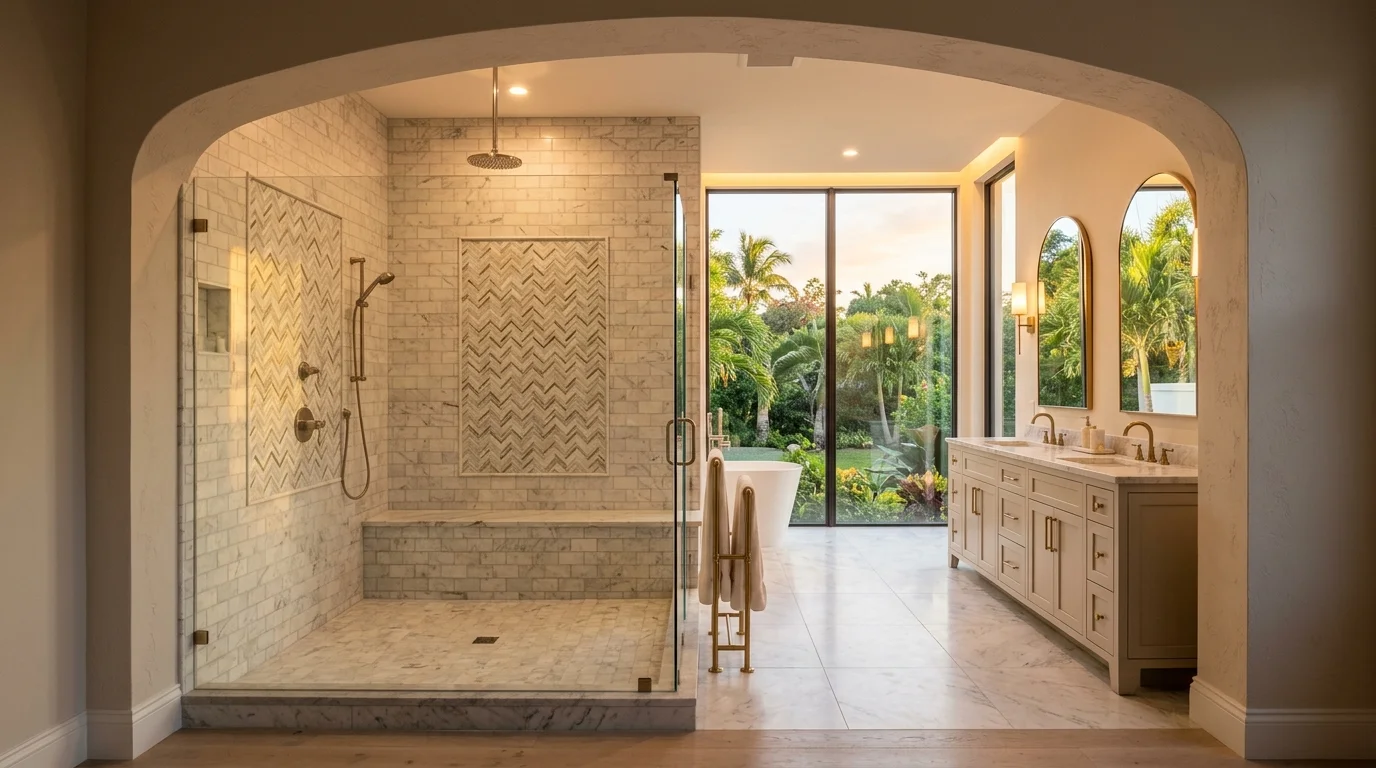
When selecting bathroom shower tile ideas for your South Florida home, you need materials and designs that can handle our humid subtropical climate while creating the spa-like retreat you want. Our team has installed thousands of shower renovations across Palm Beach County, and we know which tiles perform best in Boca Raton's humidity and which patterns work in Jupiter's coastal homes.
The right shower tile choice goes beyond just looking good. It needs to resist moisture, prevent mold growth, and maintain its beauty through years of daily use. We recommend focusing on three key areas: material selection, pattern layout, and proper installation techniques that account for Florida's unique challenges.
Best Tile Materials for South Florida Showers
Porcelain takes the top spot for shower applications in South Florida. Unlike ceramic, porcelain has a water absorption rate below 0.5%, making it nearly waterproof. This matters in Delray Beach where humidity levels stay high year-round.
Large format porcelain slabs are our go-to recommendation for shower walls. The 12x24 inch and 24x48 inch sizes create fewer grout lines, which means fewer places for water and mold to hide. We've seen too many beautiful ceramic installations fail after 5-7 years because water penetrated the tile body.
Natural stone requires more maintenance but creates unmatched luxury. Marble works beautifully but needs annual sealing in our climate. Travertine should be avoided entirely, it's too porous for shower applications. Granite and quartzite perform well but cost significantly more.
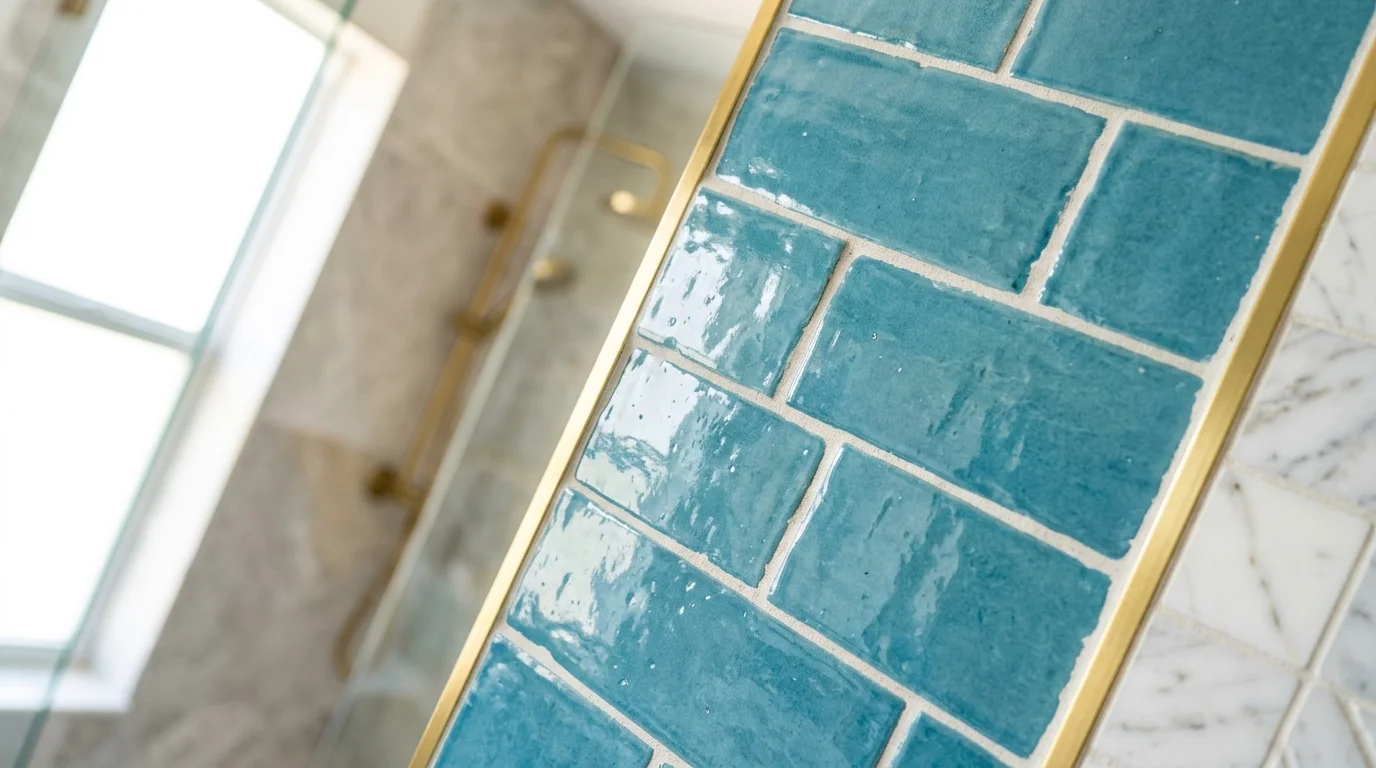
Glass tile offers excellent water resistance but shows water spots easily. We typically use it as accent material rather than full coverage. Mosaic glass works well for walk-in shower design floors where slip resistance matters more than easy cleaning.
Trending Tile Patterns and Layouts
The classic subway tile gets a modern update with vertical stacking instead of traditional brick patterns. This elongates the shower space and works particularly well in Wellington's smaller master bathrooms. We install 4x12 inch subway tiles vertically to add height to 8-foot ceilings.
Herringbone patterns create visual interest but require precise installation. The pattern works best with smaller tiles, 3x12 inch planks or 2x8 inch rectangles. This pattern adds 15-20% to labor costs due to increased cutting and layout time.
Linear drain installations open up new pattern possibilities. We can run large format tiles continuously from wall to floor without transition strips. This works exceptionally well with wood-look porcelain planks installed in a running bond pattern.
Mixed material combinations are gaining popularity. We combine large format walls with smaller accent strips or decorative borders. The key is limiting yourself to two materials maximum, more creates visual chaos in a small space.
Accent Walls and Niche Design
Feature walls transform ordinary showers into design statements. We typically accent the wall opposite the shower entrance, the first thing you see when entering. Natural stone slabs work beautifully here, even if the remaining walls use porcelain.
Shower niches require careful planning and waterproofing. We build them into the wall framing rather than cutting into finished tile. The interior of the niche should use smaller tiles, 2x2 inch or 3x6 inch, to properly slope toward the shower floor.
Corner niches waste less space than centered wall niches in smaller showers. We can typically fit two corner niches in a standard 32x48 inch shower enclosure. The bathroom remodel cost increases by $400-600 per built-in niche due to framing and waterproofing requirements.
Floating shelves provide storage without the construction complexity of built-in niches. We install them at the 48-inch height for easy access while showering. Glass shelves complement any tile choice, while natural stone shelves should match or complement the shower materials.
Floor-to-Ceiling Tile Trends
Full-height tile installation creates a luxury hotel feel and eliminates paint maintenance in humid bathrooms. We extend shower tile to the ceiling throughout the entire bathroom, not just the shower area. This prevents peeling paint issues common in South Florida bathrooms.
The tile transition at tub decks requires planning. We typically run shower tile down to the tub deck, then switch to coordinating floor tile. This creates a clean visual break while maintaining water resistance where it matters most.
Ceiling tile installation adds significant cost, expect 40-50% more than wall-only installations. The weight requires additional blocking in the ceiling framing. Some tile materials are too heavy for ceiling application, particularly natural stone over 3/8 inch thick.
Window and door trim integration becomes critical with floor-to-ceiling tile. We use waterproof trim materials like PVC or aluminum rather than wood. The trim should be installed before tiling to create proper expansion joints.
Shower Tile Cost Guide
Shower tile costs vary significantly based on material choice, pattern complexity, and installation requirements. These ranges reflect actual Palm Beach County pricing from our recent projects:
Additional costs to consider include waterproofing systems ($3-5 per square foot), niche construction ($400-600 each), and pattern premiums (15-30% for complex layouts). The hidden costs in bathroom remodels often come from inadequate waterproofing or poor substrate preparation.
A standard 32x48 inch shower with 8-foot ceilings requires approximately 85 square feet of tile coverage. Factor in 10% waste for straight patterns, 15% for diagonal or herringbone patterns. Complex patterns may require 20% overage due to cutting requirements.
South Florida Climate Considerations
Humidity levels in Palm Beach County average 70-80% year-round, creating unique challenges for tile installations. We always use membrane waterproofing systems rather than painted waterproofing, which fails in high-humidity environments.
Mold resistance becomes critical in our climate. We recommend antimicrobial grout and sealers for all installations. Epoxy grout costs more initially but resists staining and mold growth better than cement-based alternatives. This investment pays off in reduced maintenance over time.
Ventilation requirements exceed standard building codes for optimal performance. We recommend exhaust fans rated for 1.5 CFM per square foot of bathroom space, not the minimum 50 CFM required by code. Proper ventilation prevents condensation that leads to grout failure and mold growth.
Salt air affects coastal installations differently than inland properties. Homes within 5 miles of the ocean need enhanced corrosion protection for metal trim and fixtures. Stainless steel and aluminum components last longer than standard plated metals in these environments.
The Florida Building Code requires specific moisture barrier installation in shower areas. We exceed these minimum requirements with full membrane systems that extend beyond the shower enclosure. This prevents water damage to adjacent rooms and maintains your home's structural integrity.
Hurricane considerations affect material choice and installation methods. We use mechanical fasteners rather than adhesive-only installation for larger tiles. This prevents tile failure during pressure changes that occur during storm events. While you might not think about hurricanes when choosing shower tile, proper installation techniques matter when your home faces 100+ mph winds.
Temperature fluctuations, while less extreme than northern climates, still affect tile performance. We use flexible installation systems that accommodate thermal expansion and contraction. This prevents cracking that occurs when rigid installations can't flex with building movement.
For those considering a complete renovation, explore our spa-like bathroom ideas that incorporate these tile selections into cohesive design concepts. The right tile choice sets the foundation for the entire bathroom aesthetic.
When planning your project timeline, factor in South Florida's rainy season from May through October. Indoor work continues during rain, but material deliveries can be delayed. We typically recommend starting bathroom renovations in November through April for the most predictable scheduling.