Best Countertop Materials for Florida's Humidity & Heat
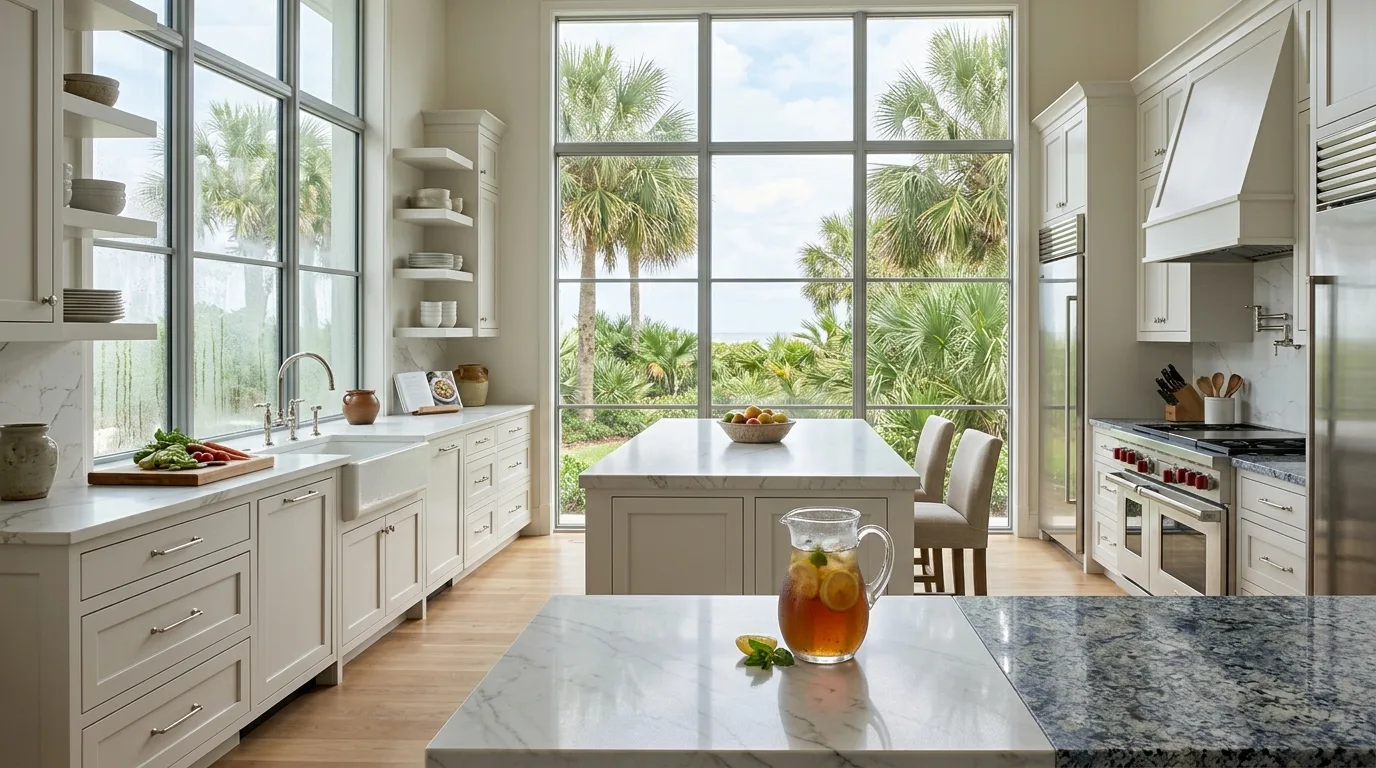
South Florida's climate is beautiful, but it's one of the harshest environments for kitchen surfaces. High humidity, intense heat, salt air near the coast, and strong UV exposure through kitchen windows all take a toll on countertop materials over time.
After completing thousands of kitchen renovations across Palm Beach County, we've seen firsthand which materials last and which ones cause headaches. This guide covers everything you need to know before choosing your countertop.
Why Florida's Climate Is Hard on Countertops
Palm Beach County averages over 60 inches of rainfall per year and maintains indoor humidity levels that frequently exceed 70% without proper climate control. Add direct sun exposure, proximity to the ocean, and year-round heat, and you have conditions that accelerate wear on porous or UV-sensitive surfaces.
The specific challenges are moisture penetration in unsealed stone, UV fading in resins and pigments, salt air corrosion on some surface finishes, and thermal expansion from direct sunlight through large kitchen windows.
Best Performers in Heat and Humidity
Quartz is the top performer for South Florida kitchens. As an engineered material it is non-porous, requires no sealing, and resists staining from moisture and food acids common in active kitchens. The resin binders can discolor under prolonged direct UV exposure, so it is best for kitchens without intense direct window sun. For most Palm Beach County homes, quartz is the practical, low-maintenance choice.
Porcelain slab is the emerging choice for Florida kitchens. It is fully UV-resistant, non-porous, and handles heat exceptionally well. Large-format porcelain slabs are increasingly popular in high-end Wellington and Boca Raton renovations. The downside is that it chips at the edges more easily than quartz and requires a skilled fabricator.
Quartzite, when properly sealed annually, performs well in South Florida. As a natural stone it has unique veining that quartz cannot replicate. It is harder than marble and more heat-resistant. The focus on sealing is non-negotiable in our climate, but homeowners who keep up with it are rewarded with a stunning, durable surface.
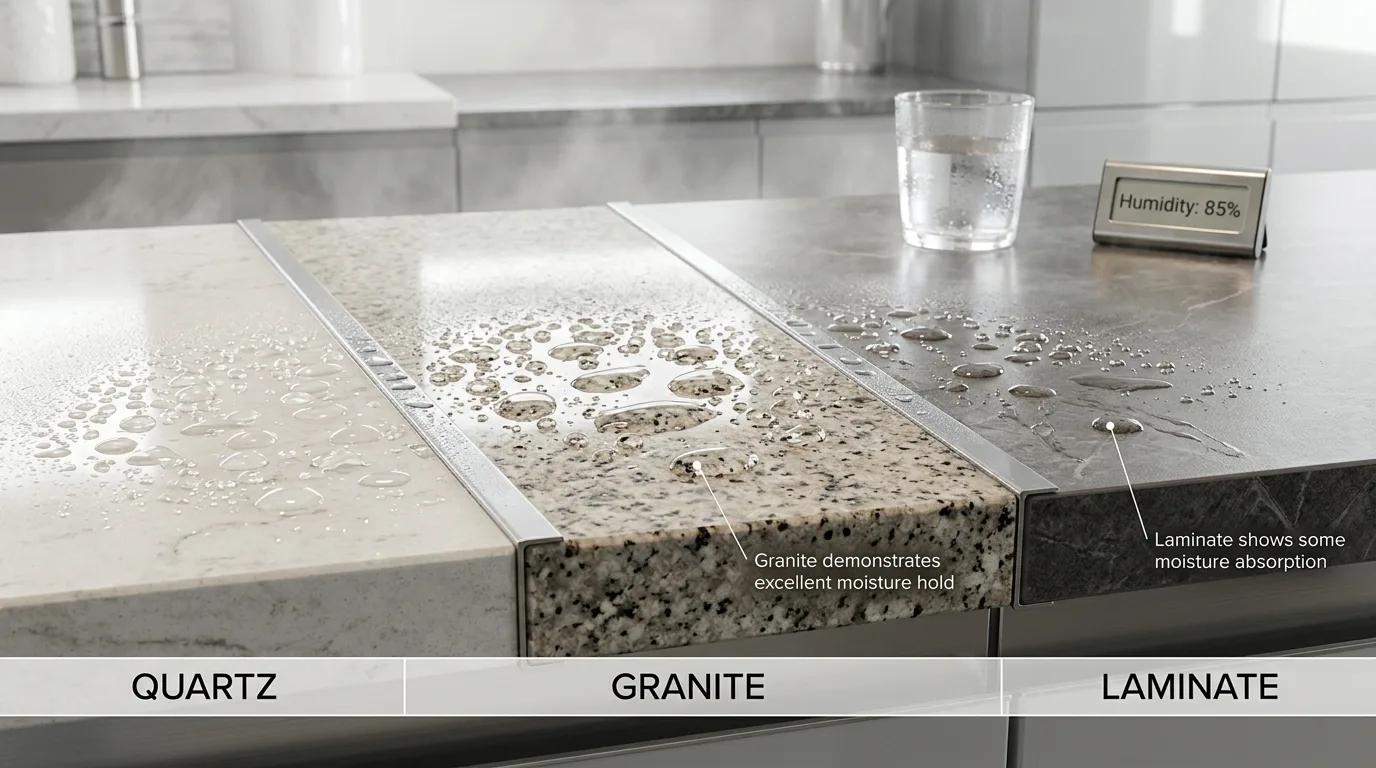
Granite remains a solid choice when sealed properly. It is heat-resistant and widely available at slab yards throughout Palm Beach County. In Florida's humidity, granite should be sealed every 12–18 months.
Materials to Avoid or Use Carefully
Marble is beautiful but demanding in Florida's climate. It etches from citrus juice and wine, stains from moisture, and requires consistent maintenance. We install marble regularly for clients who understand the commitment, but it is not a low-maintenance choice in this environment.
Laminate has improved dramatically in quality and now withstands moisture better than older versions. However, the seams and edges remain vulnerable to water infiltration in high-humidity environments. It remains a budget option but not our first recommendation for South Florida primary kitchens.
Our Recommendation for Palm Beach County
For most Palm Beach County homeowners, quartz is the best all-around choice for primary kitchen countertops. It requires zero maintenance, performs consistently in humidity, and is available at every price point. For clients who want natural stone, we recommend quartzite with a focus on annual sealing. For coastal homes in Palm Beach or oceanfront communities in Delray Beach, porcelain slab is worth the premium, the UV and salt air resistance is unmatched.
Best Countertop Materials for Humid Climates
South Florida's year-round humidity, salt air, and intense UV light create conditions that will expose weaknesses in any countertop material within a few years. The best countertops for Florida humidity share three traits: low porosity, resistance to thermal expansion, and UV stability.
Quartz (engineered stone) is the most popular countertop material we install in Palm Beach County kitchens, and for good reason. It's non-porous, never needs sealing, and won't absorb moisture even in the most humid months. Unlike natural stone, engineered quartz won't develop dark spots or mildew along seams. Brands like Cambria, Caesarstone, and Silestone all perform well in South Florida's climate.
Porcelain slab countertops are an emerging choice that handles Florida's humidity exceptionally well. With near-zero water absorption rates, porcelain resists staining, mold, and heat. Large-format slabs from brands like Dekton and Neolith can mimic marble or concrete without the maintenance burden. They're especially popular in outdoor kitchens where moisture exposure is constant.
Natural quartzite, not to be confused with quartz, offers the beauty of marble with significantly better durability. Quartzite like Taj Mahal or Super White handles humidity well when properly sealed, though it does require annual sealing to maintain its resistance. It's the premium choice for homeowners who want a natural stone look without marble's vulnerability to Florida's demanding climate.
Countertop Materials to Avoid in Florida
Marble is beautiful but problematic in South Florida. It's highly porous, stains easily from citrus and wine, and requires frequent sealing in humid environments. We see homeowners replacing marble countertops after 3–5 years due to etching and staining that becomes impossible to manage. If you love the marble look, consider quartz or quartzite alternatives that mimic the veining without the maintenance.
Butcher block and wood countertops face an uphill battle in South Florida. The constant humidity causes expansion and contraction that leads to warping, splitting, and mildew growth, even with diligent oiling. We recommend wood only as an accent piece, like a small island insert, where it can be replaced affordably if it deteriorates.
Laminate countertops perform adequately in terms of moisture resistance, but the particleboard substrate underneath is the weak point. If water penetrates a seam or edge, the substrate swells irreversibly. In humid Florida bathrooms and kitchens, this failure mode is common. If budget is a concern, solid surface materials like Corian are a more humidity-resistant alternative to laminate.
Maintenance Tips for Florida Countertop Longevity
Seal natural stone annually. If you have granite, quartzite, or any natural stone countertop in Palm Beach County, schedule sealing every 12 months, not the 2–3 years that manufacturers suggest for drier climates. Florida's humidity accelerates sealant breakdown.
Run your kitchen exhaust fan. Cooking in a closed kitchen without ventilation traps moisture that settles on countertop surfaces and seams. A quality range hood vented to the exterior removes both cooking moisture and grease that can penetrate porous materials.
Check caulk lines twice a year. The silicone caulk where your countertop meets the backsplash and sink is your first line of defense against moisture infiltration. In South Florida, caulk degrades faster, inspect and replace it before gaps develop.
Avoid storing wet items on natural stone. Leaving wet sponges, dish racks, or plant pots directly on granite or quartzite creates sustained moisture contact that can lead to dark staining even through sealant. Use trivets or mats as barriers.
Frequently Asked Questions
What countertop material holds up best in Florida humidity?
Quartz is the top performer for humid Florida climates, it is non-porous, requires no sealing, and resists moisture penetration. Porcelain slab is an excellent alternative with superior UV resistance. Both outperform natural stone for low-maintenance durability in South Florida.
Does Florida heat damage quartz countertops?
Extended direct UV exposure from strong Florida sunlight can cause some quartz surfaces to discolor over time, particularly lighter colors. For kitchens with large west-facing windows, porcelain slab or properly sealed quartzite may be a better choice. Quartz handles everyday cooking heat well.
How often should you seal granite countertops in South Florida?
Granite countertops in South Florida should be sealed every 12–18 months due to the humidity and heat. A simple water bead test tells you when resealing is needed, if water absorbs into the stone rather than beading on the surface, it's time to reseal.
Is marble a good countertop choice for South Florida kitchens?
Marble is beautiful but high-maintenance in South Florida's climate. It etches from citrus and wine, requires sealing every 6–12 months, and is more prone to staining in humid conditions. We install it for clients who love natural stone aesthetics and commit to proper care, but it is not our first recommendation for busy Palm Beach County kitchens.
What is the most low-maintenance countertop for a Florida kitchen?
Quartz and porcelain slab countertops require virtually no maintenance, no sealing, no special cleaners, and consistent resistance to humidity and staining. For homeowners who want minimal upkeep, these two materials are the clear leaders for South Florida kitchens.
Owner of South Florida Kitchen & Bath Design, serving Palm Beach County since 2007. Andre and his team have completed thousands of kitchen and bathroom renovations across Boca Raton, West Palm Beach, Wellington, Delray Beach, and the surrounding communities.