Quartz vs. Quartzite Countertops: Which Is Right for Your Kitchen?
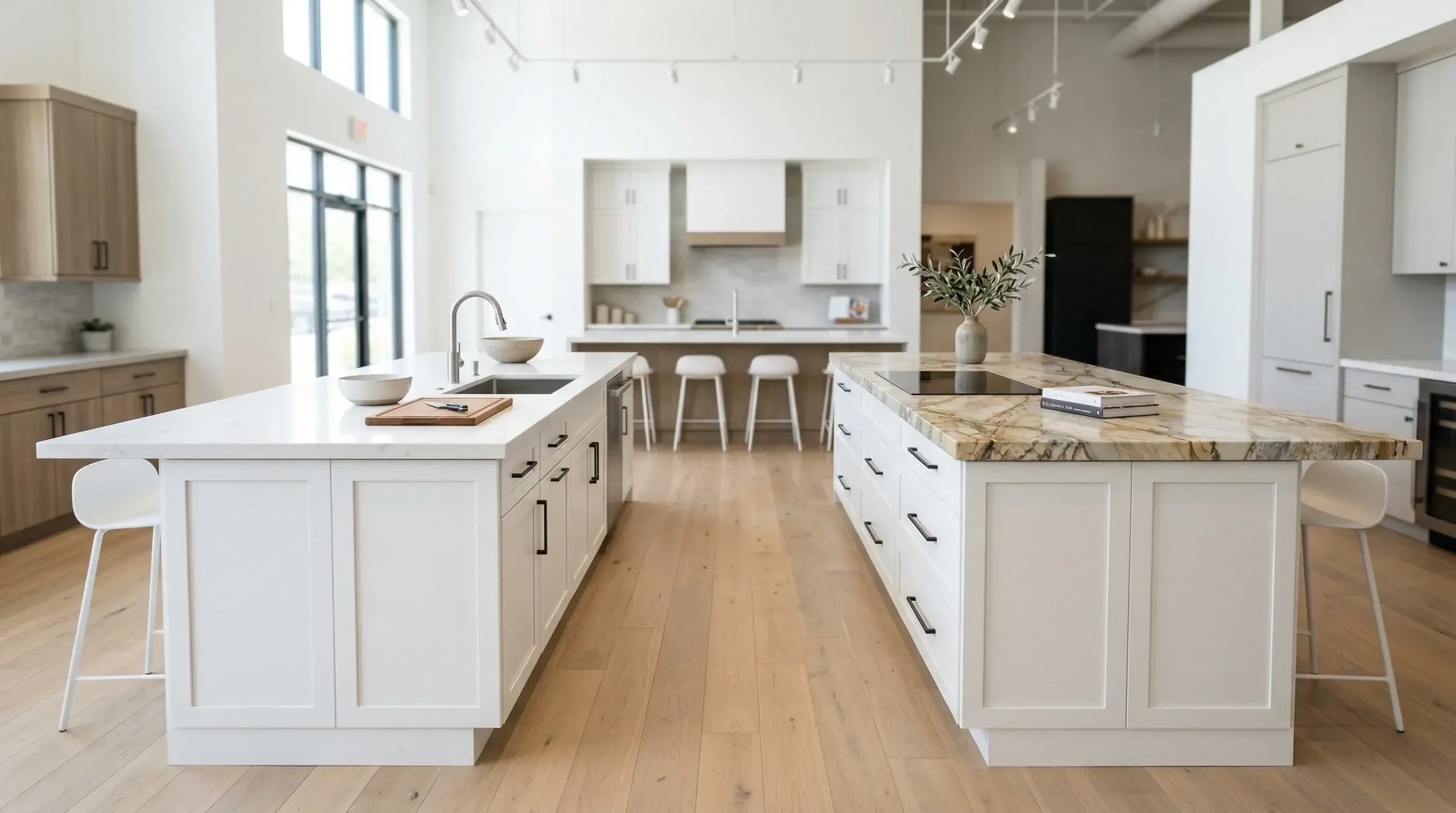
The names sound almost identical, but quartz and quartzite are fundamentally different materials. Choosing the right one depends on your lifestyle, design preferences, and maintenance expectations. Here's an honest comparison from a team that installs both every week across Palm Beach County.
What Is Quartz?
Quartz countertops are man-made, roughly 90% ground natural quartz combined with resins and pigments. This gives you a non-porous surface that never needs sealing, resists stains, and comes in an enormous range of colors and patterns, including convincing marble looks without marble's maintenance headaches.
The big three manufacturers in our installs are Cambria (made in Minnesota), Silestone (from Cosentino in Spain), and Caesarstone (Israel and the U.S.). MSI's Q Premium line has become popular for mid-range budgets. They all meet the engineered stone standard set by the Natural Stone Institute and carry similar warranty structures, 10 to 25 years for residential use.
Quartz scores 7 on the Mohs hardness scale, same as natural quartz crystal. In practice that means a dropped wine glass usually leaves the countertop intact. The resin binders are where quartz's weakness lives: they soften under direct heat above about 300°F and yellow under prolonged UV exposure.
Pros: Zero maintenance, stain-resistant, consistent color and pattern, wide selection, generally more affordable than high-end natural stone. Works well around kids and messy cooks.
Cons: Not heat-resistant (hot pans leave marks), can look less "natural" up close, not safe for outdoor kitchens, seams more visible on darker colors.
Cost in Palm Beach County: $50-$100 per square foot installed, with most kitchens running $3,000-$6,000 total. Premium quartz like Cambria Brittanicca or Silestone Eternal Calacatta runs $85-$110 installed.
What Is Quartzite?
Quartzite is a natural stone, formed when sandstone is subjected to extreme heat and pressure deep underground, typically over millions of years. The quartz grains in the sandstone fuse together into one of the hardest stones you can put in a kitchen. Most of what we install comes from quarries in Brazil, with smaller volumes from Italy, India, and the U.S.
Quartzite sits at 7 on the Mohs scale like quartz, but with a critical difference: it's 100% mineral, no resin. That makes it heat-resistant, UV-stable, and suitable for outdoor kitchens, a real advantage in Palm Beach County where covered outdoor cooking spaces are common.
The "quartzite" label gets misused in the industry. Some stones sold as quartzite are actually soft dolomitic marbles that stain and scratch much more easily. A reputable fabricator will acid-test your slab before purchase (a drop of diluted muriatic acid on a sample, real quartzite doesn't react). Always hand-pick the exact slab. The natural variation is part of the appeal, but it also means the sample at the showroom may not match what ends up in your kitchen.
Popular quartzites we see requested in Palm Beach County: Taj Mahal (warm cream with soft gold veining), White Macaubas (cool white with subtle gray), Calacatta Macchia Vecchia (dramatic marble look with heavy veining), and Super White (which, despite the name, is actually a dolomitic marble, buyer beware).
Pros: Natural beauty, extremely hard, heat-resistant, UV-stable (works outdoors), unique one-of-a-kind slabs, strong resale appeal.
Cons: Requires periodic sealing (typically annually in South Florida's humidity), more expensive than quartz, natural color variation means you need to hand-pick your slab, fewer fabricators can work with exotic varieties.
Cost in Palm Beach County: $70-$150 per square foot installed, with most kitchens running $5,000-$12,000 total. Exotic varieties like Calacatta Macchia Vecchia can reach $180+ installed.
Side-by-Side Comparison
| Feature | Quartz | Quartzite |
|---|---|---|
| Material | Engineered (90% quartz + resin) | 100% natural stone |
| Hardness (Mohs) | 7 | 7 |
| Heat resistance | Poor (use trivets always) | Excellent |
| Stain resistance | Excellent (non-porous) | Good when sealed |
| Sealing | Never | Annually |
| Outdoor use | No (UV damage) | Yes |
| Appearance | Consistent, predictable | One-of-a-kind veining |
| Cost (installed) | $50-$100/sq ft | $70-$180/sq ft |
| Resale impact | Solid, expected | Stronger at higher price points |
Maintenance Reality Check
Quartz daily care: wipe with soap and water or a pH-neutral cleaner. Skip anything with bleach, oven cleaner, or abrasive pads, those will dull the finish. The resin binders don't tolerate products with a pH above 10 over time.
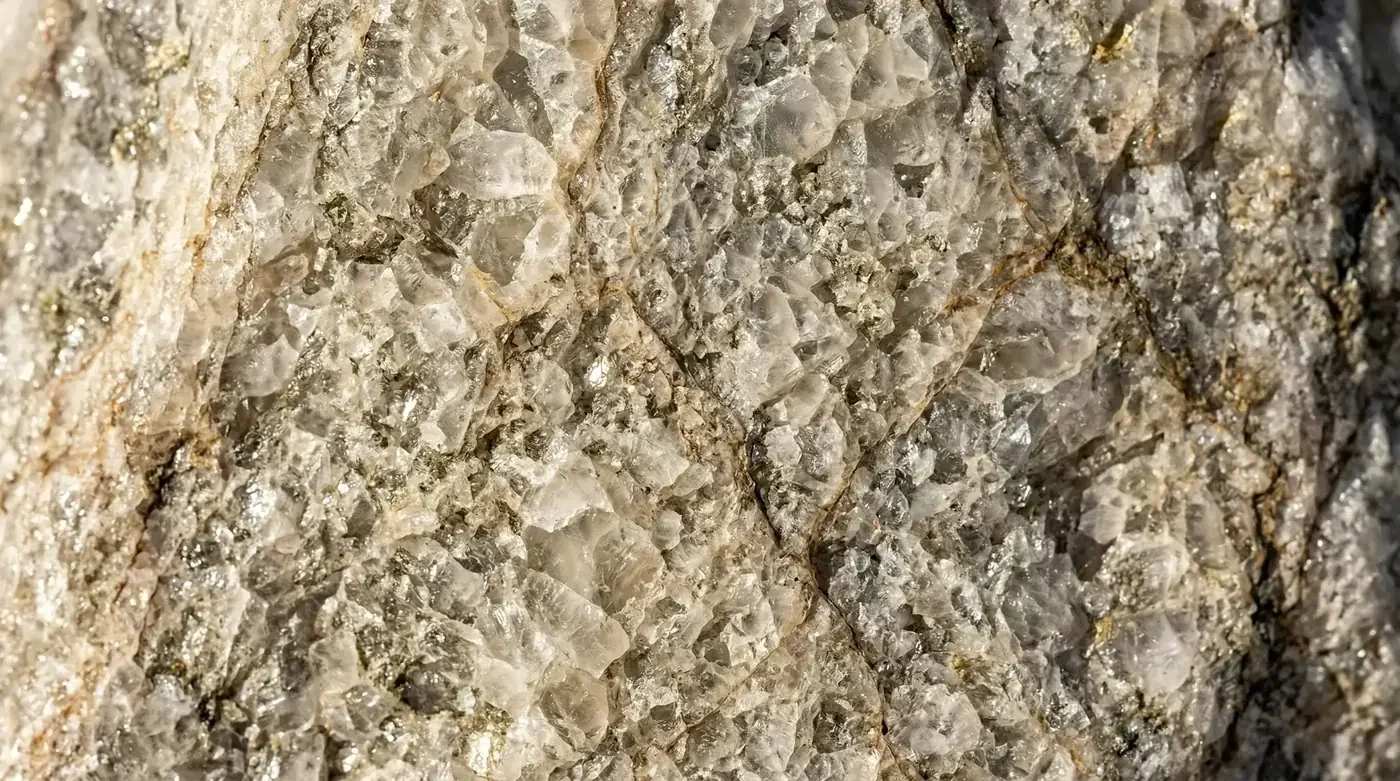
Quartzite daily care: same soap and water, but also reseal once a year with a penetrating stone sealer. In our climate, where the sealer breathes through humid air, we recommend testing every six months by dropping water on the surface, if it beads, the seal is holding. If it soaks in, it's time.
For either material, clean up acidic spills quickly. Lemon, tomato, wine, and vinegar are the main ones. Quartz won't stain but can etch slightly on cheaper brands. Quartzite will stain within hours if unsealed and left.
Palm Beach County Installation Notes
Two local factors affect your choice more than most guides mention. First, humidity: unsealed natural stone in a coastal kitchen absorbs moisture and can develop faint darker patches near the sink and dishwasher. Good sealer and proper ventilation fix this. Second, outdoor kitchen integration: a lot of our Jupiter and Boca clients want the kitchen counter to flow to a covered lanai bar. That's a quartzite move. Quartz on a lanai will yellow within 18 months, and most manufacturers void the warranty for outdoor install.
Slab selection is worth an extra Saturday. Stone yards we send clients to for hand-picking include Marble of the World, Stone Boutique, and Opustone, all in the West Palm area. Go with tape and chalk, mark which slab you want, and have your fabricator verify it's set aside before you sign.
Which Is Right for Your Kitchen?
Choose quartz if you want zero maintenance, a consistent look, a wide color selection, and you'd rather not think about sealing. It's the right call for busy families, rental properties, homes you plan to sell in under five years, and any budget where every dollar counts.
Choose quartzite if you love natural stone, want a surface no one else on the block has, have an outdoor kitchen or lanai bar involved, and don't mind annual sealing. It's the right call for homeowners who want the look of marble without the softness, and for anyone building a kitchen they plan to keep for 15+ years where the counter doubles as a design feature.
Still not sure? That's exactly what our free in-home consultation is for. We bring samples, discuss your cooking habits and lifestyle, and help you pick the right surface for your kitchen. We also make a point of showing both materials in Palm Beach County kitchens we've already installed, so you can see how each one looks in a real home.
Get a Free Quote
Free 3D Kitchen Rendering Included
A $500 value, yours at no cost
We call you within 2 hours
Free in-home consultation
Receive your written, itemized quote
Ready to start your project? Call (561) 401-0064 for a free in-home consultation, or scroll down to fill out our quick form.