Kitchen Backsplash Ideas for Palm Beach County Homes
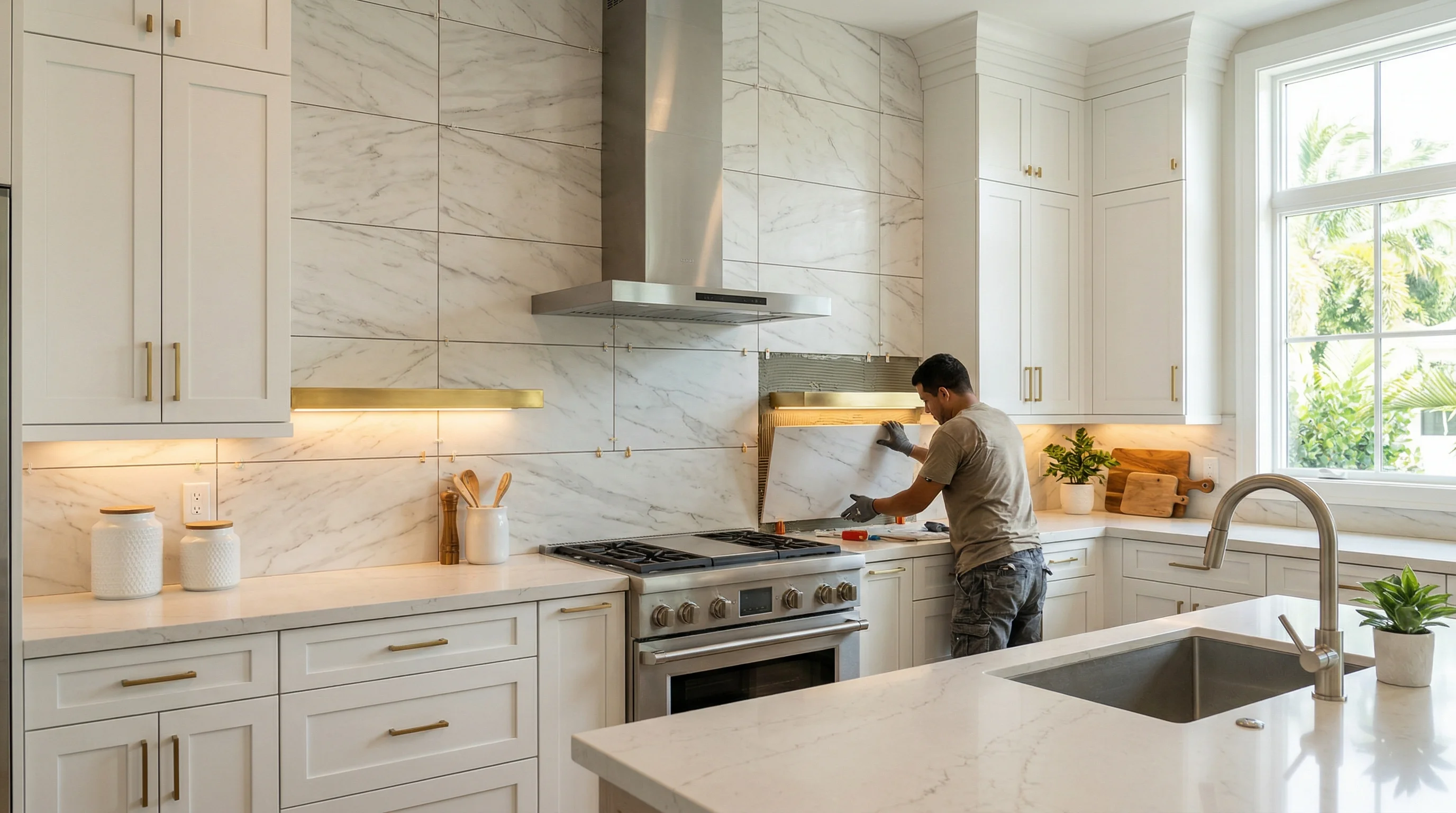
The backsplash is one of the most visible surfaces in any kitchen, and one of the most cost-effective ways to transform the space. Whether you're doing a full kitchen remodel or just looking for a targeted upgrade, the right backsplash can define your kitchen's entire character.
Here's what we're installing most across Palm Beach County in 2026, and what works best in South Florida's climate.
Best Backsplash Materials for South Florida
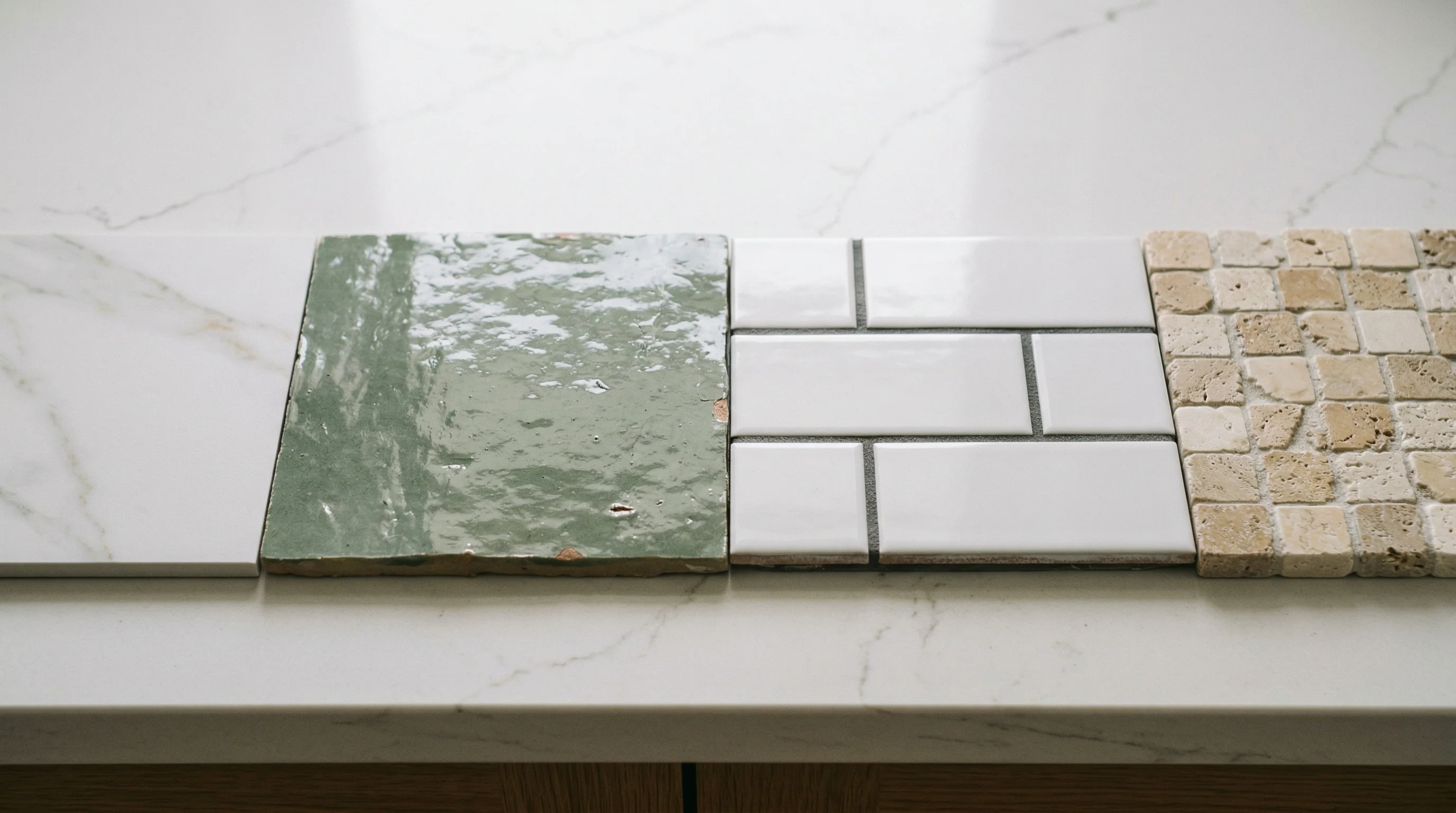
Large-format porcelain tile has become the most popular choice in our projects. Slabs that mimic Calacatta marble or concrete give you a clean, grout-free look that's virtually maintenance-free in Florida's humidity. A single slab behind the range makes a statement without the upkeep of natural stone.
Ceramic subway tile remains a reliable choice, but the trend has shifted from the classic 3x6 horizontal layout to stacked vertical, herringbone, and oversized 4x12 formats. Dark grout lines (charcoal or black) are replacing white grout for a more defined, modern look.
Handmade zellige tile is the breakout material of 2026. These Moroccan clay tiles have a slightly uneven, glossy surface that catches light beautifully. They add warmth and texture that machine-made tiles simply can't match. Popular colors in our Palm Beach County projects: sage green, warm white, and terracotta.
Natural stone, marble, quartzite, and travertine, delivers timeless elegance but requires sealing in South Florida's humid climate. We typically recommend honed finishes over polished for backsplashes, as they show fewer water spots and fingerprints.
Trending Styles in 2026
Full-height backsplashes. Instead of stopping at the bottom of the upper cabinets, more homeowners are running tile from countertop to ceiling. This works especially well with open shelving or in kitchens without upper cabinets.
Bookmatched slabs. Two mirrored slabs of natural stone or porcelain create a dramatic butterfly pattern behind the range. This is the luxury statement piece we see most in high-end Palm Beach County renovations.
Mixed materials. Combining a statement tile behind the range with a simpler, coordinating tile on the remaining walls keeps costs reasonable while creating a focal point.
Vertical stacking. Running subway tiles vertically instead of horizontally is a simple way to give a classic material a contemporary feel. It draws the eye upward and makes ceilings feel taller.
Cost Guide by Material
Labor in Palm Beach County typically runs $8–$15 per square foot for standard tile, higher for natural stone or intricate patterns. Most kitchen backsplashes are 25–40 square feet total.
South Florida-Specific Considerations
Humidity resistance matters. South Florida's year-round humidity means your backsplash material and grout need to handle moisture without staining or mildew. Porcelain and ceramic are inherently resistant. Natural stone needs quality sealer applied annually.
Grout choice is critical. We always recommend epoxy grout over cement grout for backsplashes in South Florida. It's non-porous, mildew-resistant, and doesn't need sealing. The upfront cost is slightly higher but saves significant maintenance long-term.
Light and color. Palm Beach County homes get intense natural light. This is great for showing off textured materials like zellige, but it also means glossy surfaces can create glare. If your kitchen faces south or west, consider matte or honed finishes that soften the light instead of bouncing it.
Coordinate with your countertops. The backsplash should complement, not compete with, your countertop material. If you have a dramatic veined quartzite island, a simple backsplash lets the stone be the star. If your counters are solid quartz, the backsplash is your opportunity to add pattern and texture.
Backsplash Ideas by Kitchen Style
Coastal Florida kitchen. For the relaxed, beachy aesthetic popular in Jupiter and Palm Beach Gardens, consider glass mosaic tile in sea-glass blues and greens, or a natural stone in warm sandy tones. Pair with white shaker cabinets and light quartz countertops for a cohesive coastal feel. Avoid anything too polished, the coastal look is about texture and natural materials.
Modern minimalist. Large-format porcelain slabs in matte finishes are the go-to for clean contemporary kitchens in Boca Raton and Delray Beach. A single bookmatched slab behind the range creates drama without visual clutter. Pair with flat-panel cabinets and integrated hardware for a clean look.
Traditional elegance. Marble subway tile in a classic brick layout with contrasting grout remains timeless. For Wellington and Royal Palm Beach homes with traditional cabinetry, a marble or marble-look porcelain backsplash adds refinement without trend-chasing. Consider an arabesque or lantern pattern for a subtle twist on the classic.
Transitional (most popular). Blend traditional warmth with modern clean lines. Handmade zellige tile in warm white or sage, stacked vertically, bridges both styles beautifully. This is the most-requested backsplash style in our Palm Beach County projects because it works with both shaker and flat-panel cabinets.
What to Expect During Backsplash Installation
A backsplash installation is one of the most manageable kitchen upgrades, here's the process:
Day 1: Preparation and tile setting. Your installer protects countertops and appliances, removes outlet covers, and preps the wall surface. Tile is cut and set with thin-set mortar, working from the bottom up. Most standard backsplashes are fully set in one day.
Day 2: Grouting and finishing. After the thin-set cures overnight, grout is applied, cleaned, and sealed. Outlet covers are reinstalled, and caulk lines are applied where the tile meets the countertop and cabinets. Your kitchen is fully usable again by the end of day two.
For natural stone: Add an extra day for sealing. Stone backsplashes need a penetrating sealer applied after installation and before grouting to prevent grout haze from staining the stone permanently.
Cost-saving tip: If you're handy, backsplash tile is one of the more DIY-friendly kitchen projects. However, cuts around outlets, corners, and under cabinets require precision, if you're not confident with a tile saw, hire a professional. A poorly cut backsplash draws the eye to every imperfection.
Common Backsplash Mistakes to Avoid
Choosing tile before countertops. Always select your countertop material first, then choose a backsplash that complements it. The countertop is the larger investment and harder to change, let it drive the backsplash decision.
Ignoring grout color. Grout makes or breaks the look. White grout with white tile disappears, which may be what you want. Contrasting dark grout with light tile creates a graphic pattern that highlights each individual tile. Decide intentionally.
Stopping at the upper cabinet line. Many older kitchens have backsplash that stops at the bottom of upper cabinets, leaving bare drywall above. If you have open shelving or a gap between uppers and the ceiling, extend the tile to the ceiling for a more finished, modern look.
Skipping the area behind the range. Some homeowners tile only the visible areas and skip behind the stove, assuming the range covers it. Ranges are pulled out for cleaning and service, an unfinished wall behind the range looks obviously unfinished.