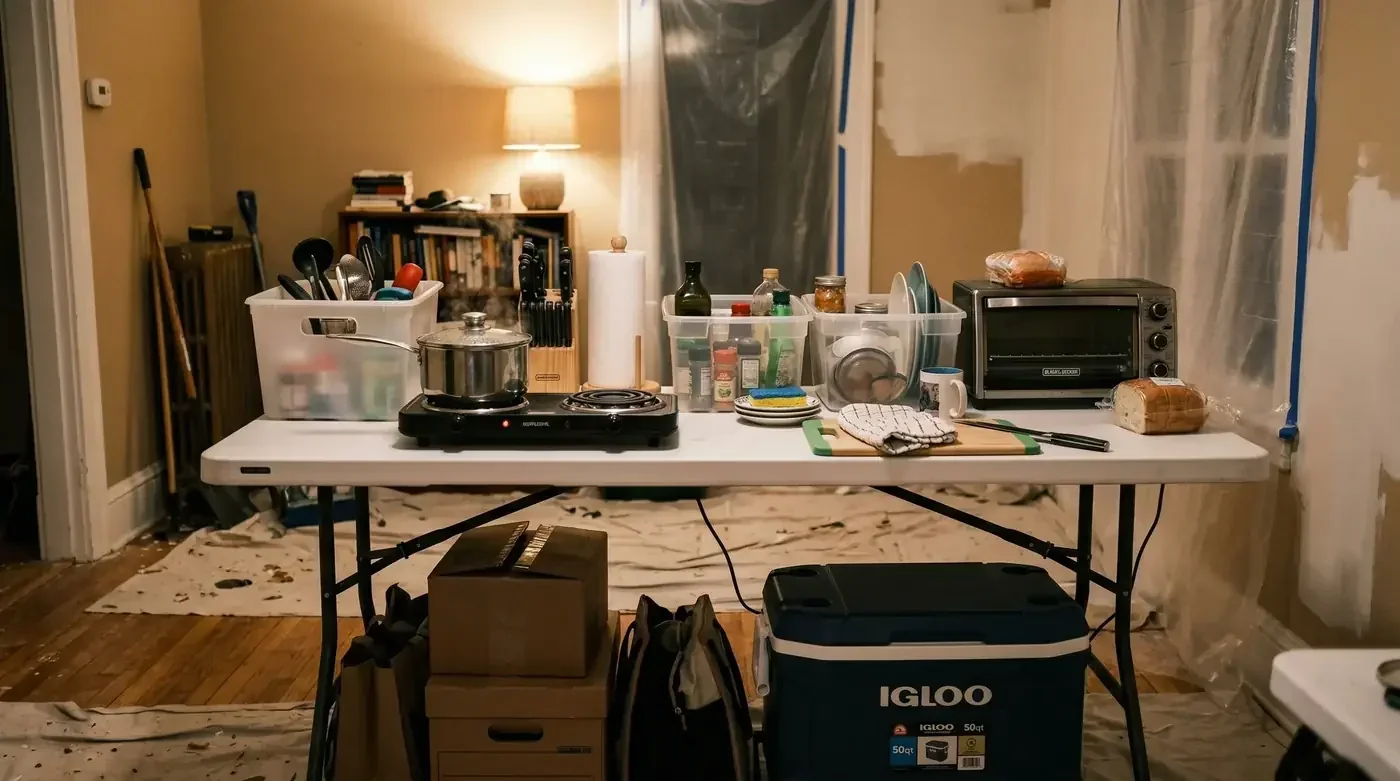
Yes, absolutely. The vast majority of our Palm Beach County clients live in their homes throughout the entire kitchen remodel. It takes planning, but it's completely doable, and it saves you the cost and hassle of temporary housing.
The Short Answer
You can stay put for a standard 4-6 week kitchen remodel. We've had clients with young kids, dogs, even one family in Wellington with chickens in the backyard. A furnished one-bedroom rental in Palm Beach County runs $3,000-$6,000 a month right now. A decent temporary kitchen setup runs about $150. The math almost always wins.
There are three situations where we tell people to move out anyway: you're adding square footage that opens an exterior wall for more than a few days, you've got a newborn or someone on home hospice, or a household member has severe asthma or COPD. Otherwise, staying makes more sense than most homeowners expect.
Set Up a Temporary Kitchen
Before demolition day, set up a functional mini-kitchen in another room. You don't need much: a folding table for prep space, a microwave (this becomes your best friend), a slow cooker or Instant Pot, a portable induction burner (if you want to cook more seriously), a mini fridge or cooler, paper plates and disposable utensils (trust us on this one), and a dish bin with dish soap for the bathroom sink.
Most of our clients set this up in their dining room, garage, or a spare bedroom. It's not glamorous, but it works for 3-4 weeks.
Where to put it. The dining room is the best spot for most households, it's close to a bathroom sink for dishes, usually carpeted or tiled (easy to protect), and already near the power outlets you need. The garage works if you have one with A/C or climate control, but in summer it turns into a sweatbox by 10 a.m. A spare bedroom with a wet bar or sink access is the dream setup and we see it a lot in the condos in Delray and Boca.
The coffee station matters more than you think. Six weeks without real coffee wrecks everyone's mood. Put the coffee maker, grinder, and mugs somewhere permanent that you don't have to rebuild every morning.
Outdoor prep zone. South Florida weather means your grill and any outdoor bar are fair game. A lot of our clients treat the lanai as the real kitchen for six weeks, grill, outdoor sink, beer fridge. It's surprisingly workable.
What not to bother buying. Skip the "full portable kitchen" units online for $800, you'll use them for 40 days and they'll sit in the garage after. Same with a second freezer. Rent a deep freezer for $30/month if you genuinely need one.
Meal Planning for Six Weeks
Two weeks before demo, start freezing meals. Chili, pulled pork, soups, and pasta sauces all reheat well in a microwave and cover about 15 family dinners if you batch-cook on two weekends. Plan for roughly $40 per day for a family of four if you mix takeout with cooking, more if you're eating out every night.
The appliance combination that carries 80% of the cooking for most of our clients: air fryer, rice cooker, electric kettle, and the microwave. Add a slow cooker and you can handle almost any weeknight meal. Skip the portable induction burner unless you're a real home cook, most people don't end up using it.
One more thing: keep a paper list of takeout spots with their phone numbers by the temp kitchen. Decision fatigue is real at week four. A visible list of four or five reliable spots makes dinner a 30-second choice instead of a 20-minute scroll.
How We Manage Dust and Disruption
This is the #1 concern homeowners have, and it's a legitimate one. Kitchen demolition generates significant dust, especially from tile removal and drywall work. Here's how we handle it:
Dust barriers: We install heavy-duty plastic sheeting with zipper doors to seal off the kitchen from the rest of your home. This keeps 95%+ of dust contained to the work area.
Daily cleanup: Our crew vacuums and sweeps the work area at the end of every day. You shouldn't come home to a mess.
Floor protection: We lay protective covering over any flooring between the kitchen and the crew's entry point, usually the front door or garage. Your existing floors stay protected throughout the project.
Ventilation: We use portable fans and open windows (weather permitting) to direct dust away from living areas during active demolition.
HEPA filtration. The EPA's guidance on indoor air quality during renovation calls out HEPA filtration as one of the single most effective controls for airborne dust. A portable HEPA purifier in the main bedroom costs about $150 and runs the whole project. Keep it on the highest setting during demo days and whenever tile is being cut.
HVAC protection. Before demolition, we tape off the return vents in the kitchen so the system doesn't pull dust through your whole duct run. Change your HVAC filter at the two-week mark and again when the project wraps. We've had clients who skipped this and paid for a full duct cleaning later, not a fun line item.
Silica is the one to watch. Cutting tile, stone, or concrete generates respirable crystalline silica, which the CDC flags as a health hazard. Our crew uses wet-cut saws and vacuum shrouds for anything that kicks up silica, and we don't cut inside the house. If you ever see a contractor dry-cutting tile in your kitchen without dust collection, that's a red flag.
South Florida Specific: Hurricane Season and Humidity
If your project overlaps June through November, plan around a few things. Cabinet deliveries need climate-controlled staging, we don't let wood boxes sit in a hot garage. Drywall mud and paint take 1-2 extra days to cure because of humidity, and trying to rush it leads to cracks you'll see within a year.
Your A/C has to keep running with the dust barriers in place. We either reroute the supply to keep the kitchen sealed or stage the work so the main trunk stays operational. If a contractor tells you to just turn the A/C off for two weeks in July, find a different contractor.
If a named storm is forecast during your project, the crew secures loose materials, covers exposed plumbing, and if needed relocates new cabinets back to climate storage. We've had this happen twice in the last four years. Both times the house came through fine.
What to Expect Week by Week
Week 1 (Demolition): This is the loudest and dustiest phase. Old cabinets, countertops, flooring, and tile come out. It's disruptive but it's also the shortest phase, typically 2-3 days for a standard kitchen.
Weeks 2-3 (Rough work): Plumbing and electrical modifications happen behind the walls. This phase is less noisy but your kitchen is still completely unusable.
Weeks 3-5 (Installation): Cabinets go in, followed by countertop templating and installation, backsplash tile, and flooring. The kitchen starts taking shape and the excitement builds.
Week 5-6 (Finishing): Hardware, fixtures, appliances, lighting, and final paint touch-ups. By the end of this phase, you're using your new kitchen.
When You Should Move Out Temporarily
Staying home works for most projects, but not all. Here's when we actually recommend moving out:
- There's a newborn under three months old in the house
- A household member has severe asthma, COPD, or is on home oxygen
- Anyone is on home hospice or recovering from surgery
- You work 100% from home and need a quiet environment outside of 9-5 (crew noise runs until 4 p.m.)
- The scope includes a major addition that opens an exterior wall for more than three days
- You're doing a whole-home remodel, not just the kitchen
For short moves, a local extended-stay hotel in Palm Beach Gardens or West Palm runs about $150/night with a kitchenette. Four weeks there is roughly $4,200 and includes daily housekeeping. It's not cheap but it beats a full furnished rental if you only need a few weeks of space.
Keeping Kids and Pets Safe
The work zone is a hazard zone. Some things we've seen work for families:
Paint a "no-go" line. Use painter's tape to mark a visible line across the floor kids aren't allowed past. The visual cue works better than verbal reminders, especially for the under-six crowd.
Nail checks. Our crew does a walk-through with a magnetic sweeper at the end of each work day. If you're working with a different contractor, ask if they do this. It's the single most important safety step for families with toddlers or pets.
Dogs on the schedule. Put a sign on the front door with your crew lead's name and a note that a dog is inside. Baby gates go up before the crew arrives each morning. For anxious dogs, a day at doggy daycare during demo days is $35 well spent.
Sawdust piles aren't toys. Some of what looks like sawdust is actually silica from tile cuts or MDF residue. Keep kids out of the work area even after the crew leaves for the day.
Tips From Homeowners Who've Done It
"Stock up on easy meals before demo day." Having two weeks of microwave-friendly meals, canned goods, and snacks ready to go eliminates the stress of figuring out dinner every night.
"Budget for eating out 2-3 times a week." Even with a temporary kitchen setup, you'll want real meals. Plan for $200-$400/month in extra dining costs during the remodel.
"Keep a path to the bathroom clear." If your kitchen is between your living space and a bathroom, make sure your contractor maintains a clear, protected pathway at all times.
"It's worth it." Every single client tells us the same thing when they see their finished kitchen, the temporary inconvenience was completely worth the result.
Frequently Asked Questions
How long will I be without a working kitchen?
Plumbing work means no running water in the kitchen for 1-3 days. The kitchen as a whole is unusable for 3-4 weeks depending on scope, which is why the temporary setup matters.
What's the most disruptive phase?
Demolition, without question. It's 1-2 days of real noise. Tile install and cabinet delivery days are also louder than average. The rest of the project is moderate noise during work hours.
Can I keep my fridge plugged in?
Usually yes, we move it to the dining room, garage, or lanai and keep it running the whole project. Just don't unplug and replug repeatedly; that's what kills compressors.
Do I need to be home during work hours?
No. Most of our clients give us a garage code or lockbox and go about their day. We text photos at end of day so you know where things stand.
How do you contain noise?
Honestly, we can't contain it much, demolition is loud. What we can do is give you a heads-up the night before the noisiest work so you can schedule around it. Work hours are 8 a.m. to 4 p.m. Monday-Friday.
Ready to start planning? Schedule a free consultation and we'll walk you through exactly what your specific project timeline and daily disruption will look like. Call (561) 401-0064.