Kitchen Flooring Options: Pros and Cons for Florida Humidity
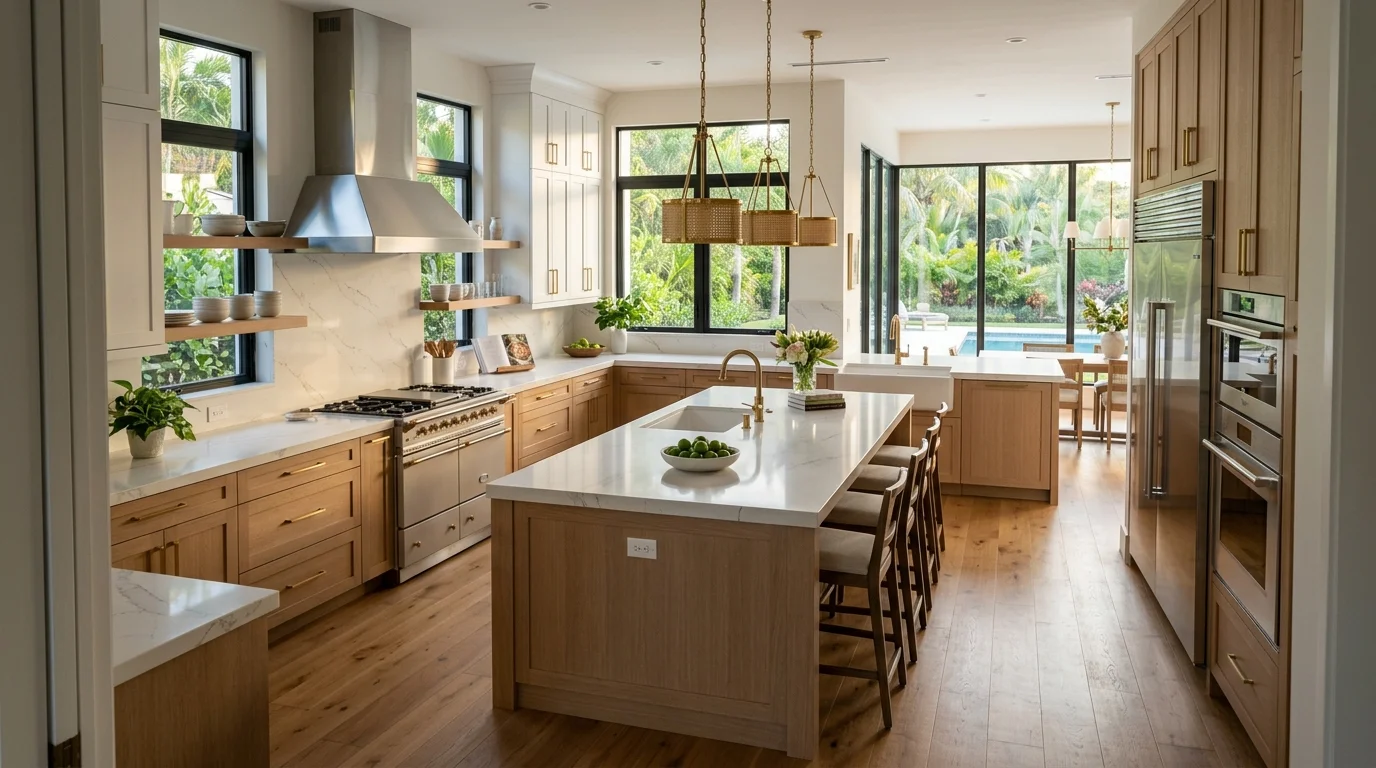
Choosing the right kitchen flooring options pros and cons becomes even more critical when you're dealing with Florida's relentless humidity and occasional flooding. After completing hundreds of kitchen remodels across Palm Beach County, we've seen what works and what fails spectacularly in our climate. The wrong flooring choice can cost you thousands in replacement and water damage repairs within just a few years.
Florida kitchens face unique challenges. Humidity levels regularly hit 80-90%. Air conditioning creates temperature swings. Sudden summer storms can cause flooding. Your flooring needs to handle moisture better than materials in drier climates. We've torn out beautiful hardwood floors ruined by humidity and replaced failed laminate that couldn't survive a dishwasher leak.
Tile Flooring: The Florida Champion
Porcelain and ceramic tile remain our top recommendation for Florida kitchens. We install more tile than any other flooring material in Boca Raton and Wellington homes for good reasons.
Porcelain Tile Pros:
- 100% waterproof when properly installed
- Handles Florida's humidity without warping or expanding
- Easy to clean after cooking spills
- Doesn't harbor bacteria or mold
- Holds up to heavy appliances
- Countless design options including wood-look and stone-look
Tile Cons:
- Hard surface can be tough on feet during long cooking sessions
- Dropped dishes and glasses will break
- Grout lines require regular maintenance
- Can feel cold underfoot (though this isn't bad in Florida)
- Installation requires experienced professionals for waterproofing
The key to successful tile installation is proper waterproofing underneath. We use Schluter DITRA uncoupling membranes on all our kitchen tile jobs. This prevents cracks from transferring through the tile and creates a secondary waterproof barrier.
Large format tiles (12"x24" or bigger) minimize grout lines and create a more contemporary look. We're installing a lot of 24"x48" wood-look porcelain planks that give you the appearance of hardwood with none of the humidity concerns.
Luxury Vinyl Plank (LVP): Modern Waterproof Solution
LVP has revolutionized kitchen flooring in Florida. The technology has improved dramatically over the past five years. We're installing premium LVP in Jupiter and Delray Beach homes where clients want the wood look without humidity risks.
LVP Pros:
- 100% waterproof core construction
- Realistic wood and stone appearances
- Softer underfoot than tile
- DIY-friendly click-lock installation (though we recommend professional installation)
- Lower cost than hardwood or quality tile
- Can be installed over most existing floors
- Handles Florida's temperature swings well
LVP Cons:
- Can scratch and dent from heavy appliances
- Lower-end products look obviously fake
- Some products off-gas VOCs initially
- Not as durable long-term as tile or hardwood
- Can fade in direct sunlight from large windows
Not all LVP is created equal. We only use products with rigid core construction and wear layers of at least 12 mil for kitchen applications. Brands like Coretec, Shaw Floorte, and Mohawk RevWood perform well in our climate. The cheaper builder-grade LVP from big box stores often fails within 2-3 years in Florida kitchens.
Hardwood in Florida: When It Works (And When It Doesn't)
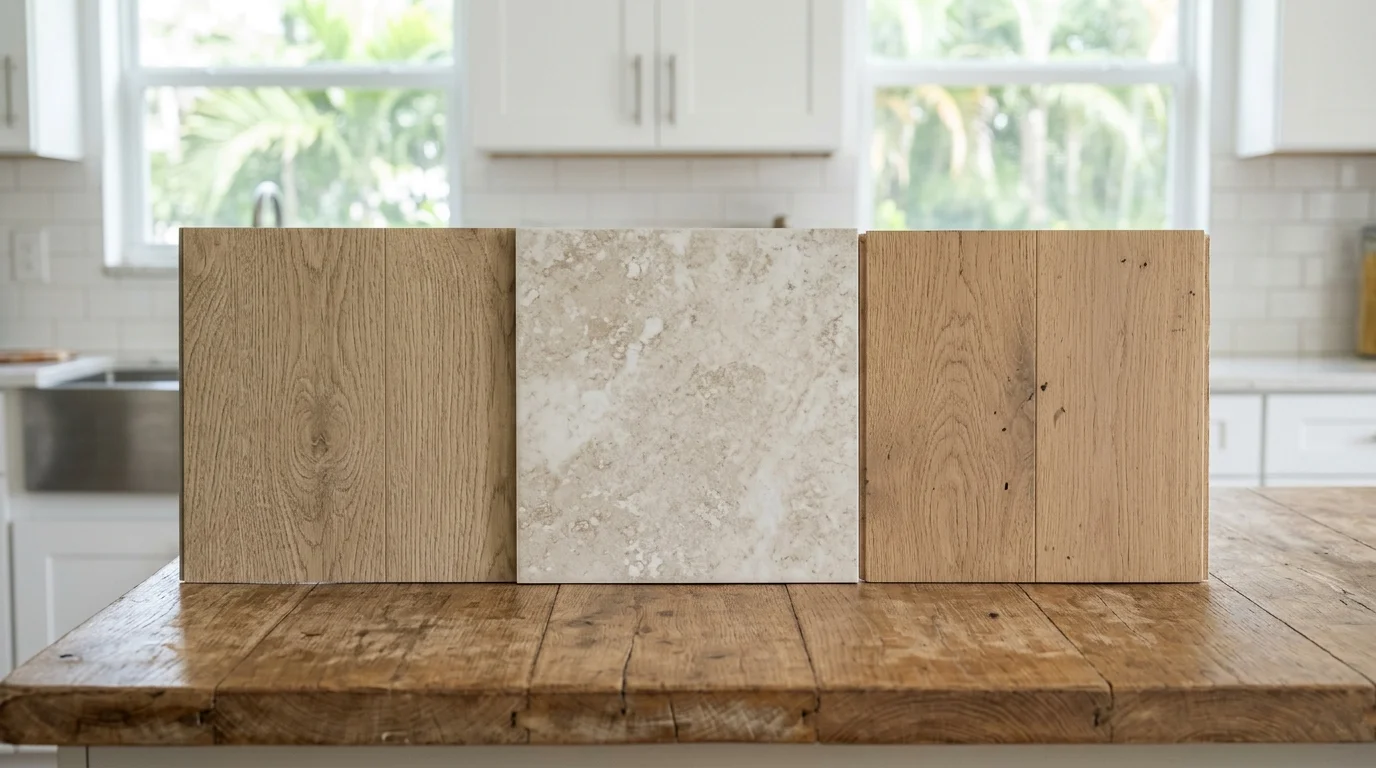
We get asked about hardwood flooring in every kitchen consultation. The honest answer: it's risky in Florida kitchens unless you understand the limitations and maintenance requirements.
Hardwood Pros:
- Timeless beauty and warmth
- Increases home value significantly
- Can be refinished multiple times
- Natural material appeals to many homeowners
- Comfortable underfoot
Hardwood Cons in Florida Kitchens:
- Expands and contracts with humidity changes
- Can cup, warp, or gap in extreme humidity
- Water damage from leaks can require full replacement
- Requires immediate cleanup of any spills
- Needs professional refinishing every 7-10 years
- Higher maintenance than other options
If you insist on hardwood in your Florida kitchen, we recommend engineered hardwood over solid wood. Engineered products handle humidity better due to their layered construction. Species like teak, Brazilian cherry, or bamboo perform better than oak or maple in humid conditions.
The kitchen island area sees the most water exposure from sinks and dishwashers. Consider using tile or LVP in high-risk zones while running hardwood in the rest of the kitchen. This creates visual interest while protecting your investment in moisture-prone areas.
Laminate Flooring: The Reality Check
Traditional laminate flooring performs poorly in Florida kitchens. We've replaced countless laminate floors damaged by humidity and water exposure. However, newer waterproof laminate options show promise.
Standard Laminate Cons:
- Particle board core swells when exposed to moisture
- Cannot be refinished or repaired
- Edges are vulnerable to water damage
- Can buckle in high humidity
- Looks obviously artificial compared to LVP
Waterproof Laminate Pros:
- Rigid core construction resists moisture
- Lower cost than LVP or tile
- Easy installation
- Good performance in controlled environments
Even waterproof laminate isn't as reliable as LVP or tile in Florida kitchens. The cost savings rarely justify the performance compromises. We recommend spending a bit more for quality LVP instead of gambling on laminate.
Cost Guide
Here's what you can expect to pay for kitchen flooring installation in Palm Beach County. Prices include materials and professional installation:
These costs assume standard installation over level subfloors. Add 20-30% for complex layouts, diagonal installations, or subfloor repairs. Kitchen remodel costs in Palm Beach County include flooring as a major component, typically representing 10-15% of the total project budget.
South Florida Considerations
Florida's unique climate and building requirements affect flooring choices in ways that don't apply to other regions. Here's what we account for in every flooring project:
Hurricane Preparedness: Hurricane-resistant materials matter for long-term durability. Tile and LVP handle flooding better than any wood product. We've seen homes in Wellington where tile kitchens survived flooding that destroyed hardwood in adjacent rooms.
HVAC Considerations: Florida homes run air conditioning year-round, creating temperature differentials that cause expansion and contraction. Materials like engineered hardwood and quality LVP handle these changes better than solid wood or cheap laminate.
Moisture Management: Proper ventilation and humidity control are essential. We recommend keeping indoor humidity between 30-50% year-round. Dehumidifiers may be necessary in some Palm Beach County homes during summer months.
Installation Timing: We schedule flooring installations during lower humidity periods when possible. Installing hardwood during August in Florida is asking for problems. October through April provides more stable conditions for installation.
Subfloor Preparation: Florida's concrete slab construction requires moisture barriers under most flooring types. We test concrete moisture levels before installation and use appropriate vapor barriers to prevent future problems.
When planning a complete kitchen renovation, flooring selection impacts other decisions. Countertop materials that handle humidity should complement your flooring choice. Similarly, cabinet styles for South Florida should work with your flooring's aesthetic and performance characteristics.
Maintenance Requirements: Florida's environment accelerates wear on all materials. Plan for more frequent cleaning and maintenance than you'd need in drier climates. Tile and LVP require minimal maintenance, while hardwood needs regular attention to prevent humidity damage.
Resale Value: Buyers in Palm Beach County understand Florida's climate challenges. Floors that obviously can't handle humidity become red flags during home sales. Invest in materials that perform well over time rather than choosing the cheapest option that might need replacement in 3-5 years.