Outdoor Kitchen Ideas for South Florida Homes
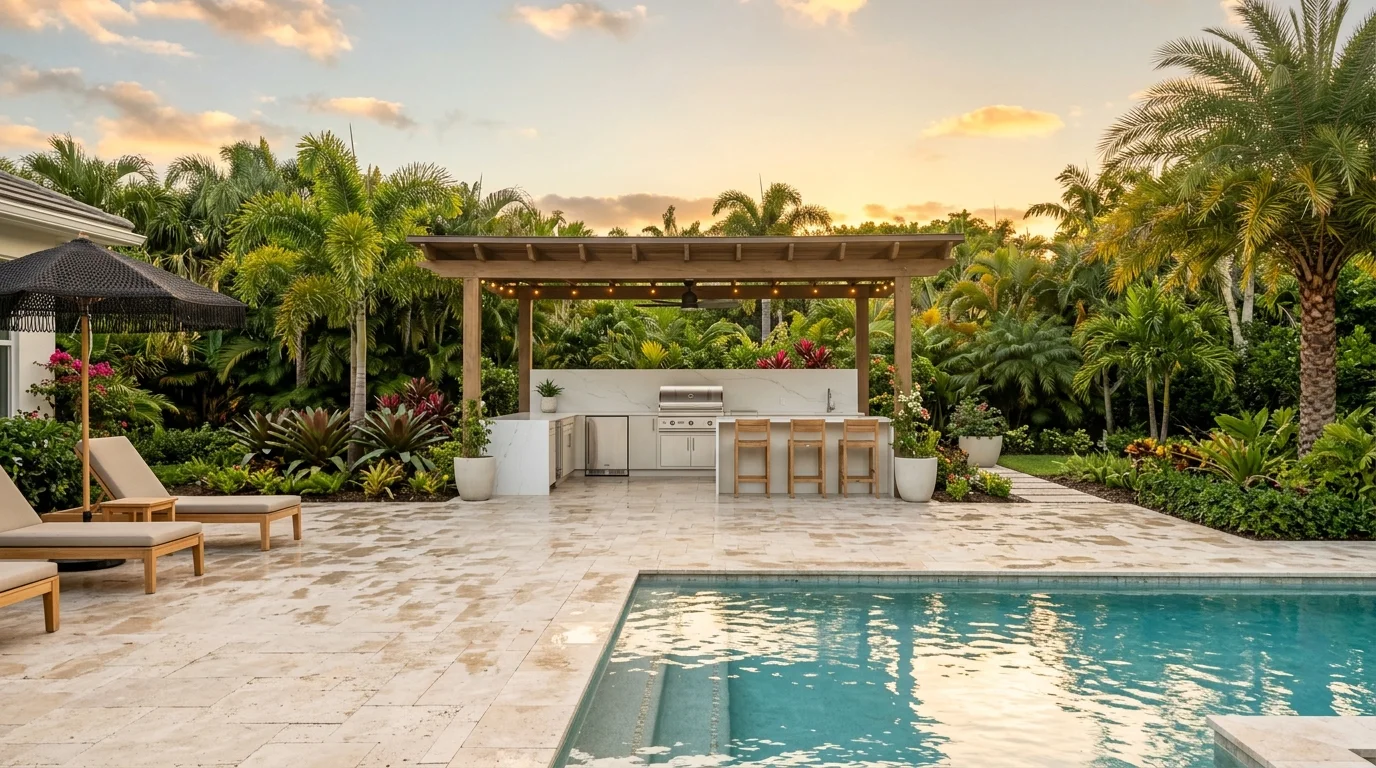
Outdoor kitchen ideas for South Florida homes look different than what you'll see in national design magazines. In Palm Beach County, we cook outside year-round. The climate makes it practical in a way that just isn't true in most of the country. Done right, an outdoor kitchen becomes one of the most-used spaces in your home, not a seasonal feature you break out three times a summer.
We've built outdoor kitchens across Boca Raton, Delray Beach, Wellington, Jupiter, and Palm Beach Gardens for nearly 20 years. What works here is specific to this climate: salt air near the coast, intense UV, humidity that never really drops, and hurricane season that demands you build with permanence in mind. This guide covers what we actually recommend, what we steer clients away from, and what it costs to do it right in this market.
Why Outdoor Kitchens Make Sense in South Florida
The math on an outdoor kitchen is different here than anywhere else in the country. Most homeowners in Palm Beach County can use their outdoor space 10 to 11 months out of the year. The only real pause is during peak summer heat in July and August, and even then, evenings are pleasant. That kind of year-round utility changes the ROI calculation significantly.
South Florida buyers actively look for outdoor living spaces. A well-built outdoor kitchen with a covered lanai, solid appliances, and quality finishes adds tangible value at resale in ways that a lot of interior upgrades don't. Agents in Boca Raton and Palm Beach Gardens consistently tell us it's one of the features that moves homes faster, especially in the $600K–$1.2M range where buyers expect a complete outdoor living experience.
There's also the entertainment factor. South Florida culture revolves around outdoor gatherings. A kitchen that lets you cook and host without going back inside changes how you use your home. We see clients use their outdoor kitchens far more than they expected, and almost none of them regret the investment.
Materials That Survive Florida Weather
This is where most outdoor kitchen projects go wrong. Homeowners choose materials based on how they look at installation, not how they perform after two years of Florida sun, salt air, and humidity. Here's what holds up and what doesn't.
Countertops: Porcelain slab is our top recommendation for South Florida outdoor kitchens. It's UV-stable, fully non-porous, and handles direct sun and rain without fading, cracking, or absorbing moisture. Brands like Dekton and Neolith specifically engineer their outdoor-rated slabs for high UV environments. Concrete countertops are a popular alternative with a more natural aesthetic, but they need proper sealing and resealing every 12–18 months in this climate. Avoid quartz outdoors. The resin binders will fade and discolor within two to three years of direct Florida sun exposure.
Cabinet frames and structure: Concrete block construction is the standard we use for permanent outdoor kitchen structures in Palm Beach County. It's moisture-proof, insect-resistant, and hurricane-rated when built to Florida Building Code. Steel-stud framing with cement board is a lighter alternative that works well for covered applications. Avoid wood framing outdoors in South Florida, even pressure-treated. The combination of ground moisture and heat will accelerate rot faster than most homeowners expect.
Finish materials: Large-format porcelain tile is the most practical exterior finish for the cabinet structure. It handles moisture, UV, and pressure washing without issue. Natural stone like travertine is beautiful but requires annual sealing. Stucco finishes are common and cost-effective but need repainting every five to seven years as the salt air breaks down exterior paint.
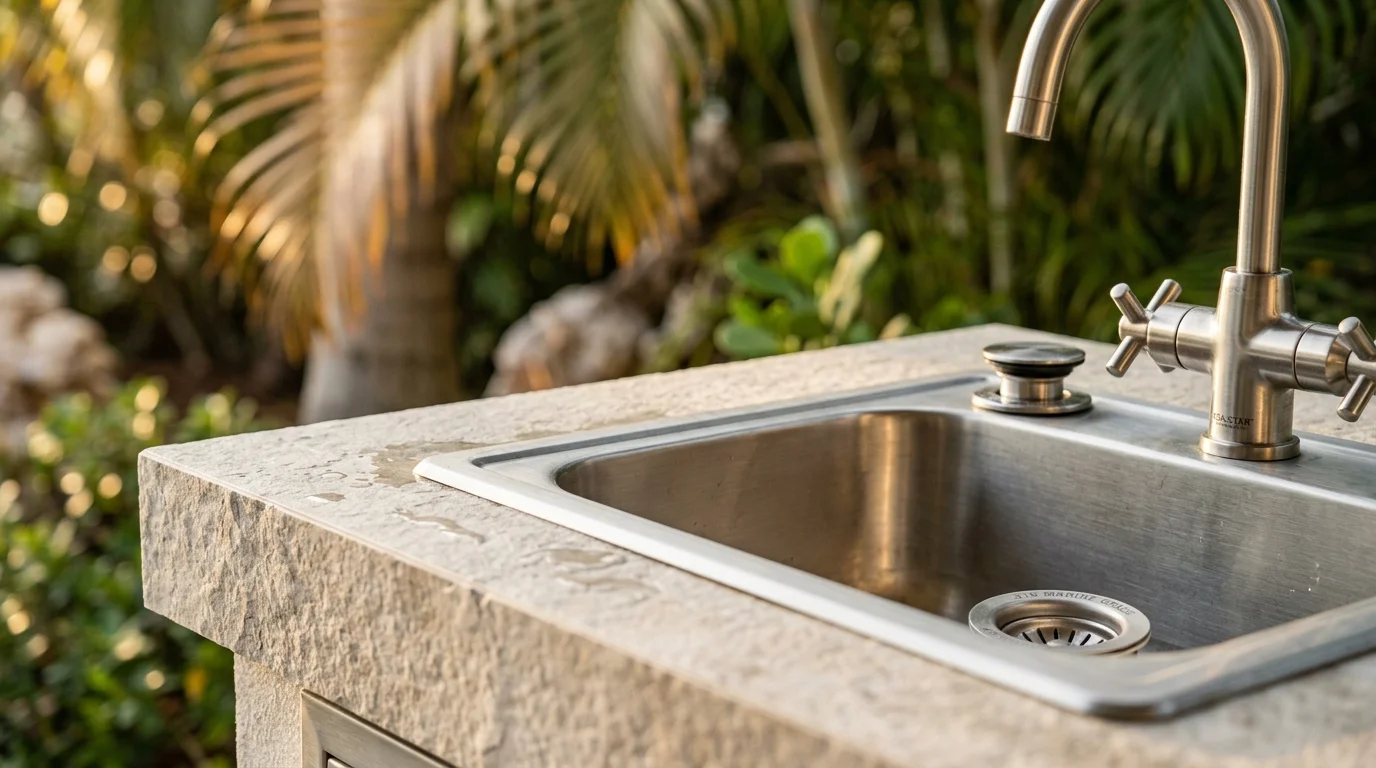
Hardware and fixtures: Marine-grade stainless steel (316 grade) is non-negotiable for any hardware within a few miles of the coast. Standard 304 stainless will corrode noticeably within a year or two in oceanfront homes in Palm Beach, Highland Beach, or Delray Beach oceanfront. Inland communities like Wellington or western Boca Raton have more flexibility, but we still spec 316 for anything client-facing.
Layout Ideas for Every Budget
The right layout depends on your space, how you entertain, and budget. Here are the three configurations we build most often across Palm Beach County:
The L-shape is what we build most often. It gives you enough counter space to cook a real meal, accommodates a sink and refrigerator without crowding the grill zone, and fits comfortably in the 15–20 ft lanai spaces typical of Palm Beach County homes built after 2000. The bar seating overhang on the return leg is a detail worth the extra cost — it turns the outdoor kitchen into a social space, not just a cooking station.
Appliances and Features Worth the Investment
Not every appliance upgrade makes sense for an outdoor kitchen in Florida. Here's our honest breakdown of what earns its cost and what we see clients underuse.
Built-in grill: This is the core of any outdoor kitchen. Budget $2,000–$5,000 for a quality 36-inch built-in grill rated for permanent outdoor installation. Lynx, Blaze, and Weber Summit are the brands we spec most often. Look for stainless burners with at least a 5-year warranty on the burner box — cheap grills corrode from the inside out within two years in humid Florida air.
Outdoor-rated refrigerator: Essential. Standard indoor mini-fridges are not rated for the ambient temperatures South Florida reaches in summer (often 95–100°F in a covered lanai). We spec units from Perlick, True, and Lynx that are rated for outdoor use at high ambient temps. Expect to spend $1,200–$2,500 for a quality 24-inch undercounter unit.
Sink with hot and cold water: Worth it if you're doing full meals outside. The plumbing adds cost ($1,500–$3,000 depending on distance from the home's water lines) but makes the outdoor kitchen genuinely self-sufficient for entertaining. Stainless single-basin undermount works best.
Side burner: Underused in our experience. Most clients who add a side burner use it rarely. If budget is a concern, skip it and add counter space instead.
Outdoor pizza oven: One of the more popular premium additions we're seeing in 2026, particularly in Wellington and Palm Beach Gardens. Built-in gas pizza ovens from brands like Alfa and Fontana Forni add a genuine wow factor and get used more than side burners. Budget $3,000–$6,000 installed for a quality unit.
Shade structure: Not optional in South Florida. An uncovered outdoor kitchen gets used a fraction as much as a covered one. A pergola, solid roof extension, or motorized louvered roof system dramatically increases usability and protects appliances and surfaces from direct rain. Hurricane-rated pergola systems from brands like StruXure start around $15,000 installed and are increasingly popular in Boca Raton and Delray Beach.
Permits and HOA Rules in Palm Beach County
This is the part of outdoor kitchen projects that surprises homeowners most. In Palm Beach County, an outdoor kitchen with any gas, electrical, or plumbing connections requires permits from the Palm Beach County Building Division. The specific permits depend on scope: gas lines require a mechanical permit, electrical work for lighting and outlets requires an electrical permit, and a plumbing permit is needed for any water connections.
For HOA communities, which covers a significant portion of homes in Wellington, Boynton Beach, Lake Worth, and Boca Raton, you'll need architectural review committee (ARC) approval before construction starts. This process typically takes two to six weeks depending on the HOA. We handle permit applications and ARC submissions as part of our project scope. Don't start construction before both are in hand.
One thing we hear often: "My neighbor built their outdoor kitchen without permits." That may be true. It's also a problem that surfaces at resale when the buyer's inspector flags unpermitted structures, or when an insurance claim gets denied because the structure wasn't up to code. We've seen outdoor kitchens that had to be partially demolished to pass retroactive inspection. Doing it right from the start is always cheaper than fixing it later. For more on this, see our guide on the real risks of remodeling without a permit in Palm Beach County.
Design Details That Make the Difference
After hundreds of outdoor kitchen builds across Palm Beach County, there are a handful of details that consistently separate well-used outdoor kitchens from ones that underperform.
Lighting matters more than most people plan for. String lights look great in photos but don't provide functional task lighting for cooking at night. We recommend recessed LED fixtures in the soffit above the cooking zone, under-counter LED strip lights for ambient fill, and pendant lights over any bar seating area. Use wet-rated fixtures throughout — Florida rain doesn't respect dry-rated specs.
Power outlets are almost always underspecced on the first pass. Plan for outlets every 36 inches along the counter run, a dedicated 20-amp circuit for the refrigerator, and a GFCI outlet near the sink. If you add a TV (increasingly popular for sports viewing), plan a dedicated circuit and a weatherproof enclosure. Running conduit after the structure is built is expensive.
Drainage is easy to overlook. The grill zone and prep area will get wet from rain and cleaning. Make sure the floor slopes away from the structure, and that any countertop seams are properly caulked with an outdoor-rated silicone. Water sitting against the cabinet base is one of the most common causes of premature deterioration in outdoor kitchens.
Counter height and depth: standard outdoor kitchen counters are 36 inches high, matching indoor kitchens. The depth varies by application. Cooking zones need a minimum of 24 inches of depth to accommodate built-in appliances; bar seating overhangs should provide 12–15 inches of knee space below and 10–12 inches of overhang above the standard counter height. If you're integrating bar stools, spec the overhang before finalizing your layout.
If you're planning a full kitchen renovation alongside your outdoor build, consider coordinating the design language. Matching your outdoor kitchen's materials and colors to the interior creates a cohesive flow from the inside kitchen to the lanai, a detail that photographs well and reads as intentional design rather than two separate projects bolted together.