4-Inch vs Full-Height Backsplash: Which Is Right for Your Kitchen?
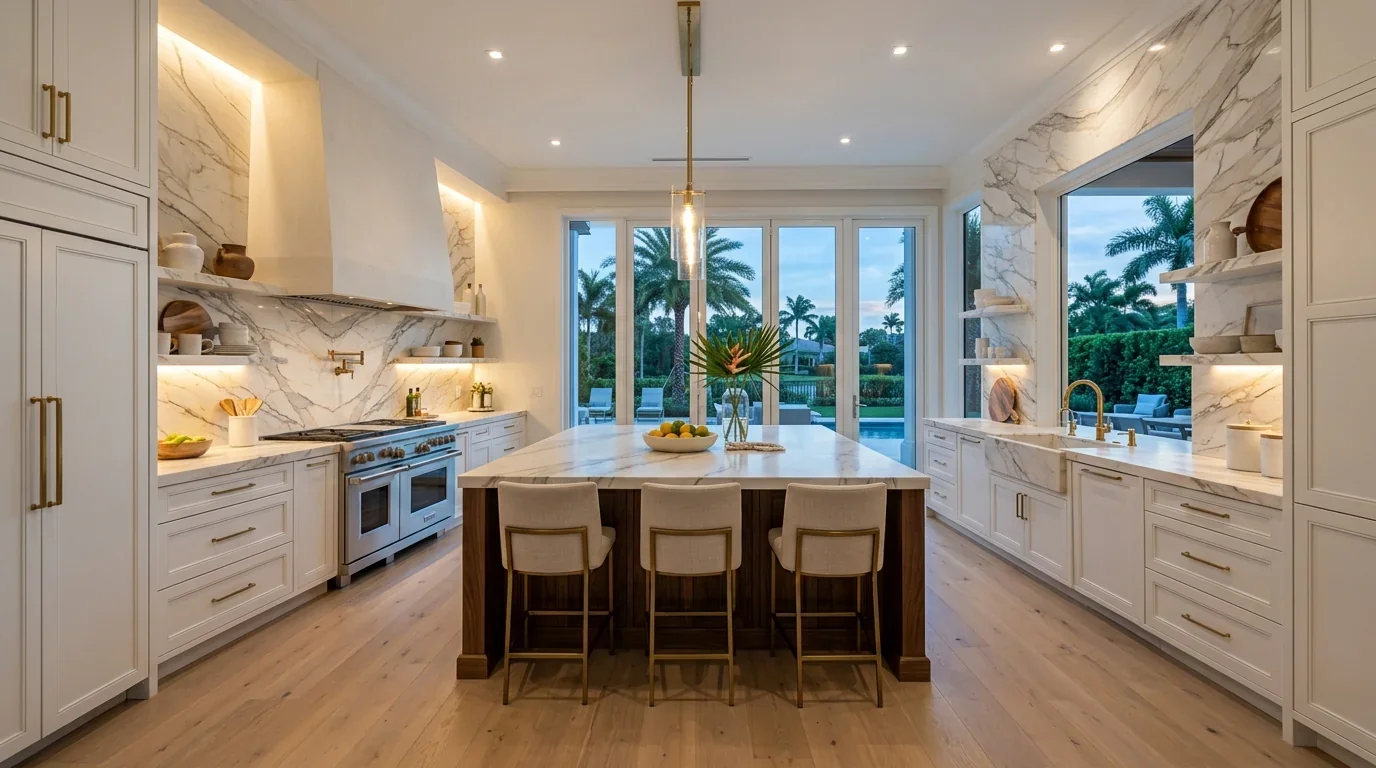
The 4-inch vs full-height backsplash question is the single most common design decision our Palm Beach County clients stall on. It feels minor until you realize it drives about $1,000 to $3,500 of budget, changes the whole look of the kitchen, and is difficult to change later without tearing out countertops. Here is what we tell clients after 5,000+ kitchens.
There is no universally correct answer. There is a right answer for your kitchen layout, budget, and style. The goal of this article is to help you figure out which you are.
What Each Option Actually Is
The terminology gets used loosely, so let us define it clearly.
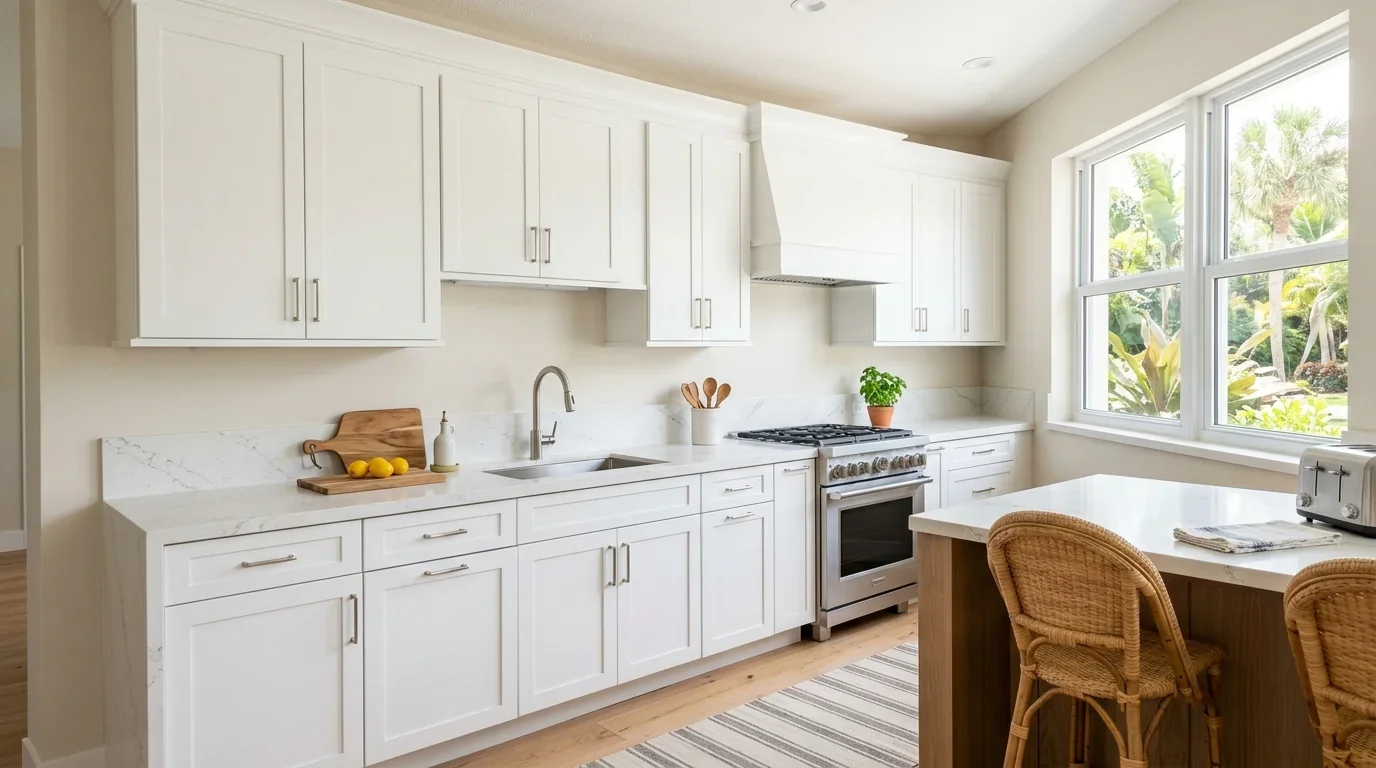
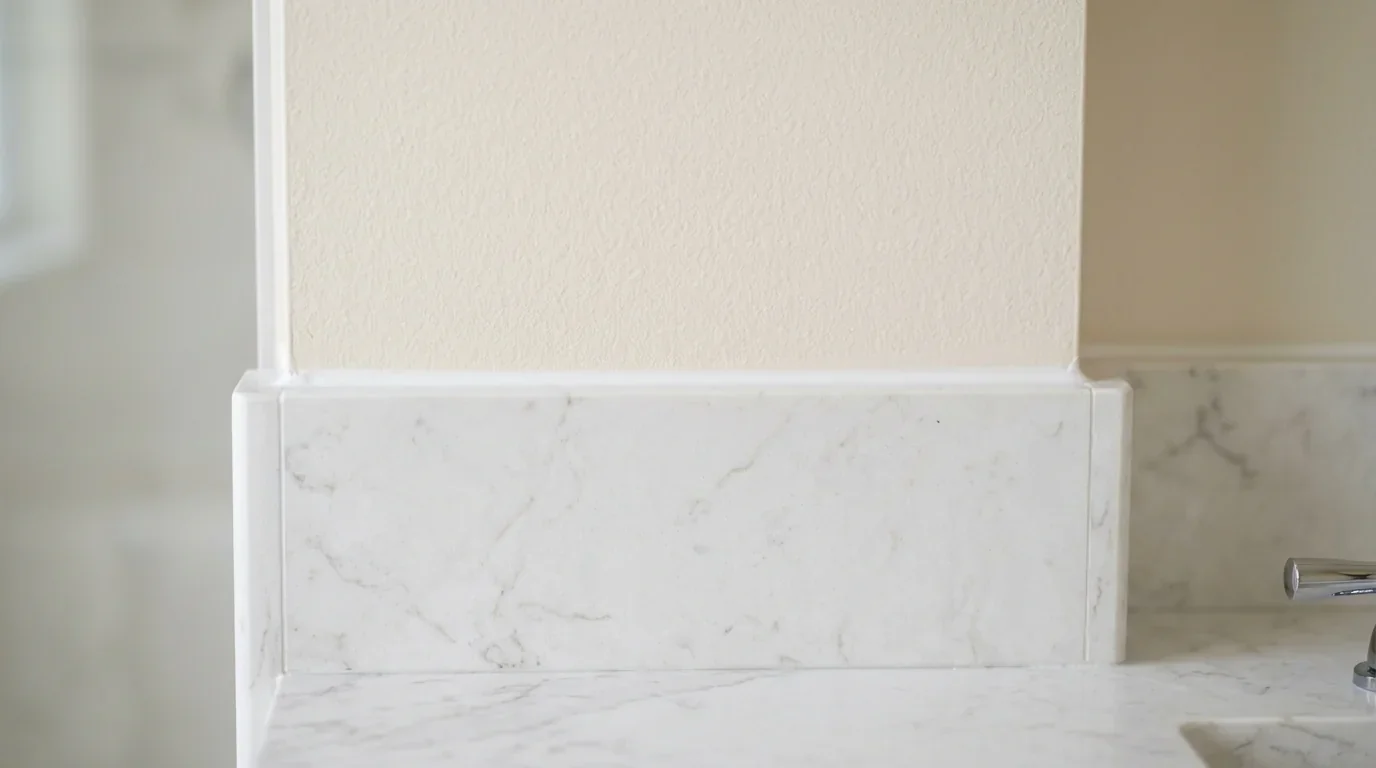
4-inch backsplash (sometimes called standard backsplash, stone backsplash, or just short backsplash): A strip of the same stone as your countertop, running 4 inches up the wall behind the counter. It is fabricated from the same slab as the countertop, so the seams and veining match. Height is usually exactly 4 inches, occasionally stretched to 6 inches.
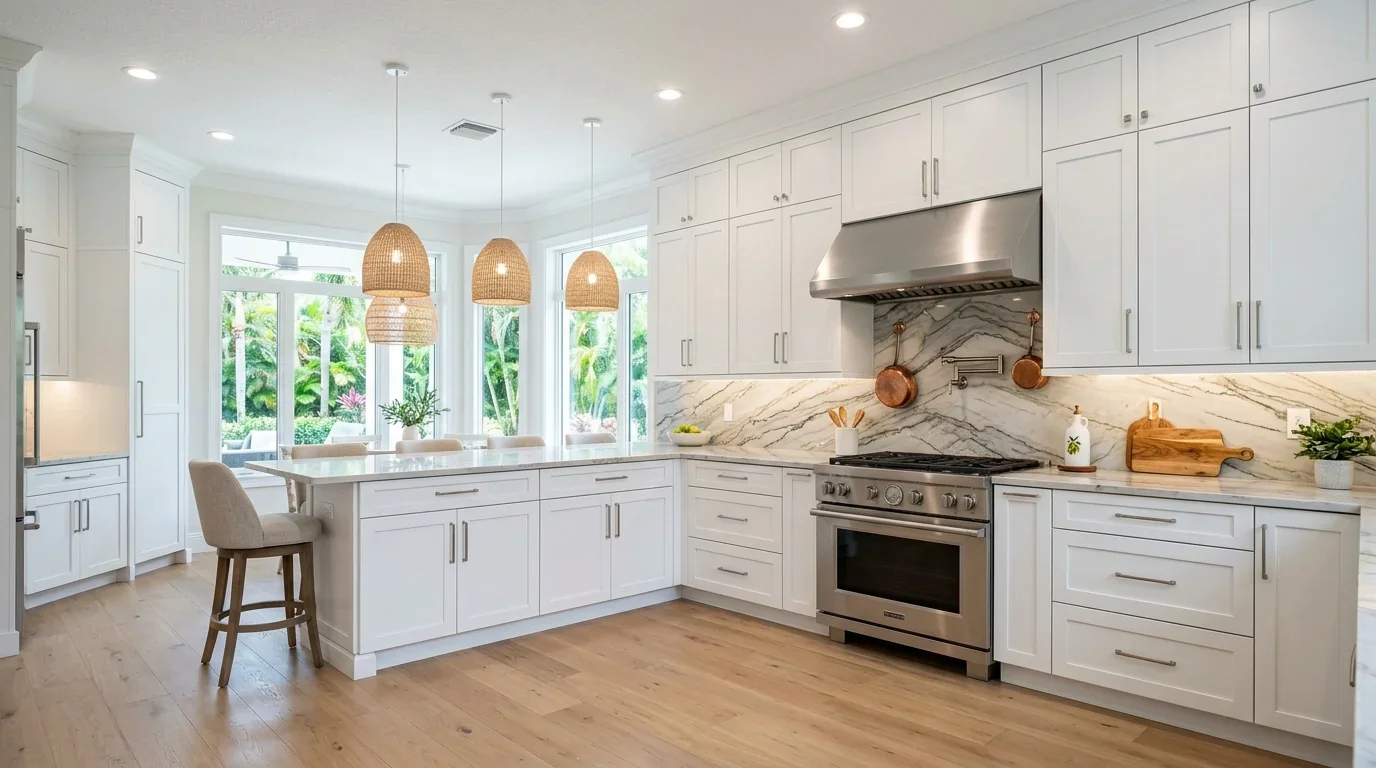
Full-height backsplash: Stone, tile, or another material that runs all the way from the countertop to the bottom of the upper cabinets (usually 18 inches) or all the way to the ceiling on walls without uppers. Can be a single slab of matching stone, a contrasting stone slab, or tile.
No backsplash (less common but trending in modern designs): Countertop meets drywall with a small caulk joint, then drywall gets painted the wall color. Looks clean in contemporary kitchens but offers zero spill protection.
See the difference
Here is the same kitchen layout with each backsplash height, so you can see how the choice changes the feel of the room.
Cost Comparison for Palm Beach County
Pricing varies with stone selection, but these are the ranges we see most often on Palm Beach County kitchens in 2026.
A 4-inch backsplash is nearly free as a line item because the fabricator includes it in the slab price, you are essentially paying for cutting and polishing a strip of scrap. A full-height slab backsplash is the opposite extreme: it requires a second full slab (often the most expensive part of the kitchen), specialized transport for a 9-foot piece of stone, and two crew members to install without cracking it.
For a full look at what is driving your overall countertop budget, see our Palm Beach County kitchen remodel cost breakdown.
Protection and Maintenance
Protection is where the short vs tall debate gets real. Backsplashes exist because drywall and wood cabinets hate water, oil, and food acids. The question is how much protection you actually need.
A 4-inch backsplash handles everyday countertop splashes, water near the sink, coffee drips, cutting-board spatter. It does not handle anything that flies above 4 inches. If you cook with a high-heat skillet, deep fry, sauce heavily, or have kids who treat the stand mixer like a tornado, you will have oil and tomato splatter on the drywall within a year.
A full-height backsplash behind the range and behind the sink handles everything. Oil, grease, pasta water, berry smoothies, nothing touches drywall. In Palm Beach County's climate, that matters more than people realize: any moisture trapped behind drywall in a humid kitchen is a mold risk, especially on coastal homes east of I-95.
The hybrid everyone forgets: a 4-inch backsplash everywhere except behind the range, where you do a full-height slab or tile zone. This protects the one place that actually gets abused without the budget of a full kitchen of tall backsplash. It is the most common recommendation we make.
When to Pick Each Height
Here is how we decide with clients during the design meeting.
Pick 4-inch when…
- Budget is tight and you need to save $2,000 to $5,000 somewhere
- You want to hang open shelving or art on the wall between counter and uppers
- You have a strong countertop stone (quartzite, bold marble) that does not need to extend upward to make its statement
- You are in a rental or flip where durability upgrades are wasted money
- Your kitchen has a lot of windows and minimal solid wall to fill
Pick full-height when…
- The wall is your visual focal point (range wall, hood wall, open-concept view)
- You cook heavily and want zero drywall cleanup
- You have a dramatic stone slab with veining that deserves full presentation
- The kitchen opens to a living area and the backsplash is visible from across the room
- You want to eliminate the visual break between counter and upper cabinets for a more custom look
Pick the hybrid (short everywhere + full behind range) when…
- You want protection where it matters but are budget-conscious elsewhere
- You have a statement range or hood and want it framed
- You like the clean look of matching stone everywhere without doubling the slab cost
What About Tile in the Middle?
Tile is the middle-ground option that sits between the 4-inch stone backsplash and a full-height slab. Tile at the standard 18-inch height (counter to upper cabinets) is the most common backsplash in Palm Beach County kitchens, for good reason, it lets you introduce a different material, color, or texture that complements the counter without trying to match it.
Our full breakdown of tile options, styles, and Palm Beach County pricing lives in the backsplash ideas guide. Short version: zellige for warmth, large-format porcelain for clean modern, subway in high-end finishes (hand-made, glazed, colored grout) when you want classic with personality.
One warning specific to South Florida's climate: tile grout absorbs moisture and is a classic mold vector in humid kitchens. Use epoxy grout on any backsplash in a coastal home and you eliminate that risk entirely. It costs about 15 to 20 percent more than standard grout and is worth every penny.
For additional context on how backsplash choices tie into the broader kitchen design, cabinet style, countertop pairing, layout considerations, the NKBA 2026 Kitchen Trends Report has good data on what is moving nationally, though coastal Florida tends to run ahead of national trends by 12 to 18 months.