How to Mix Knobs and Pulls on Kitchen Cabinets
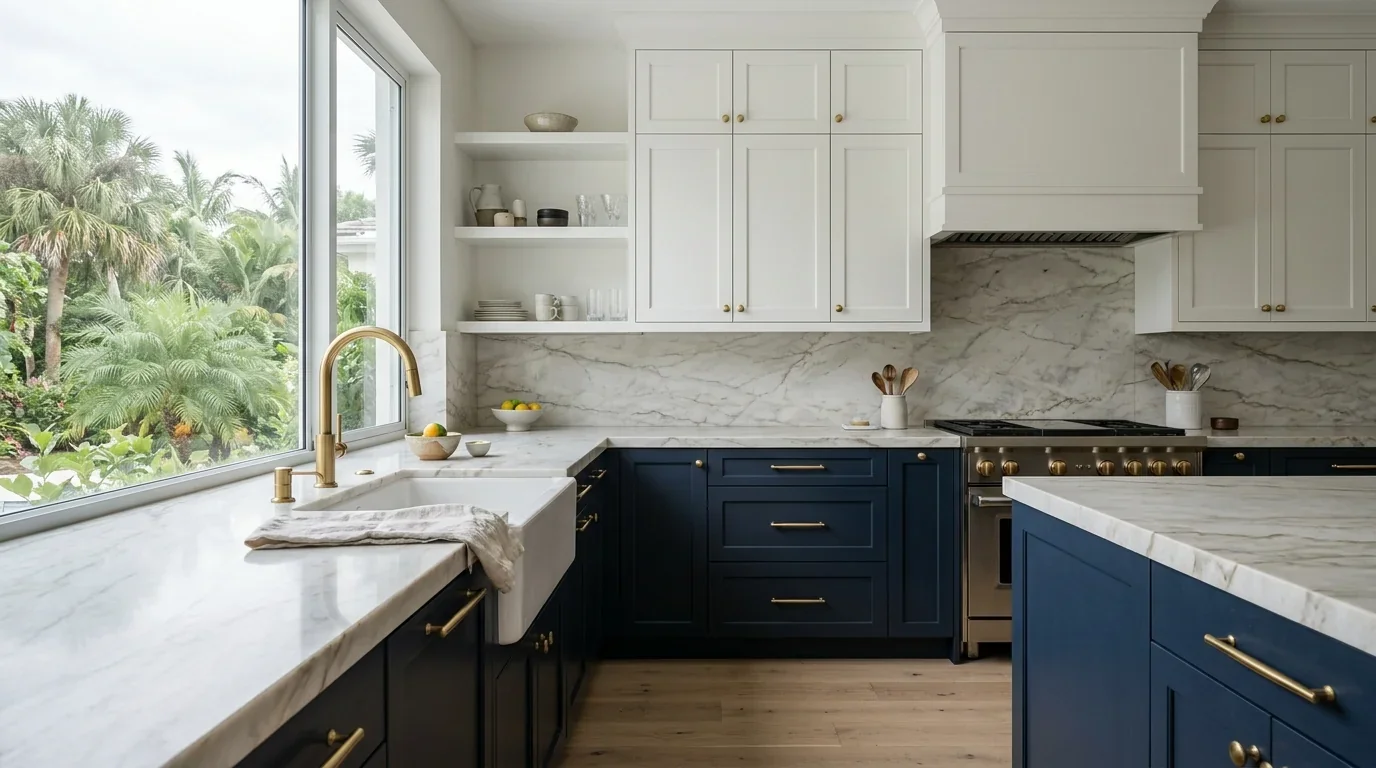
Mixing knobs and pulls on kitchen cabinets is one of the top hardware trends we are seeing in Palm Beach County kitchens right now. Done well, it adds visual interest and makes the kitchen feel custom rather than catalog. Done poorly, it looks like the homeowner ran out of one style and bought a second style to finish the job. The difference is a handful of rules you can apply in ten minutes.
We have installed mixed hardware on hundreds of kitchens from Boca Raton condos to Jupiter estate homes, and the jobs that come out looking intentional all follow the same playbook.
Why Mix Them at All?
Ten years ago, every kitchen in South Florida had the same hardware on every cabinet, usually a simple 3 inch bar pull in brushed nickel or oil-rubbed bronze. The look was consistent but also forgettable. Mixing knobs and pulls does two things: it breaks up the visual monotony of 30-plus identical handles, and it signals that someone actually thought about the design.
There is also a functional argument. Pulls are easier to grab when your hands are wet or full, which matters on drawers and bigger cabinet doors you open ten times a day. Knobs are fine on smaller upper doors and specialty cabinets you rarely touch. Putting the right hardware on the right cabinet is just better ergonomics.
The Three Rules That Keep It From Looking Random
These are the three rules we apply to every mixed-hardware kitchen. Break any one of them and the result reads as accidental.
Rule 1: One finish, period
Mixing shapes is sophisticated. Mixing finishes on top of shapes is visual chaos. If your pulls are brushed brass, your knobs are brushed brass. Not polished brass, not antique brass, not champagne bronze, the exact same finish from the exact same manufacturer, ideally from the same product line. Brass is the worst offender because there are 15 different brass finishes on the market and they all look almost identical in photos but nothing alike in person.
The only exception is an intentional accent. If you are doing two-tone cabinets and want the island hardware in a different finish than the perimeter, that is a deliberate choice and reads as one. Two finishes chosen on purpose can work. Three or more almost never does.
Rule 2: Pulls on drawers, knobs on doors (mostly)
The cleanest formula: every drawer gets a pull, every cabinet door gets a knob. This gives you a clear rhythm across the kitchen because drawers and doors are already visually different elements. The pulls emphasize the horizontal motion of the drawers; the knobs act as punctuation on the doors.
The one exception: large cabinet doors over 36 inches tall, like pantry cabinets or tall appliance garages, usually get pulls rather than knobs. A knob on a 40 inch tall door looks undersized and is awkward to grab.
Rule 3: Keep scale proportional
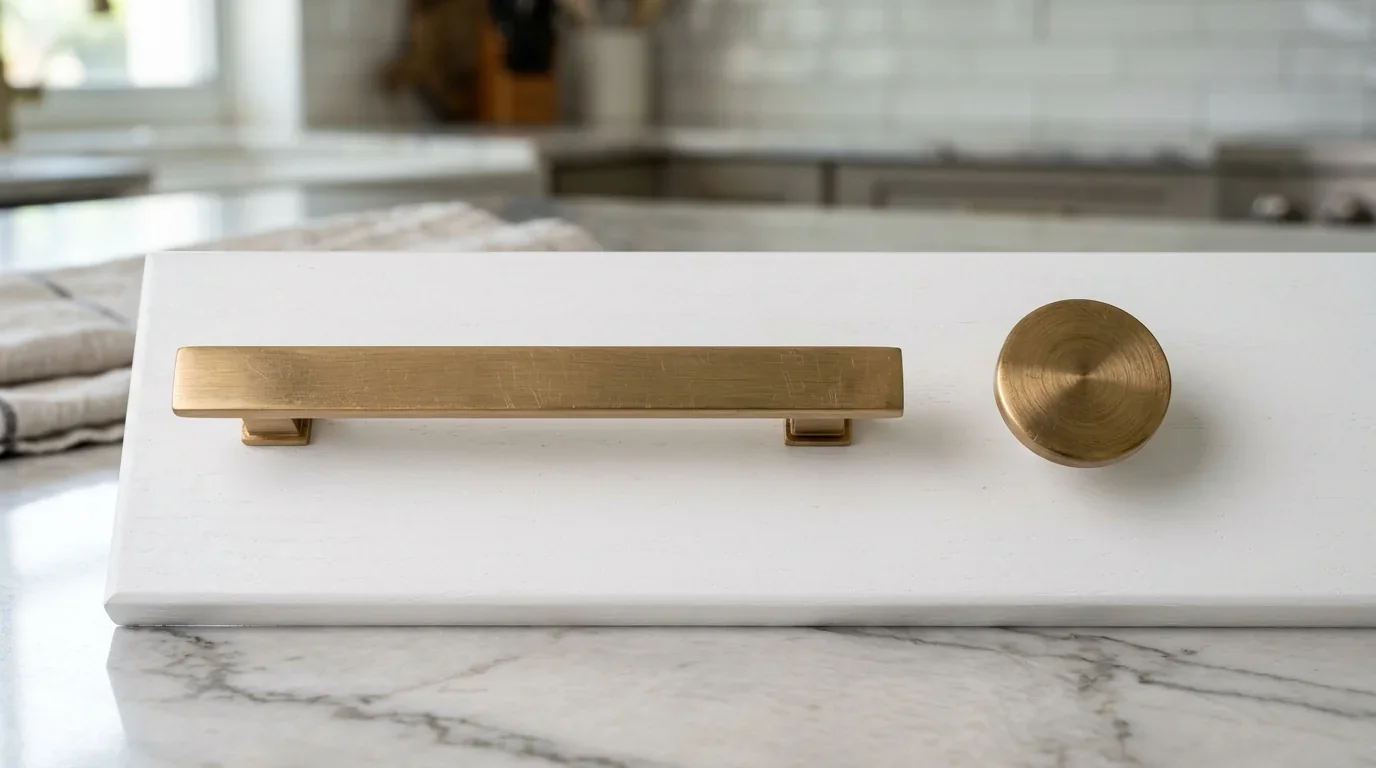
A chunky round 1.5 inch knob paired with a slim 4 inch flat tab pull will look mismatched even if the finish is identical. When you are picking hardware, look at the visual weight of each piece, the metal mass, not just the dimensions. A beefy pull wants a beefy knob. A slim modern pull wants a small, refined knob. Order samples of both and set them next to each other on a cabinet door sample before you commit.
The Placement Formula That Works Every Time
Once you have picked the hardware, placement determines whether it looks custom or chaotic. Here is the formula we use on every mixed install:
- Drawers: Single pull centered on drawers under 24 inches wide. Two pulls at one-third intervals on wider drawers.
- Upper cabinet doors: Knob centered 2.5 to 3 inches up from the bottom corner, opposite the hinge.
- Base cabinet doors: Knob centered 2.5 to 3 inches down from the top corner, opposite the hinge.
- Tall pantry or appliance doors: Long pull (8 to 12 inches), centered vertically on the stile, opposite the hinge.
The horizontal line formed by the pulls across your base cabinets and the horizontal line formed by the knobs across your uppers should feel parallel even though they sit at different heights. That visual harmony is what makes a mixed kitchen read as intentional. For a deeper dive on the exact measurements, see our complete hardware placement guide.
Finish Combinations That Work (And Ones That Do Not)
Within the one-finish rule above, you still have to pick which finish. Here is what we see working in Palm Beach County kitchens right now and what to avoid.
For specific hardware brands that hold up in humid South Florida kitchens, our supplier list covers the local distributors we use most often. Buy solid brass or stainless steel, not plated zinc, coastal air will pit the plating within five years.
Common Mistakes in Mixed-Hardware Kitchens
These are the four mistakes we get called to fix most often after someone else did the install:
Pulls on every door and drawer. Technically uniform, but boring. You lose the entire point of mixing. If you want uniformity, pick one hardware type and stick with it, that is a clean look too. Mixing is only worth doing if the mix actually shows up.
Knobs on drawers. Knobs on drawers look strange because the motion of opening a drawer wants a horizontal pull. A small knob in the center of a big drawer reads as a button, not a handle.
Two finishes on the same cabinet run. We have seen kitchens where the uppers get brass and the lowers get black in the same line of cabinetry. It does not read as intentional, it reads as running out of brass halfway through the job. If you are doing two finishes, separate them by room zone (island vs perimeter) or by cabinet section (tall pantry run vs main work zone).
Mixing the style of knobs or pulls within the same category. One knob style, one pull style. If you pick a modern flat-bar pull and a vintage glass knob, they will fight even if the finishes match. Pick one design era and stay in it.
When a client is doing a cabinet refacing project or even a light budget refresh, new hardware is usually the single highest-impact upgrade per dollar spent. Get it right and the whole kitchen reads as custom. Get it wrong and it reads as the one thing nobody thought about.