Kitchen Peninsula vs Island: Which Works for Your Layout?
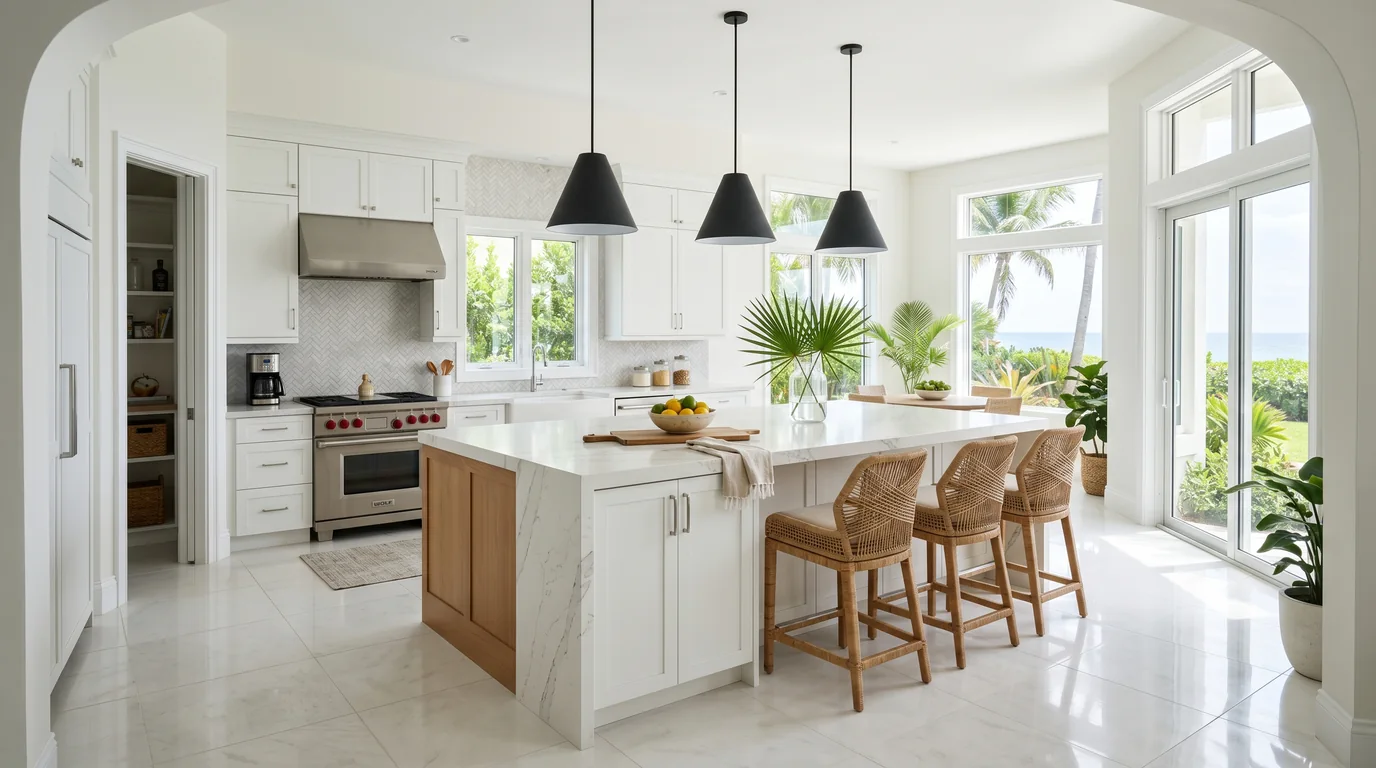
The kitchen peninsula vs island debate comes up in nearly every Palm Beach County kitchen remodel we design. Both options add counter space, storage, and seating, but they serve different purposes and work better in different layouts. We see homeowners struggle with this choice because the wrong decision can kill your kitchen's flow and functionality.
Here's the truth: most kitchens can't accommodate both options well. You need to pick one based on your space, budget, and how your family actually uses the kitchen. After designing hundreds of kitchens across Boca Raton, Delray Beach, and Wellington, we know which layout works where.
Space Requirements: Peninsula vs Island
Space dictates everything in kitchen layout planning. A peninsula needs less room because it's attached to existing cabinetry or walls. An island requires clearance on all sides.
For peninsulas, you need minimum 36 inches of clearance on the open side, 42 inches if multiple people cook together. The peninsula itself typically measures 24 inches deep, same as your base cabinets.
Islands demand more space. You need 42-48 inches of clearance on all sides for proper traffic flow. That means your kitchen needs to be at least 13 feet wide to accommodate a 3-foot island with proper clearances.
We recommend measuring your kitchen before falling in love with either option. Many Palm Beach County homes from the 1980s and 1990s have galley or L-shaped kitchens that work better with peninsulas than islands.
Functionality & Traffic Flow
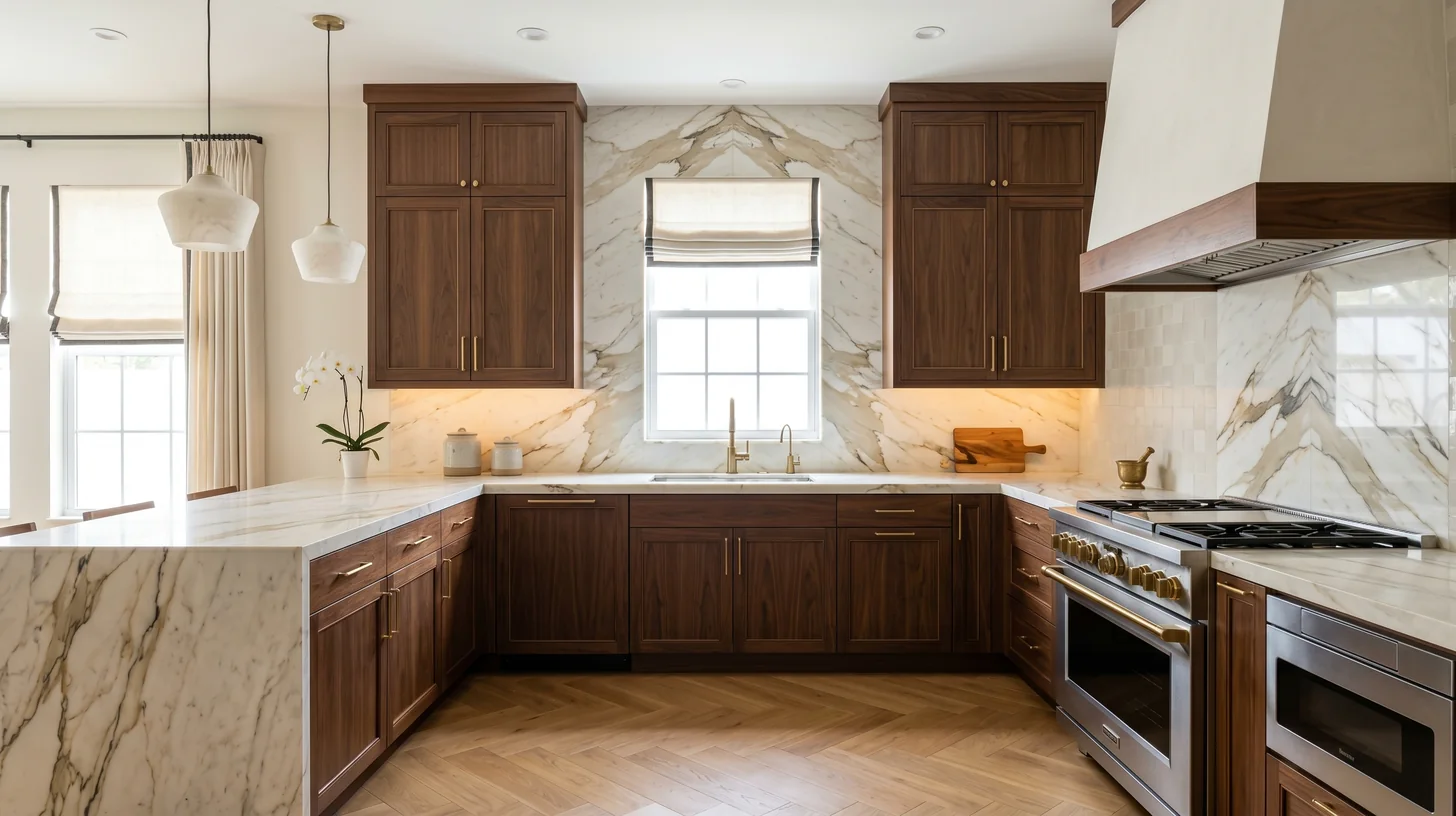
Peninsulas create defined zones while maintaining connection between kitchen and adjacent rooms. They work well as breakfast bars or room dividers between kitchen and family room. The attached design means you can run utilities easily, electrical, plumbing, and gas lines connect through existing cabinetry.
Islands provide 360-degree access, making them better for serious cooking. Multiple people can work around an island without bumping into each other. Islands also create natural gathering spots, people gravitate toward them during parties and family time.
Traffic flow differs significantly. Peninsulas direct foot traffic around the perimeter, which can create bottlenecks in narrow kitchens. Islands allow traffic to flow around them, but poorly placed islands become obstacles.
We design peninsula workflows using the kitchen work triangle principle. Islands let us create multiple work zones, prep area on one side, cleanup on another.
Seating & Storage Comparison
Seating differs between peninsulas and islands. Peninsulas typically offer seating on one side only, usually 2-4 stools depending on length. The attached side houses cabinets or appliances.
Islands can provide seating on multiple sides. A 7-foot island might seat 3-4 people comfortably. Larger islands accommodate 6+ seats, making them ideal for families who eat breakfast at the kitchen counter.
Storage capacity depends on design. Peninsulas offer storage on one side, usually base cabinets with drawers. Islands provide storage on multiple sides, potentially doubling your cabinet space.
Both options can house appliances. We've installed dishwashers, wine coolers, and warming drawers in peninsulas and islands. Islands offer more flexibility for appliance placement because of 360-degree access.
When to Choose a Peninsula
Choose a peninsula when your kitchen measures less than 150 square feet. Peninsulas work better in galley, L-shaped, and U-shaped layouts where space is tight. They're ideal for condos and townhomes common in Boca Raton and Delray Beach.
Peninsulas make sense when you want to separate kitchen from living areas without walls. They create visual boundaries while maintaining open sight lines, perfect for parents who want to watch kids while cooking.
Budget-conscious homeowners often prefer peninsulas. They require fewer materials and less complex installation than islands. Utility connections are simpler because the peninsula attaches to existing cabinetry.
We recommend peninsulas for single-cook households. If one person does most of the cooking, the linear workflow of a peninsula makes more sense than the 360-degree access of an island.
When to Choose an Island
Islands work best in kitchens over 200 square feet with adequate clearance space. They excel in open-concept layouts where the kitchen flows into living and dining areas. Many newer homes in Wellington and Jupiter feature floor plans designed around kitchen islands.
Choose an island if multiple family members cook together. Islands provide multiple work zones and prevent the cook-traffic jams common with peninsulas. They're essential for households that entertain frequently.
Islands offer maximum flexibility for cabinet storage and seating arrangements. You can configure them as prep stations, breakfast bars, or combination units with sinks and cooktops.
Consider an island when your kitchen lacks a natural gathering spot. Islands become command centers where families congregate, kids do homework, and guests chat during parties.
Cost Guide
Peninsula and island costs vary based on size, materials, and features. Here are typical ranges for Palm Beach County projects:
Islands cost more because they require additional structural support, more materials, and complex utility runs. Electrical and plumbing for islands involves running lines through the floor, more expensive than connecting to adjacent cabinetry like peninsulas.
Countertop material significantly impacts cost. Quartz runs $60-90 per square foot installed. Natural stone ranges from $50-120 per square foot depending on the material.
South Florida Considerations
South Florida's humid climate affects peninsula and island design. We recommend humidity-resistant materials for both options. Solid wood can warp in our climate, engineered wood or painted finishes perform better.
Hurricane preparedness matters for kitchen design. Islands and peninsulas should be properly anchored to withstand high winds if windows fail. We secure all cabinetry to floor joists, not just subflooring.
Open-concept layouts popular in Palm Beach County homes work well with both peninsulas and islands. The key is choosing the right scale. Oversized islands can overwhelm smaller living spaces common in coastal condos.
Air conditioning efficiency improves with proper kitchen layout. Islands create better airflow than peninsulas in open floor plans. The 360-degree clearance allows AC to circulate more effectively.
Many gated communities have architectural guidelines affecting kitchen design. HOAs in Wellington and Jupiter often require approval for structural changes. Islands typically need permits; peninsulas might not.
Resale value considerations differ between peninsulas and islands. Islands generally add more value because they appeal to more buyers. However, the wrong island in a small space can hurt resale value.
Converting a Peninsula to an Island
One of the most common requests we hear in Palm Beach County remodels is turning an existing peninsula into a freestanding island. It's appealing because it opens up traffic flow and modernizes an older layout, but it's rarely a simple swap. The peninsula's base usually carries plumbing and electrical that were run through the connected wall or cabinet run, and freeing the island means rerouting those lines under the slab.
On a slab foundation, which most of our homes sit on, that rerouting is the part that drives the cost and the timeline. Running a new sink drain or a circuit to a standalone island means cutting and patching concrete, then passing inspection before the floor goes back down. We always check what's living inside the peninsula before quoting the conversion, because a peninsula that holds only cabinets is a far cheaper change than one with a sink and outlets.
The payoff can be worth it. A well-placed island gives you walk-around access, more seating, and the open sightlines buyers want. Just go in knowing it's a real remodel rather than a furniture change, and make sure the room is genuinely large enough to keep our recommended clearances on all four sides once the peninsula is gone.