Small Kitchen Island Ideas for Palm Beach County Homes
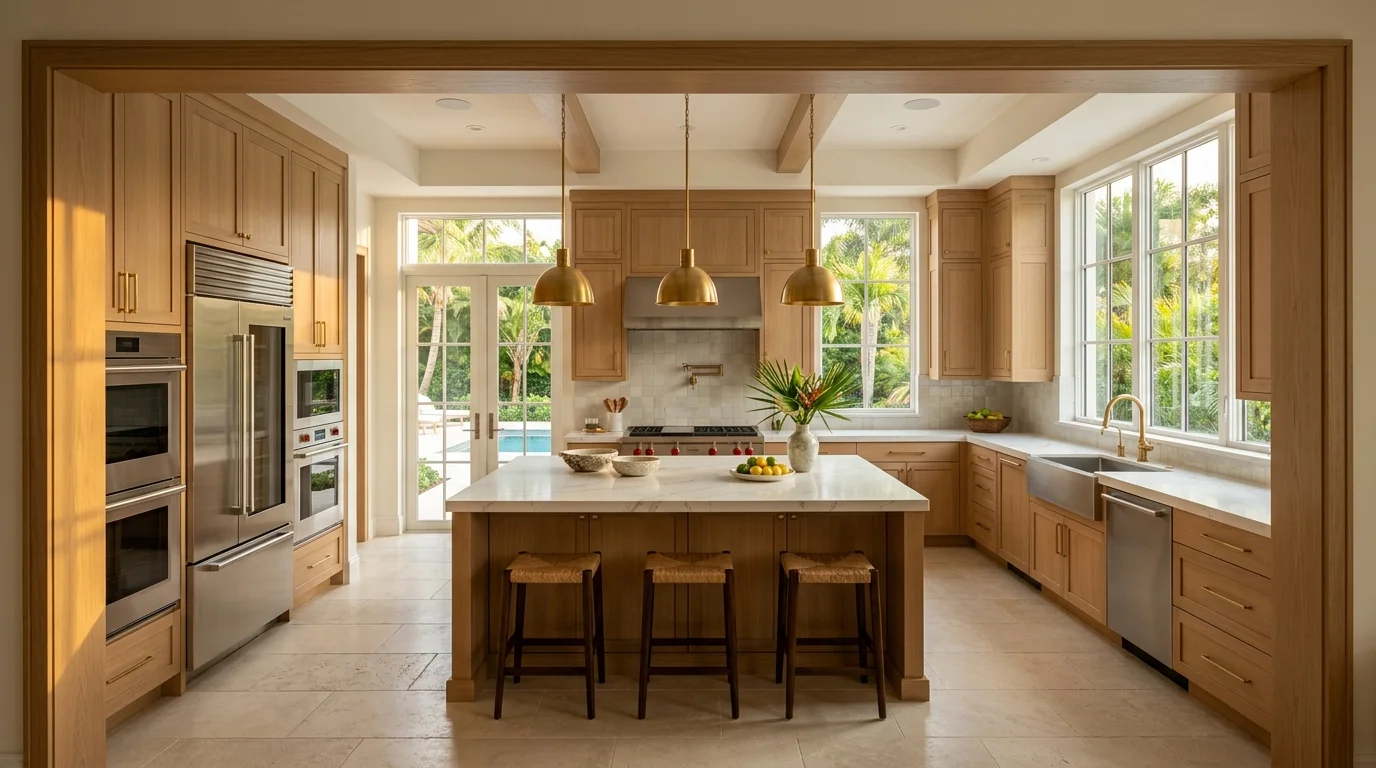
Finding the right small kitchen island ideas for Palm Beach County homes requires understanding both space limitations and Florida's unique lifestyle. Most condos in Boca Raton and townhomes in Wellington feature kitchens under 150 square feet, yet homeowners still want the functionality and style an island provides. After working on hundreds of kitchen projects across South Florida, our team has identified specific island solutions that work beautifully in compact spaces.
The key isn't just making an island smaller, it's choosing the right type for your specific layout and needs. Some kitchens benefit from portable islands that move when needed. Others work better with narrow, fixed islands that maximize prep space without blocking traffic flow.
We see three main categories of small islands that consistently work well in Palm Beach County homes: portable options for maximum flexibility, narrow designs for tight galley layouts, and storage-focused islands that replace the need for additional cabinetry.
Portable Island Options
Portable kitchen islands solve multiple problems for small spaces. They provide extra prep surface when cooking, then roll away for parties or daily traffic flow. Our team recommends portable islands for kitchens under 120 square feet or homes where the kitchen serves as a main thoroughfare.
The best portable islands feature locking wheels, solid wood tops, and built-in storage. We often specify 36-inch wide units with butcher block tops, they're substantial enough for serious cooking but mobile enough to relocate easily. Many include wine storage, spice racks, or towel bars that add functionality without bulk.
For Delray Beach condos with galley layouts, we've installed portable islands that nest partially under existing counters when not in use. This creates prep space without permanently reducing floor area. The trick is choosing units with the right height, typically 36 inches to match standard counter height.
Rolling carts with multiple levels work well for homeowners who entertain frequently. The top level serves as prep space during cooking, while lower shelves hold serving pieces or beverages during parties. After guests leave, the entire unit rolls into a pantry or garage.
Narrow Island Designs
Fixed narrow islands work when you want permanent counter space but can't accommodate a full-width island. We typically build these 18-24 inches deep versus the standard 36 inches. This provides meaningful prep space while maintaining 36-inch walkways on both sides.
The most successful narrow islands we've installed feature waterfall countertops that extend to the floor on one end. This creates visual weight that makes the island feel more substantial than its actual footprint suggests. Choosing the right countertop material becomes critical, you want something that photographs well and feels premium despite the reduced size.
Length matters more than width for narrow islands. A 24-inch deep by 8-foot long island provides more usable space than a 36-inch deep by 5-foot long version in most layouts. The extended length creates room for bar seating on one side while maintaining prep space on the other.
We often incorporate electrical outlets every 4 feet along narrow islands. This allows small appliances to move along the length as needed, coffee maker in the morning, food processor during meal prep, laptop during the day.
Storage-Maximizing Islands
When floor space is limited, every square inch must work harder. Storage-focused islands can replace entire pantry cabinets while providing prep surface and seating. Our team designs these with deep drawers, pull-out shelves, and specialized storage for specific items.
The most effective storage islands feature full-extension drawer slides and soft-close hardware. Shallow drawers at counter height hold utensils and gadgets, while deep drawers below accommodate pots, pans, and small appliances. Corner storage with lazy susans maximizes access to awkward spaces.
For Jupiter waterfront condos where entertaining is frequent, we've built islands with built-in wine refrigeration and glassware storage. The island essentially becomes a compact bar that doesn't require a separate wet bar area. Ice makers, beverage refrigerators, and stemware storage all fit within a 4-foot island footprint.
Vertical storage extends the island's capacity without increasing floor area. Tall cabinet sections can house brooms, ironing boards, or fold-out step stools. Open shelving at the top displays decorative items while keeping everyday dishes within reach.
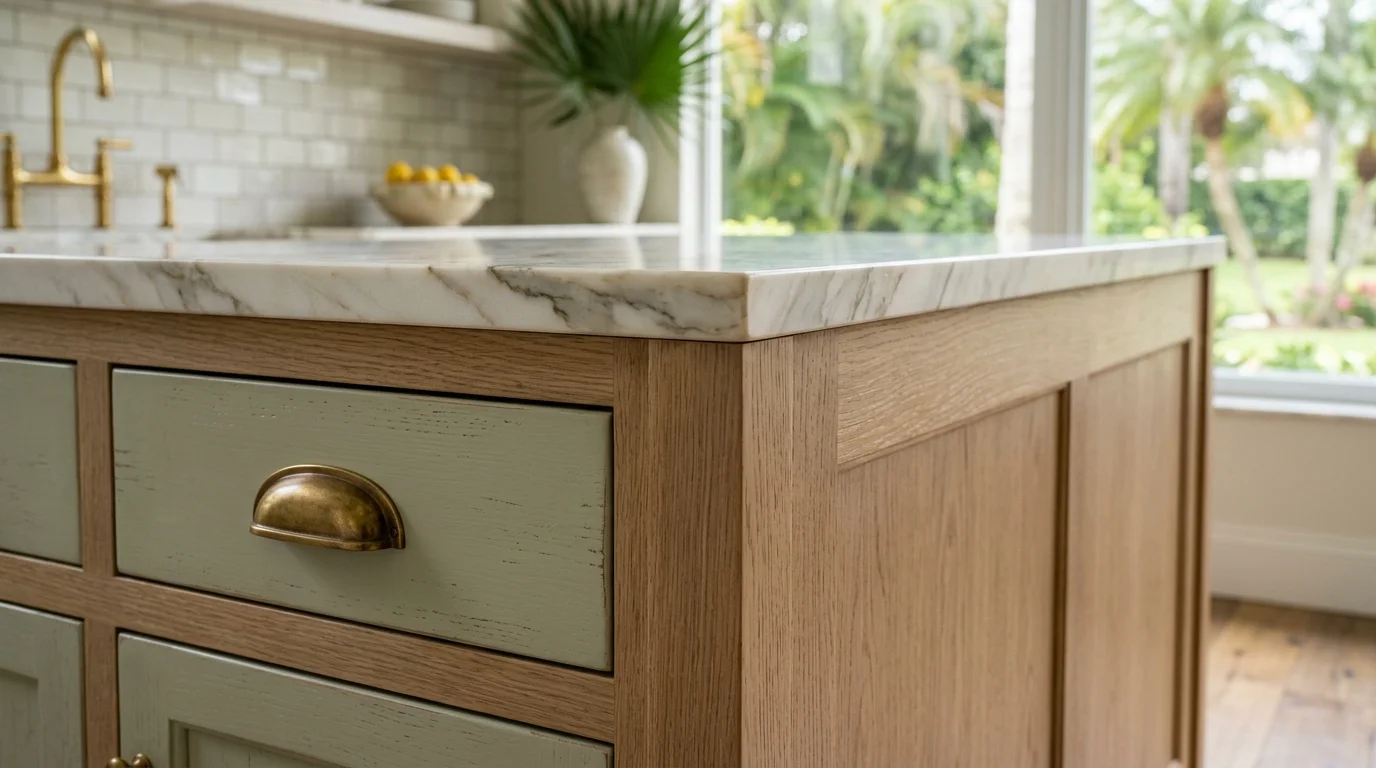
Hardware selection becomes more important on small islands since every piece is visible and frequently used. We recommend oversized pulls that are easy to grip and finishes that hide fingerprints, particularly important in Florida's humid climate.
Cost Guide
Small kitchen island costs in Palm Beach County vary significantly based on size, materials, and complexity. Here's what homeowners typically invest:
These ranges include materials, labor, and basic electrical work. Additional costs include plumbing for sinks ($800-$1,500), gas lines for cooktops ($600-$1,200), and specialty storage features ($200-$800 per component).
Material choices significantly impact final costs. Laminate countertops start around $40 per square foot installed, while natural stone runs $80-$200 per square foot. Island budgeting requires balancing upfront costs with long-term value, especially in competitive Palm Beach County real estate markets.
Installation typically takes 2-3 days for simple islands, longer for complex builds with plumbing or electrical work. Our team coordinates all trades to minimize disruption, particularly important for occupied condos in Boca Raton high-rises.
South Florida Considerations
Florida's climate creates unique requirements for kitchen islands. High humidity demands moisture-resistant materials and proper ventilation. Salt air near the coast accelerates corrosion of hardware and appliances. Our team specifies marine-grade finishes and stainless steel components for waterfront properties.
Hurricane considerations affect island design in coastal areas. Fixed islands must meet Florida Building Code wind load requirements, while portable islands need secure storage locations during storm season. We often design storage areas in garages or interior closets for wheeled islands.
Air conditioning efficiency becomes important with any island that includes heat-generating appliances. Wine refrigerators, ice makers, and warming drawers all add cooling loads. Our team coordinates with HVAC contractors to ensure adequate capacity, particularly in older buildings with limited electrical service.
Many Palm Beach County condos and townhomes have strict HOA guidelines for renovations. HOA approval processes can affect timeline and design choices. We help homeowners navigate these requirements early in the planning process.
Open floor plans common in South Florida homes require islands that complement adjacent living spaces. The island often serves as a visual divider between kitchen and family room, making material and color selection critical for overall home aesthetics.
Entertaining lifestyle common in warm climates influences island design. We incorporate features like built-in cutting boards that flip over to reveal serving platters, wine storage accessible from both sides, and electrical outlets positioned for small appliances used during parties.
For waterfront properties, we specify non-corrosive materials and sealed electrical connections. Salt air penetrates surprisingly far inland, homes in western Wellington still experience accelerated hardware deterioration compared to inland markets.