Quartz vs Quartzite vs Granite vs Marble: Which Countertop Is Best?
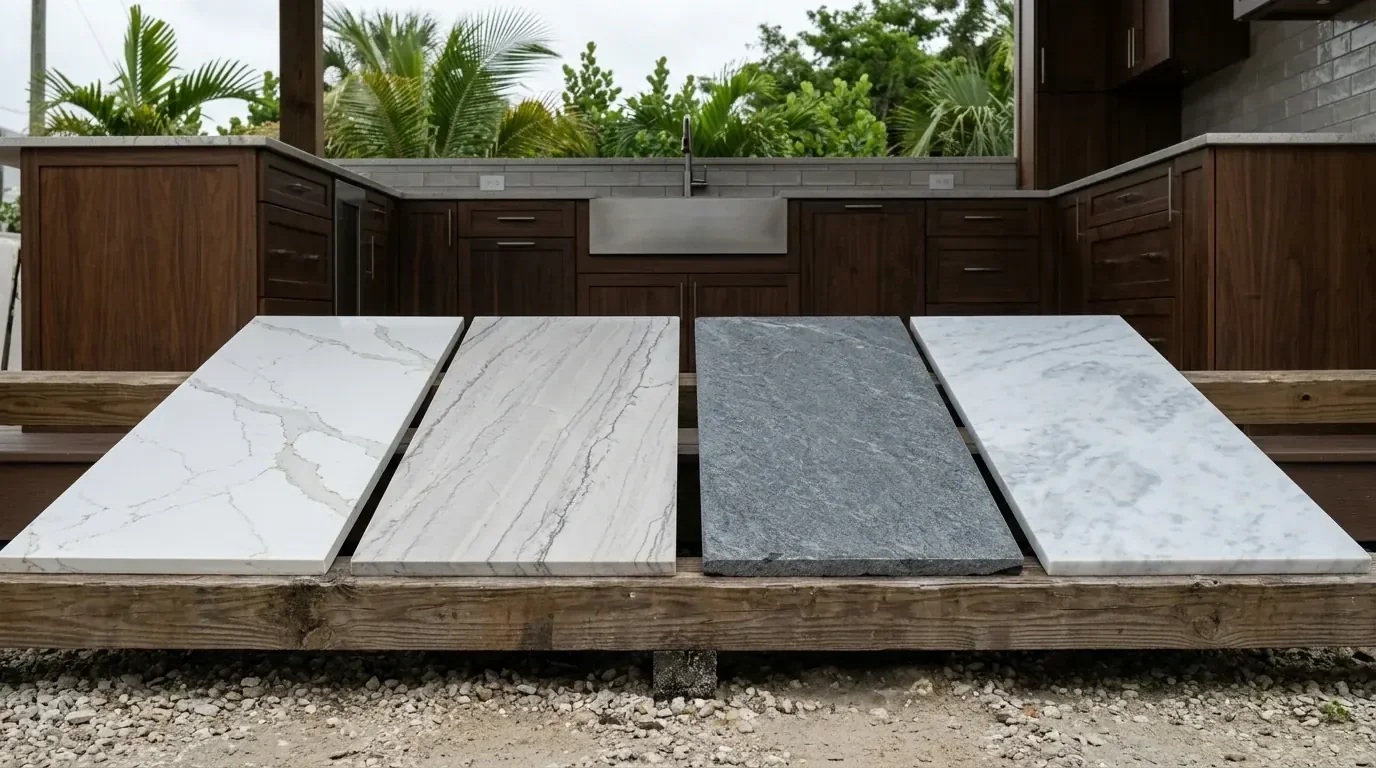
Quartz, quartzite, granite, marble, the four countertops our Palm Beach County clients ask about most, and the four that get confused most often. They look similar in stone yard photos. They perform very differently in a working kitchen. After 5,000 installs across Boca Raton, Delray Beach, Jupiter, and Wellington, here is how to pick the right one for your kitchen.
Each material has a clear sweet spot. The wrong choice for your cooking style or budget will fight you for the next 20 years. The right one will outlast the rest of your remodel.
The Quick Verdict
If you want the short answer before the detail:
- Pick quartz if you want zero maintenance, consistent patterns, and the best balance of durability and cost. Best for busy families and resale.
- Pick quartzite if you want a natural stone that looks like marble but performs like granite. Best for design-focused kitchens with real cooking.
- Pick granite if you want heat resistance, unique veining, and the lowest natural-stone price. Best for budget-conscious traditional kitchens.
- Pick marble if you want the classic luxury look and accept that it will patina (etch, scratch, stain) over time. Best for owners who value aesthetics over perfection.
What Each Material Actually Is
Understanding what the material is made of tells you 80 percent of what you need to know about how it will perform.
Quartz
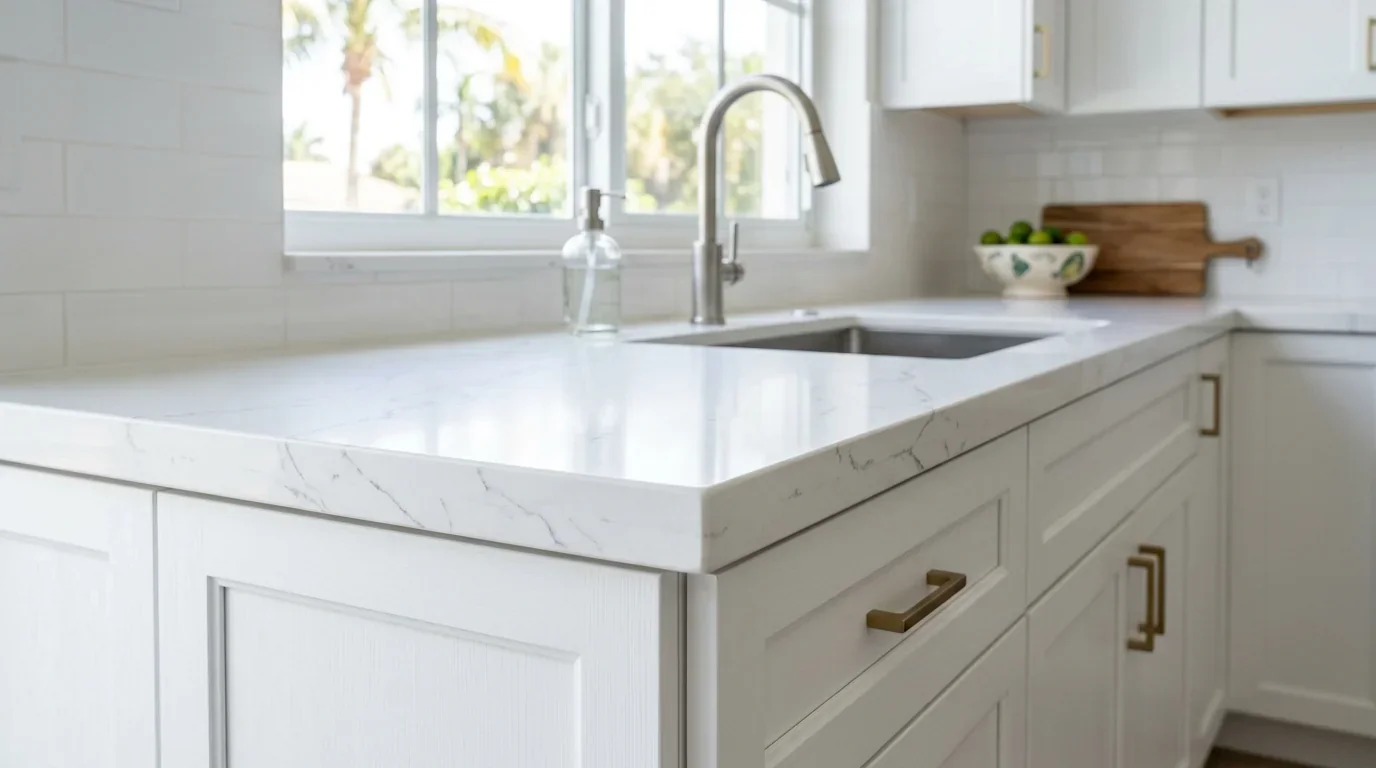
Composition: About 90 to 95 percent ground natural quartz crystals bound with 5 to 10 percent polymer resin. Engineered, not natural. Brands include Caesarstone, Cambria, Silestone, and MSI Q.
Look: Consistent patterns, what you see on the slab sample is exactly what you get. Many quartz products mimic marble or quartzite veining, but the pattern repeats every 8 to 10 feet.
Performance: Non-porous, stain-resistant, never needs sealing. Heat-sensitive, hot pans will discolor or melt the resin at temperatures above 300°F.
Quartzite
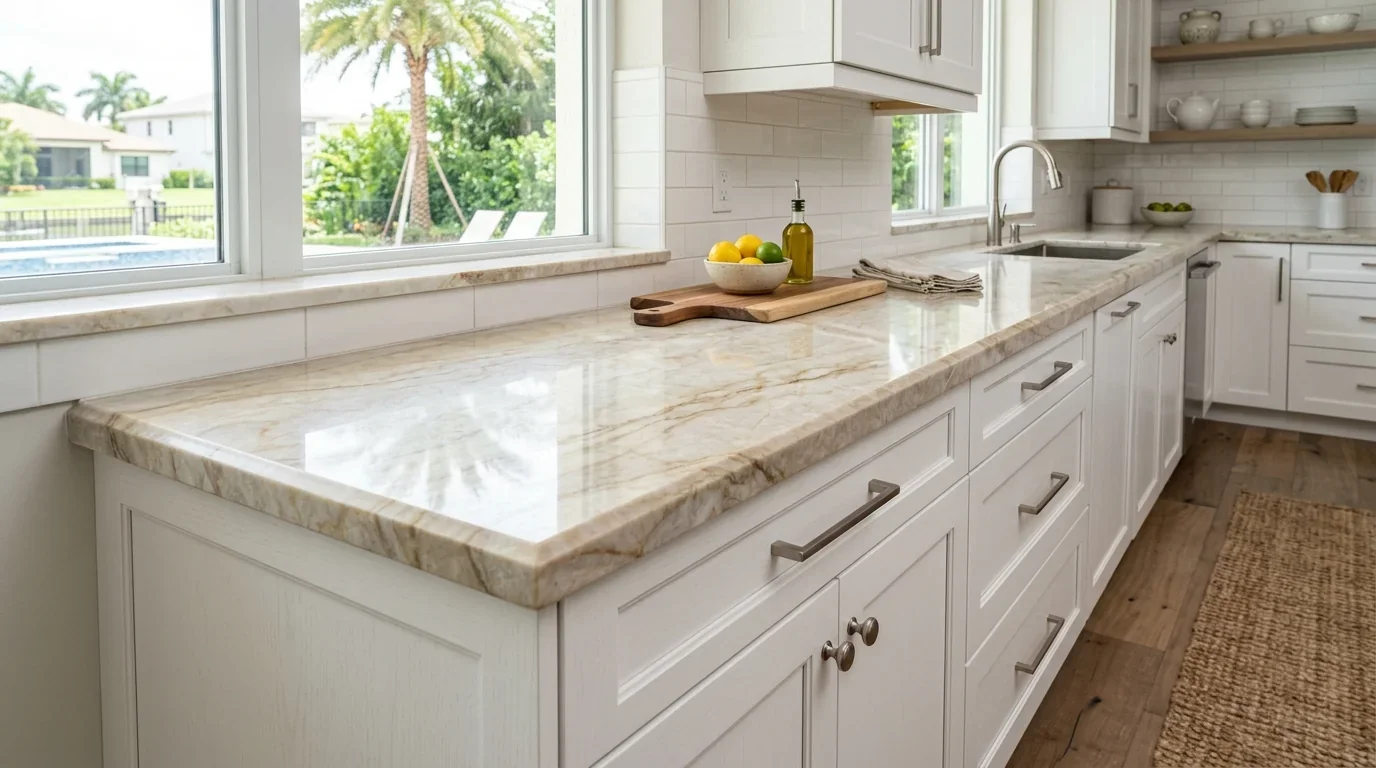
Composition: Natural metamorphic rock formed when sandstone is compressed and heated deep in the earth. 100 percent natural stone. Not the same as quartz despite the similar name.
Look: Natural veining similar to marble, often in white and gray tones. Each slab is unique. Popular options in Palm Beach County include Taj Mahal, Super White, and Calacatta quartzite.
Performance: Harder than granite and much harder than marble. Heat-resistant, scratch-resistant. Requires sealing once a year because it is porous.
Granite
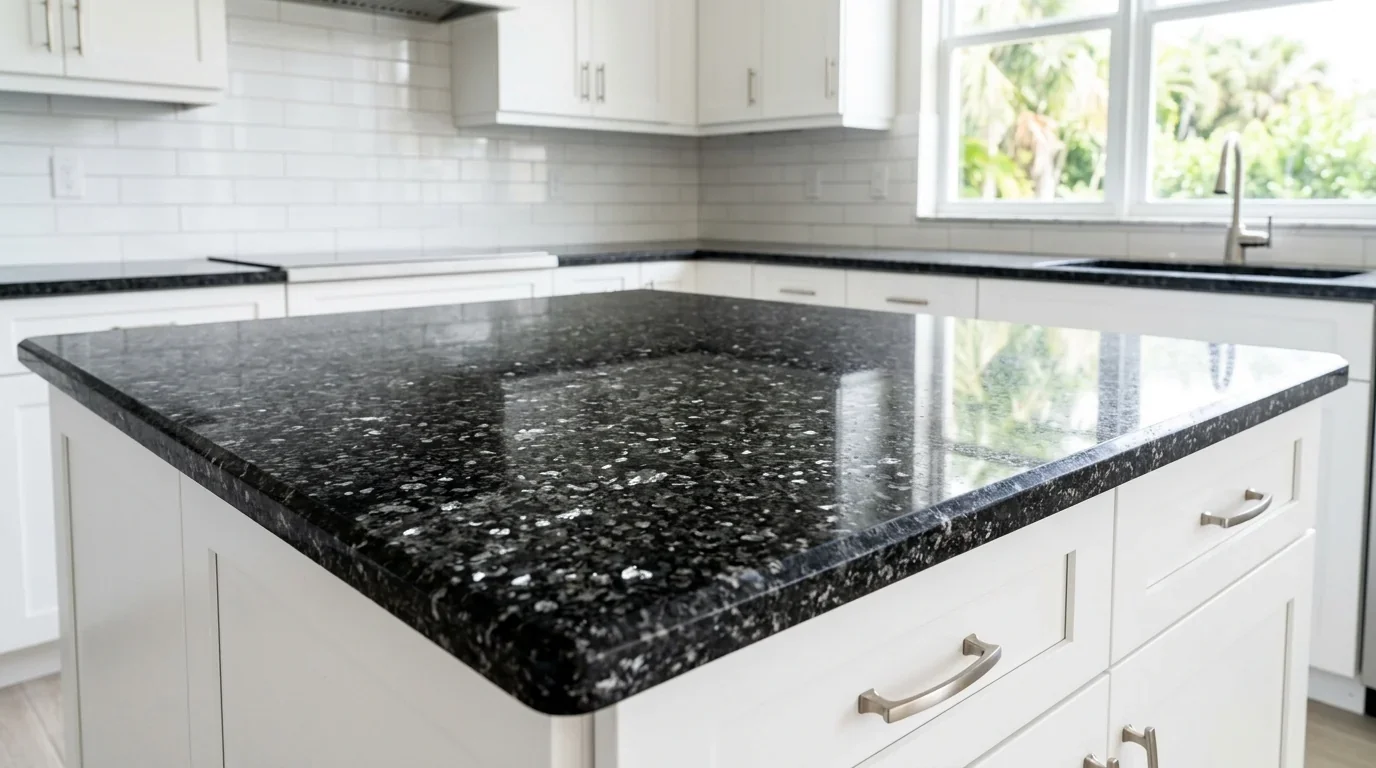
Composition: Natural igneous rock formed from cooled magma. Made of feldspar, quartz, and mica in varying proportions.
Look: Grainy, speckled patterns in a huge range of colors, black, gray, blue, green, beige, red. Less "veiny" than marble or quartzite.
Performance: Very heat-resistant (hot pan directly on the surface is fine), scratch-resistant, durable for 20+ years. Requires sealing annually.
Marble
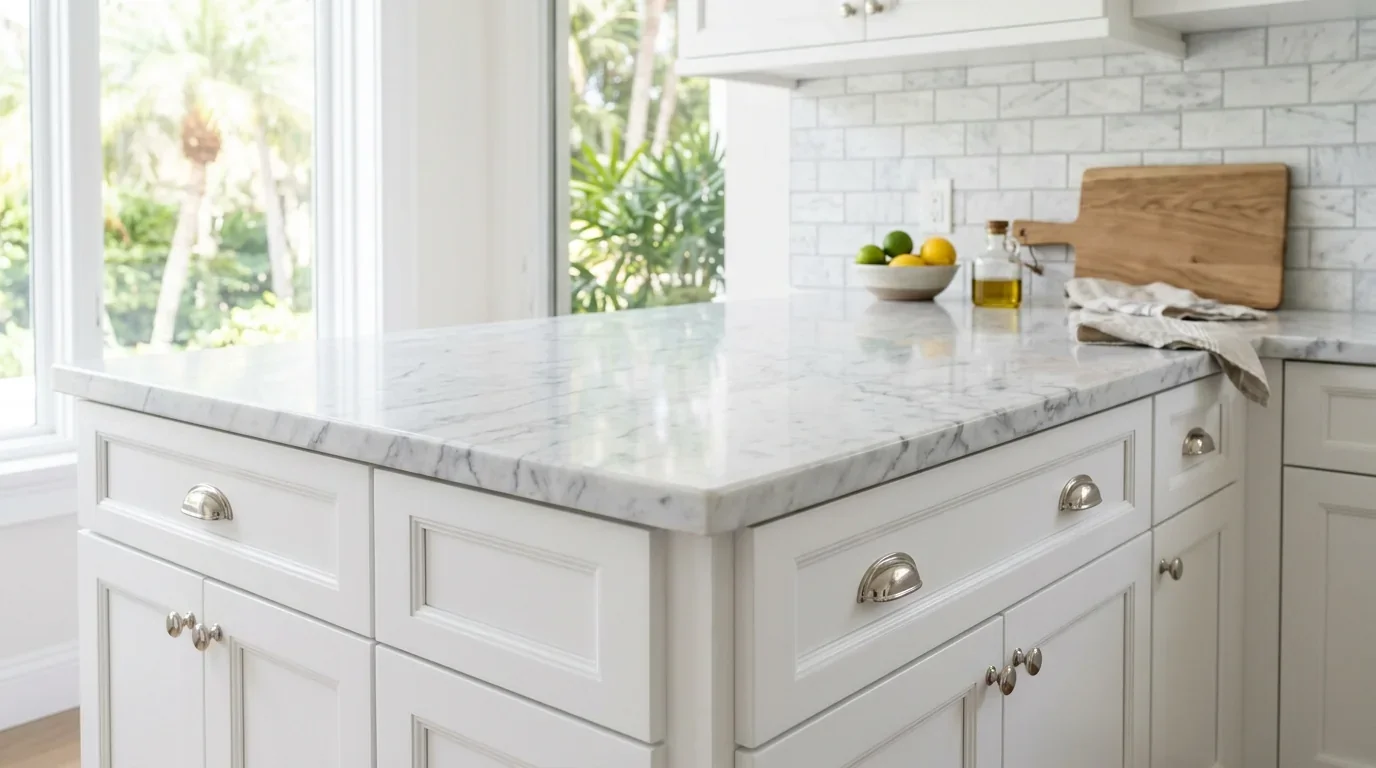
Composition: Natural metamorphic rock, primarily calcium carbonate. Softer than granite and quartzite.
Look: Elegant, flowing veining, the classic luxury kitchen look. Carrara, Calacatta, and Statuario are the most common varieties.
Performance: Porous, soft, reactive to acids. Will etch from lemon juice, wine, tomato sauce. Will scratch from knives and pans. Requires sealing 2 to 4 times per year.
Side-by-Side Comparison Table
Pricing is for Palm Beach County installed jobs in 2026 including edge profile, sink cutout, and standard install. Exotic stones (Calacatta Viola marble, blue quartzite, premium Caesarstone) can run 30 to 50 percent above these ranges.
How to Choose for Your Kitchen
Skip the material comparisons and start with how you actually use your kitchen.
If you have kids, cook daily, and do not want to think about countertops, pick quartz. It is bulletproof for everyday use, never needs sealing, and the consistent look makes it easier to coordinate with backsplash and cabinets.
If you want a stone that looks like marble without the drama, pick quartzite. Taj Mahal and Super White quartzite are the two most popular in Palm Beach County for a reason, they deliver the marble look with 5 times the durability and a fraction of the maintenance. The quartz vs quartzite comparison has more detail on this specific matchup.
If you want maximum durability at the lowest natural-stone price, pick granite. The trendy granites of 2005 (swirling tropical browns and speckled tans) have been replaced by more subdued options like Black Pearl, Steel Gray, and Colonial White that look current in 2026 kitchens.
If you want the classic luxury look and are OK with a kitchen that ages like Italian leather, pick marble. Honed marble hides etching better than polished. Go in knowing it will not look brand-new in five years, and if that sounds stressful, pick quartzite instead.
South Florida-Specific Considerations
A few factors matter more in Palm Beach County than in other markets.
Humidity: All four materials handle humidity fine. But quartz can yellow over 10+ years near east-facing windows with intense sun, especially white quartz. We recommend quartzite or granite for any counter that gets direct afternoon sun exposure. Our Florida humidity countertop guide goes deeper on this.
Salt air (coastal homes east of I-95): Unsealed or poorly sealed stone can absorb salt over time. This is a sealing discipline issue, not a material issue. Stay current on annual sealing for natural stones and you are fine.
Outdoor kitchens: Quartz is not suitable for outdoor kitchens under any circumstances, the resin fails under UV. Granite and quartzite are the standard choices for South Florida outdoor kitchens. See our outdoor kitchen materials guide for full recommendations.
Permit and code implications: Countertop material selection has no permit implications. You can swap any of these four during a kitchen remodel without changing your permit scope.
For authoritative data on natural stone performance, the Natural Stone Institute consumer guide is the industry reference and covers every stone we install.