Outdoor Kitchen Cost in Florida (2026 Guide)
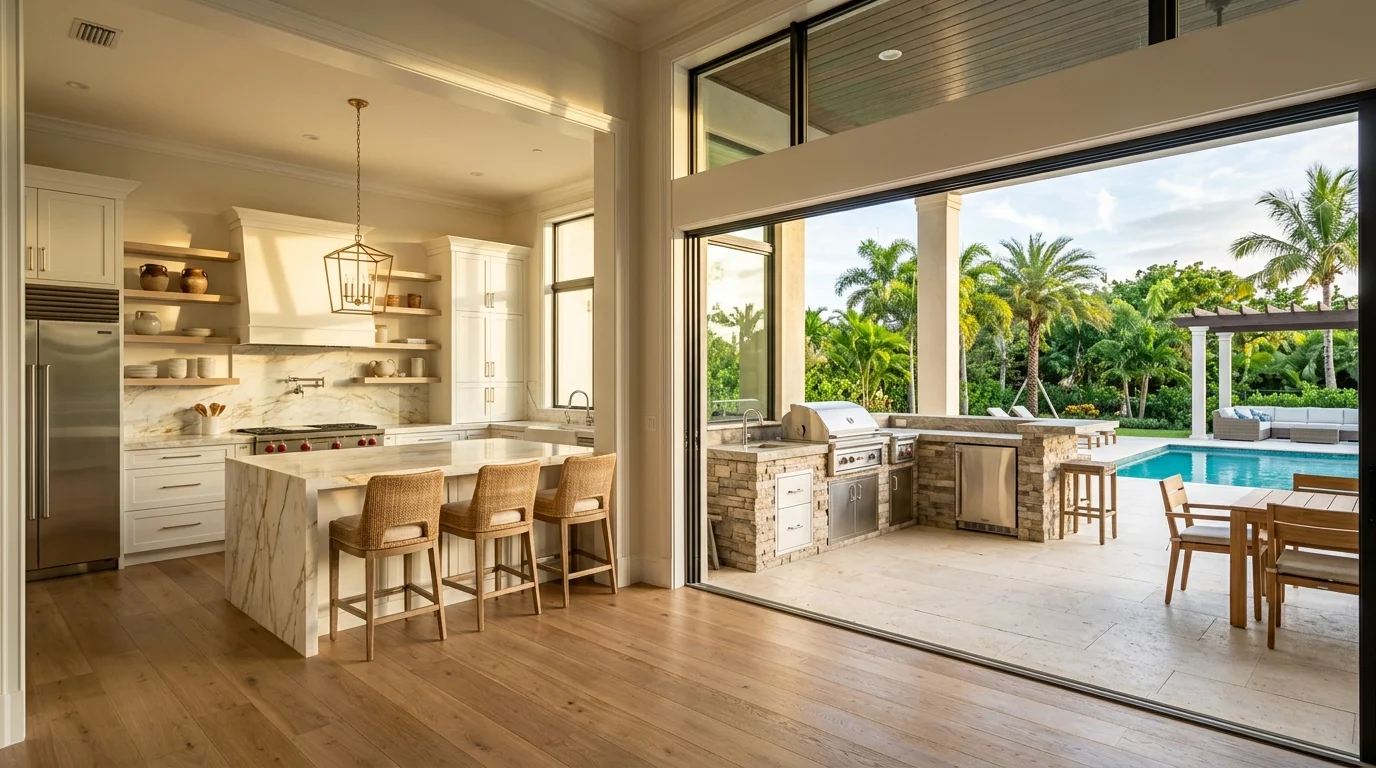
Outdoor kitchen cost in Florida is not the same as what you'll read in a national home improvement article. The salt air, summer heat, hurricane season, and year-round use that come standard with life in Palm Beach County change everything, from the materials you choose to the structural requirements your build has to meet. At South Florida Kitchen & Bath Design, we work with homeowners across Boca Raton, Delray Beach, Wellington, and Jupiter who want outdoor kitchens they can actually use every day, not once a month. This guide breaks down real 2026 pricing for our market, what separates a $15,000 build from a $60,000 one, and where homeowners consistently overspend or underspend.
What Drives Outdoor Kitchen Cost
The biggest cost lever is size. A straight 10-foot run with a grill, a side burner, and a small prep area is a fundamentally different project than an L-shaped or U-shaped build with a pizza oven, a wet bar, refrigeration, and a sink. Linear footage of cabinetry and countertop is the baseline, and everything you add, appliances, roofing, lighting, plumbing, stacks on top of that.
The second lever is structure. Modular setups using powder-coated aluminum frames can go in over a weekend. A true built-in outdoor kitchen, block or steel-stud framing, cement board, stucco, stone or tile cladding, takes skilled tradespeople multiple days and carries a corresponding cost. Most of the outdoor kitchens our team builds in South Florida are the built-in type, because they hold up to wind and weather in a way modular units simply cannot match over a five- to ten-year horizon.
Appliance selection moves the number dramatically. A solid stainless steel grill from a reputable brand like Napoleon runs $1,200-$3,500 depending on BTUs and burner count. Add a dedicated outdoor refrigerator ($600-$1,800), a side burner ($300-$800), a pizza oven ($1,500-$4,500), an ice maker ($900-$2,200), and a sink ($400-$900 before plumbing), and you're stacking $5,000-$12,000 in appliances alone before a single cabinet or countertop is quoted.
Countertop material is the other major variable. This is one area where homeowners frequently make a costly mistake, choosing an interior countertop material that fails outdoors in two Florida summers. We cover the right options in detail in our guide to outdoor kitchen countertops for Florida, but the short version is: porcelain slab and concrete are the workhorses, granite is acceptable, and quartz is a poor choice outdoors because UV exposure destroys the resin binders over time.
Roofing and shade structures are their own budget category. A pergola, covered lanai extension, or insulated roof panel system can add $8,000-$25,000 depending on size and materials. That cost sits outside the kitchen build itself but is part of most real outdoor kitchen projects in our market, because cooking in direct Florida sun at noon in August is not a lifestyle.
Finally, if your build requires a new gas line run, a dedicated electrical circuit for refrigeration or lighting, or plumbing for a sink drain and supply, those trades are coordinated through your general contractor. Permit requirements depend on the scope of work, permits are required when you're adding gas service, new electrical circuits, or plumbing connections, and your GC handles that relationship with the building department. A simple modular unit placed on an existing patio with no utility connections generally does not require a permit.
Built-In vs. Modular: Which Makes More Sense in Florida
This is a question we get constantly, and our opinion is straightforward: in South Florida, built-in wins for anyone planning to stay in their home more than three years.
Modular outdoor kitchen kits, aluminum-frame units with polymer doors and snap-in appliances, are sold everywhere from big box stores to specialty outdoor retailers. Entry-level kits start around $3,000-$5,000 for a basic grill module. Mid-grade modular setups with multiple modules, a refrigerator, and a sink run $8,000-$18,000 including installation. The appeal is speed and flexibility. You're not waiting on a masonry crew.
The problem is longevity. Aluminum frames hold up, but the door panels, finishes, and connections on modular units take a beating from salt air, UV radiation, and the kind of wind events that come with a South Florida summer. After five years, most modular units look rough. After ten, they're eyesores. Built-in construction, concrete block or steel stud framing wrapped in cement board, finished with porcelain tile, stucco, or natural stone, survives indefinitely when built correctly.
Built-in construction also allows full customization. Our team can design an outdoor kitchen that matches the architectural language of your home, whether that's a coastal whitewashed stucco finish in Delray Beach or a coral stone-clad build in a Jupiter estate. Modular kits give you what the kit gives you.
The cost premium for built-in is real. A comparable footprint in built-in construction costs 30-60% more than modular at entry level. But when you factor in the lifespan difference, the replacement cost of modular components, and the impact on home value, built-in is almost always the better investment. If you want context on how to think about outdoor projects relative to overall home value, the 30 percent rule in remodeling is a useful starting framework.
Best Materials for Florida's Climate
Florida's outdoor environment is essentially a stress test for building materials. You're dealing with 90% humidity for months at a stretch, UV index values that fade and crack anything not rated for exterior use, salt air within 20 miles of the coast, and wind loads that matter during storm season. Here's how we think about each material category.
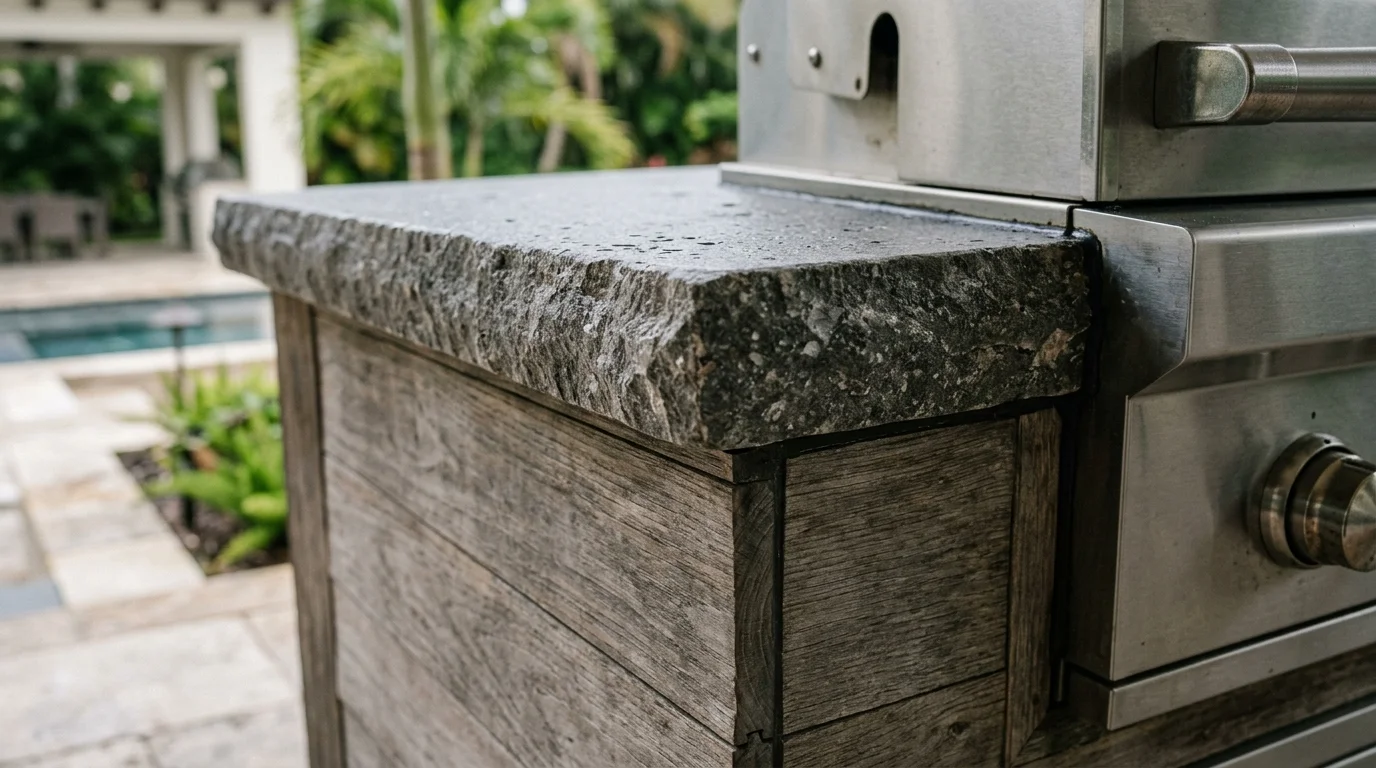
Countertops: Porcelain slab is our top recommendation for outdoor kitchens in Palm Beach County. It's UV-stable, non-porous, heat-resistant, and available in large format slabs that look genuinely high-end. Expect $65-$120 per square foot installed. Concrete is a strong second choice, it's extremely durable, can be cast in custom shapes, and develops a patina that looks better with age in an outdoor setting. Expect $80-$130 per square foot. Granite works well outdoors but needs periodic sealing. Quartz, as mentioned above, is not recommended for outdoor use, UV degrades the polymer resin that holds quartz composite together, causing discoloration and surface breakdown within a few years in our climate.
Cabinet/Frame materials: For the structure, concrete block is the most durable and most common for built-in outdoor kitchens in South Florida. Steel stud framing wrapped in cement board is a close second and works well for lighter builds. Wood framing outdoors in Florida is a mistake, even pressure-treated lumber will show rot and pest damage within a few years in high-humidity zones. For door panels on built-in builds, powder-coated stainless steel or high-density polyethylene (HDPE) panels are the correct choices. Standard interior cabinet materials, even painted MDF, will delaminate, swell, and fail in the outdoor environment.
Cladding and finishes: Porcelain tile cladding on the face of your outdoor kitchen is our preferred finish. Large-format porcelain in a 24x24 or 12x24 format gives a clean, modern look and is virtually maintenance-free. Natural stone, travertine, coral stone, coquina, is beautiful and appropriate for the Florida aesthetic, but requires sealing and some ongoing care. Stucco is economical and works well when properly applied with an elastomeric finish coat that handles thermal movement without cracking.
Appliances: 304-grade stainless steel is the minimum for outdoor appliances in our climate. For homes within a mile of saltwater, 316-grade marine-grade stainless is worth the premium. Anything less will show rust staining within a season. Appliance covers are cheap insurance during the off-season, even in South Florida's mild winters.
For a deeper look at how Florida's humidity affects material choices beyond the outdoor kitchen, our article on the best countertop materials for Florida's humidity and heat covers the indoor counterpart of this same conversation.
2026 Outdoor Kitchen Cost Guide
The ranges below reflect actual pricing in the Palm Beach County market, Boca Raton, Delray Beach, Wellington, Jupiter, and surrounding areas. These are installed costs including materials, labor, and standard appliance packages. Gas line runs, dedicated electrical circuits, plumbing, and roofing/shade structures are listed separately because they're coordinated through your general contractor and vary significantly by site conditions.
One thing to flag: contractor labor costs in Palm Beach County have risen meaningfully since 2023. Don't anchor your budget to quotes you received two or three years ago. Material costs for porcelain slab and quality stainless appliances have stabilized in 2025-2026, but skilled masonry and tile labor remains tight in our market. If you're getting quotes that look unusually low, that's worth asking about.
To understand how outdoor kitchen spend fits into your overall property investment, it's worth reading our piece on which kitchen upgrades add the most value to a Florida home. The ROI dynamics for outdoor kitchens are different from interior remodels but real, particularly in our market where outdoor living is a year-round lifestyle, not a seasonal amenity.
South Florida Considerations
Building an outdoor kitchen in Palm Beach County involves a few realities that don't apply in other parts of the country. Here's what our team tells every homeowner before they commit to a design.
Wind load requirements matter. Palm Beach County falls under the Florida Building Code high-velocity wind zone requirements, and any permanent outdoor structure, including a built-in kitchen, needs to be built to those standards. This isn't just a code compliance issue; it's a practical one. A poorly anchored outdoor kitchen can become a projectile hazard in a tropical storm. Permits are required when structural work or utility connections are involved, and wind load compliance is part of that review process.
HOA and ARB approval is a factor in much of our market. Wellington, Boca Raton, and virtually every gated community in Jupiter requires approval for exterior modifications. The approval process typically involves submitting design drawings, material samples, and sometimes a site plan. Our team prepares those design documents for homeowners to submit. The timeline for HOA/ARB approval can add two to eight weeks to your project schedule, so build that into your planning if you're in a community with an architectural review board.
Orientation and sun exposure affect your build more than most homeowners realize. In South Florida, a west-facing outdoor kitchen means cooking directly into the afternoon sun from May through October. North or east-facing orientations are dramatically more comfortable for daily use. If your existing patio doesn't favor those orientations, a shade structure or strategically placed pergola becomes even more important, and more worth the budget allocation.
Salt air corrosion is a real operating cost for outdoor kitchens within a few miles of the Intracoastal or the ocean. Budget for annual appliance maintenance, re-sealing of natural stone surfaces if you use them, and periodic touch-up of any painted or powder-coated finishes. This isn't a reason not to build, it's a reason to specify marine-grade materials from the start and factor maintenance into your cost-of-ownership thinking.
Finally, if you're thinking about the outdoor kitchen as part of a broader backyard or interior upgrade, it's worth coordinating the design language between your outdoor and indoor spaces. Our guide to outdoor kitchen ideas for South Florida homes shows how we approach that design continuity, from finish selection to layout planning. And if you're also considering a kitchen refresh inside, you'll find pricing context in our kitchen remodel cost guide for Palm Beach County to help you think about sequencing and total budget allocation across both projects.