Best Paint for Kitchen Cabinets in Palm Beach County Homes
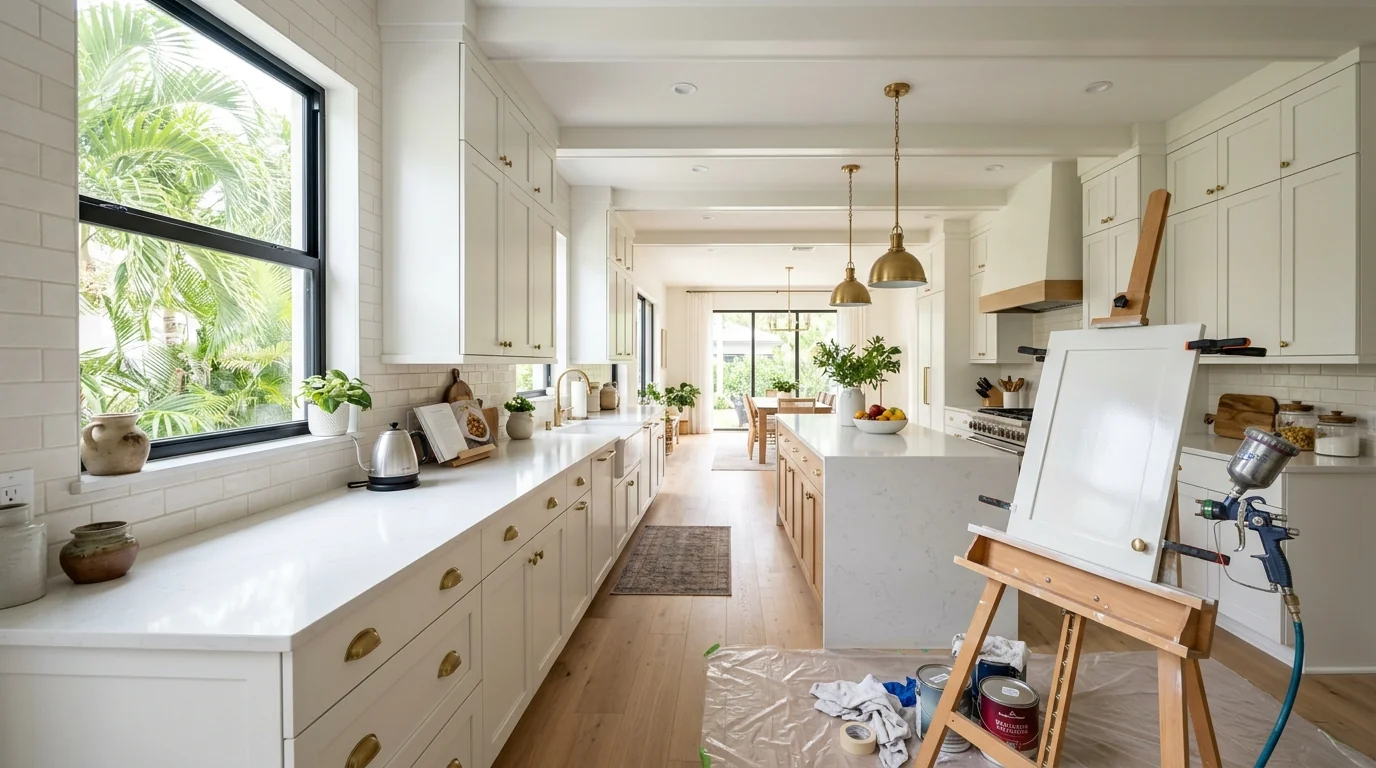
The best paint for kitchen cabinets is a cabinet-grade enamel, not the latex you would roll onto a living room wall. That one distinction separates a finish that still looks sharp in ten years from doors that chip, scuff, and go tacky by the second summer. In Palm Beach County, where humidity sits high for months at a stretch, the product you choose and how long you let it cure decide whether your cabinets stay hard and clean or turn sticky around the handles.
We finish and refinish cabinets across Boca Raton, West Palm Beach, Wellington, and the coastal towns, and the questions we hear most are the same ones homeowners type into Google. What type of paint should you use. What keeps cabinets from getting sticky. Whether you need a clear coat on top. This guide answers all of it with the products and methods that actually hold up in South Florida kitchens.
The Best Paint Types for Cabinets
Cabinets take more abuse than any painted surface in the house. Fingers, grease, water, cleaning sprays, and doors banging shut a dozen times a day. Wall paint cannot survive that. You want a paint engineered to dry into a hard, furniture-like film, and three categories do that well.
Waterborne acrylic enamel is what we reach for most. Products like Sherwin-Williams Emerald Urethane Trim Enamel and Benjamin Moore Advance level out almost like an oil paint while cleaning up with water and staying low-odor. They cure to a dense, washable surface that shrugs off fingerprints. For most Palm Beach County kitchens, a quality waterborne enamel is the sweet spot of durability, color range, and easy maintenance.
Waterborne alkyd-hybrid enamel blends the hardness of old oil-based paint with modern low-VOC chemistry. Benjamin Moore Advance is technically a waterborne alkyd, which is why it cures so hard. These hybrids resist blocking better than plain latex, which matters a lot in a humid climate. If sticky doors are your main worry, this is the category to look at first.
True oil-based enamel still produces a glass-smooth, rock-hard finish, and some old-school painters swear by it. The tradeoffs are real, though. It ambers over time, which ruins a crisp white, it smells strong for days, and stricter VOC rules have pushed most of it off the shelf. We rarely recommend it anymore because the waterborne enamels have closed the gap on hardness without the yellowing.
What you should not use is standard wall paint, even the "scrubbable" kind. Flat and eggshell latex stays soft, holds onto grease, and is the number one reason DIY cabinet jobs feel gummy within a year. If a product does not say it is made for trim, doors, or cabinets, leave it on the shelf. The folks at Benjamin Moore publish clear product data on which of their enamels are rated for cabinetry, and it is worth reading the spec sheet before you buy.
Why Painted Cabinets Get Sticky in Florida
Sticky cabinets are the single most common complaint we hear about painted finishes, and it is almost always one of two things. The paint never fully cured, or the wrong paint was used in the first place. South Florida humidity makes both worse.
Here is what is happening. Latex and waterborne paints dry to the touch in a few hours, but drying and curing are not the same. Curing is the slow chemical hardening that can take two to three weeks to finish. When you close a cabinet door before the paint has cured, two painted surfaces press together and bond slightly. That is called blocking, and it is why doors feel tacky or pull at the edges when you open them. High humidity slows curing down, so a kitchen in Jupiter or Delray Beach takes longer to reach full hardness than the same kitchen would in a dry climate.
The fix has two parts. First, use a paint that cures hard. A waterborne alkyd-hybrid or a urethane-modified acrylic enamel reaches a tougher final film than ordinary latex, so it resists blocking even when the air is heavy. Second, give the finish time. We tell clients to leave doors and drawers open for several days after the final coat and to go easy on the kitchen for the first week or two. Wiping a still-curing surface with a wet rag or a harsh cleaner can soften it and start the stickiness all over again.
Grease is the other culprit, especially right above the range. Cooking oil drifts onto nearby doors, and if it is not cleaned off and the paint is soft, it sits in the finish and stays tacky. A hard-curing enamel cleans up with a damp cloth instead of soaking up the grease. If your current cabinets already feel sticky and they were painted with the wrong product, no amount of cleaning fixes it. They need to be properly prepped and recoated with a real cabinet enamel.
Primer, Prep, and Sheen That Last
The paint gets the credit, but prep and primer do most of the work. A flawless enamel over bad prep still peels. We spend more hours sanding, cleaning, and priming than we do laying down color, and that is on purpose.
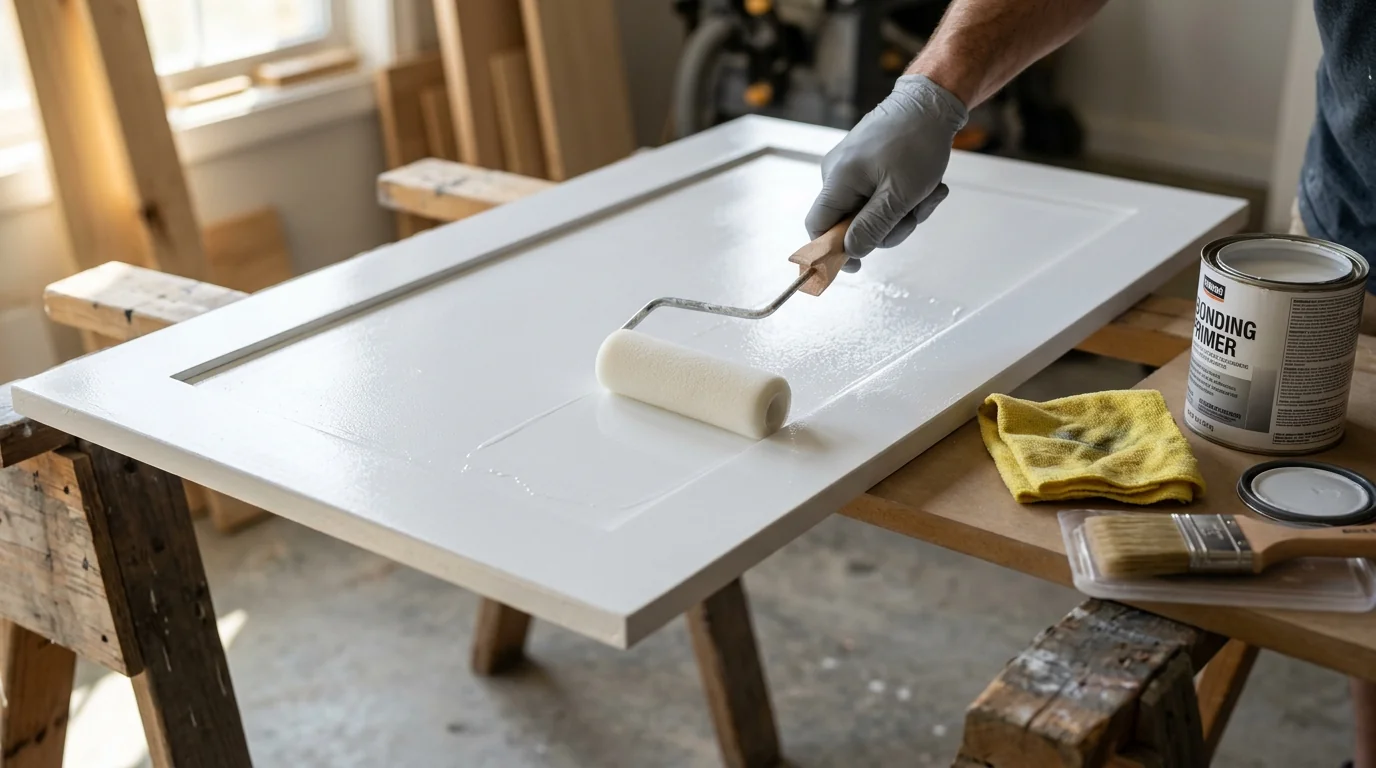
Degreasing comes first. Kitchen cabinets carry years of cooking film, and paint will not stick to grease. We clean every surface with a degreaser, then sand to knock off the sheen and give the primer something to grip. Slick factory finishes and old oil paint especially need this step or the new coat sheets right off.
Primer is non-negotiable on cabinets. A quality bonding primer or a shellac-based primer like Zinsser BIN locks down stains, blocks tannin bleed from oak and other woods, and gives the enamel a uniform surface to grab. Skipping primer to save a step is the fastest way to end up with peeling doors. On raw wood or anything that has been heavily sanded, primer is doing real adhesion work, not just changing the color underneath.
Sheen is where homeowners get stuck, so here is the short version. Satin and semi-gloss are the only two that belong on cabinets. Satin reads soft and modern, hides minor surface flaws, and is what most of our clients choose right now. Semi-gloss is more reflective and slightly more washable, which some people prefer around a heavy-cooking range. Flat and eggshell have no place on a cabinet, full stop, because they hold dirt and cannot be scrubbed.
How you apply it matters too. Spraying gives the smoothest, most factory-like result, which is why a shop finish always wins on glass-smooth doors. A careful hand using a fine foam roller and a quality brush with a self-leveling enamel can get close, and that is the realistic route for most on-site jobs. Two thin coats beat one thick coat every time, with light sanding between coats. Thick paint sags, traps solvents, and takes far longer to cure, which loops right back to the stickiness problem.
Color drives a lot of these decisions as well. If you are still weighing finishes, our breakdown of painted versus stained kitchen cabinets walks through how each ages in a humid coastal home, and our guide to dark kitchen cabinet ideas covers what deeper paint colors do to a Florida kitchen's light.
Do You Need a Clear Top Coat?
This is one of the most searched questions about painted cabinets, and the honest answer is: usually not, but sometimes yes. A true cabinet enamel already cures into its own protective film. It does not need a clear coat the way chalk paint or a craft finish does. If you used a quality waterborne enamel and let it cure, you are done.
Where a clear top coat earns its keep is on the hardest-working doors. The cabinet under the sink, the trash pull-out, the drawers right next to the range, and any surface little hands grab all day. A water-based polyurethane or polyacrylic clear coat adds a sacrificial layer of abrasion resistance there. It will not make a soft paint hard, but it will help a good enamel last longer in the spots that wear first.
If you do add a clear coat, the rule is simple: use a non-yellowing water-based product over white and light colors. Oil-based and some older clear coats amber as they age, and there is nothing worse than a crisp white cabinet turning faintly yellow a year later. Brands like General Finishes High Performance Topcoat and Minwax Polycrylic are made to stay clear. Match the sheen of the clear to the sheen you want, since the top coat sets the final look, and test it on a spare door first because any clear coat shifts the color slightly.
One thing a clear coat will not do is rescue a job that used the wrong paint. Homeowners sometimes ask us to clear-coat over sticky cabinets hoping to seal the tackiness in. It does not work. The soft paint underneath keeps moving, and the clear coat cures unevenly on top of it. The only real fix for sticky cabinets is to strip back to a sound surface and recoat with a proper enamel.
Site-Painted vs Factory-Finished
There is a ceiling on how good a site-painted finish can look, and it comes down to environment. A cabinet shop sprays in a controlled booth, bakes or cures in clean air, and ships doors that are harder and more uniform than anything we can achieve in a lived-in kitchen full of dust and Florida humidity. When a client wants a flawless, dead-smooth painted look, new factory-finished cabinets deliver it more reliably than refinishing.
Site painting still has its place. If your boxes are solid wood or quality plywood, the layout works, and you mainly want a fresh color, refinishing in place saves real money and keeps cabinets out of the landfill. We get great results on solid doors with proper prep and a sprayed or carefully rolled enamel. The finish is excellent, just not quite the mirror-smooth perfection of a factory line.
Where we steer people away from painting is when the boxes themselves are failing. Particleboard cabinets that are swelling at the sink, delaminating, or sagging will not be saved by paint. Painting tired boxes is money spent on a surface that is structurally on its way out. In those cases, refacing or replacing is the smarter spend. If you are torn, our comparison of cabinet refacing versus replacement lays out when each one pays off in a Palm Beach County home.
Our take, after thousands of kitchens: site-paint solid cabinets you want to keep, and buy factory-finished when you want a showroom finish or your existing boxes are worn out. Both are right answers, just for different kitchens.
Cost Guide
Painting cabinets costs a fraction of replacing them, which is exactly why it is so popular. Pricing in Palm Beach County depends on the number of doors and drawers, whether the work is sprayed or brushed, and how much prep the old finish needs. Here is the range we see in the local market.
A DIY job looks cheap on paper, but factor in your time, the learning curve, and the very real risk of a sticky finish if you rush the cure. We repaint a fair number of failed DIY projects, and that redo erases the savings. If you do it yourself, buy the right enamel, prime properly, and respect the cure time.
Professional pricing buys you the prep, the right products, and a finish that holds up. Spraying costs more than brushing because doors come off, get tagged, sprayed in a controlled setup, and reinstalled, but the result is closer to factory smooth. For a full picture of how cabinet work fits into a larger budget, our Palm Beach County kitchen remodel cost guide puts these numbers in context. When you are ready for real numbers on your own kitchen, our team is happy to take a look. Reach out through our contact page for a free estimate.