Painted vs Stained Kitchen Cabinets: Which Lasts in Florida?
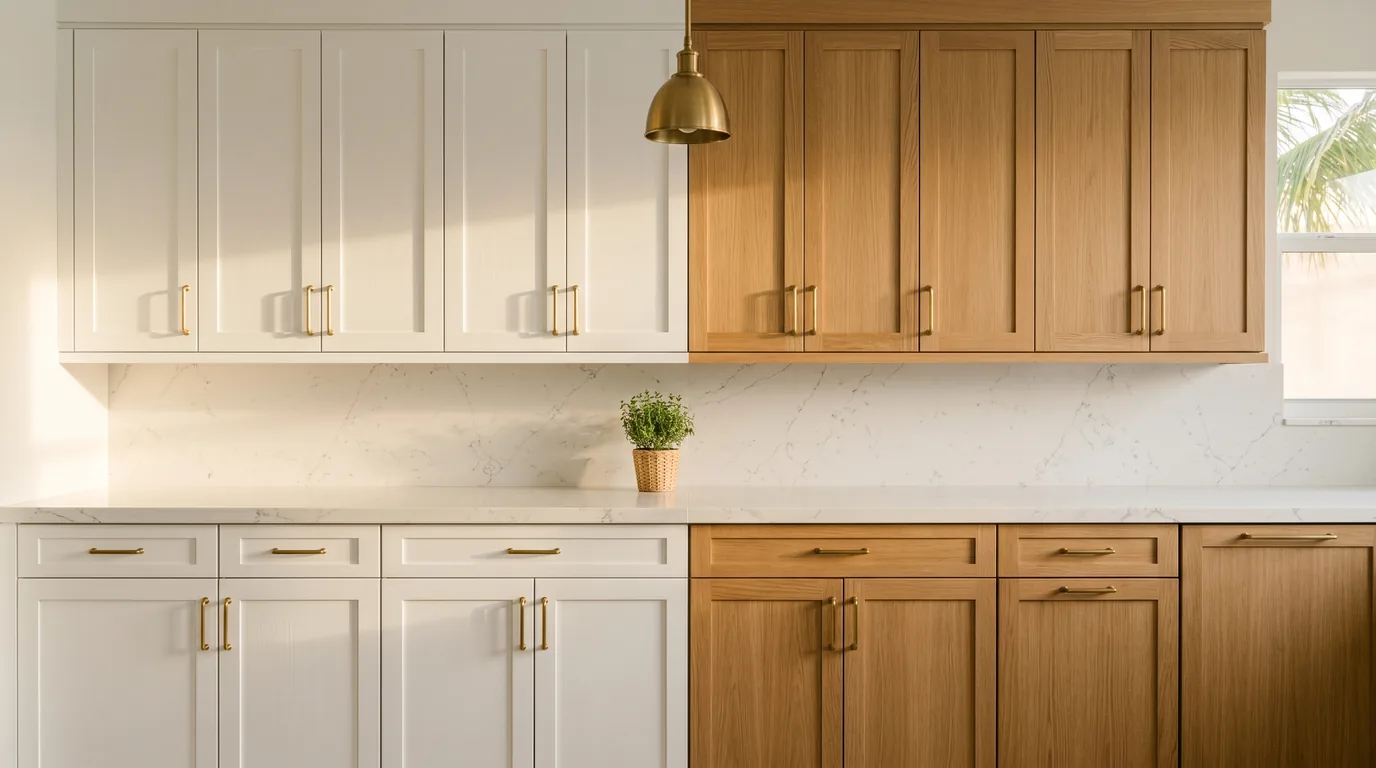
The painted vs stained kitchen cabinets debate takes on new meaning in Florida's relentless humidity. After 15 years working on kitchens from Boca Raton to Jupiter, our team has seen how our subtropical climate affects both finishes. The answer isn't as simple as "one is better", it depends on your priorities, maintenance tolerance, and design goals.
Paint offers superior moisture protection and unlimited color options, while stain showcases natural wood beauty but requires more careful material selection and finishing. Both can last decades in Florida when done right, but the execution matters more than the choice itself.
Here's what we've learned about cabinet finishes that actually hold up in Palm Beach County's heat and humidity.
Paint vs Stain in Florida's Climate
Florida's climate is brutal on wood finishes. We're talking 80-90% humidity for months, temperature swings from air-conditioned interiors to 90°F+ outdoors, and salt air if you're near the coast. These conditions make finish selection critical.
Paint creates a complete moisture barrier when applied correctly. Quality cabinet paint, we recommend Sherwin Williams ProClassic or Benjamin Moore Advance, forms a hard, durable shell that protects the wood substrate underneath. This barrier prevents moisture penetration, which is the leading cause of cabinet deterioration in Florida.
Stained cabinets rely on the wood's natural properties plus topcoat protection. The stain penetrates the wood grain, then gets sealed with polyurethane or similar clear coat. This system can work beautifully in Florida, but the wood species and application quality become more critical than with paint.
We see painted cabinets lasting 15-20 years without major refinishing in Florida kitchens. Stained cabinets, when done with the right materials, last just as long, but they're less forgiving of shortcuts during installation.
The humidity factor affects both finishes during application too. Paint can take longer to cure properly in humid conditions, while water-based stains may raise wood grain more aggressively. Professional application matters more in Florida than in drier climates.
Durability & Maintenance Comparison
Painted cabinets win the low-maintenance category hands down. Minor scratches and dings can often be touched up with matching paint. Deep scratches require light sanding and repainting of the affected panel, but most homeowners can handle small touch-ups themselves.
Paint also hides wood imperfections completely. If you're working with lower-grade cabinet boxes or dealing with existing cabinets that show wear, paint levels the playing field. Cabinet refacing projects often use paint for this exact reason.
Stained cabinets require more thoughtful maintenance. You can't just touch up a scratch with stain, the repair needs to match both color and wood grain pattern. Professional refinishing becomes necessary sooner with stained cabinets, typically every 10-12 years versus 15-18 for painted ones.
However, stained cabinets age more gracefully. Small scratches and wear marks often add character to wood finishes, while the same damage looks sloppy on painted surfaces. This natural aging process can be an advantage if you prefer the lived-in look.
Heat damage affects both finishes, but differently. Paint can show scorch marks near cooktops and ovens, requiring spot refinishing. Stained wood may darken or change color from heat exposure, but the damage often blends better with the natural wood variation.
Style & Design Considerations
Paint opens up unlimited color possibilities. Want navy cabinets? Forest green? Soft gray? Paint delivers any color you can imagine. This flexibility makes paint the go-to choice for colored kitchen cabinet projects we handle throughout Palm Beach County.
Paint also works with any cabinet style. Shaker, flat panel, raised panel, contemporary slab, paint looks appropriate on all of them. This versatility extends the design life of your kitchen since painted cabinets can be refreshed with new colors as trends change.
Stained cabinets showcase wood's natural beauty, but limit your color options to what nature provides. Cherry, oak, maple, walnut, each species has its own color range that stain can enhance but not fundamentally change. Natural wood kitchen cabinets create warmth and richness that paint can't replicate.
The wood grain itself becomes part of the design with stained cabinets. Quarter-sawn oak shows dramatic ray patterns. Maple displays subtle, consistent grain. Cherry develops rich patina over time. These natural characteristics add visual interest and depth to your kitchen.
Stained cabinets work best with traditional and transitional styles. They look less natural on ultra-modern slab doors or highly geometric designs where the wood grain competes with clean lines.
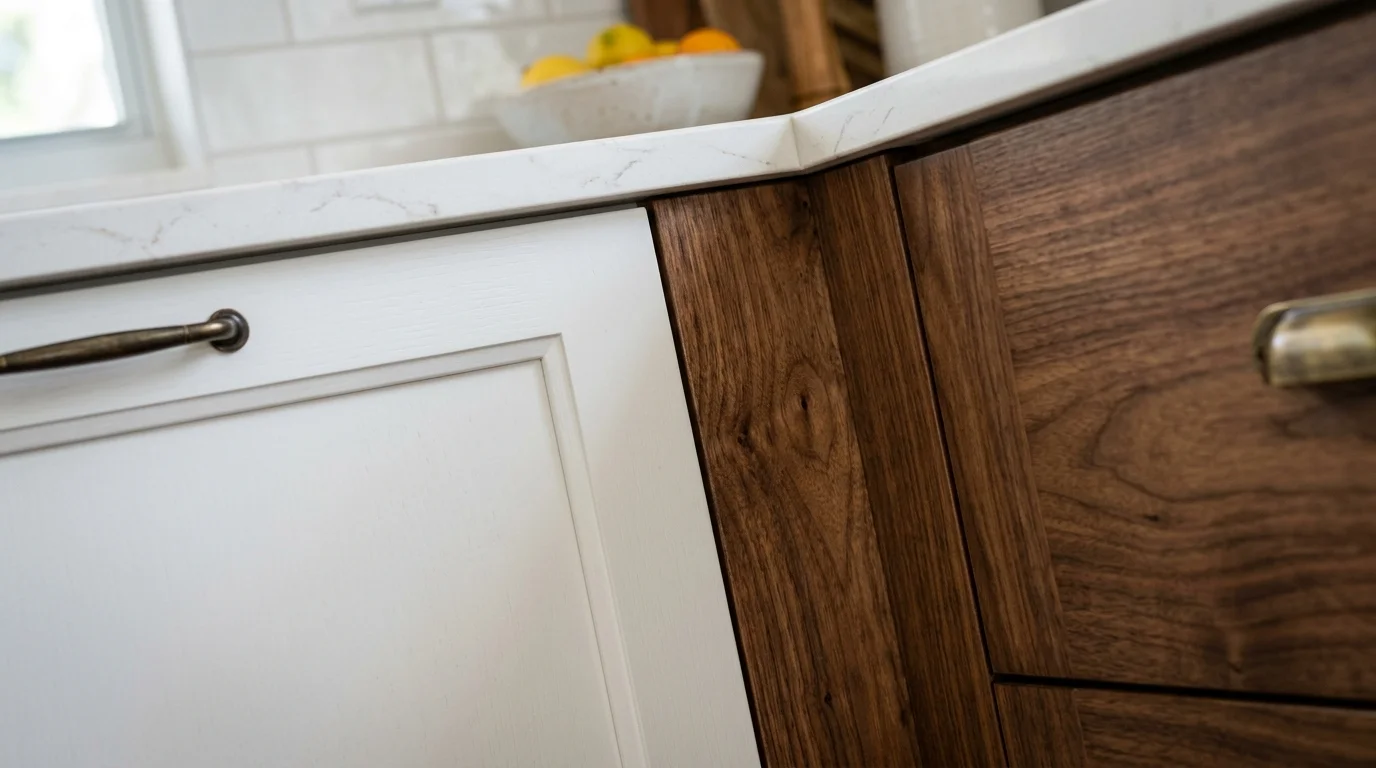
Consider your other materials when choosing between paint and stain. Projects that mix wood and stone often benefit from stained cabinets that complement natural stone countertops. All-white kitchens typically use painted cabinets to maintain the crisp, clean aesthetic.
Cost Guide
Cabinet finishing costs in Palm Beach County vary significantly based on cabinet quality, finish complexity, and application method. Here are current price ranges we see:
These ranges assume a typical 150-200 square foot kitchen with 25-30 cabinet doors and drawer fronts. Costs increase with kitchen size, cabinet complexity, and finish difficulty.
Paint generally costs less upfront, especially for solid colors on MDF or plywood boxes. Stained cabinets require solid hardwood construction, which drives up material costs. However, the labor costs can favor stain on simpler projects since there's no primer step.
Long-term costs favor painted cabinets slightly. Touch-up materials cost less, and homeowners can handle minor repairs themselves. Stained cabinet maintenance typically requires professional refinishing, adding $3,000-$6,000 every 10-12 years.
Geographic location within Palm Beach County affects pricing too. Projects in Boca Raton and Delray Beach typically run 10-15% higher than similar work in Wellington or Jupiter due to local market conditions and permit requirements.
South Florida Considerations
Florida's building requirements add complexity to cabinet projects. The Florida Building Code doesn't specifically regulate cabinet finishes, but hurricane preparedness considerations affect material choices.
Salt air near the coast attacks metal hardware faster than interior components. We recommend marine-grade hinges and slides for kitchens within 5 miles of the ocean, regardless of paint or stain choice. The cabinet finish itself isn't affected by salt air, but the hardware longevity matters for long-term durability.
Hurricane preparedness favors painted cabinets slightly. If storm damage requires cabinet repairs, matching paint colors is easier than matching stain and wood grain patterns. We've handled several post-hurricane kitchen rebuilds where paint simplified the restoration process.
HOA restrictions in gated communities can affect finish choices. Some developments limit exterior color palettes, and a few extend those restrictions to kitchen finishes visible through windows. Gated community kitchen projects sometimes require architectural review committee approval for bold cabinet colors.
Energy efficiency considerations matter year-round in Florida. Light-colored painted cabinets reflect heat better than dark stained wood, potentially reducing cooling costs. The difference is small but measurable in kitchens with significant sun exposure.
Professional application becomes more critical in Florida's climate. Both paint and stain need proper cure times despite humidity and temperature challenges. We see more finish failures from rushed installation schedules than from material choice mistakes.
Timing cabinet projects around Florida's weather patterns improves results. We prefer scheduling finish work during drier months (November through April) when possible. Summer installations require more careful moisture management and extended cure times.