Black Bathroom Fixtures: Is the Trend Worth It?
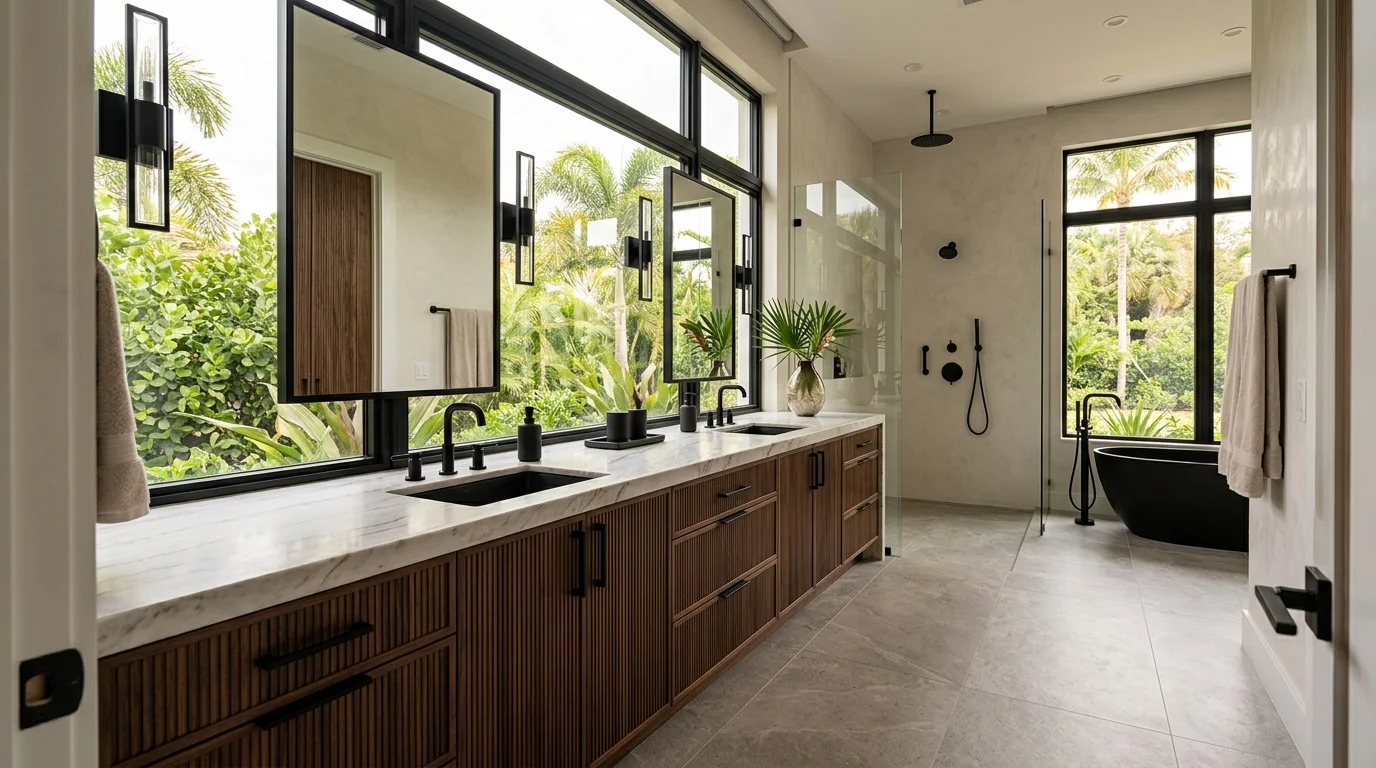
The black bathroom fixtures trend has dominated design magazines and social media feeds for the past few years, but we're getting more questions from Palm Beach County homeowners about whether matte black faucets and hardware are actually practical for daily use. After installing hundreds of black fixtures in Boca Raton, Delray Beach, and Wellington bathrooms, we have strong opinions about when this trend works, and when it doesn't.
Black fixtures can look stunning when done right. But they require more maintenance than traditional chrome or brushed nickel, show water spots immediately, and may not age as gracefully as classic finishes. The question isn't whether black fixtures are beautiful (they are), but if you're prepared for the reality of living with them.
We recommend black bathroom fixtures for design-conscious homeowners who don't mind daily maintenance and want a bold, contemporary look. Skip them if you prefer low-maintenance finishes or aren't committed to the extra cleaning they require.
Durability and Maintenance Reality
Let's address the elephant in the room: matte black fixtures show everything. Water spots, soap residue, and fingerprints are immediately visible on the dark surface. In our humid South Florida climate, this becomes even more pronounced as steam and moisture constantly hit these surfaces.
The durability depends entirely on the finish quality. Cheap matte black coatings chip and wear through to the base metal within months. Quality manufacturers like Delta and Kohler use PVD (Physical Vapor Deposition) coating that holds up much better, but even these premium finishes require daily wiping to look their best.
We see three main durability issues with black fixtures:
Water spot visibility: Every water droplet leaves a visible mark on matte black surfaces. Chrome hides these spots much better. You'll need to dry fixtures after each use to maintain the clean look that made you choose black in the first place.
Soap scum buildup: White soap residue shows dramatically against black finishes. Regular cleaning with appropriate products becomes non-negotiable, not optional.
Coating wear: Lower-quality black finishes wear through at contact points, faucet handles, shower controls, towel bars. This creates an inconsistent appearance that's impossible to fix without replacement.
For homeowners committed to the look, we recommend investing in the highest-quality fixtures you can afford and establishing a daily maintenance routine from day one.
Coordinating Black Fixtures with Tile and Finishes
Black fixtures work beautifully when properly coordinated, but they're unforgiving partners. The wrong tile choice or competing finishes can make black hardware look out of place or overwhelming.
We've had the best success pairing black fixtures with these design approaches:
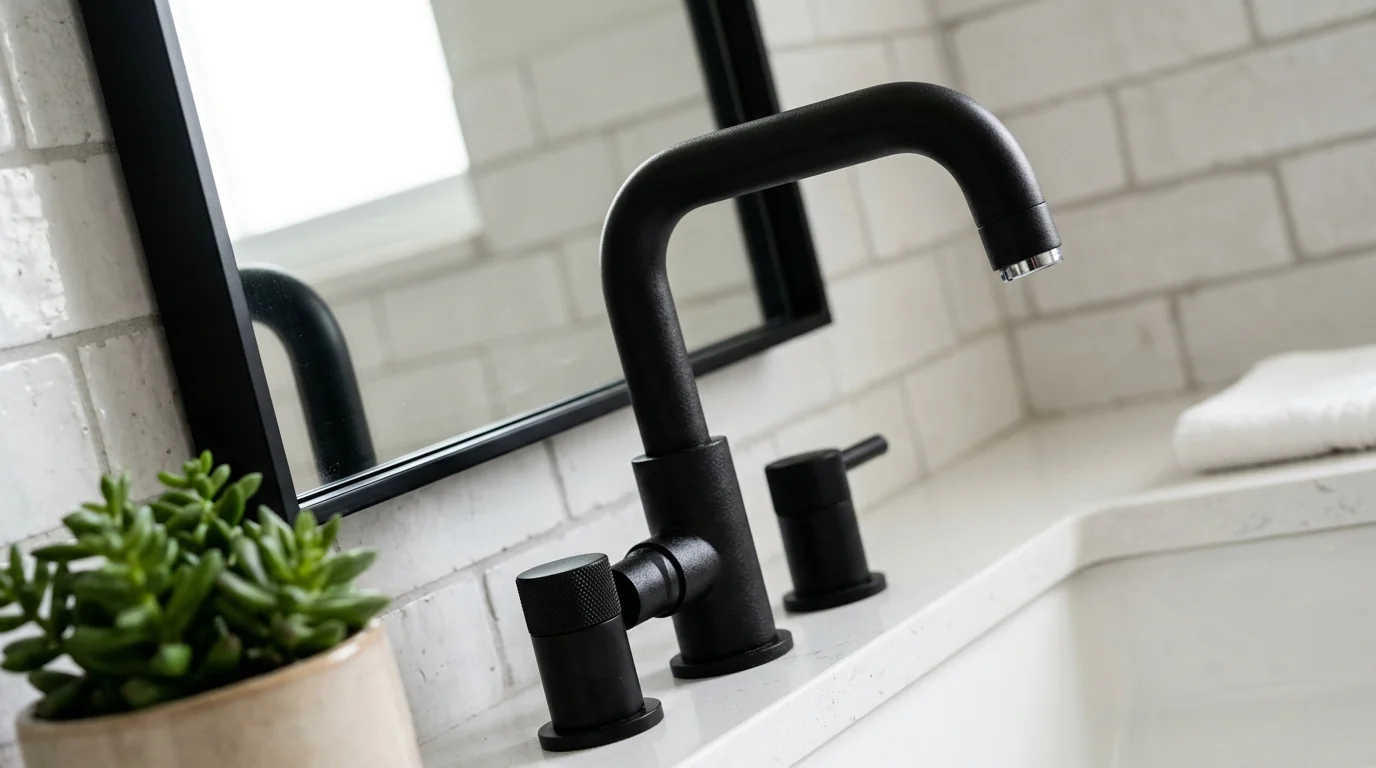
High contrast schemes: Black fixtures against white or light gray shower tile create dramatic, modern looks. The contrast needs to be intentional and bold, lukewarm gray tiles make black fixtures look muddy.
Warm neutral backgrounds: Cream, warm white, or beige tile provides a softer backdrop that prevents black fixtures from feeling too harsh. This approach works particularly well in traditional or transitional bathroom designs.
Natural stone coordination: Black fixtures complement the veining in certain marble and quartzite. But avoid busy stone patterns that compete with the bold fixture finish.
The biggest coordination mistakes we see? Mixing too many metal finishes in one bathroom. If you choose black fixtures, commit to the look throughout, faucets, shower controls, towel bars, cabinet hardware, and light fixtures should all match. One or two accent pieces in a different finish can work, but three or more creates visual chaos.
Cabinet hardware deserves special attention. Black cabinet pulls and knobs need to complement your vanity style, they look fantastic on white shaker cabinets but can overwhelm darker wood tones.
Will Black Fixtures Stay Popular?
This is the question we hear most from homeowners planning major bathroom remodels. Nobody wants to invest in a look that feels dated in five years.
Black fixtures peaked around 2021-2022, and we're seeing early signs of the trend plateauing. Design magazines are featuring more mixed metals and warmer finishes. But "trending downward" doesn't mean black fixtures will suddenly look terrible, they're transitioning from "hot new trend" to "established design choice."
Consider these factors when evaluating trend longevity:
Classic black versus matte black: Traditional glossy black finishes have been around for decades and feel more timeless. Matte black specifically feels more trend-driven and may date faster.
Your timeline: If you remodel bathrooms every 7-10 years, trend longevity matters less than if you're planning a 15-20 year renovation. Black fixtures should look current for at least another 5-7 years.
Resale considerations: Black fixtures appeal to design-conscious buyers but may not have the broad appeal of classic chrome or brushed nickel. In competitive Palm Beach County markets, this could matter.
Our recommendation? Choose black fixtures because you genuinely love the look and are prepared for the maintenance, not because they're trendy. Trends fade, but good design choices made for the right reasons tend to age better.
Cost Guide
Black fixture pricing varies significantly based on quality level and finish durability. We've seen too many homeowners choose cheaper options and regret it within months when the coating starts wearing off.
Installation costs run $150-$300 per fixture, depending on complexity and whether plumbing modifications are needed. Your general contractor handles any plumbing work, our team focuses on coordinating fixture finishes with your overall design and ensuring proper placement during the bathroom remodel process.
We strongly recommend staying in the mid-range or luxury categories for black fixtures. The budget options often use inferior coating processes that don't hold up to daily use and humidity exposure.
South Florida Considerations
Our humid climate creates specific challenges for black bathroom fixtures that homeowners in drier regions don't face.
Humidity and water spots: Year-round humidity means bathroom surfaces stay damp longer, increasing water spot formation on black fixtures. Good exhaust ventilation becomes essential, not optional. We recommend upgrading to higher-capacity exhaust fans when choosing black fixtures.
Salt air effects: Coastal areas like Jupiter and Delray Beach have salt air that can accelerate corrosion on lower-quality finishes. PVD-coated fixtures resist this better than painted or plated options.
Hurricane preparedness: Black fixtures don't affect storm preparation, but consider how exposed coastal locations might impact long-term finish durability. Homes directly on the water see more environmental stress on all finishes.
Cleaning product availability: Stock up on appropriate cleaning products that won't damage black finishes. Abrasive cleaners can permanently scratch matte coatings. Mild dish soap and microfiber cloths work best for daily maintenance.
We also recommend considering your household's cleaning habits honestly. South Florida's humidity means black fixtures need attention every day, not just during weekly cleaning. If that level of maintenance doesn't fit your lifestyle, beautiful alternatives like brushed gold or oil-rubbed bronze might serve you better.