Coastal Kitchen Design Ideas for South Florida Homes
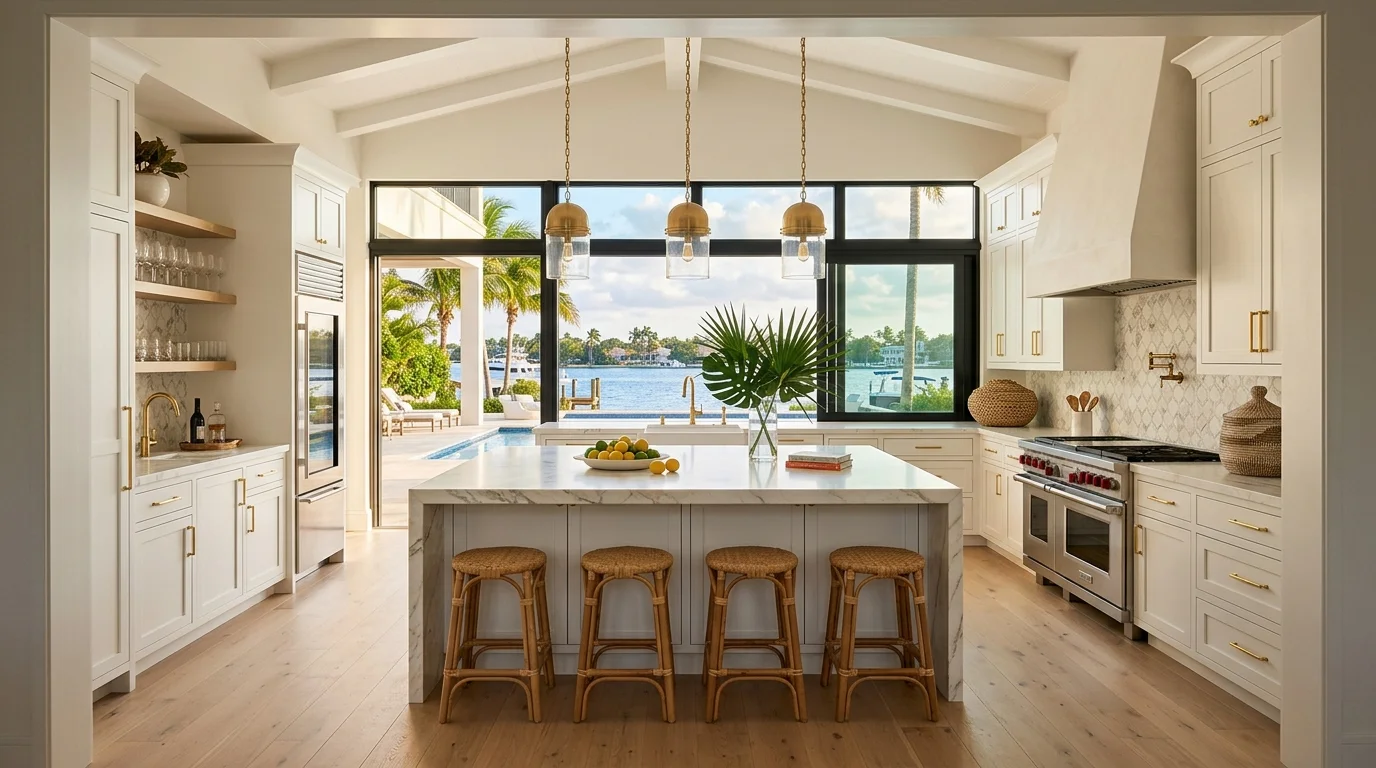
Coastal kitchen design in South Florida captures the relaxed elegance of beachside living while handling our unique climate challenges. After completing hundreds of kitchen projects from Boca Raton to Jupiter, we've learned what works, and what doesn't, when creating kitchens that feel connected to the ocean.
The best coastal kitchens blend functionality with that breezy, salt-air aesthetic. Think weathered textures, ocean-inspired colors, and materials that can handle humidity without losing their charm. This isn't about cramming seashells everywhere. It's about creating spaces that feel naturally connected to South Florida's coastal lifestyle.
Coastal Color Palettes That Work
Successful coastal color schemes go beyond basic white and blue. We recommend starting with a neutral base, warm whites, soft grays, or creamy off-whites, then layering in ocean-inspired accents.
Our clients in Wellington and Delray Beach love combining crisp white cabinets with weathered wood islands. The contrast creates depth without overwhelming the space. For cabinet colors, consider soft sage greens, driftwood grays, or even navy blues on lower cabinets paired with lighter uppers.
Backsplashes offer the perfect opportunity for coastal color. Sea glass tiles in soft blues and greens catch South Florida's abundant natural light beautifully. We often suggest subway tiles in varying shades to create subtle movement that mimics ocean waves.
Hardware finishes matter too. Brushed brass and aged bronze work better than bright chrome in coastal settings. These warmer metals complement the organic materials we'll discuss next.
Natural Materials for Beachside Living
Natural materials form the backbone of authentic coastal design. But not all materials handle Florida's humidity equally well. We've seen expensive mistakes when homeowners choose materials that look great but can't handle our climate.
For countertops, quartz outperforms natural stone in our humid conditions. Look for quartz slabs with organic patterns that mimic marble or limestone. Avoid pure white, subtle veining and movement feel more coastal.
Wood elements add warmth but require careful selection. Reclaimed teak, weathered pine, and cypress handle moisture well. We often incorporate these as open shelving, ceiling beams, or island details. Avoid oak and maple, they're beautiful but struggle with humidity changes.
For cabinet materials, frameless construction works better in coastal settings. The clean lines feel more contemporary, and there are fewer places for moisture to collect.
Stone and tile floors ground coastal kitchens beautifully. Travertine, limestone, and large-format porcelain tiles that mimic natural stone all work well. Skip hardwood in kitchens, even engineered versions struggle with the moisture from cooking and our climate.
Open, Airy Layouts
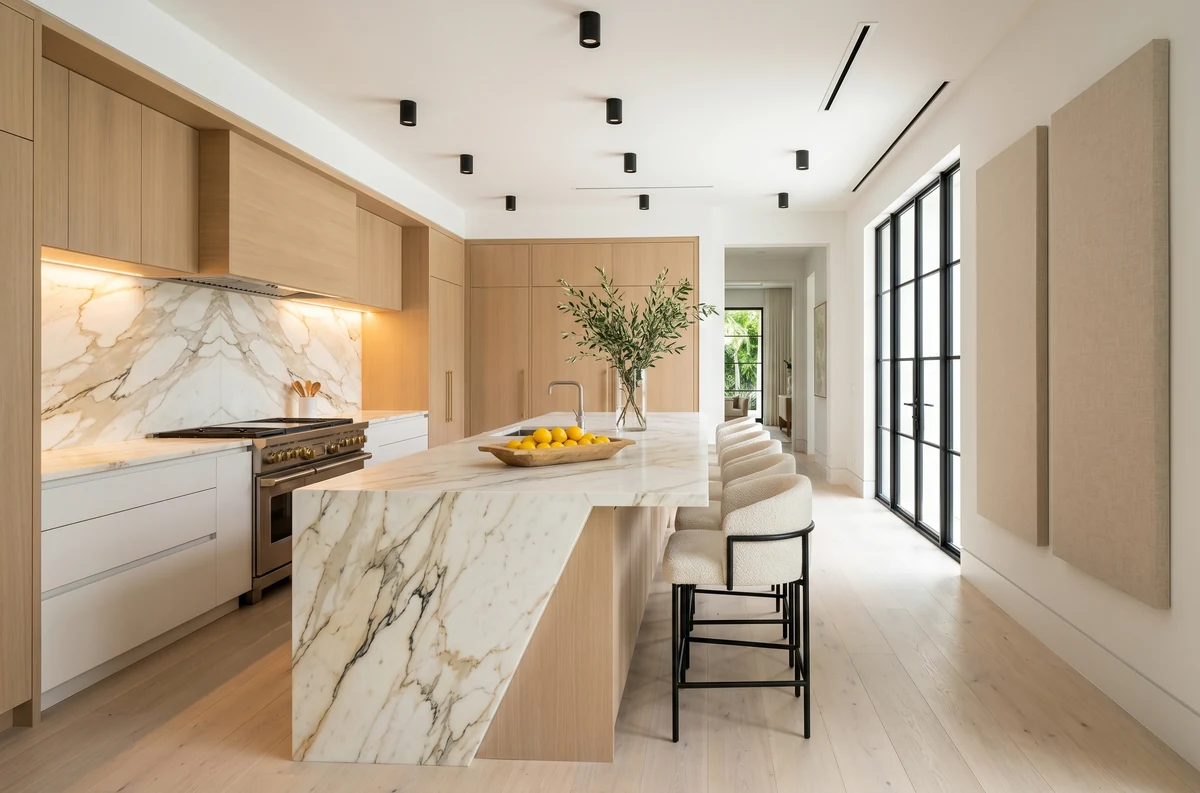
Coastal design demands open, flowing layouts that maximize natural light and ventilation. Traditional closed-off kitchens fight against South Florida's indoor-outdoor lifestyle.
We recommend removing walls between kitchens and living areas whenever possible. Open concept designs let ocean breezes flow through and create that resort-like feeling our clients want.
Large islands work beautifully in coastal kitchens, especially when they include seating for casual dining. Position islands to maintain clear sight lines to outdoor spaces. Nothing ruins the coastal vibe like blocking views of your pool or garden.
Windows deserve special attention. Maximize natural light with larger openings, but consider hurricane impact requirements. We often suggest extending countertops to create window seats or breakfast bars that take advantage of views.
Storage should feel integrated, not imposing. Floor-to-ceiling cabinets can overwhelm coastal spaces. Instead, mix closed storage with open shelving for displaying coastal-inspired dishware and glassware.
Hurricane-Resistant Features
Coastal living means preparing for storms. Smart material choices and construction techniques protect your investment while maintaining style.
Hurricane-resistant materials don't have to look institutional. Impact-resistant windows and doors now come in styles that complement coastal design. Look for products that meet Florida Building Code requirements for high-velocity hurricane zones.
Appliance placement matters during storms. Avoid putting expensive equipment near large windows or sliding doors. Create dedicated spaces for hurricane supplies without sacrificing daily functionality.
Polished construction details help too. Raising electrical outlets and placing mechanical systems higher prevents flood damage. These practical considerations blend into coastal design when planned from the beginning.
Cost Guide
Coastal kitchen costs vary widely based on scope. The biggest variable isn't whether you go coastal, it's whether you keep the existing layout or move plumbing, change the footprint, and add hurricane impact windows. Here's what we typically see in Palm Beach County:
The Budget column starts at $15,000 because that's a real number, a cabinet-and-countertop refresh on the existing layout with coastal-style materials. Most of our coastal kitchen work lands in the Mid-Range column ($25,000-$50,000) when clients add the tile backsplash, hardware refresh, and finish-level details that pull the room together. The Luxury column ($50,000-$100,000) applies when the project includes premium-tier counters, full custom cabinetry, and a complete finish package. Note that natural stone flooring and hurricane impact windows are separate add-on scopes, they can push the total higher when included, but most coastal kitchen projects don't include both.
South Florida Considerations
Coastal kitchens in South Florida face unique challenges beyond typical design concerns. Our climate, building codes, and lifestyle demands all influence successful coastal design.
Humidity control starts with proper ventilation. We always recommend commercial-grade range hoods and additional exhaust fans. Moisture buildup ruins even the best coastal finishes quickly.
Salt air affects more than you'd expect, even miles from the beach. Metal finishes need protective coatings, and we avoid materials that corrode easily. This eliminates some popular coastal hardware options.
Cabinet finishes require special attention in our climate. Standard paint jobs fail quickly. We use marine-grade finishes and proper sealing techniques to prevent moisture damage.
Lighting design must account for our intense sun. Too many windows create glare problems, while too few make spaces feel closed off. We balance natural light with strategic window treatments and artificial lighting.
HOA requirements in waterfront communities often restrict exterior changes. Check regulations before planning window enlargements or outdoor kitchen connections. We help navigate these requirements during design.
Hardware and Fixtures That Survive Salt Air
Near the water, the finish on your hardware and fixtures matters as much as the look. Salt air is relentless on metal, and a cabinet pull or faucet that looks perfect in the showroom can spot and pit within a couple of seasons if it's the wrong finish. We guide coastal clients toward marine-grade stainless steel, solid brass, and quality powder-coated finishes, all of which hold up far better than cheaper plated hardware where the coating eventually gives way.
Living finishes are worth understanding before you commit. Unlacquered brass and oil-rubbed bronze will develop a patina over time, and on the coast that happens faster. Plenty of homeowners love that aged, lived-in look, but if you want a finish to stay bright, a satin or brushed finish with a protective clear coat is the safer choice for a beachside kitchen.
The same thinking applies to the sink and faucet. A solid stainless or fireclay sink shrugs off coastal conditions, and a faucet from a established manufacturer with a good finish warranty is money well spent here. We'd rather a client invest a little more in fixtures that last than replace corroded hardware in three years, which is exactly the kind of avoidable cost we try to design out from the start.