Kitchen Pantry Design Ideas for South Florida Homes
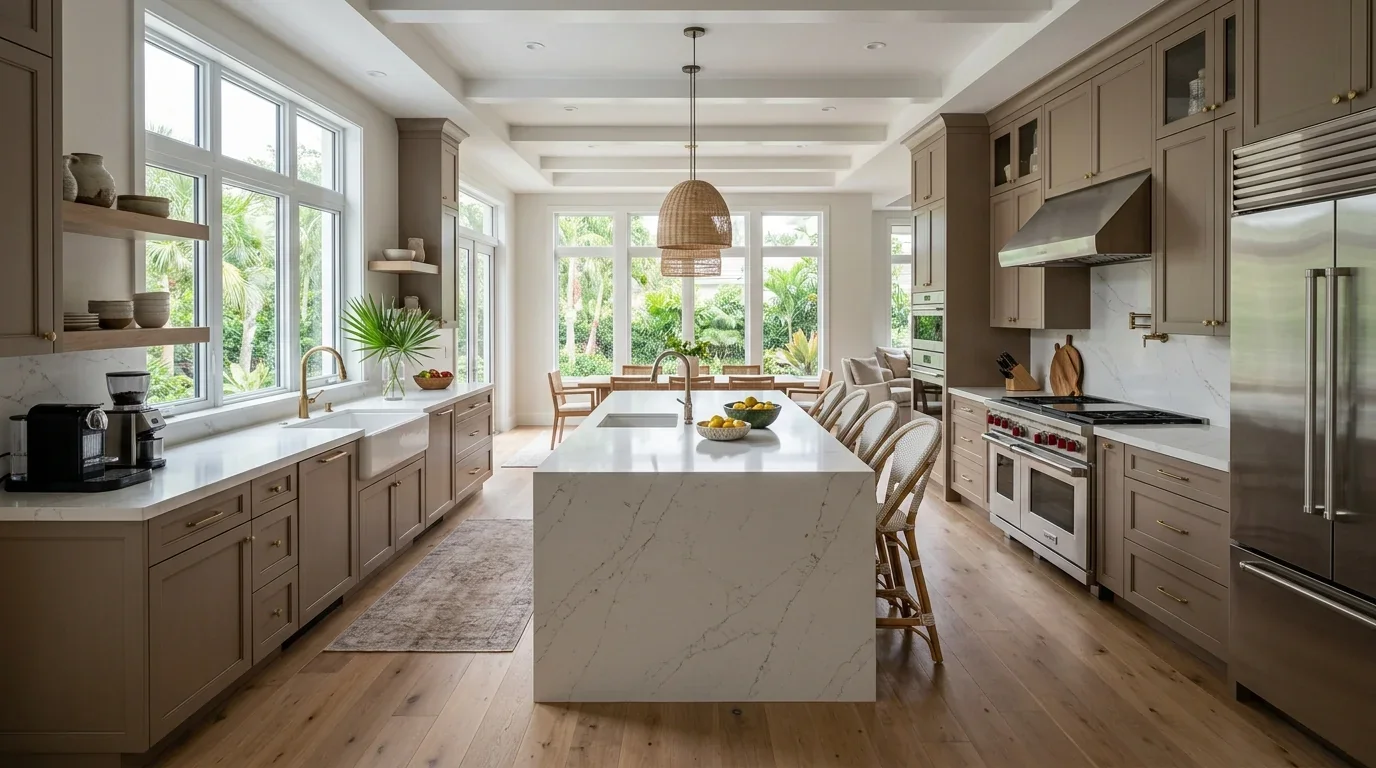
Smart kitchen pantry design ideas can transform how you store and organize food in your South Florida home. Our team sees homeowners in Palm Beach County struggling with limited storage and humidity challenges that affect traditional pantry setups. The right pantry design goes beyond just adding shelves, it creates a functional space that works with our climate while maximizing every square inch.
We recommend three main pantry types for South Florida kitchens: walk-in pantries, reach-in pantries, and butler's pantries. Each serves different needs and budgets. Your choice depends on available space, family size, and how you cook.
Types of Pantries
Walk-in pantries offer the most storage but require at least 6x4 feet minimum. We build these in Wellington and Jupiter homes where space allows. Floor-to-ceiling shelving on three walls creates maximum capacity. Include a small countertop for prep work and appliance storage.
Reach-in pantries work better for smaller kitchens common in Boca Raton condos. These 24-inch deep closets use every inch with pull-out drawers and adjustable shelving. Door-mounted racks add extra storage for spices and small items.
Butler's pantries serve as secondary prep areas between kitchens and dining rooms. Popular in Delray Beach custom homes, these spaces house extra appliances, dishes, and party supplies. They keep main kitchens clutter-free during entertaining.
Corner pantries fit awkward kitchen layouts. We design these with rotating shelves or pull-out systems that bring items within reach. They use otherwise wasted space effectively.
Humidity-Resistant Materials
South Florida's humidity destroys standard pantry materials quickly. We specify moisture-resistant options that prevent warping, mold, and deterioration.
Thermofoil cabinets resist humidity better than real wood veneers. The plastic coating blocks moisture penetration. Solid wood painted cabinets work if properly sealed and maintained annually.
Wire shelving allows air circulation but collects dust. We prefer coated steel or powder-coated wire that wipes clean easily. Avoid particle board shelving, it swells and fails in humid conditions.
Ventilation prevents moisture buildup. Install a small exhaust fan or ensure adequate air circulation. Dehumidifiers help in windowless pantries.
Sealed containers protect dry goods from humidity and pests. Glass jars with rubber seals work well for flour, sugar, and cereals. Clear containers let you see contents and quantities at a glance.
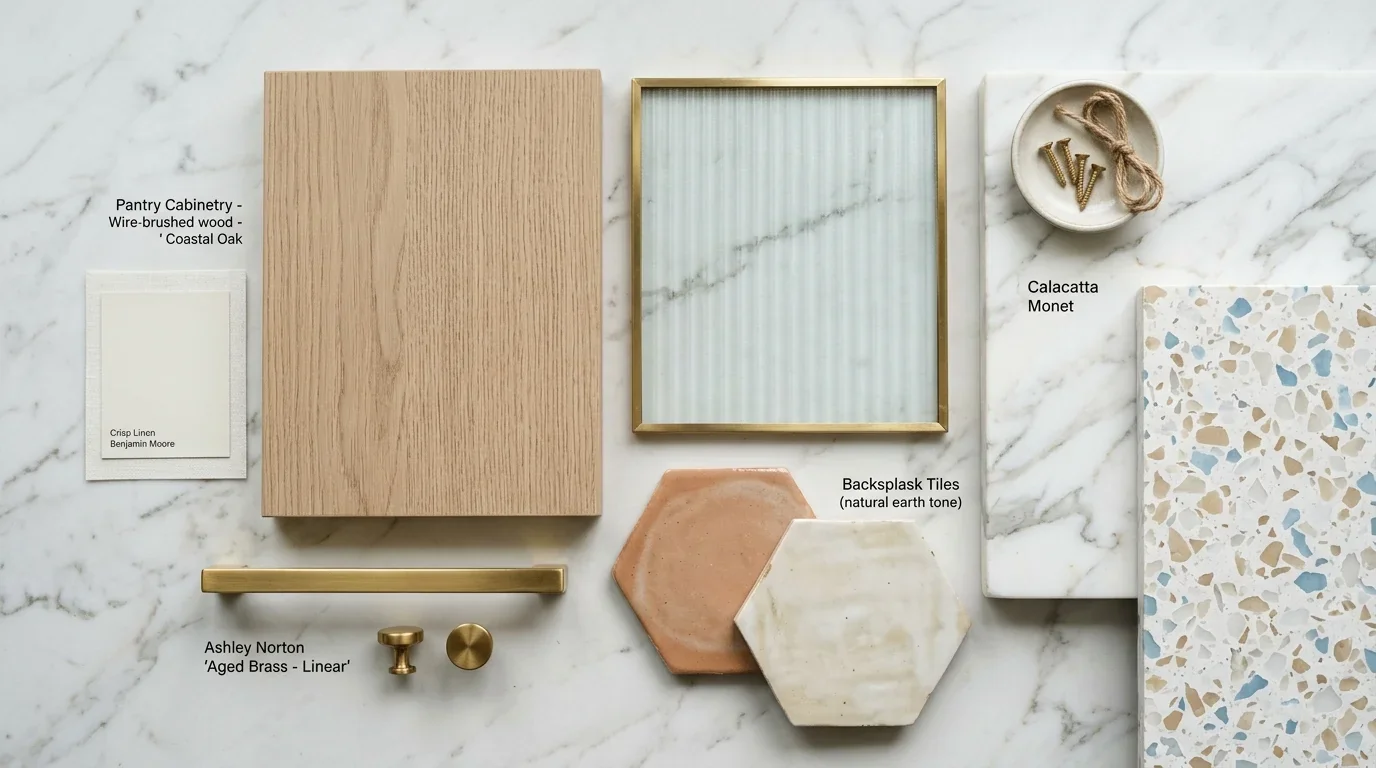
Organization Systems
Smart organization systems make pantries functional regardless of size. We install pull-out drawers that bring items forward for easy access. Deep shelves become usable when contents roll toward you.
Lazy Susans work well in corner pantries. Two-tier versions double storage capacity. Choose models with raised edges to prevent items from falling off.
Adjustable shelving adapts to changing needs. We space shelves 12-16 inches apart initially, then adjust as needed. This flexibility accommodates different container heights.
Door storage maximizes space in reach-in pantries. Slim racks hold spices, oils, and small items. Over-door organizers add storage without permanent installation.
Pull-down shelving makes high storage accessible. These spring-loaded systems bring top shelves to eye level. Worth the investment in tall pantries.
Basket systems organize loose items like onions, potatoes, and snacks. Wire or plastic baskets slide out for easy access. Label everything clearly.
Design Considerations
Lighting transforms pantry functionality. LED strip lighting under each shelf eliminates shadows and makes reading labels easy. Motion sensors turn lights on automatically when doors open.
Flooring should match adjacent kitchen areas for visual continuity. We recommend tile or luxury vinyl plank that handles spills and humidity well. Avoid carpet or hardwood in pantries.
Counter space in walk-in pantries provides prep area and appliance storage. A 24-inch deep counter works for most needs. Include electrical outlets for small appliances.
Door styles affect accessibility. Bi-fold doors work in tight spaces but limit visibility. Single doors require clearance space. Pocket doors disappear when open but cost more.
Color schemes should complement the main kitchen. Light colors make pantries feel larger and help with visibility. White pantries stay classic and bright.
Cost Guide
Pantry renovation costs in Palm Beach County vary significantly based on size, materials, and complexity. Here are typical ranges our team sees:
Higher-end finishes and custom features increase costs. Solid wood shelving, granite countertops, and premium organization systems push projects toward upper ranges.
DIY organization systems cost $300-800 but require careful measuring and installation skills. Professional installation ensures everything fits properly and functions smoothly.
South Florida Considerations
Hurricane preparedness influences pantry design in coastal Palm Beach County areas. We recommend secure shelving that won't shift during storms. Lower shelves store heavy canned goods that could become projectiles.
Pest control matters more in our climate. Sealed storage containers prevent ant and roach infestations. Regular cleaning and proper food storage practices keep pantries pest-free.
Salt air affects metal components near the coast. We specify stainless steel or powder-coated finishes that resist corrosion. Regular maintenance extends hardware life.
Cooling costs increase with poor pantry ventilation. Proper air circulation prevents heat buildup that makes air conditioning work harder. This consideration affects energy bills year-round.
Building codes in Palm Beach County require proper electrical installation for lighting and outlets. We handle permits and inspections to ensure compliance with local regulations according to Palm Beach County building requirements.
Resale value improves with well-designed pantries. Kitchen storage upgrades appeal to buyers who prioritize organization and functionality.
Butler's Pantry vs. Walk-In Pantry, Which One Fits Your Home
These two terms get used interchangeably by builders and real estate listings, but they serve very different purposes. A walk-in pantry is a dedicated storage room with shelving, usually off the kitchen or in an adjacent hallway, designed primarily for dry goods and bulk storage. A butler's pantry is a working transition space between the kitchen and dining room, with countertop, cabinetry, often a sink, and sometimes a second dishwasher or beverage refrigerator. Picking the wrong one for your home is one of the more common mistakes we see in Palm Beach County remodels, particularly in newer construction in Jupiter, Palm Beach Gardens, and the Boca Raton waterfront where square footage allows for either.
A walk-in pantry earns its space when your household shops in bulk, cooks regularly, and stores more than a week of groceries at a time. Clients in Wellington with large families or in Delray Beach retirement communities who cook for grandkids on weekends almost always prefer the walk-in. It is the most storage per dollar you can add to a kitchen. A butler's pantry is the right choice when you entertain, think clients in Boca Raton or Admirals Cove who host dinners and want a staging area for platters, glassware, and serving pieces without blocking the main kitchen. It is a luxury upgrade more than a functional one, and it costs considerably more per square foot because it is essentially a second kitchen.
Kitchen planning guidelines published by the National Kitchen & Bath Association recommend at least 24 inches of shelf depth for a true walk-in pantry and 42 inches of aisle clearance if the pantry has shelving on both sides. For a butler's pantry, the NKBA benchmark is 30-36 inches of countertop depth and at least 48 inches between opposing cabinet runs. Ignore those numbers and the pantry you loved on paper will feel cramped the day your groceries actually arrive.
A few practical notes from our crew's projects across Boynton Beach, Lake Worth, and Royal Palm Beach. Ventilation matters more than homeowners expect. A walk-in pantry sharing an exterior wall in a South Florida home gets humid fast during summer; we specify either a small passive vent to the main kitchen or a dedicated exhaust on a humidistat. Second, if you are planning a butler's pantry with an under-counter beverage fridge or ice maker, plan the plumbing rough-in and the dedicated 20-amp circuit during rough framing, not after drywall. Retrofit is three times the cost. Finally, lighting, puck lights or LED strips inside the pantry cost under $200 but make a meaningful difference in a space that otherwise sits behind a closed door. Motion-activated LED switches have become our default spec.