How to Fix a Warped Cabinet Door in Humid South Florida
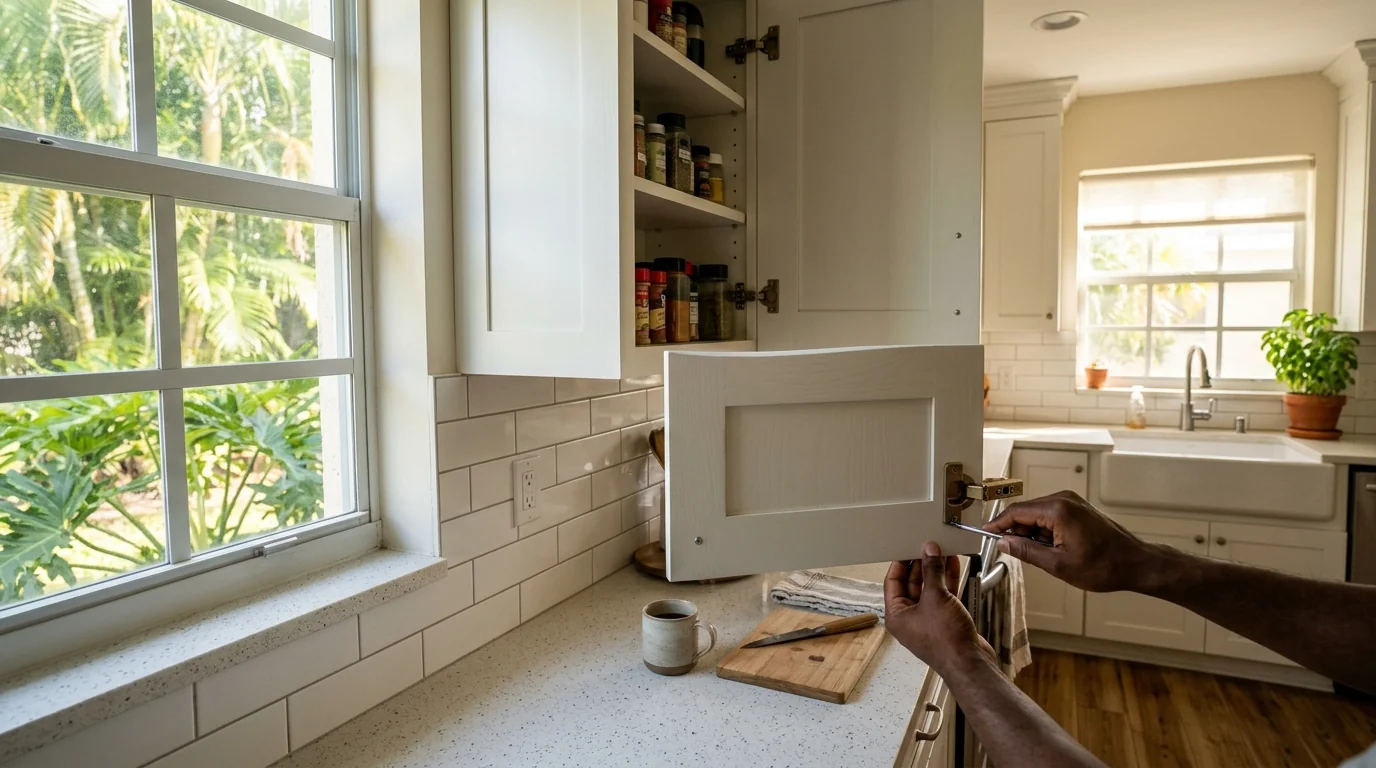
A warped cabinet door is one of the most common callbacks we see in Palm Beach County kitchens, and the humidity gets most of the blame for good reason. If you have a door that no longer sits flush, that catches at one corner, or that has visibly bowed away from the frame, the good news is that learning how to fix a warped cabinet door is usually a weekend job rather than a replacement. We've walked hundreds of homeowners from Boca Raton to Jupiter through this, and most warps come down to one thing: moisture hitting one face of the door harder than the other.
Below we'll cover why doors warp in this climate, how to repair a warped door without making it worse, when a door is worth saving, and the prevention steps that actually hold up through a South Florida summer. Some fixes you can do with the door still hanging. Others need it off the cabinet for a couple of days. We'll tell you which is which.
Why Cabinet Doors Warp Here
Wood and wood products move when they take on or give up moisture. A cabinet door warps when one face absorbs more water vapor than the other, swells slightly, and pulls the whole panel into a bow. The door curves toward the drier side. That's the entire mechanism, and once you understand it, every fix and every prevention step makes sense.
South Florida stacks the deck. Indoor humidity here sits high for months at a time, and a kitchen adds its own moisture on top of that: steam off the cooktop, heat and vapor venting from the dishwasher, a sink that runs all day. The doors closest to those sources tend to warp first. We see it constantly on the cabinet right next to the range and on the doors under the sink.
Heat plays a part too. A door that gets afternoon sun through a window, or sits beside an oven that runs hot, dries on that side faster than the back. Uneven drying bows a door just as readily as uneven wetting. Add hinge tension into the mix, where a door is fighting its mounting hardware, and a panel that was flat at install can develop a noticeable curl within a season.
The detail most homeowners miss is the back of the door. Factory finishing often coats the visible front beautifully and leaves the back bare or lightly sealed. In a dry climate that's fine. In ours, that bare back is a sponge. It drinks humidity while the sealed front stays put, and the door bows outward at the top or bottom corner. If you only remember one thing from this article, remember that an unsealed back is the root cause behind most warped doors in this region.
Quick Fixes That Don't Need a Workshop
Before you pull a door off, figure out how bad the bow actually is. Close the door and look at the gap between the door and the cabinet frame at each corner. A warp under an eighth of an inch is often something you can correct with the door still hanging. Anything more than that usually needs the moisture-and-weight treatment we cover in the next section.
For a mild bow, start with the hinges. This is the answer to the question we hear most, which is how do you fix a warped door without removing it. On most modern cabinets you have concealed European cup hinges with two or three adjustment screws. The screw nearest the door controls depth, pulling the door closer to the cabinet or pushing it away. Turning that screw on the corner that sticks out will often draw the high corner back into line.
Work in small turns and close the door to check after each one. You're trying to balance the door so both top and bottom corners sit against the frame evenly. If tightening one hinge fixes the top but throws off the bottom, split the difference between the two. On traditional face-frame cabinets with exposed hinges, simply re-tightening loose screws sometimes pulls a slightly bowed door back flat.
When a single door corner refuses to stay put, two cheap parts solve it. A magnetic catch mounted behind the high corner holds that corner against the frame every time you close the door. Adding a third hinge in the middle of a tall door spreads the tension and stops a long door from bowing in the center. Both are common moves on the pantry and broom-cabinet doors that run floor to ceiling and are most prone to warping along their length. If your kitchen is heavy on tall units, our overview of cabinet door styles and constructions explains which builds hold their shape best in a humid room.
Adjusting hinges treats the symptom, not the cause. It's the right first move for a fresh, mild warp, and plenty of doors never need anything more. But if the panel itself has taken a set, meaning the wood has actually curved and stayed there, no amount of hinge tweaking will flatten it. For that, the door comes off.
The Moisture and Weight Method
This is the workhorse repair for a solid wood door that has bowed and stayed bowed. The idea is simple: add moisture back to the concave side so it swells and relaxes, then hold the door flat while it dries even. You're reversing the exact imbalance that caused the warp. It takes two to four days, so plan around an empty cabinet for the weekend.
Take the door off the hinges and remove the hardware. Lay a damp, not soaking, towel across the concave face, which is the side that curves inward. Cover that with plastic to slow evaporation and let it sit for a few hours so the wood draws the moisture in. The goal is to make that tight side supple enough to give.
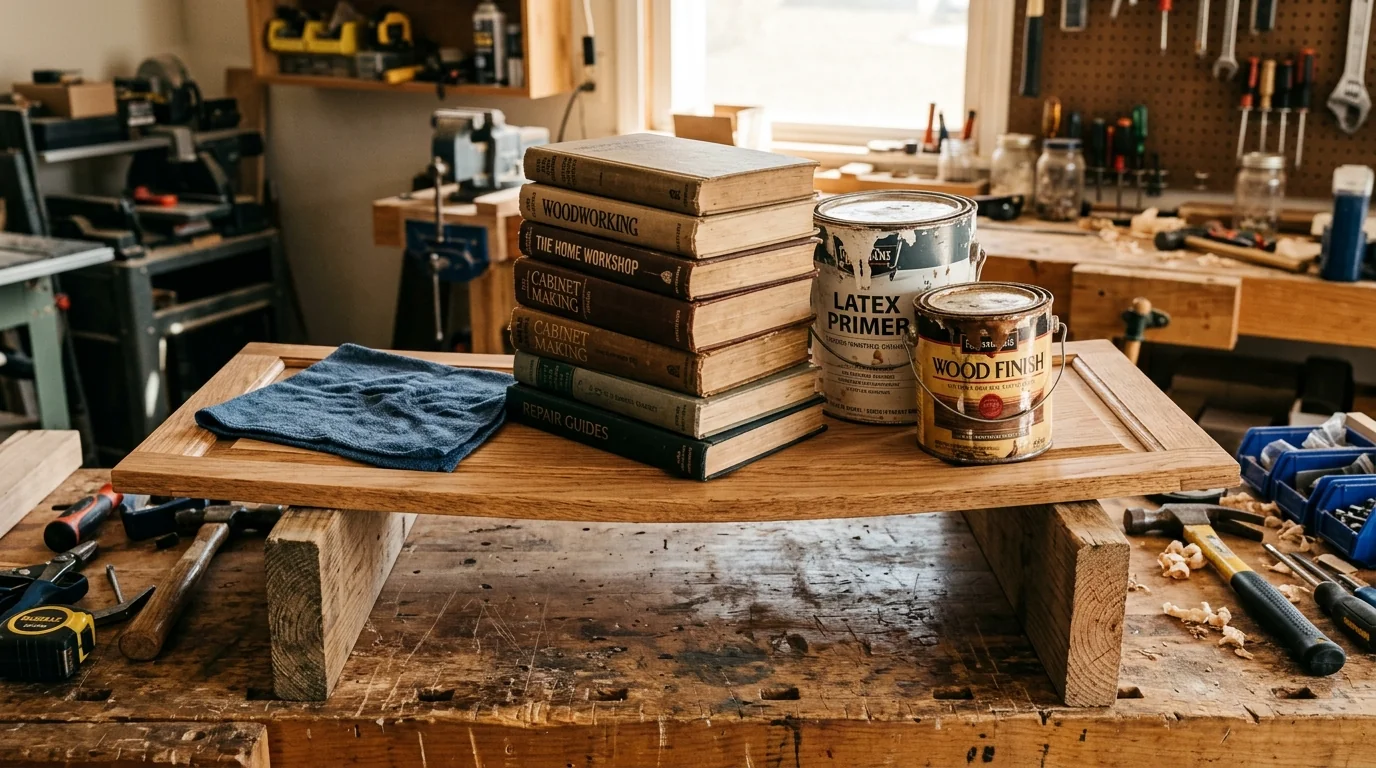
Now flatten it. Lay the door across two supports with the bow facing up, then stack weight in the center, books, a couple of paint cans, anything heavy and flat. For a stubborn warp, clamp the door over a very slight reverse bow so it dries past flat and settles back to true. Check it every day. Re-dampen lightly if the wood feels dry before it has relaxed. Let it come back to flat slowly, because forcing it fast is how panels crack.
Reversing a Warp With Heat
Heat speeds up the process by making the wood fibers pliable, but it's the step where people do the most damage. If you use it, use it gently. A clothes iron on low over a damp cloth, kept moving so you never park it in one spot, can soften a localized bow enough to clamp it flat. Some people use a hair dryer on the concave side for the same effect. Keep the heat low and the door moving, let it cool under weight, and stop the moment you smell finish or see the surface change. High heat blisters paint, bubbles thermofoil, and scorches stain. When in doubt, skip the heat and let moisture and weight do the work over a couple more days.
Once the door is flat, do not rehang it bare. Seal the back before it goes anywhere near the cabinet, which we cover in the prevention section. A door you flatten and then put back unsealed will bow again within a few humid weeks, and you'll be right back where you started.
MDF vs Solid Wood vs Thermofoil
What your door is made of decides whether a warp is fixable at all, so identify the material before you spend a weekend on it.
Solid wood is the most forgiving. It absorbs and releases moisture, which is why it warps, but that same behavior means it responds well to re-flattening and resealing. A solid wood door that has bowed can almost always be brought back to true with the moisture-and-weight method, then kept flat with a sealed back. These are the doors worth fighting for.
MDF, the engineered core under most painted doors, is a different animal. It holds its shape beautifully when it stays dry, which is why it's a great paint substrate. But once MDF actually absorbs water, the fibers swell and that swelling is permanent. A painted MDF door that has bowed from ambient humidity can sometimes be coaxed flatter and then sealed. A painted MDF door that got wet, swelled, and lost its edges will not come back. That one is a replacement.
Thermofoil is a vinyl skin heat-pressed over an MDF core, and it has its own failure mode. It doesn't warp so much as delaminate. Heat from a range, an oven, or even a nearby toaster oven can loosen the vinyl and let it peel away from the substrate, especially along bottom edges. Once thermofoil starts peeling, there's no fixing it, gluing it back rarely lasts. If you're weighing materials for a future project, our breakdown of frameless versus framed cabinet construction and our guide to the best cabinet styles for South Florida both factor humidity into the recommendation.
When to Repair vs Replace
Here's where we'll give you the straight answer, because plenty of repair guides pretend every door is salvageable and that's not honest. Repair makes sense when the door is solid wood, the finish is intact, and the bow is moderate. Those doors flatten reliably and stay flat once sealed. We'd repair that door every time before replacing it.
Replace the door when the damage is structural rather than just shape. A door that's delaminating, where layers are separating, is done. Thermofoil that's peeling off its core is done. MDF that swelled from real water exposure and lost its crisp edges is done. None of those return to flat no matter how patiently you weight them, and trying just wastes a weekend.
There's also a math problem worth naming. If one door in a twenty-door kitchen warped, repair or order a single replacement. But if doors are warping across the whole kitchen, that's usually a sign the original cabinetry wasn't built or sealed for this climate, and you'll keep chasing warps one at a time forever. At that point a refacing or new doors often costs less in aggravation than a years-long game of whack-a-mole. We lay out that decision in detail in our guide to cabinet refacing versus replacement, and if hardware is part of the problem, our cabinet hardware placement guide covers hinge upgrades that hold doors flatter.
Stopping Warps Before They Start
Every fix above is reactive. The real win is keeping doors flat in the first place, and in this climate that comes down to a few habits.
Seal the back of every door. This is the big one. A door with a finished front and a bare back will always be fighting moisture imbalance, so a coat or two of the same finish or a quality sealer on the unfinished side evens out how both faces breathe. If you're refinishing or repainting cabinets anyway, do the backs and edges at the same time. It's the single highest-value thing you can do to fix warped cabinet door humidity problems for good.
Manage the moisture in the room. Run a range hood that vents outside rather than recirculating, especially on the cabinets flanking the cooktop. Run the bath exhaust fan and crack a window when you can. If a stretch of cabinets sits in a notoriously damp corner, a small dehumidifier nearby does more than people expect. We get into broader humidity strategy in our piece on building a kitchen for South Florida's climate, and the same thinking applies to choosing surfaces that hold up to humidity.
Watch the heat sources. Keep doors from sitting directly against a hot oven cheek if the layout allows, and use window treatments on kitchen windows that bake one cabinet run all afternoon. Wipe down spills and standing water promptly, particularly under the sink where a slow drip can warp a door over months before you notice the leak.
Finally, buy for the climate when you remodel. Plywood box construction handles humidity better than particleboard, solid wood and well-sealed doors outlast bargain thermofoil in a hot kitchen, and a reputable cabinet line will have finished the backs for you. Spending a little more on construction up front is cheaper than re-flattening doors every August. If you want a second set of eyes on your kitchen, our team is happy to take a look. Reach out through our contact page and we'll tell you honestly if you're looking at a quick repair or something bigger.