Induction vs Gas Cooktop: Which Is Best for Florida Homes?

The induction vs gas cooktop debate comes up in every high-end kitchen remodel we complete in Palm Beach County. After installing both types in hundreds of South Florida homes, from Wellington estates to Boca Raton condos, we have strong opinions about which works best in our climate.
Gas dominated Florida kitchens for decades. Now induction is gaining ground fast, especially in luxury remodels where homeowners want the latest technology. The choice affects your cooking experience, energy bills, and resale value.
We recommend induction for most South Florida homes. Here's why, plus the specific situations where gas still makes sense.
Cooking Performance Comparison
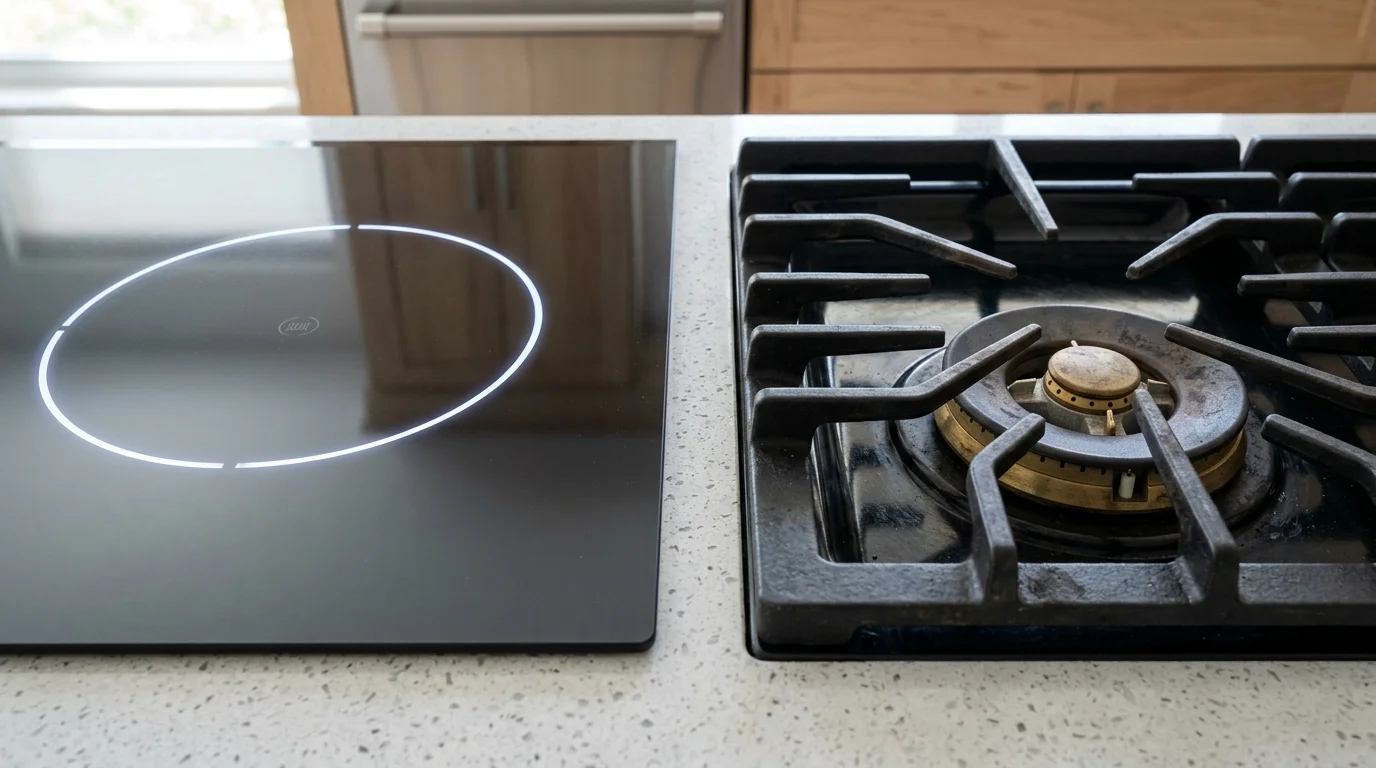
Induction wins on pure cooking performance. The electromagnetic field heats cookware directly, giving you precise temperature control that gas can't match. You can simmer delicate sauces at exactly 140°F or sear steaks at maximum heat instantly.
Gas offers visual feedback, you see the flame adjust. Some chefs prefer this immediate visual cue. But induction's digital controls give you repeatable results every time. Set it to level 6, and level 6 delivers identical heat output whether it's your first use or your thousandth.
Response time favors induction dramatically. Water boils 50% faster than on gas. Heat adjustments happen instantly, no waiting for burners to heat up or cool down. This matters during Florida's hot summers when you want to minimize time spent over a hot cooktop.
For serious cooking enthusiasts who want kitchen upgrades that add the most value to Florida homes, induction delivers restaurant-quality performance at home.
Energy Efficiency in Florida's Climate
Energy efficiency becomes critical when your air conditioning runs eight months per year. Induction operates at 85-90% efficiency compared to gas at 40-55%. That means less waste heat pumped into your kitchen.
Gas cooktops generate significant ambient heat. Every BTU of wasted energy becomes heat your AC system must remove. During August in Delray Beach, that gas burner waste translates directly to higher electric bills.
Induction keeps your kitchen cooler. The cooktop surface stays relatively cool since only the cookware heats up. We've measured 15-20°F temperature differences between kitchens with induction versus gas during heavy cooking sessions.
Florida Power & Light data shows homes with induction cooktops use 12-18% less energy for cooking compared to gas. Over a year, that adds up to $150-250 in savings for typical households. Premium homes with larger families see even bigger differences.
Safety Considerations
Safety matters more in Florida's hurricane-prone climate. Gas lines can suffer damage during storms, and power outages affect gas appliances with electronic ignition systems anyway.
Induction eliminates open flames entirely. No risk of kitchen fires from forgotten burners or loose clothing catching fire. The cooktop surface cools quickly after cooking, important for homes with children or elderly residents.
Gas requires proper ventilation and carbon monoxide monitoring. Florida's tight hurricane windows and doors can trap combustion gases if ventilation systems fail. We've seen too many homes with inadequate makeup air for gas appliances.
Emergency shutoffs work differently. Induction stops heating instantly when cookware is removed. Gas burners continue producing flame until manually turned off. This difference prevents many accidents.
Installation Requirements
Induction requires 220V electrical service, the same as electric dryers or ovens. Most homes built after 1980 can accommodate this easily. Older homes might need electrical upgrades, adding $500-1,500 to installation costs.
Gas installation costs vary dramatically based on existing infrastructure. Homes without gas service face $2,000-5,000 in line installation costs. Existing gas homes need proper sizing, many older installations can't handle today's high-BTU ranges.
Ventilation requirements differ significantly. Gas needs powerful exhaust systems rated for BTU output, typically 600+ CFM for professional-style ranges. Induction requires less ventilation since it produces minimal ambient heat and no combustion gases.
When planning your kitchen remodel timeline, factor in permit requirements. Gas installations always require permits and inspections. Induction installations typically don't, simplifying the process.
Cost Guide
Costs vary significantly based on appliance quality, installation complexity, and existing infrastructure. Here are current Palm Beach County pricing ranges:
Premium brands like Wolf, Thermador, and Miele command higher prices but offer better warranties and service networks. Mid-range options from Bosch, KitchenAid, and GE Café provide excellent performance at lower costs.
Installation complexity affects final costs significantly. Simple replacements cost less. Complete kitchen remodels requiring new electrical or gas service cost more. Always factor in permits, inspections, and potential countertop modifications.
South Florida Considerations
Florida's unique conditions tip the scales toward induction. Our team sees consistent patterns across Boca Raton, Jupiter, and Wellington projects.
Hurricane preparedness matters. Induction cooktops work immediately when power returns after storms. Gas appliances with electronic ignition often need service calls to relight pilot lights or check safety systems. We field dozens of these calls after every major storm.
Humidity affects gas appliances more than induction. Salt air near the coast corrodes gas lines and burner components. Induction's sealed design resists humidity better. This becomes important when choosing countertop materials that handle Florida's humidity and coordinating appliance selections.
Resale value considerations vary by market segment. Luxury buyers in gated communities expect induction technology. Traditional buyers still prefer gas familiarity. Know your target market when making decisions.
Service availability factors into long-term ownership. More technicians service gas appliances currently, but induction service networks are expanding rapidly. Major appliance retailers in Palm Beach County now stock induction-compatible cookware and offer installation services.
For homeowners considering comprehensive updates, coordinate cooktop selection with other kitchen cabinet hardware choices and backsplash design decisions to create cohesive designs.
According to the Florida Building Code, both gas and induction installations must meet specific safety requirements, but induction installations typically face fewer restrictions and inspection requirements.
Cookware and Adjusting to Induction
The detail that surprises most people switching to induction is cookware. Induction only works with magnetic pots and pans, so if a magnet sticks to the bottom of a pan, it will heat. Cast iron, carbon steel, and most stainless steel are fine. Pure aluminum, copper, and glass cookware won't work unless they have a magnetic base layer. We tell clients to test their existing set with a kitchen magnet before assuming they need to replace everything, since many sets pass.
There's also a short learning curve. Induction responds almost instantly, faster than gas, so the habits you built waiting for a burner to heat or cool no longer apply. Sauces come up to temperature quickly, and a hard boil drops to a simmer the moment you turn the dial down. Most cooks adapt within a week or two and end up preferring the control.
The flat glass surface changes cleanup for the better. Because the cooktop itself stays relatively cool and only the pan heats, spills don't bake onto the surface the way they do on gas grates or a radiant electric coil. A wipe with a soft cloth usually handles it. For busy Palm Beach County kitchens that see heavy use, that day-to-day ease is a bigger deal than the spec sheet suggests.