Kitchen Remodel Hidden Costs You Should Know About
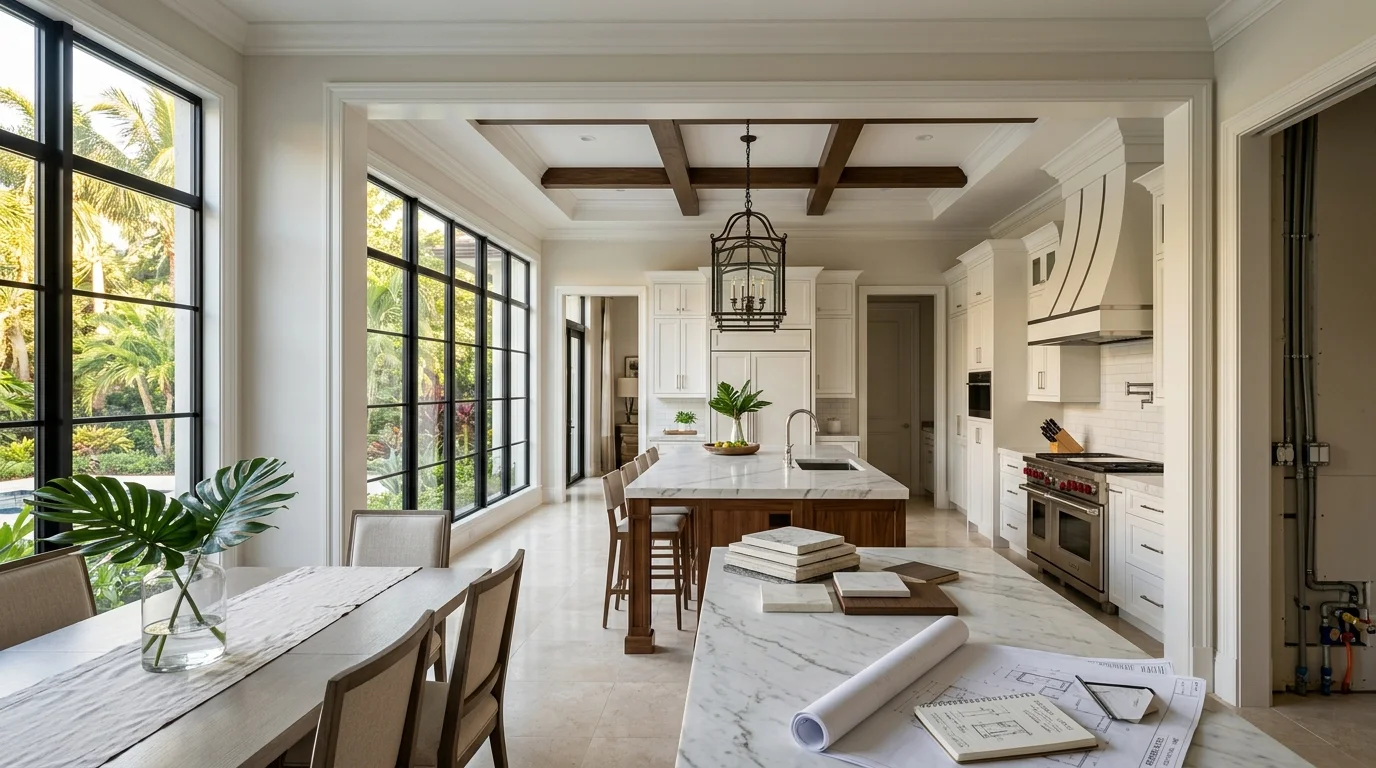
Kitchen remodel hidden costs can turn your dream renovation into a financial nightmare. We've seen too many homeowners in Palm Beach County get blindsided by unexpected expenses that weren't in their original budget. After completing hundreds of kitchen renovations across Boca Raton, Delray Beach, Wellington, and Jupiter, we know exactly where these surprise costs come from, and how to prepare for them.
Most contractors give you the pretty picture upfront. New cabinets, countertops, appliances. What they don't mention? The outdated electrical panel that can't handle your new induction cooktop. The asbestos tile hiding under your old flooring. The termite damage we find after removing cabinets.
Here's what we tell every client during our initial consultation: budget for the unexpected. In South Florida's older homes, we find costly surprises on about 70% of projects. Smart homeowners plan for them.
Structural Surprises Behind the Walls
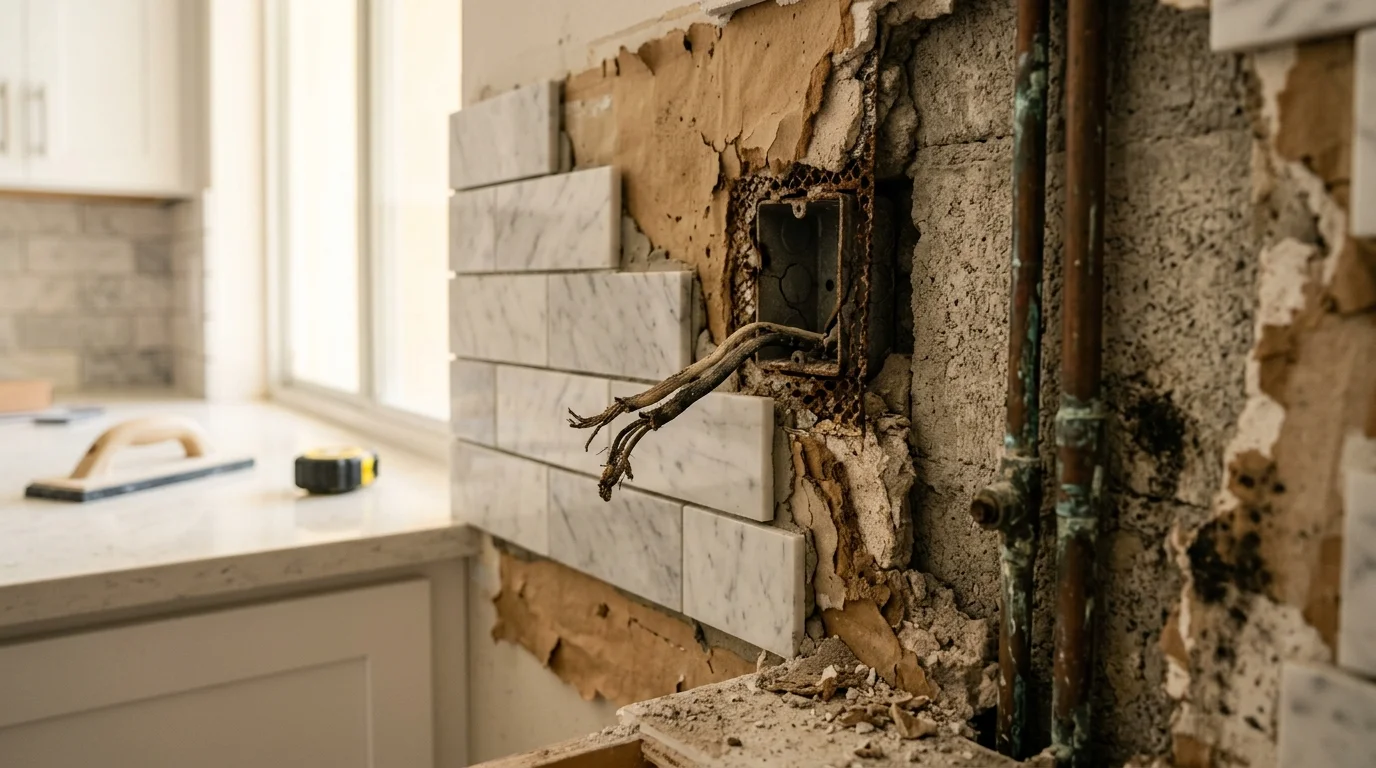
The moment our crew starts demo work, that's when reality hits. We've opened walls in thousand-dollar-a-square-foot Wellington neighborhoods and found amateur DIY wiring from the 1980s. We've removed cabinets in Boca Raton condos and discovered water damage that's been slowly growing for years.
Termite damage is huge in South Florida. These bugs love our humidity and warmth. We find evidence of old or active infestations in about 40% of kitchens we renovate. Sometimes it's cosmetic, a few damaged boards we can replace. Other times, it requires structural repairs that add $3,000-$8,000 to your project.
Mold and water damage go hand in hand down here. That small leak behind your sink? It's been feeding mold growth in your walls for months or years. Professional mold remediation runs $1,500-$4,500 depending on the affected area. We don't mess around with mold, it has to be handled properly.
Asbestos is another surprise, especially in homes built before 1980. Floor tiles, popcorn ceilings, even some old cabinet materials contain asbestos. Professional abatement costs $1,200-$3,000 for a typical kitchen, but it's non-negotiable for safety.
Permit and Inspection Fees
Not every kitchen remodel needs a permit. If you're swapping cabinets and countertops with no plumbing or electrical relocation, no permit required, that's straight finish work, and most of our jobs fall in this category. Permits get pulled when the project actually moves things: relocating sinks or dishwashers, upgrading electrical service or panel capacity, running new gas lines, or opening up walls. When that's the case, your general contractor pulls the permit through their qualified plumber, electrician, or builder. We handle the design and finish-install side either way.
When permits are needed, Palm Beach County fees vary by scope. A simple plumbing-only or electrical-only permit runs $200-$500. Moving walls, upgrading electrical service, or adding gas lines usually pushes the package to $800-$1,500. A cabinet-and-counter refresh with no plumbing or electrical changes shows $0 in permit fees on the budget, those projects don't trigger permitting.
Then come the inspections. Electrical, plumbing, structural, each one costs money and takes time. We've had projects delayed weeks waiting for inspection approvals. The Palm Beach County Building Division is thorough, which is good for safety but tough on timelines.
Don't forget HOA approvals if you're in a condo or gated community. These can take 30-60 days and often require architectural review fees of $200-$800. We help clients navigate this process in our condo remodel guide.
Electrical and Plumbing Upgrades
Modern kitchens demand serious electrical power. Your old 15-amp circuits won't handle today's appliances. We recommend planning for electrical upgrades on any home built before 2000.
A typical electrical upgrade includes new 20-amp circuits for appliances, GFCI outlets, under-cabinet lighting circuits, and sometimes a panel upgrade. Budget $2,500-$6,000 for comprehensive electrical work. If your main panel needs replacement, add another $2,000-$4,000.
Plumbing surprises are common too. Want to move your kitchen island? That means relocating water and drain lines under your slab. In South Florida's concrete slab homes, this requires jackhammering and professional plumbing work. We're talking $1,800-$4,500 depending on complexity.
Gas line installation for ranges or cooktops is another hidden cost. If your home doesn't have existing gas service, you're looking at $1,200-$2,800 to run new lines. We discuss gas versus induction options in our cooktop comparison guide.
Florida-Specific Challenges
Florida's climate creates unique challenges that add costs to kitchen remodels. Our humidity accelerates mold growth, rusts metal components, and warps materials. We've learned to account for these issues in every project.
Hurricane protection is increasingly important. Many clients want impact-resistant windows or reinforced structures. These upgrades add 15-25% to material costs but provide peace of mind during storm season.
Concrete block construction in many South Florida homes makes electrical and plumbing modifications expensive. We can't just drill through studs, we need specialized equipment and sometimes structural engineering approval.
Building code updates happen frequently here. What was acceptable five years ago might not meet current hurricane codes. We've had to upgrade structural connections, add hurricane straps, or reinforce openings to meet current standards.
Material delivery challenges in our spread-out county add costs too. Getting custom cabinets from Miami to Jupiter involves logistics fees. Heavy materials like stone countertops require special handling on upper floors of condos.
Hidden Cost Guide
Based on our experience across Palm Beach County, here's what these hidden costs actually run. These are real numbers from recent projects, not national averages that don't reflect our local market.
Smart homeowners budget an additional 15-20% of their total project cost for unexpected issues. On a $50,000 kitchen remodel, that's $7,500-$10,000 in contingency funds. It sounds like a lot, but we've never had a client complain about having money left over.
The key is working with contractors who are upfront about potential issues. During our free estimates, we inspect areas prone to problems and give clients realistic expectations.
South Florida Considerations
Palm Beach County's building departments are stricter than many areas. They've seen what hurricanes can do, so they enforce codes rigorously. This protects homeowners but adds time and cost to projects.
Our crew works in gated communities throughout Wellington, Jupiter, and Boca Raton where HOA rules add complexity. Some communities require specific material approvals or architectural review processes. We factor these delays into our project timelines.
Insurance considerations are unique here too. Many policies have specific requirements for hurricane resistance or flood protection. We help clients understand how their remodel choices affect coverage.
Material selection matters more in our climate. Standard drywall won't cut it in high-humidity areas, we recommend moisture-resistant alternatives. Regular hardware fails quickly in salt air near the coast. We use marine-grade finishes in Jupiter and other coastal areas.
Supply chain logistics affect costs here. We're at the end of many distribution networks, so rush deliveries cost extra. Smart planning helps avoid these premium charges.
The good news? Property values in Palm Beach County support higher remodel investments. A well-executed kitchen renovation typically returns 70-80% of its cost at resale, even accounting for hidden expenses.