Shower Niche Ideas: Design and Placement Guide
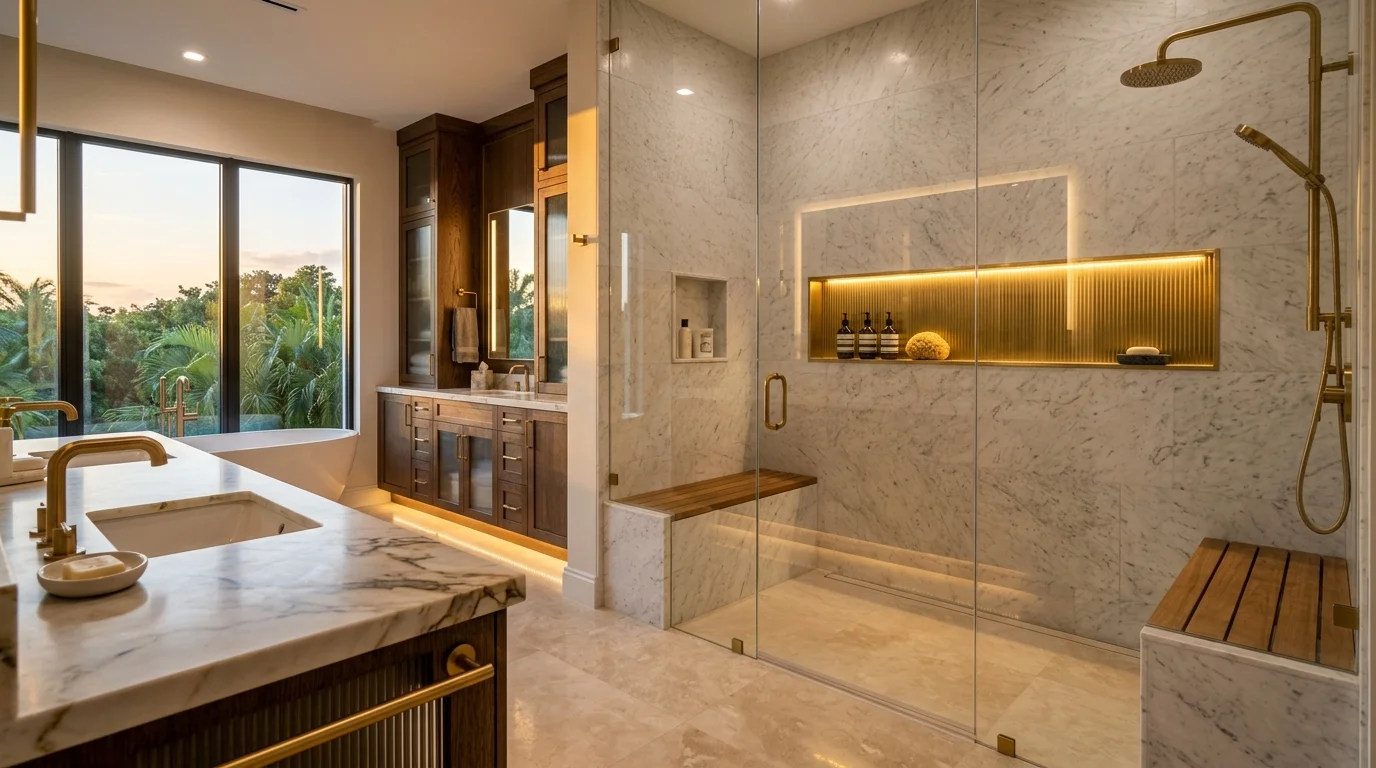
The right niche in shower ideas can transform your bathroom from ordinary to exceptional. Smart niche placement keeps toiletries organized while creating a clean, streamlined look that feels intentional rather than afterthought. Our team has installed hundreds of shower niches across Palm Beach County, from simple recessed storage in Boca Raton condos to elaborate multi-tier designs in Wellington custom homes.
The difference between a successful niche and a problem waiting to happen comes down to three factors: proper placement, correct sizing, and bulletproof waterproofing. Get any of these wrong, and you're looking at water damage, mold issues, or a storage space that nobody can actually use.
Niche Placement Basics
Height matters more than most homeowners realize. We install most shower niches between 48-54 inches from the finished floor, shoulder height for the average adult. This puts shampoo and soap within easy reach without requiring awkward stretching or bending.
Corner placement works well in smaller showers, but avoid the direct spray zone. Water should hit the niche indirectly, not blast straight into it every time someone showers. Our team typically positions niches on the side wall opposite the showerhead or on the back wall if it's a walk-in design.
Stud location drives everything. Niches need to fit between wall studs (typically 16 inches on center) or require structural modifications that add cost and complexity. We always check framing before finalizing niche placement, there's nothing worse than discovering a steel beam exactly where you wanted that perfect storage spot.
Multiple niches work better than one oversized cavity. Two smaller niches at different heights serve more users and look more proportional than a single massive opening. Think about who uses the shower: kids need lower access, adults prefer mid-level storage.
Single vs Double Niche Design
Single niches work in compact showers where wall space is limited. A well-proportioned single niche measuring 12×12 inches provides adequate storage for most families without overwhelming the wall. We recommend this approach in guest bathroom remodels where storage needs are minimal.
Double niches offer more flexibility and better organization. Position them at different heights: upper niche for adults, lower niche for kids or less-frequently used items. This approach works particularly well in master bathrooms where multiple users have different storage needs.
Horizontal double niches (side-by-side) create a modern, linear look but require more wall width. Vertical double niches (stacked) work in narrower spaces and provide clear separation between user zones. Our team finds that vertical arrangements photograph better and feel more intentional in the space.
Consider user habits when deciding. Families with multiple children benefit from multiple niches at varying heights. Empty nesters might prefer a single, well-appointed niche with premium materials and lighting.
Sizing and Proportions
Standard niche dimensions range from 12×12 inches (single user) to 12×24 inches (family size). Depth should match your wall construction, typically 3.5 inches in standard 2×4 walls or 5.5 inches in 2×6 walls. Going deeper requires framing modifications that increase costs.
Proportion matters more than absolute size. A 12×6-inch niche looks lost on a large shower wall but perfect in a compact stall. Scale your niches to the overall shower size, larger showers can handle bigger storage features without looking cluttered.
Avoid these sizing mistakes: niches taller than they are wide (looks awkward), niches deeper than 6 inches (collects water and debris), and niches smaller than 8×8 inches (too small to be useful). Our team sticks to rectangular proportions that complement standard tile sizes.
Plan around your tile layout. Niches work best when they align with tile joints rather than cutting through tile centers. This creates cleaner lines and reduces the number of cut tiles needed. We always mock up the tile pattern before finalizing niche dimensions.
Waterproofing Requirements
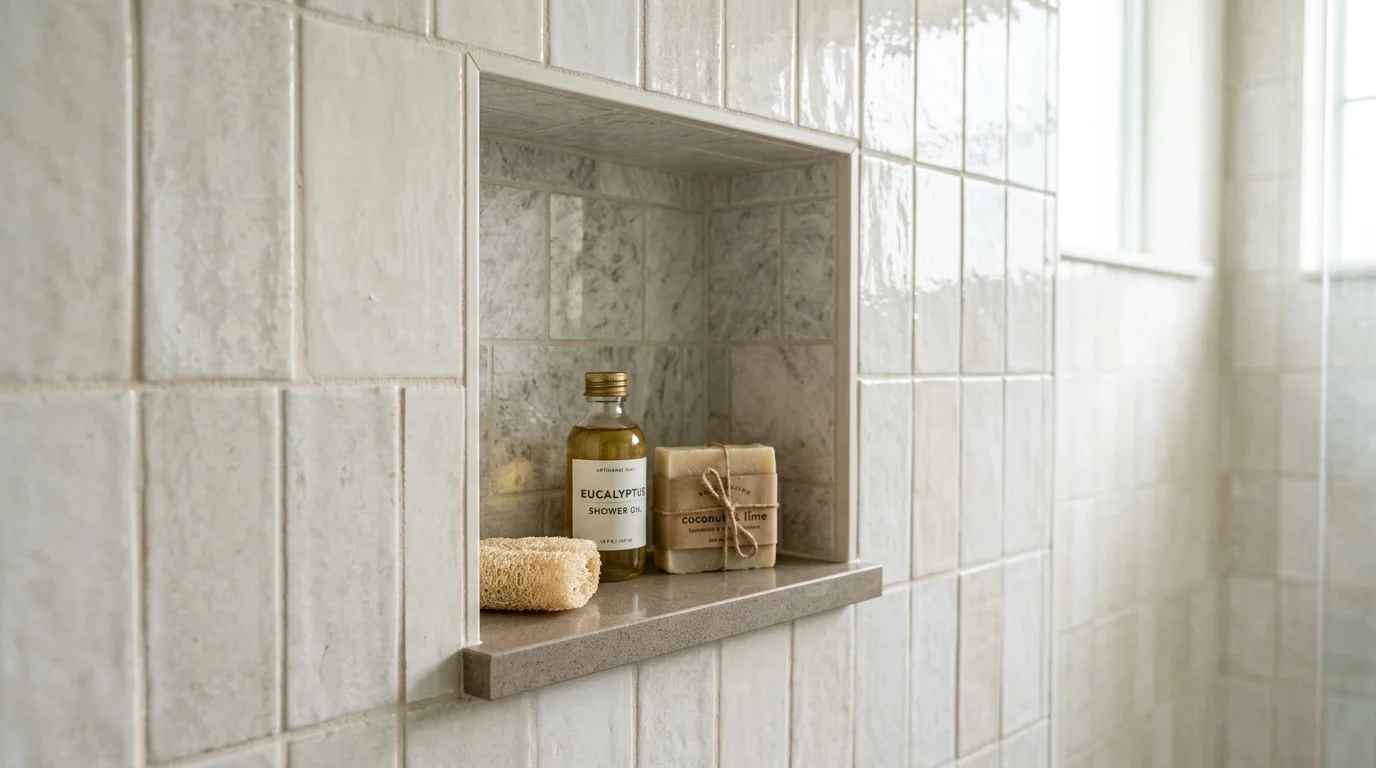
Proper waterproofing separates successful niches from future disaster zones. Every niche needs a complete waterproof membrane system, not just the shower walls around it. Water finds the smallest gaps and exploits them over time.
The Florida Building Code requires continuous waterproofing in all shower areas, including recessed niches. This means liquid membrane or sheet membrane that covers the niche interior, connects to the main shower waterproofing, and includes proper drainage slope. No exceptions.
Slope is critical but often overlooked. Niche floors need a slight pitch toward the shower (minimum 1/4 inch per foot) so water doesn't pool inside the storage area. Flat niche floors create standing water, which leads to mold and deterioration over time.
We use Schluter-Kerdi or similar systems for niche waterproofing. These provide continuous protection from the niche interior to the main shower membrane. Cheaper alternatives like RedGard paint-on systems work but require more careful application and don't offer the same long-term reliability.
Pre-formed niche boxes simplify installation and improve waterproofing reliability. Products like Schluter-Kerdi-Board-SN come ready to install with integrated waterproofing. They cost more upfront but reduce labor time and eliminate common waterproofing mistakes.
Tile Accent Ideas
Accent tile transforms a basic niche into a design feature. Consider these approaches: contrasting tile color (dark niche in light shower), different tile size (mosaic in a large-format space), or upgraded material (natural stone accent in porcelain shower).
Mosaic tile works particularly well in niches because the smaller scale suits the confined space. Glass mosaic adds sparkle and reflects light, making the niche feel larger. Natural stone mosaic provides texture and warmth. Our bathroom shower tile ideas showcase various accent approaches that work in South Florida homes.
Vertical tile orientation creates height and makes niches appear taller. Horizontal orientation emphasizes width and works well in longer, narrower niches. Mixed orientations (vertical accent, horizontal field) add visual interest but require careful planning to avoid busy-looking results.
Consider maintenance when selecting accent tiles. Heavily textured surfaces collect soap scum and require more cleaning. High-contrast grout shows dirt quickly in shower environments. We recommend subtle color variations and grout colors that match the tile for easier maintenance.
Metallic accents add luxury but need proper specification. Stainless steel or aluminum trim pieces provide crisp edges and durability. Avoid brass or copper accents in shower environments, they tarnish quickly in Florida's humid conditions.
LED Lighting Options
LED strip lighting transforms functional storage into a design highlight. Recessed LED strips along the top or sides of the niche provide even illumination and create a floating effect for displayed items.
Waterproof LED strips rated IP65 or higher are essential in shower environments. Standard LED products fail quickly when exposed to moisture and steam. We use marine-grade LED systems designed for wet locations.
Color temperature affects the niche appearance. Cool white (4000K-5000K) provides crisp, clean light that works well with contemporary designs. Warm white (2700K-3000K) creates a softer, more spa-like atmosphere. Avoid colored LED strips, they look gimmicky and date quickly.
Installation requires planning during rough construction. LED strips need dedicated low-voltage wiring and waterproof connections. This work must be completed before tile installation, so lighting decisions can't be an afterthought.
Control options range from simple on/off switches to dimmer controls and smart home integration. Consider a separate switch for niche lighting so it can operate independently of the main shower lighting. This allows the niche to serve as a nightlight or accent feature.
Cost Guide
Shower niche costs vary significantly based on size, materials, waterproofing method, and complexity. Here's what we see in Palm Beach County projects:
Additional costs include structural modifications ($300-$800 if wall framing needs adjustment), upgraded waterproofing systems ($150-$400), and electrical rough-in for LED lighting ($200-$450). These add-ons are project-specific and depend on existing conditions.
Material choices affect pricing significantly. Standard ceramic tile keeps costs down, while natural stone or high-end porcelain increases material costs by $3-$8 per square foot. Custom millwork or metal trim details can add $200-$500 per niche.
Our bathroom remodel cost guide provides detailed pricing for complete renovation projects that include shower niches as part of the overall scope.
South Florida Considerations
Humidity affects material selection and installation methods in our climate. Non-porous materials perform better long-term than natural stones like travertine or limestone, which can develop mold or discoloration in consistently humid environments.
Porcelain tile offers superior performance in Florida bathrooms compared to ceramic options. The lower water absorption rate reduces moisture-related problems, and the harder surface resists staining from hard water deposits common in Palm Beach County.
Hurricane season brings additional moisture concerns. Properties in coastal areas like Jupiter and Delray Beach experience extended periods of high humidity during storm season. Proper ventilation becomes even more critical in these locations.
HOA restrictions in gated communities may limit exterior modifications but rarely affect interior bathroom upgrades. However, some luxury developments in Wellington and Boca Raton require architectural review for significant bathroom renovations. Check your community guidelines before beginning work.
Local building codes emphasize flood resistance and moisture management. The Florida Building Code requires enhanced waterproofing in all shower areas, making proper niche installation even more critical in our market.
Hard water throughout Palm Beach County affects long-term maintenance. Glass doors show water spots quickly, and mineral deposits accumulate on horizontal surfaces. Design niches with slight drainage slopes and choose materials that hide water spots rather than highlight them.