Butcher Block Countertops: Pros and Cons for Florida
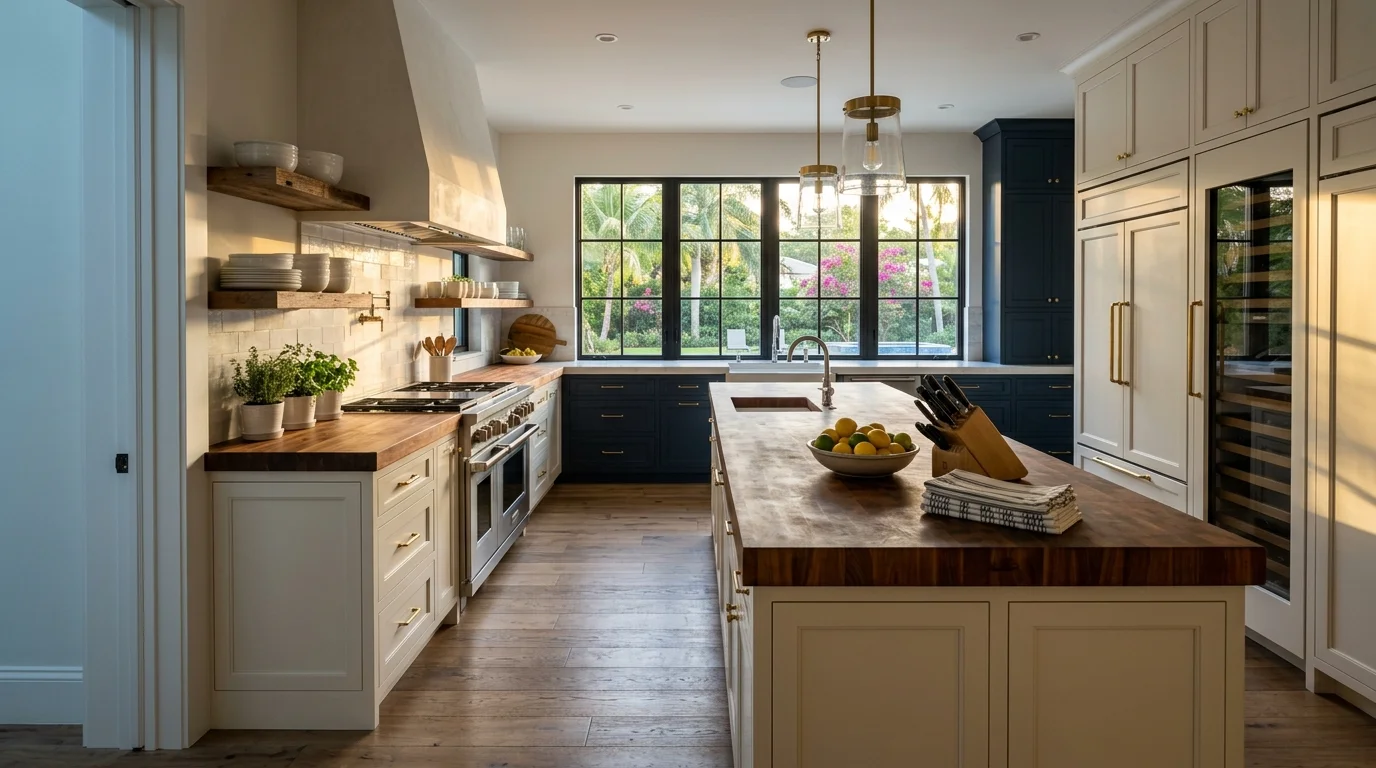
Butcher block countertops pros and cons become more complicated when you factor in Florida's humidity and heat. While these natural wood surfaces offer warmth and character that synthetic materials can't match, they demand constant attention in our climate. After installing hundreds of countertops across Palm Beach County, we've seen butcher block work beautifully in some homes and fail spectacularly in others.
The difference comes down to realistic expectations about maintenance, understanding your cooking habits, and choosing the right wood species for South Florida conditions. We'll break down everything you need to know about butcher block countertops so you can decide if they're worth the upkeep in Boca Raton, Delray Beach, or Wellington.
What Is Butcher Block?
Butcher block countertops are made from strips of hardwood glued together to form a solid surface. The wood grain can run end-grain (like traditional cutting boards), edge-grain, or face-grain depending on how the pieces are oriented.
Common wood species include maple, oak, walnut, cherry, and bamboo. Maple dominates the market because it's hard, relatively affordable, and has a neutral color that works with most kitchen designs. Walnut costs more but offers rich chocolate tones. Oak shows prominent grain patterns that some homeowners love and others find busy.
Most butcher block comes pre-finished with food-safe mineral oil or unfinished for on-site treatment. Thickness ranges from 1.5 inches to 4 inches, with 1.5-inch being standard for most residential applications.
The manufacturing process affects durability. Higher-quality blocks use stronger adhesives and tighter grain matching. Cheaper versions may have visible glue lines or inconsistent wood color that becomes more obvious over time.
Pros of Butcher Block Countertops
Affordability: Butcher block costs significantly less than quartz or quartzite surfaces. You can outfit an average kitchen for $800-$1,500 in materials compared to $3,000-$6,000 for stone.
Warmth and Character: Wood brings natural warmth that cold stone surfaces can't match. Each piece has unique grain patterns that add personality to your kitchen. The texture feels good under your hands.
Repairability: Scratches, dents, and stains can often be sanded out and re-oiled. This makes butcher block more forgiving than stone, which chips permanently or requires professional repair.
DIY-Friendly: Basic woodworking skills are enough for installation. You can cut openings for sinks and cooktops with standard tools. No special equipment needed like stone fabrication requires.
Antimicrobial Properties: Research shows that wood surfaces naturally inhibit bacteria growth better than plastic cutting boards. The wood fibers trap and kill harmful microorganisms over time.
Sustainable Option: Wood is renewable and biodegradable. Bamboo versions grow even faster than traditional hardwoods. Carbon footprint is lower than manufactured stone alternatives.
Cons of Butcher Block Countertops
High Maintenance: Monthly oiling is required to prevent cracking and water damage. Miss a few treatments and you'll see permanent staining or splitting. This isn't set-it-and-forget-it like engineered stone surfaces.
Water Sensitivity: Standing water causes permanent black stains and swelling. Spills must be wiped immediately. Even humid air can cause warping in Florida's climate.
Heat Damage: Hot pots leave permanent marks and can crack the finish. You need trivets for everything, unlike stone surfaces that handle heat better.
Staining Issues: Wine, coffee, and acidic foods penetrate the wood and stain permanently. Light woods like maple show every mark. Dark stains may never come out completely.
Expansion and Contraction: Wood moves with humidity changes. Gaps can open between sections or around sinks. Seasonal movement is more pronounced in Florida than drier climates.
Limited Resale Appeal: Many buyers see butcher block as high-maintenance or temporary. Stone countertops add more value when selling your Wellington or Jupiter home.
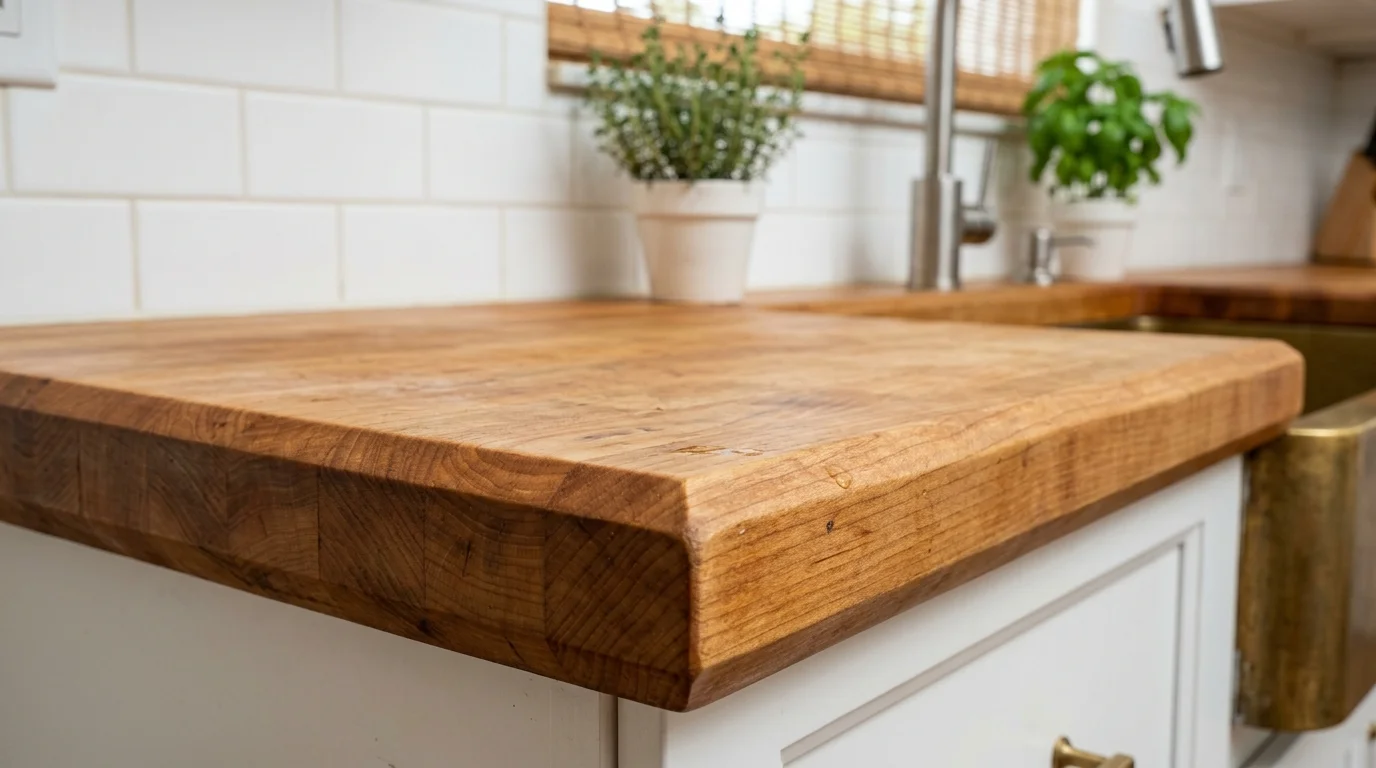
Maintenance Requirements
Butcher block demands consistent care to survive Florida's conditions. Here's what you're signing up for:
Daily Care: Wipe spills immediately. Use mild soap and water for cleaning, then dry completely. Never let standing water sit on the surface.
Monthly Oiling: Apply food-safe mineral oil or specialized butcher block conditioner. Work it into the grain with a clean cloth. Let it soak for 20 minutes, then wipe excess. This prevents cracking and water penetration.
Quarterly Deep Treatment: Sand lightly with 220-grit paper to smooth rough spots and remove surface stains. Clean thoroughly, let dry completely, then apply a heavier coat of oil.
Annual Refinishing: Deeper sanding may be needed to remove accumulated wear and staining. This involves sanding through progressively finer grits, then reapplying finish.
Seasonal Adjustments: Florida's humidity swings from 40% in winter to 80% in summer. Oiling frequency may need to increase during dry months when wood contracts.
The Wood Database provides detailed information about different species' maintenance requirements and durability characteristics.
Miss this maintenance schedule and you'll see permanent damage within months. Water stains, cracks, and warping can't always be repaired once they occur.
Cost Guide
Butcher block appears affordable upfront, but factor in ongoing maintenance costs and potential replacement needs in Florida's climate:
A typical 40-square-foot kitchen runs $2,000-$4,800 installed for butcher block versus $4,500-$8,000 for quartz. But add annual maintenance costs and potential replacement every 8-12 years in Florida, and the lifetime cost narrows significantly.
We typically recommend budgeting an extra 30% beyond initial installation for maintenance and repairs over the first five years.
South Florida Considerations
Florida's climate presents unique challenges for butcher block countertops that don't exist in drier regions:
Humidity Extremes: Summer humidity above 80% causes wood to expand and absorb moisture. Winter air conditioning drops humidity below 40%, causing contraction and cracking. This constant movement stresses joints and finish.
Hurricane Season Prep: Power outages during storms mean no air conditioning for days. Humidity spikes can cause immediate warping and mold growth. Stone surfaces aren't affected by these conditions.
Coastal Salt Air: Homes near the ocean in Boca Raton and Delray Beach deal with salt-laden air that accelerates wood deterioration. Metal hardware corrodes faster, and finishes break down quicker.
Year-Round Cooking: Florida kitchens get heavy use since outdoor entertaining happens all year. More cooking means more heat, moisture, and wear on wood surfaces.
Pool Area Adjacency: Many Palm Beach County kitchens open directly to pool areas. Chlorine fumes and pool chemicals can discolor wood finishes over time.
We've seen butcher block fail within two years in poorly ventilated Florida kitchens or homes without consistent climate control. The humidity-resistant alternatives we typically recommend perform much better long-term.
Success stories usually involve dedicated homeowners who love the maintenance routine and have excellent kitchen ventilation. These installations can last 10+ years with proper care.
Consider your lifestyle honestly. If you travel frequently, host large gatherings, or prefer low-maintenance surfaces, engineered options will serve you better in South Florida's demanding climate.