Countertop Design Trends 2026: Slab Backsplashes. Edges & Stone Looks
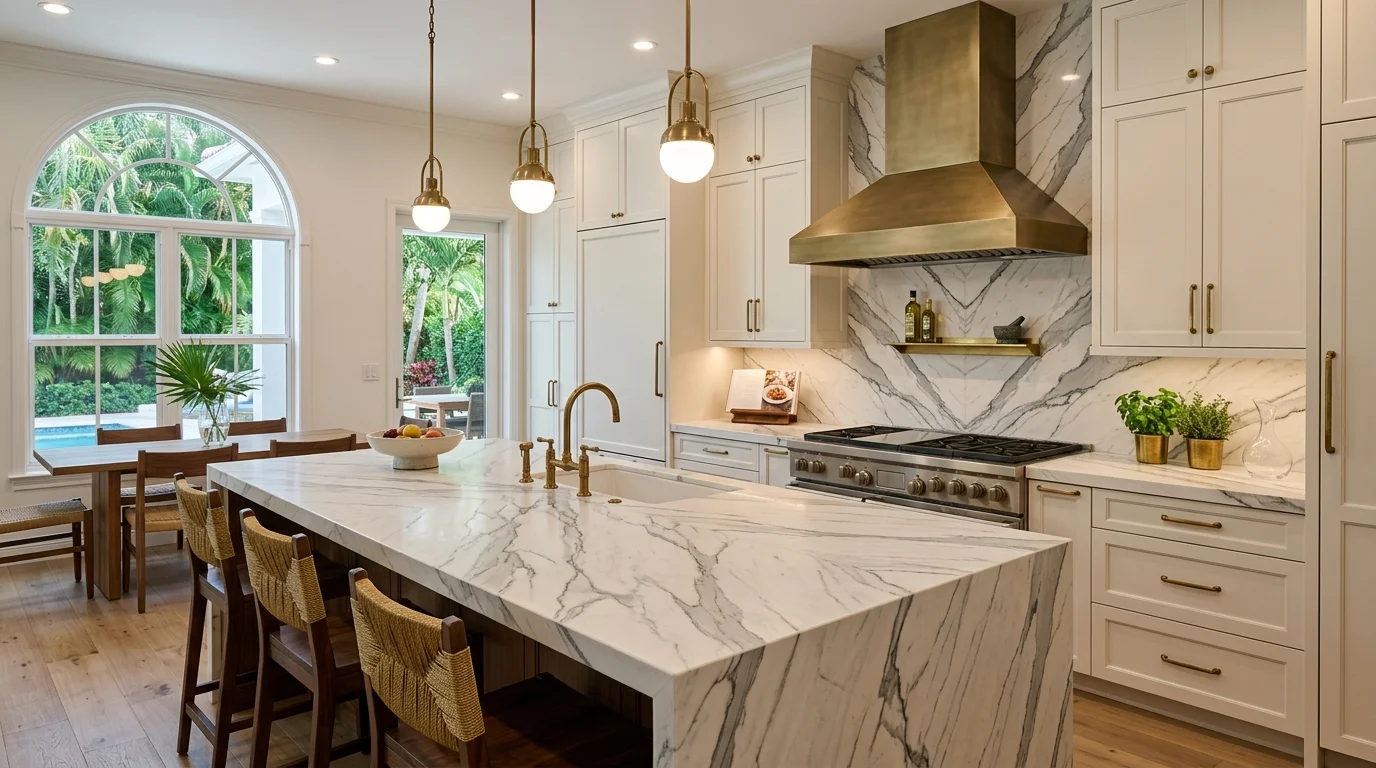
The countertop design trends 2026 landscape shows a clear direction: bigger slabs, bolder edges, and stone patterns that actually look like stone. After years of uniform quartz patterns, homeowners in Palm Beach County want surfaces with character. Our team at South Florida Kitchen & Bath Design sees this shift daily in Boca Raton and Delray Beach projects. Clients want countertops that make statements.
These trends aren't just about looks. They're responding to how people use kitchens now. Open concepts demand surfaces that work as room dividers. Social media drives demand for photogenic spaces. Hurricane-resistant materials matter more after recent storms.
We're seeing three major movements: full-height slab backsplashes replacing traditional tile, dramatic edge profiles that extend beyond simple eased edges, and stone patterns with actual movement and variation. Each trend brings design opportunities and installation challenges.
The Slab Backsplash Revolution
The full-height backsplash debate is over. Slabs won. We're installing more continuous countertop-to-ceiling surfaces than ever before in Wellington and Jupiter kitchens.
Book-matched slabs create the most dramatic effect. Two consecutive slabs from the same block, opened like a book, create mirror-image patterns. The veining flows smoothly across the seam. It's expensive but stunning when done right.
Slab backsplashes eliminate grout lines completely. No maintenance headaches. No discoloration over time. Just one continuous surface that's easy to clean. This matters in Florida's humid climate where grout can harbor mold.
We recommend 2cm thickness for slab backsplashes. Thicker looks heavy. Thinner can crack during transport or installation. The 2cm sweet spot provides durability without overwhelming the space.
Template precision becomes critical with slab backsplashes. Electrical outlets must be perfectly positioned. Cabinet heights need exact measurements. There's no tile flexibility to hide minor variances.
Edge Profile Trends for 2026
Edge profiles are getting aggressive. The safe eased edge is losing ground to profiles with personality. Countertop edge profiles now drive design decisions instead of following them.
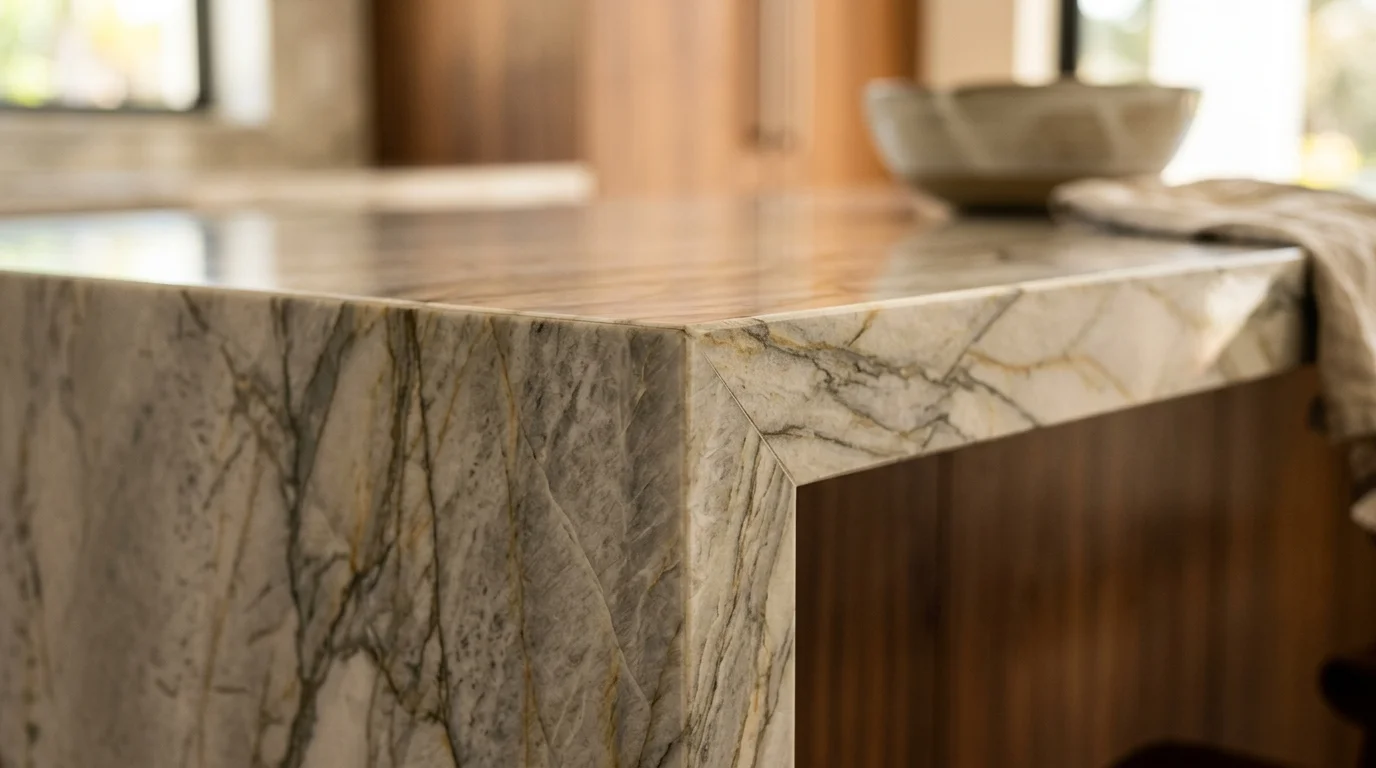
Mitered edges top our installation list. Two pieces meet at precise angles, creating sharp corners without visible seams. It's architectural. Clean. Modern. Perfect for waterfall islands where the countertop flows down the side.
Waterfall edges aren't new, but they're evolving. We're seeing them on peninsulas, not just islands. Some clients want waterfalls on both sides of an island. Others prefer asymmetrical applications, one waterfall, one standard overhang.
Chiseled edges bring texture back to smooth surfaces. Hand-finished appearance contrasts with machine precision elsewhere in the kitchen. It's rustic without being casual. Works especially well with natural quartzite.
Slim square edges, basically a slight bevel on a square profile, photograph beautifully. They create subtle shadow lines that add depth in photos. Social media influence on design choices is real.
Stone Looks Dominating 2026
Fake-looking quartz is finished. Clients want surfaces that could believably be natural stone. The best quartz versus quartzite debate often comes down to pattern authenticity.
Calacatta-look quartz leads demand. The dramatic white base with bold gray veining photographs beautifully. New manufacturing techniques create depth that rivals natural stone. Some slabs fool even experienced installers at first glance.
Actual quartzite remains popular for clients wanting genuine stone. Taj Mahal quartzite dominates high-end projects. Super White quartzite offers similar looks with better availability. Both offer durability that matches lifestyle demands.
Soapstone aesthetics are trending, though not actual soapstone. The dark gray-green color palette works well in transitional designs. Quartz manufacturers now offer convincing soapstone patterns without the maintenance requirements.
Travertine-look surfaces bring warmth back to kitchens. The cream and beige tones complement wood cabinets better than stark white options. Natural variation prevents the sterile appearance of solid colors.
What Photographs Well in 2026
Instagram and Pinterest drive more design decisions than we'd like to admit. Surfaces need to look good in photos, not just in person. This influences material choices, lighting decisions, and styling approaches.
High contrast creates visual impact in photos. White cabinets with dark countertops. Light countertops with dark islands. The contrast needs to be obvious, not subtle.
Veining direction matters for photography. Horizontal veining feels calm. Vertical veining adds energy. Book-matched patterns create symmetry that photographs beautifully but can feel formal in person.
Matte finishes reduce glare problems in photos. Polished surfaces create hot spots under kitchen lighting. Honed finishes photograph more consistently across different lighting conditions.
Integrated sinks complement slab backsplashes in photos. No visual interruption from rim details. The eye follows the surface continuously. It's expensive but creates clean lines that photograph well.
Cost Guide
Countertop costs vary significantly based on material choice, edge complexity, and installation scope. These ranges reflect current Palm Beach County pricing for our typical projects.
Premium edge profiles add $200, $500 per linear foot depending on complexity. Chiseled and waterfall edges require additional fabrication time. Simple beveled or eased edges cost less but offer fewer design opportunities.
Template precision becomes more expensive with slab backsplashes. Multiple site visits ensure accurate measurements. Electrical outlet positioning must be exact. These details add cost but prevent expensive remakes.
South Florida Considerations
Florida's climate influences material choices and installation approaches. Humidity affects adhesives, sealers, and expansion rates. Countertop materials for Florida humidity require specific considerations.
Thermal expansion matters with large slabs. Temperature swings from air conditioning to outdoor heat cause materials to expand and contract. Proper support structure prevents cracking at stress points.
Slab backsplashes need adequate ventilation behind them. Trapped moisture can cause adhesive failure. We install vapor barriers when necessary. The investment protects long-term performance.
Hurricane resistance influences material selection. Heavy slabs can shift during extreme weather. Proper anchoring systems secure surfaces to structural elements. This isn't just cosmetic, it's safety.
Coastal exposure in areas like coastal South Florida accelerates wear on some materials. Salt air affects metal elements in composite stones. Natural materials often perform better near the ocean.
Mold resistance becomes critical in humid climates. Clean installations eliminate hiding places for biological growth. Slab backsplashes offer advantages over traditional tile in this regard.
According to the Florida Building Code, structural modifications may require permits, though most countertop replacements on existing layouts do not. Your general contractor handles permitting when scope includes plumbing or electrical changes.
Local supply chains affect material availability. Some exotic quartzites take months to source. Countertop slab suppliers in Palm Beach County maintain different inventory levels. Planning ahead prevents delays.
Installation scheduling works around weather. High humidity days affect adhesive curing times. We monitor conditions and adjust installation schedules accordingly. Quality installations can't be rushed.
Trends Worth Skipping in 2026
Part of our job is talking clients out of choices they'll regret, and a few of 2026's louder trends fall into that category. Ultra-glossy, high-contrast veining photographs beautifully but shows every water spot and fingerprint in a kitchen that actually gets used. In a busy Palm Beach County household, a honed or low-sheen finish keeps that drama without the constant wiping. We'd rather you love the counter in year five than just in the listing photos.
Very dark countertops are another one to think twice about in our light. Deep charcoals and blacks look striking in a showroom, but South Florida sun is unforgiving, and dark surfaces show dust, crumbs, and dried water far more than mid-tone stone. They also read warmer in a room you're trying to keep feeling cool and open. If you want depth, a mid-tone with movement usually wears better day to day.
Finally, be cautious with hyper-specific trend colors on a permanent surface. A countertop is a ten-to-twenty-year decision, while a bold color trend often fades in three or four. We steer clients toward timeless stone for the counters and let the trendy color live somewhere easy to change, like paint, a backsplash, or hardware. That way the kitchen stays current without a five-figure redo when tastes move on.