Open Shelving Kitchen Pros and Cons: What Works in South Florida
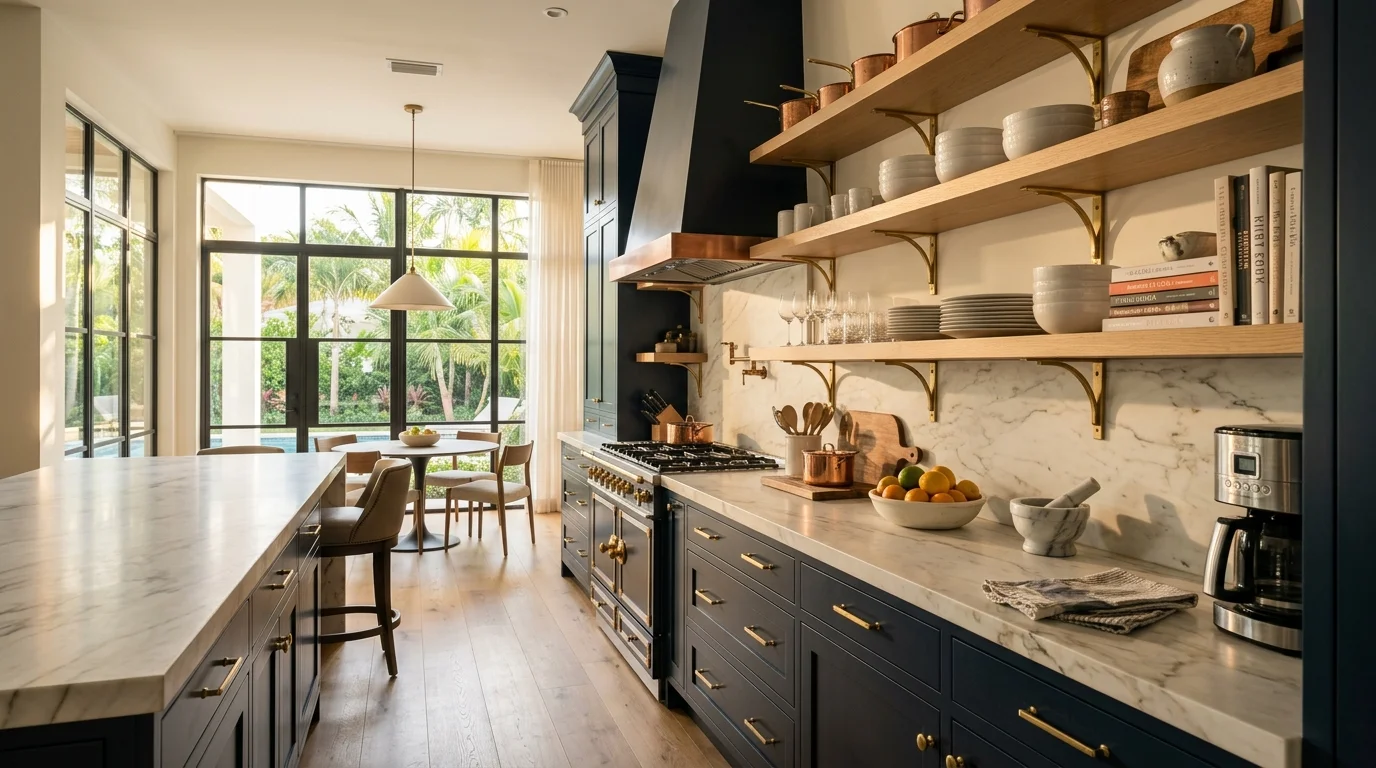
Open shelving kitchen pros and cons come down to one question: are you ready to keep those shelves looking magazine-perfect every day? We've designed hundreds of kitchens across Palm Beach County, and the homeowners who love their open shelves are those who embrace the daily styling commitment. The ones who regret it? They thought open shelving would be easier than cabinets.
Open shelving isn't just a design trend, it's a lifestyle choice. In Boca Raton and Wellington, we see homeowners drawn to the airy, accessible feel of floating shelves and the way they make small kitchens feel larger. But South Florida's humidity and dust present unique challenges that national design blogs don't mention.
Here's what actually happens when you choose open shelving, based on real feedback from our clients in Delray Beach, Jupiter, and across Palm Beach County.
The Pros of Open Shelving
Open shelving works brilliantly when done right. Our team sees the biggest wins in these areas:
Makes Small Kitchens Feel Larger
Floating shelves don't create the visual weight of upper cabinets. In Palm Beach County condos where every square foot counts, open shelving can make a galley kitchen feel twice as spacious. We recommend this approach especially when you're working with small kitchen island ideas where cabinet mass would overwhelm the space.
Easy Access to Daily Items
No cabinet doors to open when you're grabbing plates or coffee mugs. Everything's visible and within reach. This works particularly well for frequently-used dishes, glassware, and serving pieces.
Display Beautiful Dishware
If you own gorgeous ceramics or vintage glassware, open shelves turn them into functional art. We've installed floating walnut shelves in Wellington kitchens specifically to showcase clients' pottery collections.
Cost Savings
Open shelving costs significantly less than upper cabinets. You're eliminating cabinet boxes, doors, hinges, and installation complexity. This budget savings can go toward higher-end countertops or better appliances.
Easy to Change and Rearrange
Unlike fixed cabinets, you can move items around seasonally or when you get new dishes. The flexibility appeals to homeowners who like refreshing their kitchen's look.
The Cons of Open Shelving
The downsides are real, and they hit harder in Florida's climate:
Constant Dusting Required
Everything collects dust. In South Florida, that dust appears faster thanks to our sandy soil and frequent winds. Dishes you use weekly will need cleaning before use. Items you use monthly become dust magnets.
Always On Display
Your kitchen organization is permanently visible to everyone. Mismatched dishes, plastic storage containers, and everyday clutter can't hide behind cabinet doors. This pressure to maintain perfect styling exhausts many homeowners.
Limited Storage
Open shelves hold far less than cabinets. You lose the deep storage space that cabinets provide, plus you can't stack items efficiently since everything needs to look presentable.
Grease and Cooking Splatter
Items near your cooking area will get greasy. We've seen beautiful ceramic collections lose their appeal after months of oil splatter from nearby cooktops. Glass items show water spots and fingerprints immediately.
No Protection from Humidity
Florida's humidity affects everything on open shelves. Wooden serving pieces can warp. Metal items may show water spots more quickly. Even dishes can develop that humid-climate film that requires extra cleaning.
Florida-Specific Challenges
South Florida's environment creates unique problems for open shelving that work differently than in drier climates:
Hurricane Season Concerns
Open shelving means everything becomes a potential projectile during storms. We recommend hurricane-proof kitchen materials and securing systems, but open shelves will always be more vulnerable than enclosed cabinets during severe weather.
Salt Air Corrosion
Near the coast in Jupiter or Boca Raton, salt air accelerates corrosion on metal items. Stainless steel serving pieces, copper accents, and even some ceramic glazes can show accelerated aging when constantly exposed.
Increased AC Costs
Open shelving means more surface area exposed to temperature changes. Your HVAC system works slightly harder to maintain consistent temperatures, though the difference is minimal in most homes.
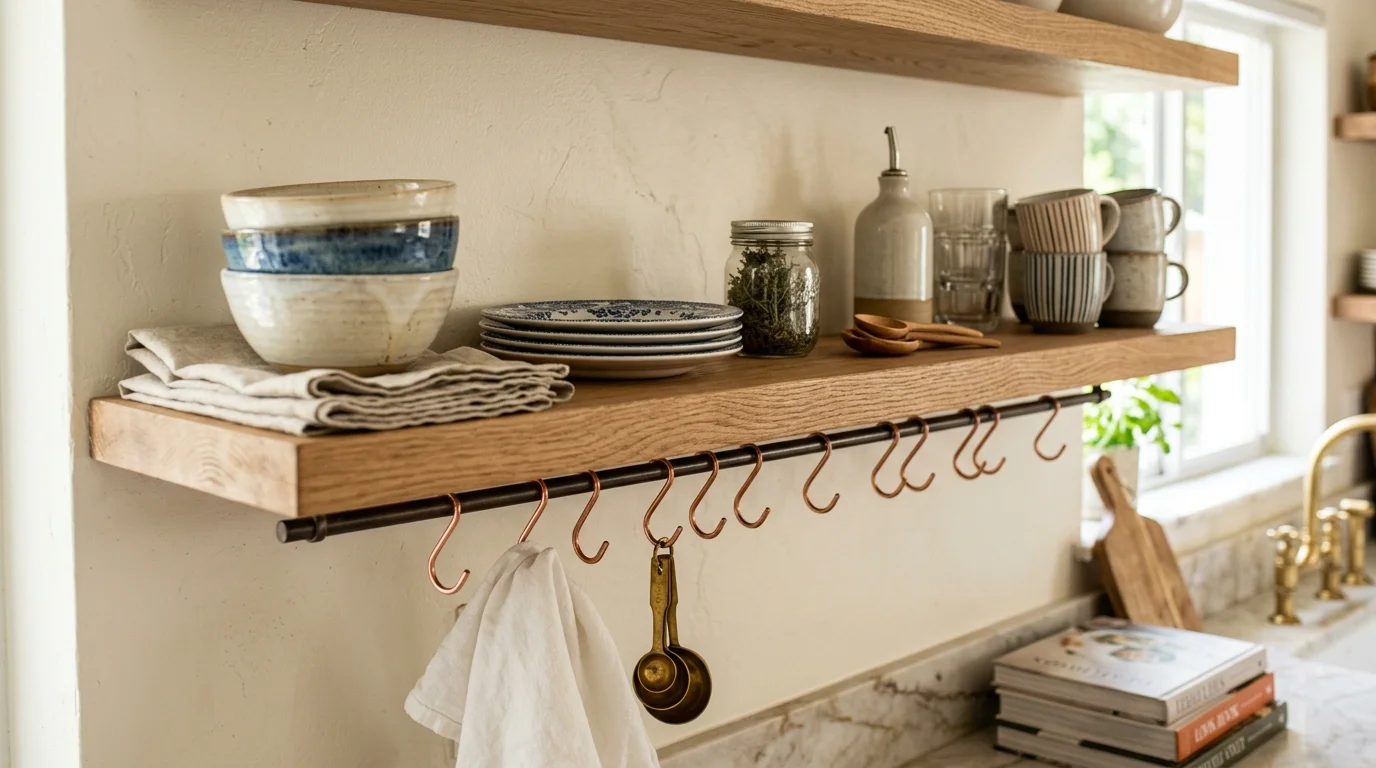
How to Style Open Shelves That Work
After installing open shelving in dozens of Palm Beach County homes, we've learned what actually works long-term:
Stick to a Limited Color Palette
White dishes, natural wood, and one accent color (maybe green plants or blue ceramics) create cohesion. Mixing too many colors makes shelves look cluttered quickly.
Group Items in Odd Numbers
Three bowls look intentional. Four looks like you ran out of space. This designer trick makes any arrangement look more polished.
Mix Heights and Shapes
Tall items (vases, bottles) next to short items (bowls, plates) creates visual interest. All items the same height looks like a cafeteria.
Leave Breathing Room
Don't pack shelves full. Empty space is part of the design. We recommend filling shelves only 60-70% to maintain that airy, open feel.
Use Baskets for Hidden Storage
Woven baskets can hide less-attractive items (plastic containers, cleaning supplies) while maintaining the open-shelf aesthetic.
Install Task Lighting
LED strips under floating shelves make displayed items look amazing and provide useful task lighting. This works especially well with under cabinet lighting kitchen design principles.
Cost Guide
Open shelving costs vary significantly based on materials and installation complexity. Here's what our clients typically invest in Palm Beach County:
Installation adds $200-$400 per shelf depending on wall type and whether electrical work is needed for lighting. In older Palm Beach County homes with plaster walls, installation costs run higher due to additional prep work.
South Florida Considerations
Designing open shelving for South Florida kitchens requires specific material choices and placement strategies:
Choose Humidity-Resistant Materials
Solid wood shelves should be properly sealed against moisture. Metal brackets need powder coating or stainless steel construction to resist salt air corrosion. We recommend against painted MDF shelves in Florida kitchens, they'll show humidity damage within two years.
Consider Coastal Location
Homes within five miles of the ocean face accelerated wear on open shelving. Stainless steel, powder-coated aluminum, and properly sealed natural stone work better than painted wood or untreated metals.
Plan for Hurricane Storage
Include a plan for securing or storing displayed items during storm season. Some clients install subtle lips on shelves to prevent items from sliding off during minor tremors or high winds.
Account for More Frequent Cleaning
Florida's dust, pollen, and humidity mean items on open shelves need cleaning 2-3 times more often than in drier climates. Factor this maintenance reality into your decision.
Work with Existing Architecture
Many Palm Beach County homes have beautiful original details that work well with open shelving. Exposed beams, brick walls, and original wood trim can provide natural anchor points for floating shelves. Consider how open shelving might complement kitchen backsplash ideas to create a cohesive design.
The decision between open shelving and traditional cabinets often comes down to lifestyle. Homeowners who love cooking shows and enjoy daily kitchen styling tend to thrive with open shelves. Those who prefer grab-and-go functionality usually regret eliminating cabinet storage.
We recommend combining both approaches: open shelving for frequently-used, attractive items and closed cabinets for bulk storage, small appliances, and everyday clutter. This hybrid approach gives you the visual impact of open shelving without sacrificing practical storage.
When considering open shelving, also evaluate how it fits with your overall kitchen goals. If you're planning other updates, consider how open shelves work with different kitchen color trends and whether they support or compete with other design elements.