Kitchen Cabinet Trends 2026: Door Styles, Colors & Storage
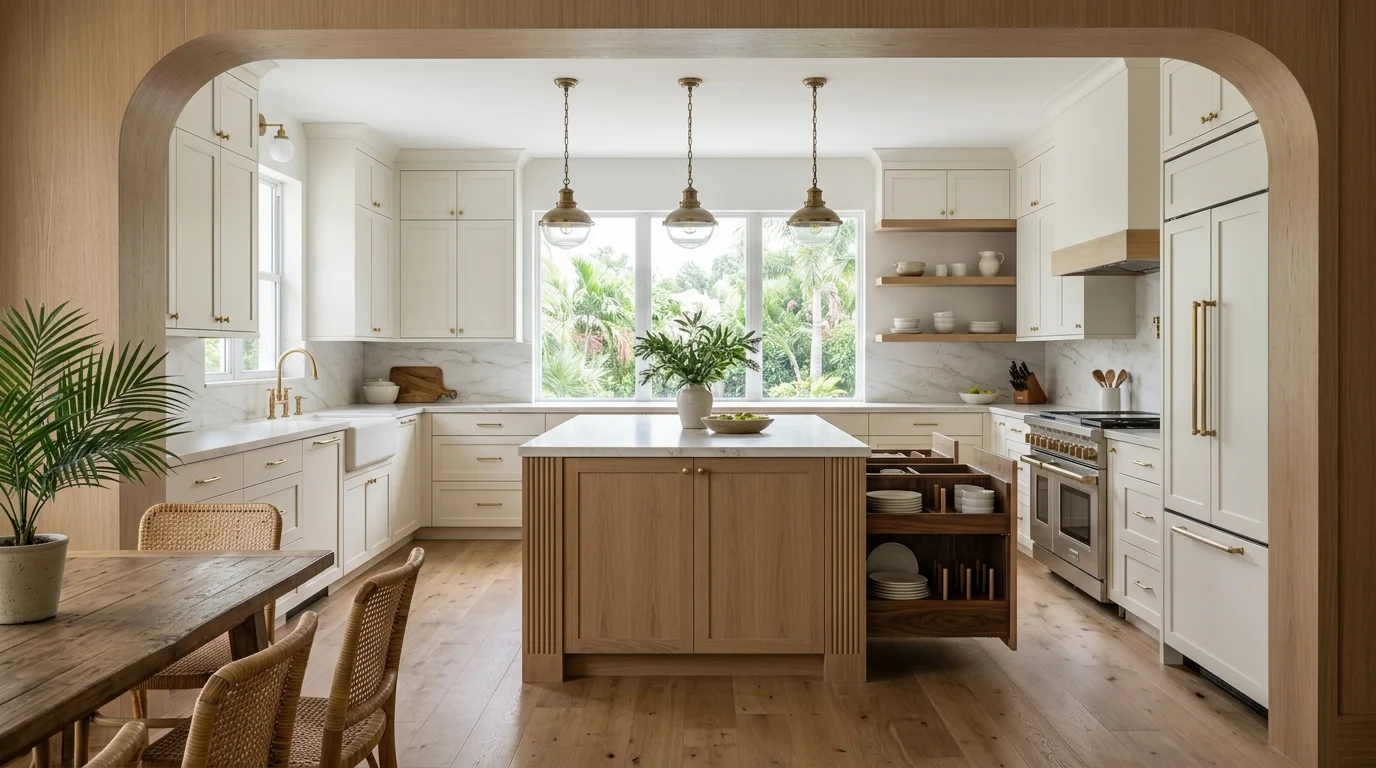
The kitchen cabinet trends 2026 will bring homeowners three major shifts: sleeker door profiles, warmer color palettes, and storage that actually makes sense. After years of thick, chunky shaker doors and stark white everything, we're seeing a swing toward refined minimalism paired with thoughtful functionality. Our team has been tracking these changes through manufacturer previews, trade shows, the National Kitchen and Bath Association design forecasts, and real client requests here in Palm Beach County.
The biggest change? Door thickness is dropping dramatically. What we used to call "full overlay" shaker doors are giving way to slim profiles that read more contemporary without going fully flat. Colors are warming up too, sage greens, mushroom grays, and creamy whites are replacing the stark whites that dominated the 2010s.
Storage design is getting smarter. Deep drawer banks are replacing traditional lower cabinets. Pull-out pantry systems are becoming standard, not premium upgrades. Hidden charging stations and appliance garages are moving from luxury wish-list items to practical necessities.
Door Styles Taking Over 2026
Slim shaker cabinets are the clear winner for 2026. These feature the classic shaker frame-and-panel construction but with dramatically reduced rail and stile width, typically 1.5 inches instead of the standard 2.25-2.5 inches we've been seeing. The result reads cleaner and more modern while keeping the timeless appeal that makes shaker doors work in both traditional and contemporary spaces.
Slab doors aren't going anywhere either. Pure flat-front cabinets still work beautifully in ultra-modern kitchens, especially when paired with integrated handles or push-touch hardware. We recommend slab doors for clients who want that sleek, European aesthetic without visible hardware interrupting clean lines.
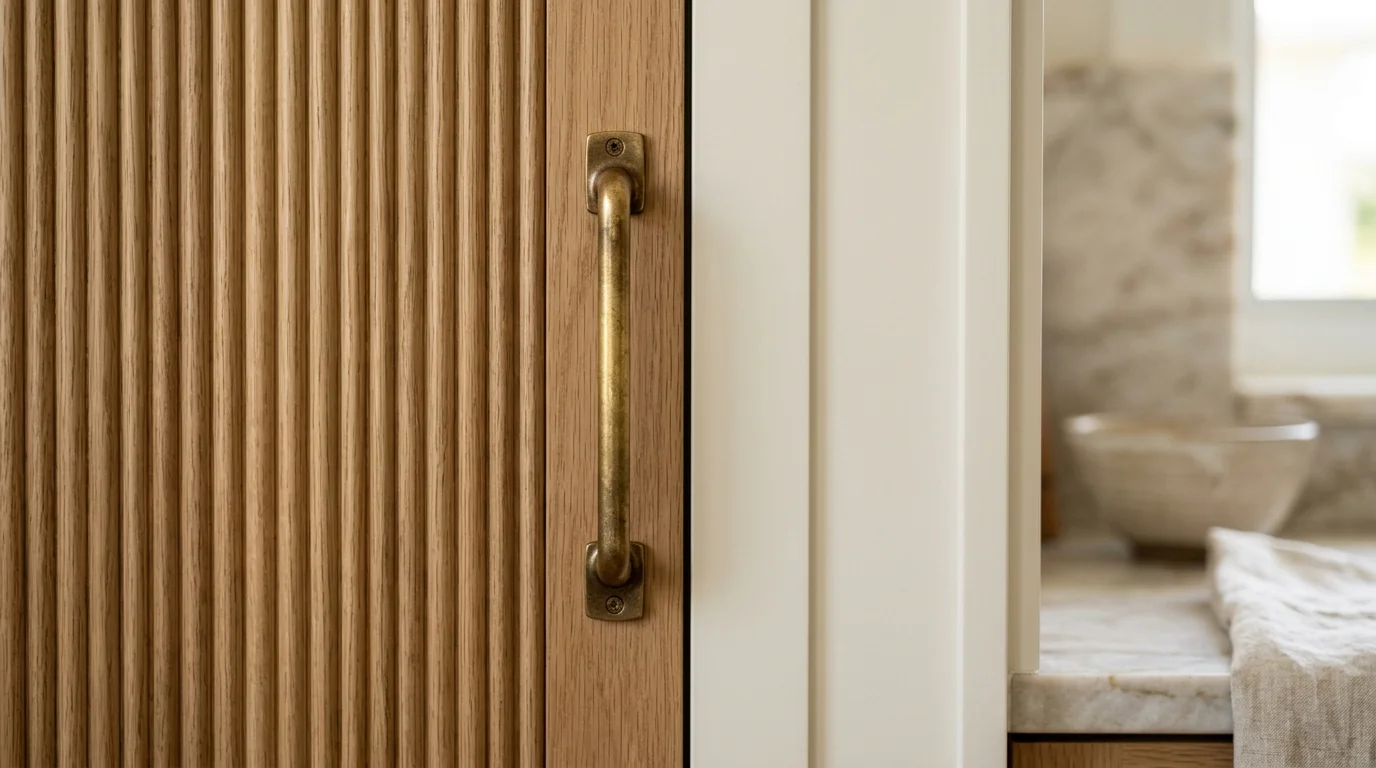
Fluted and reeded panels are having a moment. These vertical groove patterns add texture without the traditional weight of raised panels. They work particularly well as accent doors, maybe on an island or pantry wall, rather than throughout the entire kitchen. The key is restraint. Too much texture gets busy fast.
Framed inset construction is making a comeback, though it's still a premium option. Inset doors sit flush with the cabinet face frame rather than overlaying it. This creates extremely clean sight lines but requires precise manufacturing and installation. Expect to pay 20-30% more for true inset construction, but the result is undeniably elegant.
Glass-front uppers are evolving too. Instead of traditional mullion patterns, we're seeing more simple glass rectangles, sometimes with fluted or reeded glass for privacy while maintaining the open feel.
Cabinet Colors & Wood Tones
Warm whites are replacing stark whites as the go-to neutral. Colors like Benjamin Moore's Cloud White or Sherwin Williams' Creamy have just enough warmth to feel inviting rather than clinical. This shift works perfectly in South Florida where natural light can make pure white feel harsh.
Sage green continues gaining ground. This isn't the bold hunter green we saw a few years back, it's more muted, almost gray-green. Sage works beautifully paired with warm whites or natural wood tones. We've used it successfully on islands while keeping perimeter cabinets neutral.
Mushroom and putty grays are replacing the cool grays that dominated the 2010s. These warmer gray tones have brown undertones that feel more organic and less industrial. They pair beautifully with brass or warm brass hardware.
Deep navy is losing steam. While still handsome, the trend peaked around 2023. Clients are moving toward softer, more livable colors that won't feel dated in five years.
For natural wood kitchen cabinets, rift-cut white oak is the clear winner. This grain pattern runs straight and consistent, creating a more refined look than traditional flat-cut oak. The natural color works beautifully unstained or with a clear protective finish.
Walnut remains popular but in lighter, more natural finishes rather than the dark chocolate stains we used to see. Cerused oak, where white filler is rubbed into the grain, creates beautiful contrast and texture.
Two-tone combinations are evolving. Instead of dramatic contrasts (like white uppers with dark blue lowers), we're seeing more subtle pairings: warm white with sage, or natural oak with creamy painted doors.
Storage Innovations That Actually Work
Pull-out pantry systems are becoming standard equipment. These full-extension drawers turn deep cabinets into accessible storage. Instead of digging through dark corners, everything rolls out for easy viewing and access. We install these in 18-inch, 24-inch, and 30-inch wide cabinets depending on the space.
Deep drawer banks are replacing traditional door-and-shelf lower cabinets. Three or four deep drawers store more and access better than two doors with fixed shelves. Pots, pans, small appliances, and bulk pantry items all work better in drawers than behind doors.
Lift-up upper mechanisms are gaining traction, especially for frequently accessed items like dishes or glassware. These hardware systems lift the door up and hold it in place rather than swinging out. They work particularly well for cabinets above islands where swing-out doors might hit heads.
Appliance garages are moving from luxury to necessity. With more small appliances than ever, coffee makers, stand mixers, air fryers, instant pots, counter space gets cluttered fast. A dedicated appliance cabinet with tambour door or lift-up front keeps these items accessible but hidden.
Hidden charging drawers solve the modern problem of device storage. A shallow drawer lined with felt and equipped with outlets keeps phones, tablets, and charging cables organized and out of sight. We typically install these in kitchen desks or island ends.
Spice storage is getting smarter. Instead of traditional spice racks, we're building narrow pull-out towers that maximize vertical space. These can fit in 6-inch spaces between other cabinets and hold significantly more than door-mounted racks.
Trash pull-outs are evolving beyond basic single bins. Multi-compartment systems handle trash, recycling, and compost in one organized unit. Soft-close mechanisms prevent slamming, and full-extension slides make liner changes easier.
Cost Guide
Cabinet costs vary significantly based on construction quality, door style, and storage features. These ranges reflect our typical Palm Beach County projects and include design, materials, and installation.
Budget tier typically uses plywood box construction with laminate or thermofoil doors. Mid-range features solid wood doors with plywood boxes and soft-close hardware. Luxury includes custom solid wood construction, premium hardware, and specialized storage solutions.
Storage upgrades add cost but deliver significant functionality. Pull-out pantry systems run $800-$1,500 per cabinet depending on size and mechanism quality. Appliance garages with tambour doors cost $400-$800 each. Hidden charging drawers add $250-$450 including electrical rough-in.
Door style affects pricing too. Standard shaker doors represent baseline cost. Slim shaker profiles add 10-15% due to more precise manufacturing requirements. Fluted panels add 15-25%. True inset construction increases costs 20-30% over overlay doors.
Two-tone kitchens cost 10-20% more than single-color designs due to additional setup and finishing work. Natural wood stains cost more than painted finishes because wood quality matters more when grain shows through.
South Florida Considerations
Florida's humidity creates specific challenges for cabinet construction and finishes. Solid wood doors and frames handle moisture changes better than MDF or particleboard, though they cost more upfront. We recommend solid wood construction for door frames at minimum, even in budget projects.
Box construction matters in humid climates. Plywood boxes resist moisture better than particleboard alternatives. The small upcharge for plywood construction pays dividends in longevity, especially in coastal areas from Jupiter to Boca Raton where salt air adds additional stress.
Finish durability is critical. Catalyzed lacquer finishes hold up better than standard paint in humid conditions. For painted versus stained options, both can work well with proper preparation and quality finishes, but painted surfaces show wear patterns differently than natural wood.
Hardware selection matters more in coastal environments. Stainless steel or solid brass hardware resists corrosion better than plated alternatives. Soft-close mechanisms with sealed bearings last longer in humid conditions.
Ventilation planning affects cabinet longevity. Proper exhaust ventilation removes moisture and cooking residue that can damage finishes over time. We work with your general contractor to ensure adequate ventilation capacity for your cooking style and kitchen size.
Installation timing matters in South Florida. Cabinets should arrive and install after HVAC systems are running to control humidity during the critical first few weeks. Extreme temperature and humidity swings during installation can cause wood movement and finish issues.
For waterfront properties, especially in Wellington and Delray Beach canal communities, salt air requires extra finish protection. We recommend marine-grade clear coats on natural wood and premium paint systems on painted surfaces.
Hurricane preparedness affects storage planning. Lower cabinets with deep drawers store emergency supplies better than high shelves that become inaccessible during power outages. We often design dedicated storage for hurricane supplies in pantry areas.