Panel Ready Refrigerators: Worth It in 2026?
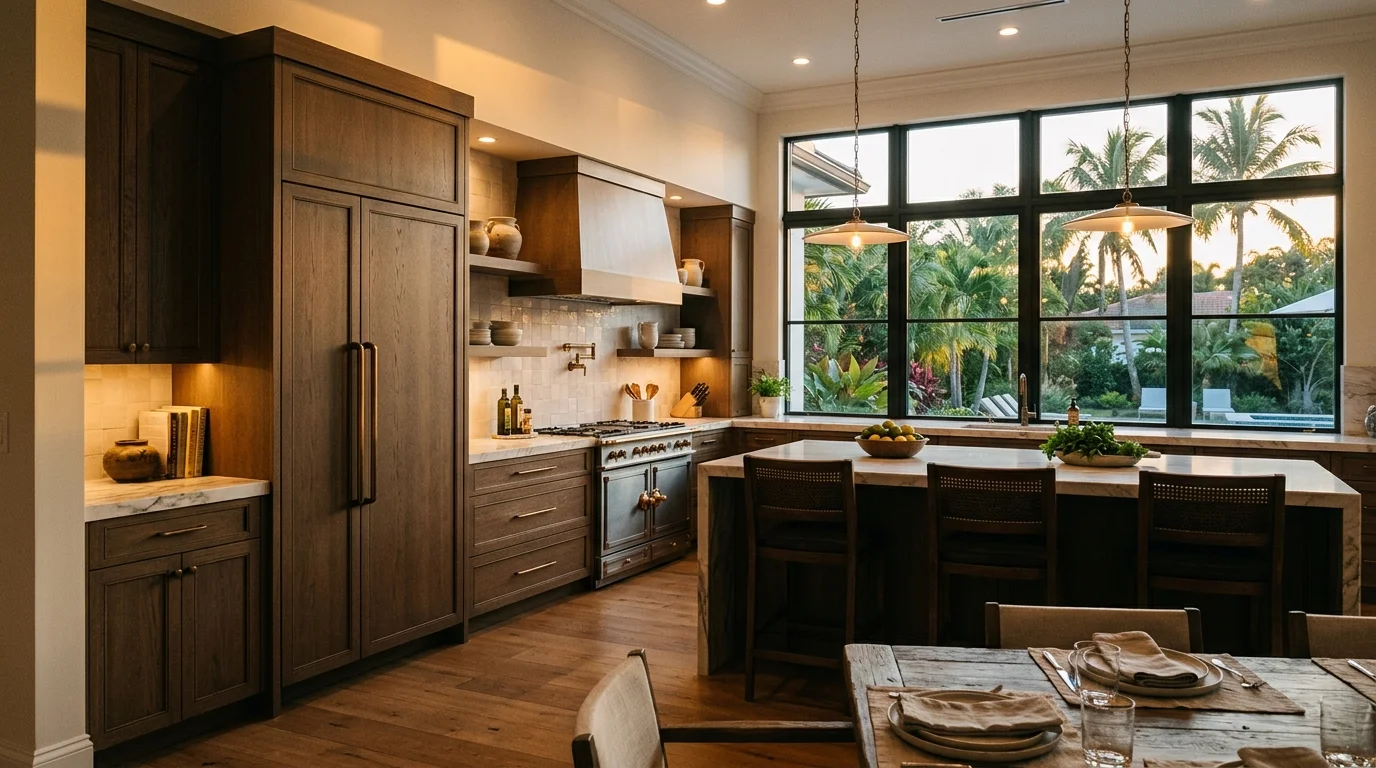
Panel ready refrigerators have become the gold standard for high-end kitchen designs across Palm Beach County. These appliances accept custom cabinet panels that match your cabinetry exactly, creating a fully built-in look that hides the refrigerator entirely. But with high pricing and specific install needs, homeowners in Boca Raton, Delray Beach, and Wellington often ask whether the cost makes sense for their kitchen remodel.
The answer depends on your design priorities, budget, and how long you plan to stay in your home. Panel ready models typically cost 20-40% more than comparable stainless steel refrigerators, but they solve the biggest visual break in most kitchen designs: that large stainless box taking over your wall of cabinetry.
We've installed hundreds of panel ready refrigerators in South Florida kitchens over the past decade. Here's what we've learned about when they're worth the cost and when standard models make more sense.
What Are Panel Ready Refrigerators
A panel ready refrigerator is designed to accept custom cabinet doors and panels that match your kitchen cabinetry. Instead of a finished front in stainless steel or black, these units have a mounting system that lets you attach cabinet doors directly to the refrigerator face.
The goal is a fully built-in look. When done right, your refrigerator disappears into the cabinet design. No stainless steel. No contrasting finishes. Just a wall of matching cabinetry with strategically placed handles that happen to open refrigerator compartments.
Most panel ready refrigerators are built-in models that need specific rough-in sizes and venting space. This isn't an add-on option for existing standard refrigerators. You need a unit built for panel attachment from the maker.
The trend has taken off in luxury markets like Jupiter and Wellington because it solves a common design problem. Standard refrigerators, even high-end stainless models, create a visual break in cabinet runs. Panel ready units remove that break entirely.
How Panel Ready Technology Works
Panel ready refrigerators use mounting brackets and alignment systems that let cabinet doors attach directly to the refrigerator face. The cabinet doors become the refrigerator doors, moving with the internal refrigerator mechanism when opened.
Here's the typical process: Your refrigerator manufacturer provides specific panel dimensions and weight limits. Our team builds cabinet doors to those exact specs, usually 3/4-inch thick to match the cabinets around them. The doors attach to mounting brackets on the refrigerator using heavy-duty hinges built to handle the added weight.
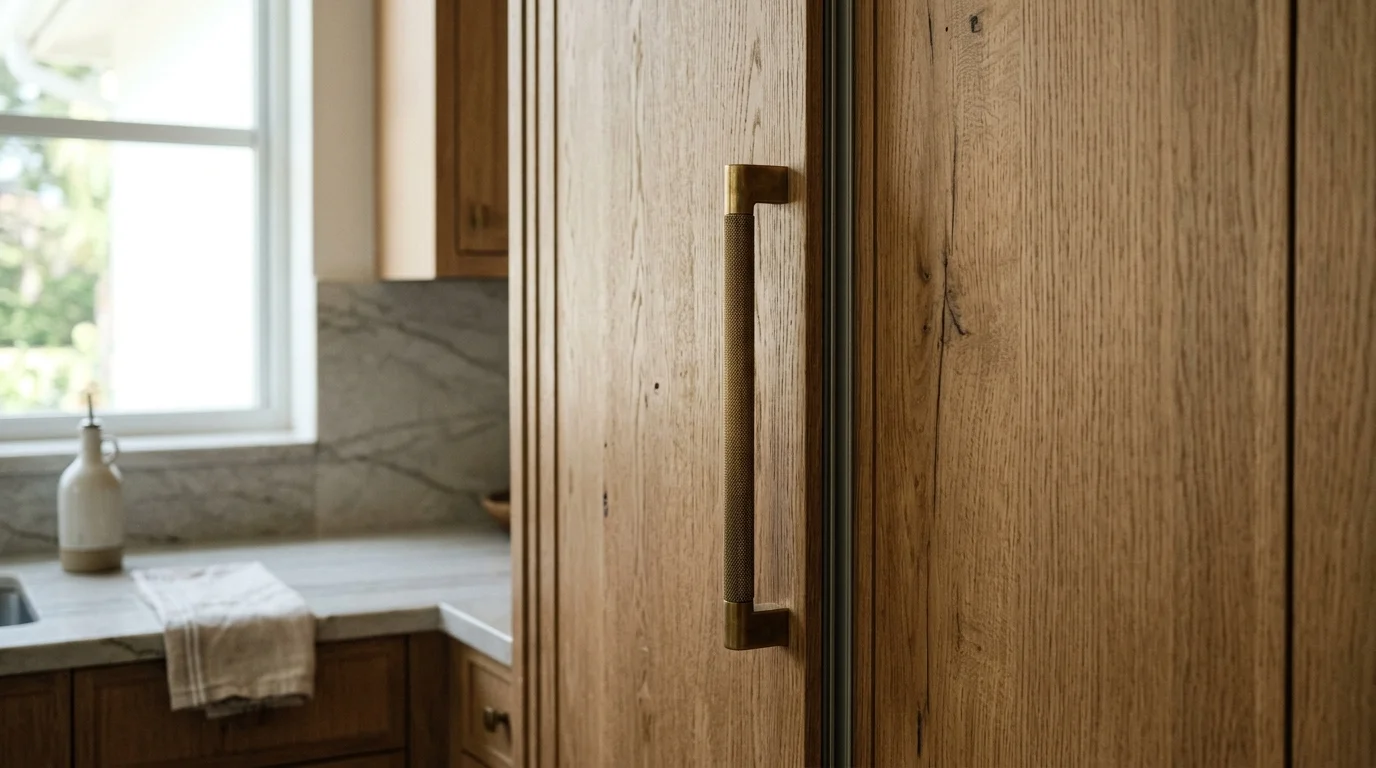
The cabinet doors need to be a bit smaller than standard doors to allow for the refrigerator's inner parts. Most makers require 1/8-inch clearance on all sides. Hardware placement is key. Handles must line up with the cabinets around them while staying clear of the refrigerator's moving parts.
Some panel ready models also take side panels that cover the refrigerator's sides when it sits between cabinets. This creates a fully built-in look, but it needs exact measurements and pro install to avoid gaps or doors that don't line up.
The key limit: cabinet doors must stay within the maker's weight limits, usually 15-25 pounds per door. This narrows your wood and thickness choices compared to standard cabinet doors.
Pros and Cons of Panel Ready Refrigerators
We recommend panel ready refrigerators when a built-in look matters more than budget. But they're not right for every kitchen or homeowner. Here's our honest take:
The Pros:
A fully built-in look changes kitchen design. Instead of a large stainless appliance breaking up your cabinet flow, you get a clean, unbroken wall of matching cabinetry. This works especially well in all-white kitchen designs where any odd element draws the eye.
Higher resale value in luxury markets. Buyers in gated communities and waterfront homes expect this level of finish. Panel ready refrigerators signal high-end work and care for design.
More freedom with cabinet styles and finishes. You can match any door style, wood type, or painted finish. When you change cabinet hardware, the refrigerator hardware changes too, so everything stays consistent.
Better protection from humidity and salt air. Cabinet panels add a barrier against South Florida's climate compared to bare metal surfaces.
The Cons:
Much higher cost. Panel ready refrigerators cost $2,000-$5,000 more than similar standard models. Add custom cabinet doors and pro install, and you're looking at $3,000-$7,000 in extra costs.
Tricky install needs. These units need exact rough-in sizes and pro install. DIY install voids warranties and often creates lineup issues that cost a lot to fix.
Fewer repair options. When cabinet doors are tied into refrigerator parts, repairs get harder. Some techs won't work on panel ready units, which limits your service choices.
Door weight limits narrow your design options. You can't use thick reclaimed wood or heavy stone door inserts that work fine on regular cabinets.
Top Panel Ready Brands for 2026
We work with several panel ready refrigerator makers, and quality varies a lot. Here are the brands we recommend for South Florida installs:
Sub-Zero remains the gold standard for panel ready refrigerators. Their mounting systems are rock solid, weight limits are generous, and local service support is excellent. Models start around $8,000 before panels, but the reliability is worth the higher price. The built-in compressor design handles Florida's humidity better than most rivals.
Thermador offers excellent value in the panel ready category. Their Freedom Collection gives you Sub-Zero quality at 20-30% lower prices. Column refrigerators and freezers come in several widths, giving you more layout freedom. The service network in Palm Beach County is solid.
Bosch Benchmark Series hits the sweet spot for many Palm Beach County kitchens. German engineering, fair pricing, and mounting systems that work reliably with custom panels. The 24-inch column models work great in galley kitchens and smaller spaces.
JennAir panel ready models have gotten much better in recent years. Their NOIR series offers special design touches like flush install and high-end finishes. Pricing sits between Thermador and Sub-Zero.
We usually avoid panel ready options from mainstream brands like KitchenAid or GE. The mounting systems aren't as strong, and long-term reliability doesn't justify the higher price over standard models.
Always check local service before choosing any brand. Sub-Zero's service locator helps you find a tech in your area.
Cost Guide
Panel ready refrigerator costs vary based on size, brand, and how hard the install is. Here's what to expect in the current Palm Beach County market:
The budget range usually covers Bosch or Thermador models with painted cabinet panels. The premium range covers Sub-Zero units with custom wood panels and harder built-in work.
Extra costs can include electrical upgrades for higher-amp units, water line changes for built-in ice makers, and cabinet changes if you're updating an existing kitchen. Always budget 15-20% above your first estimate for surprises during install.
Compare these costs against high-end stainless steel refrigerators in the $3,000-$6,000 range. The added cost for panel ready units usually runs from $3,000-$10,000 depending on your choices.
South Florida Considerations
South Florida's climate creates specific problems for panel ready refrigerators that don't exist in other markets. High humidity, salt air, and temperature swings affect both the refrigerator and cabinet panels.
Managing humidity is key with cabinet panels. Wood swells and shrinks more here than in dry climates. We use marine-grade finishes and sealed panels to stop warping and moisture from getting in. High-quality paint systems are a must for painted panels that need to hold their finish.
Salt air near the coast calls for extra protection. Stainless steel refrigerator parts can pit over time, but cabinet panels act as a barrier. We recommend yearly maintenance checks for coastal installs to catch any issues early.
Power outages from summer storms affect panel ready units differently than standard refrigerators. The added weight of cabinet doors can strain hinges and mounting systems when the door is opened often while power is out. We use heavy-duty hardware rated for tropical conditions.
Service matters more in South Florida because of climate-related wear. Make sure your chosen brand has approved service techs who know panel ready models in your area. Remote spots in western Palm Beach County may have longer wait times for service.
Condo and HOA rules apply to many South Florida installs. Some buildings limit appliance changes or require approval for built-in installs. Check your building's rules before ordering panel ready units.
The good news: panel ready refrigerators handle Florida's climate better than standard models when installed right. The cabinet panels add insulation and protection from the conditions that can damage bare appliance surfaces.