Pendant Lighting Over Kitchen Island: Style and Sizing Guide
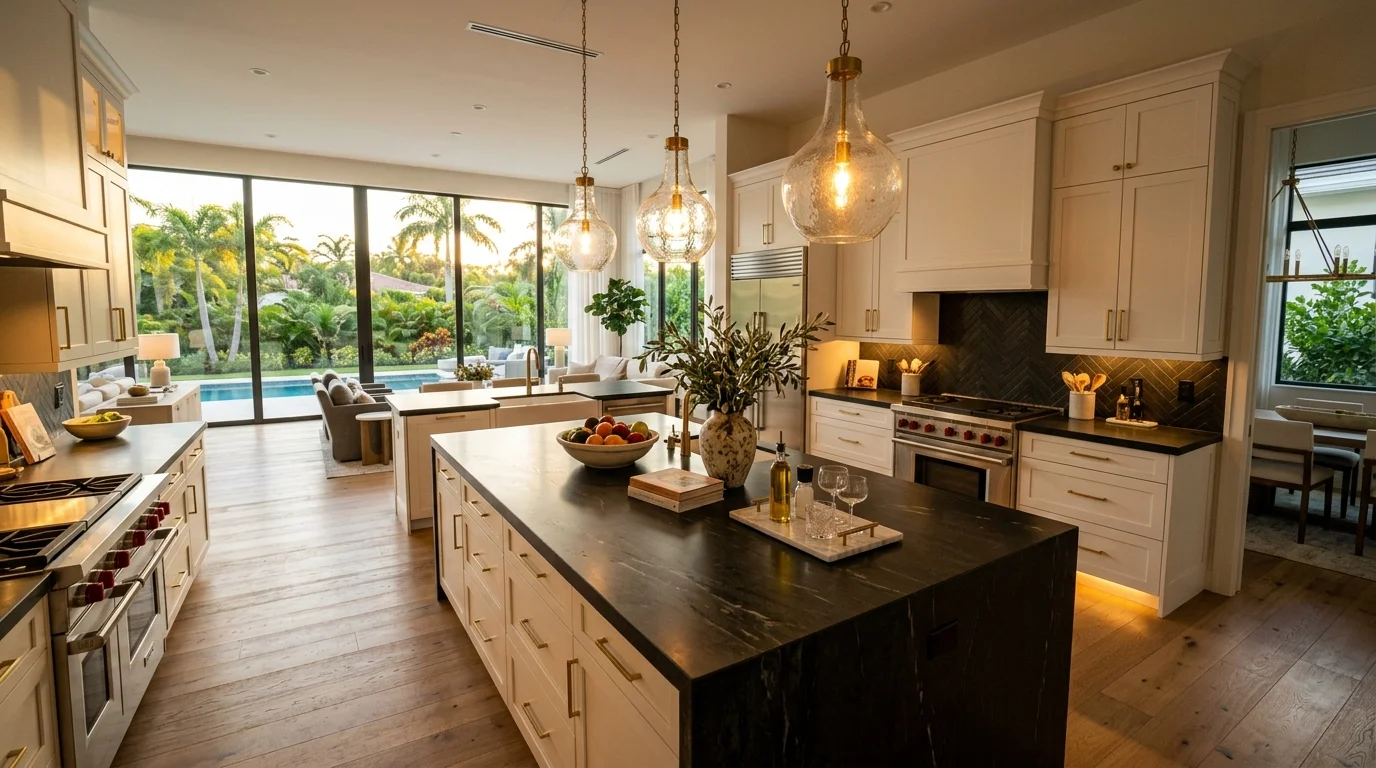
Getting pendant lighting kitchen island placement right makes the difference between a professionally designed space and one that feels off. We see homeowners in Boca Raton and Wellington struggle with this daily, either hanging fixtures too high where they provide no task lighting, or too low where they block sight lines across the kitchen.
After completing hundreds of kitchen remodels in Palm Beach County, we've learned that pendant lighting isn't just about aesthetics. It's about creating functional zones that work with your cooking habits while complementing your overall design. The wrong height or spacing can make even the most expensive fixtures look amateur.
Here's what we've learned about pendant lighting that actually works in South Florida kitchens.
Height and Spacing Rules
The 30-36 inch rule gets thrown around everywhere, but it's not that simple. We hang pendants 30 inches above the island surface for standard 8-foot ceilings. With 9-foot ceilings (common in newer Palm Beach County homes), we go 32-34 inches. For 10-foot ceilings, 36 inches works better.
But height means nothing without proper spacing. For three pendants over a standard 8-foot island, we space them 30 inches apart, center to center. Two pendants work better with 36-inch spacing. Single large pendants should be centered, obviously, but we rarely recommend this approach unless the island is under 4 feet long.
The sight line test matters more than any rule. Stand at your kitchen sink and look across the island toward your family room. Can you see over the pendants comfortably? If not, they're too low or too wide.
We also consider bar stool height. Standard counter-height islands (36 inches) work with the spacing above. Bar-height islands (42 inches) need pendants hung 6 inches higher to maintain proper proportions.
Sizing Your Pendants
Pendant size depends on island length and ceiling height, not personal preference. We use this formula: island length in inches, divided by four, equals maximum pendant width in inches. So an 8-foot island (96 inches) can handle pendants up to 24 inches wide.
Most homeowners go too small. Those 6-inch mini pendants that look cute in photos disappear in real kitchens. We recommend 12-inch minimum diameter for most applications. Large islands (10+ feet) can handle 18-24 inch pendants without looking oversized.
Scale matters with cabinet height too. Standard height cabinets (36 inches to countertop) look better with medium-scale pendants. Tall cabinets (42+ inches) can support larger fixtures.
Don't forget about pendant height when sizing. A 12-inch wide pendant that's also 12 inches tall takes up more visual space than a 15-inch wide pendant that's only 8 inches tall.
Popular Styles for Florida Homes
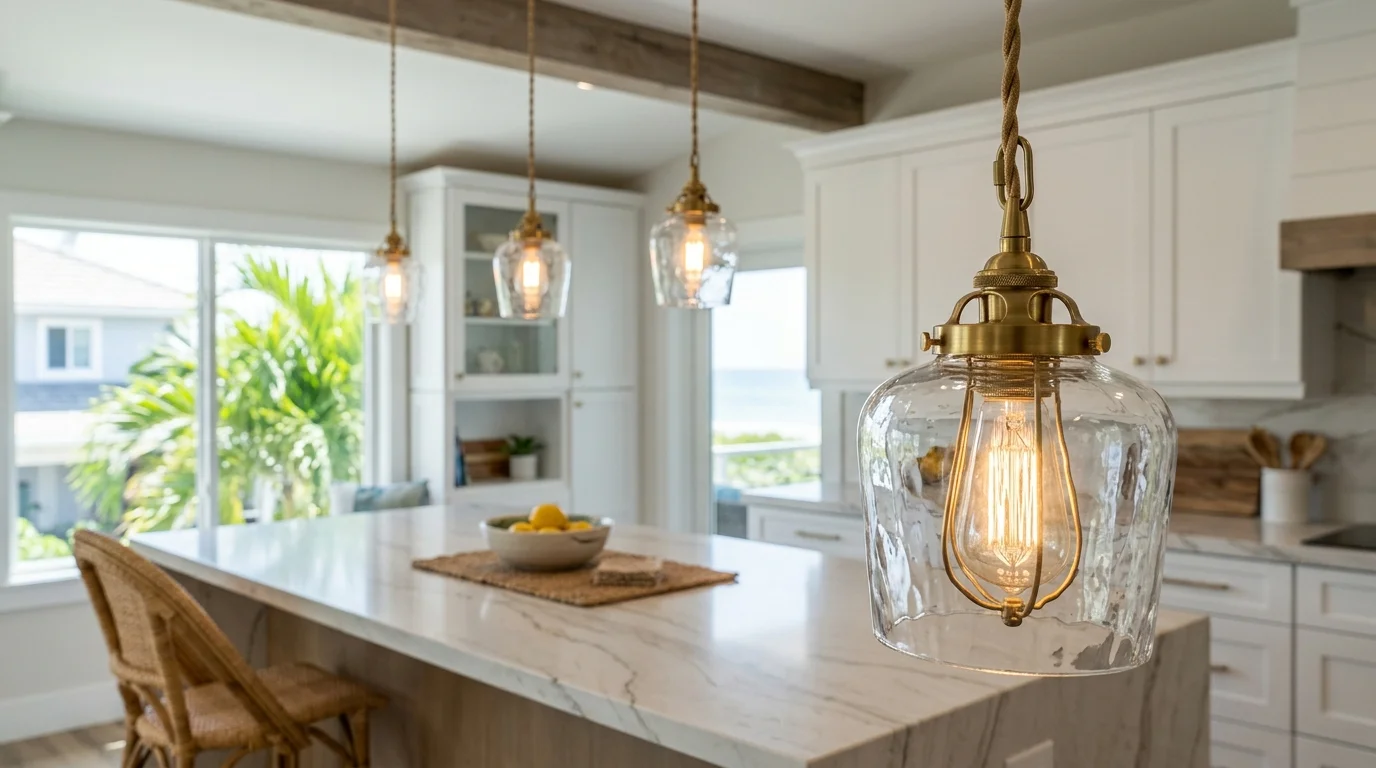
Glass pendants dominate our South Florida projects. They don't compete with ocean views, and they handle humidity better than metal finishes. Clear glass works with any style, while seeded or textured glass adds interest without blocking light.
For white kitchen designs, we love black metal frames with clear glass shades. The contrast looks sharp without being heavy. Brass and gold finishes work well too, especially with warm wood tones.
Natural materials perform well here. Woven rattan or rope pendants add coastal texture, but choose ones with glass inner shades for easy cleaning. Solid wood pendants need proper sealing for our humidity levels.
We avoid heavily textured metals (think hammered copper) that show water spots easily. Smooth finishes in stainless steel, brushed nickel, or powder-coated metals clean easier and last longer.
LED compatibility matters more than style. Most decorative pendants now accommodate LED bulbs, but verify this before buying. LEDs run cooler and last longer, important for fixtures used daily.
Coordinating with Recessed Lights
Pendant lighting shouldn't work alone. We design layered lighting schemes where pendants handle task lighting over the island while recessed lights provide general illumination.
Space recessed lights 4-6 feet apart throughout the kitchen. Keep them at least 3 feet from pendant locations to avoid competing light patterns. We typically use 4-inch LED recessed lights with 3000K color temperature to match most pendant bulbs.
Dimmer switches are non-negotiable. We install separate dimmers for pendants and recessed lights so homeowners can adjust lighting for different activities. Cooking needs bright task lighting. Entertaining calls for ambient lighting only.
Under-cabinet lighting completes the scheme. LED strip lights under cabinets eliminate shadows on countertops that pendants can't reach. This three-layer approach, recessed, pendant, and under-cabinet, creates professional-quality kitchen lighting.
Control placement matters too. We put pendant switches near the island for easy access while cooking. Recessed light switches go by the main kitchen entrance. Under-cabinet lights can use motion sensors or connect to the pendant switch.
Cost Guide
Pendant lighting costs vary widely based on style, size, and installation complexity. Here's what we see in Palm Beach County projects:
Installation costs depend on electrical work needed. Existing junction boxes keep costs low. New electrical runs add $300-600 per location. Dimmer switches cost $50-150 each installed.
Budget $800-2,000 total for three quality pendants with professional installation. High-end projects can reach $3,000-5,000 for premium fixtures with complex electrical work.
South Florida Considerations
Humidity affects pendant lighting more than most homeowners realize. We recommend sealed fixtures for areas near cooktops where steam is common. Glass shades handle moisture better than fabric or natural fiber options.
Hurricane preparedness matters for expensive fixtures. We secure pendants with additional support cables in areas prone to strong winds. Removable shades make storm preparation easier, you can store delicate glass components safely.
Ceiling fans complicate pendant placement in open kitchen layouts. Plan pendant locations before installing fans. Most Palm Beach County homes need both, so coordination matters from the design phase.
Salt air affects metal finishes, especially near the coast. Stainless steel and powder-coated finishes last longer than brass or copper in Delray Beach and Jupiter waterfront homes. Regular cleaning prevents corrosion buildup.
Energy efficiency counts with our electricity costs. LED-compatible pendants reduce cooling loads too, important for year-round air conditioning. The Department of Energy reports that LEDs use 75% less energy than incandescent bulbs and last much longer.
Pool reflections can create glare issues in outdoor kitchen areas. We position pendants to avoid reflecting off water surfaces, which means adjusting standard height and spacing rules for covered outdoor islands.