Before You Sign · March 2026
What to Ask Before Signing a Kitchen Remodel Contract in Florida

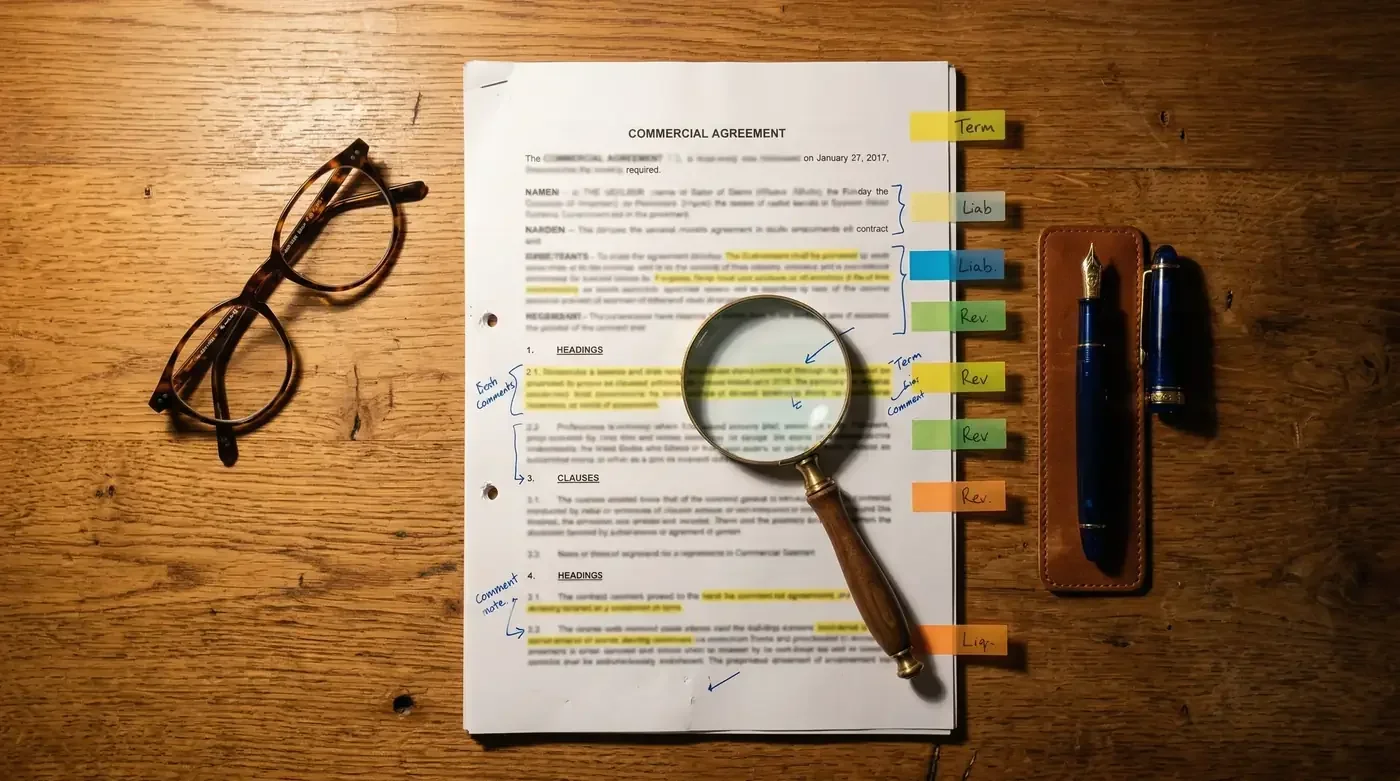
Photo: Palm Beach County homeowner reviewing a kitchen remodel contract
By Andre · Palm Beach County · March 2026
Signing a remodeling contract in Florida without asking the right questions first is one of the most expensive mistakes a homeowner can make. This isn't about being difficult, it's about protecting a $40,000 to $150,000 investment in your home.
Most remodeling disputes come down to one thing: assumptions. The homeowner assumed something was included. The contractor assumed it wasn't. A clear contract eliminates that gap before a single cabinet is touched.
The questions below are the ones we wish every homeowner asked us. We welcome them, and so does any reputable contractor. If someone rushes you through these or deflects the hard ones, that's its own answer. You can verify Florida construction credentials directly at the Florida DBPR license portal, and the FTC's contractor hiring guidance is worth a quick read before any major signing.
Credentials & Insurance Questions
Protects you financiallyCan you provide a current Certificate of Insurance listing me as additionally insured?
You want general liability (minimum $1M per occurrence) and workers' compensation coverage. If a worker is injured in your home and the contractor lacks workers' comp, you could be held liable. "Additionally insured" means you're covered if their work damages your property. Ask for the COI to come directly from the insurer, not a copy emailed by the contractor.
Verification takes two minutesWhat credentials should I verify, and how?
Florida requires credentials for general contractors (state-certified or county-registered) and for the trades that handle plumbing, electrical, and gas. You can verify any Florida credential at myfloridalicense.com in about two minutes, look for active status, no complaint history, and matching business name. For Palm Beach County registrations, the county's Construction Industry Licensing Board maintains a separate directory. Ask for the license number before signing, not after.
Workers' comp isn't optionalAre all your subcontractors covered under your workers' comp, or do they carry their own?
Most remodelers in Palm Beach County use subcontractors for plumbing, electrical, tile, and cabinet install. Either the general contractor's workers' comp needs to cover them, or each sub needs to show their own certificate. Gaps here put the homeowner on the hook for injuries. Ask specifically.
Want exact pricing for your kitchen remodel?
Get a free, no-obligation estimate for your Palm Beach County kitchen or bath.
We respond within 2 hours during business days.
Scope & Specifications Questions
Prevents change ordersIs everything in this quote fully specified, or are there allowances?
Allowances are budget placeholders for unselected items, and they're almost always too low for Palm Beach County costs. Push to replace every allowance with a real product selection before signing. If impossible, ask to raise each to a realistic number.
Cabinet quality matters enormouslyWhat is the cabinet box construction, plywood or particle board?
In South Florida's humidity, particle board cabinets will swell and fail within 5-10 years, especially near sinks and dishwashers. Plywood construction is the only right answer for a long-term remodel. Get this in writing.
Line-item detail beats lump sumsCan you break down the quote by scope, demolition, cabinets, countertops, tile, plumbing, electrical, paint?
A $60,000 lump-sum quote tells you nothing. A line-item breakdown lets you compare quotes on even ground, catch missing scope (who's removing the old tile? who's doing the drywall repair?), and evaluate where a contractor is strong or weak. If a bidder refuses to break it down, they don't want you comparing their numbers. Move on.
Permit responsibility should be explicitWho pulls the permits, you or me?
Standard practice is for the contractor to pull permits for their own work. That puts them on record with the county as responsible. If a contractor asks you to pull the permit as the homeowner, that's a red flag, it usually means they don't want their name on the job. See our Palm Beach County permit guide for what's required.
Timeline & Payment Questions
Affects your daily life for weeksWhat is the realistic timeline, and what could extend it?
Custom cabinets in Palm Beach County currently have 10-14 week lead times. A realistic full kitchen remodel is 12-18 weeks from contract to completion. Anyone promising 6 weeks is using stock cabinets or not telling the full story. Ask what items drive the critical path, and what happens to the timeline if, say, the countertop slab is back-ordered.
Florida law protects you hereWhat is your payment schedule, and is it tied to milestones?
A legitimate payment schedule is milestone-based, tied to project phases, not arbitrary dates. You should see payments tied to: contract signing, demolition completion, cabinet installation, countertop installation, and final walkthrough. Avoid any contractor who requires a large lump-sum payment early in the project before work has been completed. Florida Statute §489.126 also caps up-front payments on contracts over $2,500, the contractor cannot collect more than 10% plus material costs before work or deliveries begin.
Final payment is your leverageWhat exactly triggers the final payment?
Final payment should be tied to one thing: completion of the written punch list to your satisfaction. Not "substantial completion." Not "final inspection passed." Full punch-list completion, including the tiny items like touch-up paint and adjustment of cabinet doors. Your final payment is the only leverage you have to get those small items finished. Don't give it away early.
Florida-specific note: Request a Notice of Commencement be filed with Palm Beach County before work begins. This document protects you from mechanic's liens filed by subcontractors or suppliers who weren't paid by your general contractor.
Red Flags to Watch For
These aren't deal-breakers in every case, but each one deserves a hard question before you sign:
Most common scam patternDemand for a large up-front payment "to lock in the schedule"
Florida statute caps this, and legitimate contractors don't need it anyway. Any request for more than 10% plus material costs before work begins is suspect. Contractors disappearing after taking large deposits is the single most common complaint filed with the Florida DBPR for construction businesses.
Price anchoring trick"Sign today and I'll take $5,000 off"
Legitimate pricing doesn't evaporate in 24 hours. This pressure tactic is designed to stop you from getting other quotes or reading the fine print. A quote that's good today should be good for at least 30 days.
Communication fails laterNo single point of contact named in the contract
If the contract doesn't name your project manager, you don't have one. When issues come up mid-project, and they always do, you need to know who owns the decision. Insist on a named PM in writing.
Legal exposure to youNo written warranty, or a warranty that excludes labor
A labor warranty of at least one year after completion is standard in South Florida. Manufacturer warranties cover the product; the labor warranty covers the installation. You need both. A contract with zero labor warranty, or a warranty that excludes "labor of any kind," is a walk-away.
Credential mismatchBusiness name on the quote doesn't match the credential on file
When you look up the credential on myfloridalicense.com, the business name on the registration should match the name on your contract. Mismatches usually mean the contractor is working under someone else's credential, a situation Florida statute specifically prohibits.
Pre-Signing Checklist
Palm Beach County Remodel Checklist
- Received Certificate of Insurance (you as additionally insured)
- All allowances replaced with real specs or raised to market rate
- Cabinet box construction confirmed as plywood in writing
- Plumbing/electrical relocation explicitly included or excluded
- Realistic timeline confirmed with lead time acknowledgment
- Payment schedule is milestone-based, not date-based
- Payment schedule is milestone-based and tied to completed work phases
- Labor warranty terms in writing
- Notice of Commencement process confirmed
- Change order process defined in contract
Common Questions
Frequently Asked Questions
What should be included in a kitchen remodel contract in Florida?
A proper Florida kitchen remodel contract should include a detailed scope of work, itemized pricing, a milestone-based payment schedule, start and completion dates, a written change order process, warranty terms covering both labor and materials, and the contractor's credential number and insurance information.
What does Florida law say about up-front payments on remodel contracts?
Florida Statute §489.126 caps up-front payments on contracts over $2,500, the contractor cannot collect more than 10% plus reasonable material costs before work or deliveries begin. Ask for a structured payment schedule tied to project milestones, and never pay the full amount before work is complete.
Can a contractor change the price after signing in Florida?
The original contract price is binding. Any change in scope or price must go through a written change order signed by both parties. Verbal agreements to change prices are not enforceable. Never authorize additional work without a signed change order.
What credentials should I verify before signing a kitchen remodel contract in Palm Beach County?
Florida requires credentials for general contractors (state-certified or county-registered) and for the trades that handle plumbing, electrical, and gas. You can verify any credential at myfloridalicense.com before signing. Confirm that the credential is active, that the business name matches the contract, and that there are no open complaints.
What is a reasonable payment schedule for a kitchen remodel?
A fair payment schedule ties payments to project milestones, typically deposit at signing, a draw after demolition and rough-in, a draw after cabinet installation, and a final payment after the punch list is complete. Never pay the final balance until all work is finished to your satisfaction.
A
About the Author
Andre
Owner of South Florida Kitchen & Bath Design, serving Palm Beach County since 2016. Andre and his team have completed thousands of kitchen and bathroom renovations across Boca Raton, West Palm Beach, Wellington, Delray Beach, and the surrounding communities.
Explore More
Related Pages & Service Areas