Undermount vs Drop-in Sink: Which Is Best for Your Kitchen?
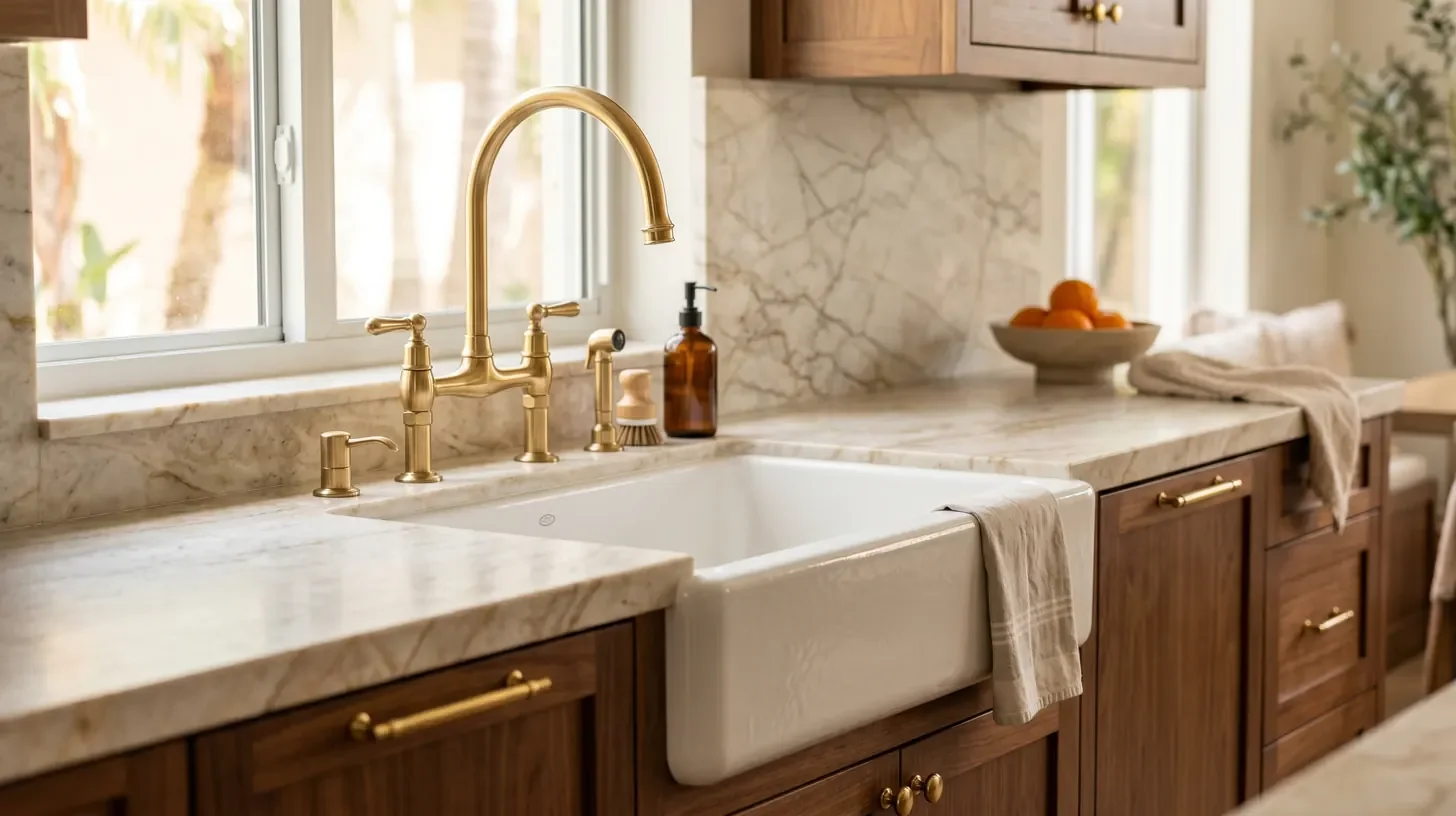
The undermount vs drop-in sink debate comes up in nearly every kitchen remodel we handle across Palm Beach County. Both styles have their place, but the right choice depends on your countertop material, cleaning preferences, and budget. We recommend undermount sinks for most Boca Raton and Wellington homes with natural stone counters, while drop-in models work better for budget-conscious projects or specific design styles.
After installing hundreds of kitchen sinks from Jupiter to Delray Beach, our team has strong opinions about when each style makes sense. This isn't about trends, it's about function, maintenance, and getting your money's worth in South Florida's demanding climate.
Understanding Sink Styles
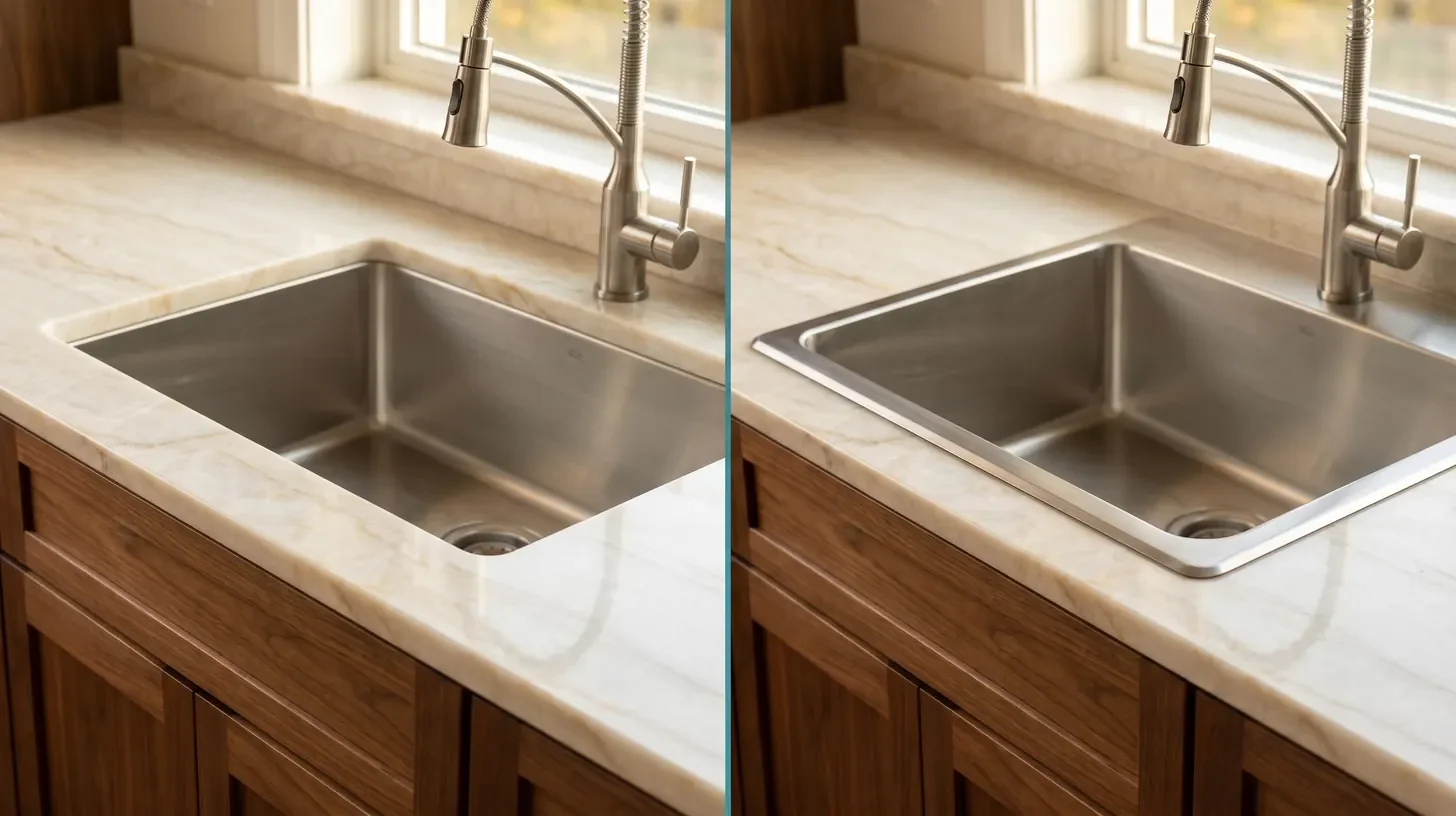
Undermount sinks attach from below the countertop, creating a smooth transition from counter to basin. Drop-in sinks (also called top-mount or self-rimming) sit on top of the counter with a visible rim that overlaps the cutout.
The installation method changes everything: how you clean, what countertops work, and what you'll pay. Drop-in sinks were the standard for decades because they're forgiving during installation. Miss the cutout measurements by an eighth-inch? The rim covers minor mistakes.
Undermount installation requires precision. The countertop cutout must be exact, the sink needs proper support brackets, and the seal has to be perfect. One small error and you're looking at water damage or a complete reinstall.
Undermount Sinks: Pros and Cons
Undermount sinks create the cleanest look in modern kitchens. The uninterrupted countertop surface flows directly into the basin, no rim to catch crumbs or collect grime. This matters more than you might think in daily use.
Cleaning becomes effortless. Sweep debris straight from counter to sink without lifting over a rim. Wipe down counters in one smooth motion. Our clients consistently tell us this is their favorite feature after living with their new Florida kitchen countertops.
The downsides? Installation complexity drives up costs. Not every countertop material works, you need solid stone, engineered stone, or thick solid-surface materials. Laminate counters can't support the sink weight or provide adequate sealing.
Undermount sinks also require more maintenance around the seal. Florida's humidity and temperature swings can stress the bond between sink and stone. We've seen poorly installed undermounts fail after 5-7 years when the adhesive gives up.
Drop-In Sinks: Pros and Cons
Drop-in sinks work with any countertop material, from basic laminate to exotic granite. The rim provides structural support, so you're not relying purely on adhesives and brackets. Installation takes half the time and costs significantly less.
These sinks shine in budget remodels or when you're keeping existing countertops. Replacing a drop-in sink is straightforward, usually a morning project for our crew. Try swapping an undermount and you might need new countertops too.
The rim creates problems though. Food particles and water collect in the crevice between rim and counter. Even with careful cleaning, this junction harbors bacteria and develops stains over time. South Florida's moisture makes this worse.
Drop-in rims also interrupt the visual flow of your countertop. Not a dealbreaker, but definitely noticeable in modern kitchen designs where clean lines matter.
Countertop Compatibility
Your countertop material often decides the sink question for you. Undermount installation requires materials thick enough to support the sink weight and accept polished edges around the cutout.
Granite, marble, and quartzite work beautifully with undermount sinks. The stone fabricator polishes the cutout edge to match the top surface, creating that continuous look. Engineered quartz countertops also support undermount installation and resist staining better than natural stone.
Laminate countertops need drop-in sinks. The thin substrate and particle board core can't handle undermount stress. Even thick laminate installations lack the structural integrity for long-term undermount success.
Solid-surface materials like Corian fall in the middle. Thicker installations can support undermount sinks, but the material isn't as rigid as stone. We've seen some flex and seal failure over time, especially in large sink installations.
Butcher block and other wood counters typically use drop-in sinks. The wood movement from humidity changes stresses undermount seals. Florida's climate makes this particularly challenging.
Cost Guide
Sink costs vary widely based on material, size, and brand, but installation method significantly impacts your total investment. Here's what we typically see in Palm Beach County:
These prices include basic installation labor but not countertop modifications. Undermount installation with new stone counters adds $200, $400 to fabrication costs for the polished cutout edge and mounting hardware.
Retrofitting an undermount sink into existing counters costs more, $800, $1,500 depending on access and complexity. Sometimes it's more economical to upgrade the entire counter surface.
Making the Right Choice for Your Kitchen
Pick undermount if you're installing quartz, quartzite, granite, or marble counters and plan to stay in the home 10+ years. The continuous look pays you back every day in cleanup time, and it holds its value if you ever sell.
Pick drop-in if your countertop is laminate, butcher block, or any material under 1.25 inches thick. Also pick drop-in if this kitchen is a rental, flip, or short-term hold. The cost savings matter and the design difference is minor at those price points.
Split the difference with a flush-mount or "zero-reveal" sink. The rim is there but sits nearly flush with the counter, giving you most of the undermount look at drop-in complexity. Good middle ground for laminate upgrades that aren't ready for stone.
If you're remodeling anyway and your countertops are being replaced, undermount is the obvious call. The incremental cost is just the polished edge detail (about $200-400), and you're already paying for fabrication. Skipping this in a full remodel is a decision most Palm Beach County homeowners regret within the first year.
Installation Timeline and What to Expect
A clean undermount install takes one day with a trained crew once countertops are in place. Drop-in replacement on existing counters takes 3-4 hours. Both assume standard plumbing with no surprises, and South Florida surprises are real.
Older Palm Beach County homes often have galvanized drain lines that need upgrading during sink work. Cabinet bases in kitchens built before 2000 frequently show water damage from past leaks that has to be repaired before the new sink goes in. Budget a full day for the sink work plus half a day of contingency for anything we uncover.
New-construction installs in Wellington and Jupiter go faster because everything is accessible and to current code. Retrofit work in Boca Raton condos built in the 1970s-80s often doubles the timeline because of tight access, outdated plumbing, and HOA water shut-off coordination.
Expect the water shut off for most of the day. Plan for takeout that evening. Testing the seal takes 24 hours before running water volume through the drain.
South Florida Considerations
Florida's climate creates unique challenges for kitchen sinks. High humidity, temperature swings, and salt air impact both materials and installation methods differently.
Undermount sinks face adhesive stress from constant moisture. We use marine-grade sealants and check the installation during our follow-up visits. Poor sealing leads to water damage in the cabinet base, expensive to fix in homes with natural stone counters.
Stainless steel works well in coastal areas like Jupiter and Boca Raton, but cheaper grades show water spots and corrosion faster. We recommend 16-gauge or thicker stainless in 304-grade for longevity. The higher nickel content resists saltwater corrosion better than budget alternatives.
Composite granite sinks handle Florida weather well but show hard water stains. Most Palm Beach County water has mineral content that leaves spots on dark sink finishes. Light colors hide this better than black or deep brown options.
During hurricane season, undermount sinks in outdoor kitchens need extra attention. Wind-driven rain can infiltrate compromised seals. Our team inspects and reseals undermount installations in South Florida outdoor kitchens annually.
Gated communities in Wellington and Delray Beach often have architectural review requirements that favor certain sink styles. Check your HOA guidelines before ordering, some communities restrict visible sink rims or require specific finishes to maintain design consistency.