Heated Bathroom Floors: Worth It in Florida?
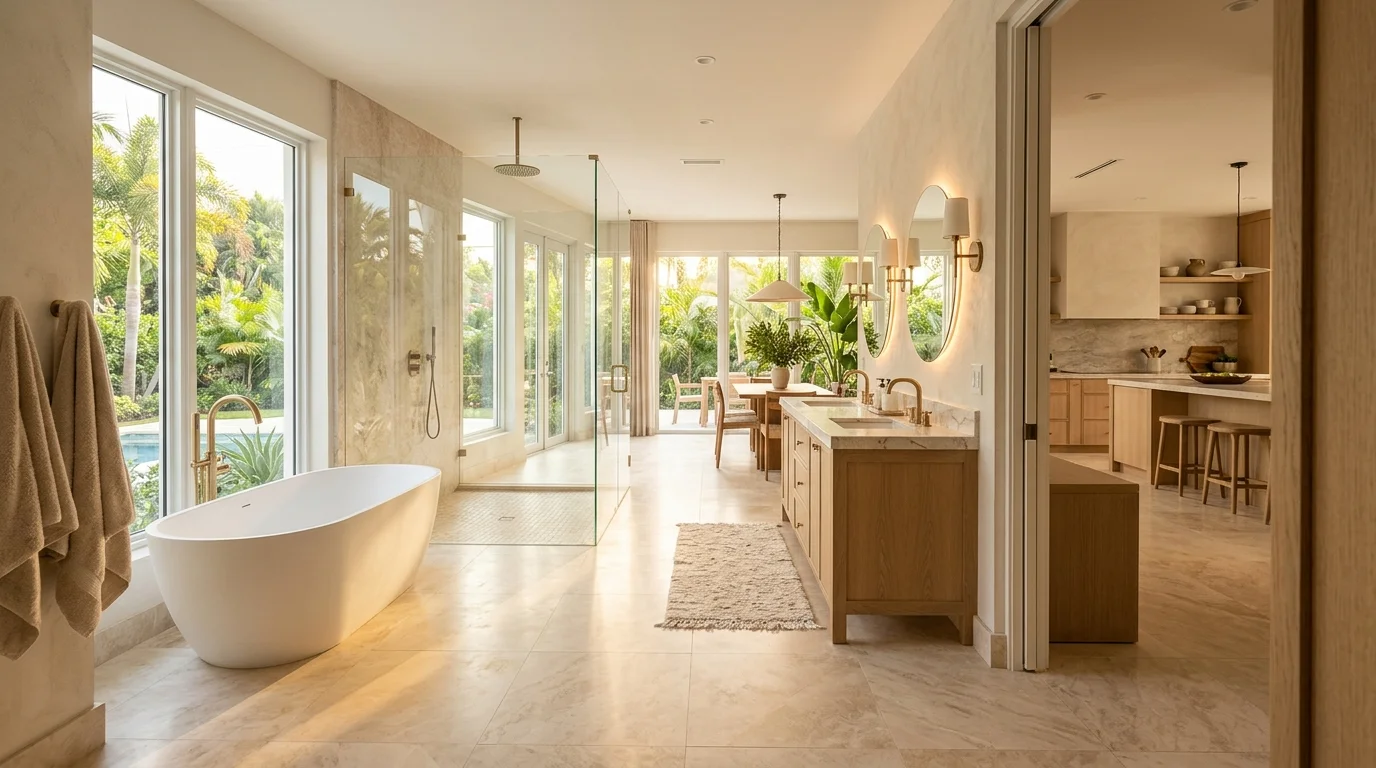
Heated bathroom floors sound like a luxury built for Minnesota winters. So why are we installing them in Palm Beach County bathrooms more often than ever? The honest answer: heated bathroom floors in South Florida are less about survival and more about daily comfort, resale appeal, and the feeling you get when you step out of a shower onto a warm tile floor at 6 a.m. That feeling is real. And for a surprising number of Boca Raton, Delray Beach, Wellington, and Jupiter homeowners, it's worth every dollar. This guide breaks down how the systems work, what they actually cost here in South Florida, and whether the investment makes sense for your specific situation.
How Heated Bathroom Floors Work
Radiant floor heating works by running either electric resistance cables or warm water through tubing beneath your tile. The heat radiates upward from the floor surface rather than blowing from a vent. The result is even, consistent warmth at floor level, exactly where you feel it when you're barefoot.
There are two delivery systems. Electric radiant heat uses a thin mesh mat or loose cable embedded in thinset mortar directly beneath your tile layer. A thermostat, usually a programmable or smart unit, controls the temperature. Hydronic systems circulate hot water through PEX tubing, typically embedded in a concrete or mortar bed. The thermostat still controls everything, but the heat source is a boiler or water heater rather than electricity.
For bathroom applications, electric is by far the more practical choice. Installing hydronic in a single bathroom is rarely cost-effective unless you're running it throughout an entire home at the time of construction or a major renovation. Electric mats are thin (about 3/16 of an inch), integrate cleanly with standard tile installation, and can be installed in a typical bathroom in a day. That's what our crews work with on the vast majority of South Florida bathroom projects.
The tile type matters. Porcelain and ceramic conduct heat efficiently and are the standard pairing for radiant floors in this region. Natural stone works too, but thicker slabs slow the response time. Luxury vinyl plank can be used with low-temperature systems but check the manufacturer specs first. For a deeper look at how porcelain and ceramic stack up for local conditions, see our guide on porcelain vs. ceramic tile for South Florida bathrooms.
The Florida Case: Comfort Over Cold
Let's be direct. You are not installing heated bathroom floors in Wellington because you're worried about frostbite. Florida tile floors stay cool to the touch in the morning, especially in air-conditioned homes. AC runs most of the year here. That 65-degree interior temperature at 6 a.m. in December is mild by any national standard, but stepping onto a cold tile floor when you're half awake is still unpleasant.
That's the first argument for radiant heat in Florida: the AC effect. We keep our homes cold. Cold homes mean cold tile. Heated floors fix that problem year-round, not just in January.
The second argument is resale value. This is where the Florida case gets genuinely compelling. Palm Beach County has a large population of buyers relocating from the Northeast and Midwest. These buyers grew up with heated floors in high-end homes. When they tour a primary bath in Boca Raton and see a Nuheat or WarmlyYours thermostat on the wall, they know what it means. It signals quality. It signals that the owner spent money on the right details. That perception translates to perceived value at sale time, even if the buyer never uses the system above 75 degrees.
Luxury bathroom remodels in Palm Beach County increasingly include heated floors as a standard feature rather than an upgrade. If you're investing in a full primary bath overhaul, leaving heated floors out can actually make the space feel incomplete to buyers in the upper price brackets. Take a look at some of the full-scope projects we've worked through in our luxury bathroom remodel ideas for Palm Beach County for context on where this feature fits.
There's also the comfort case for aging in place. Warm floors reduce the thermal shock of stepping out of a hot shower into a cooled room, which matters for circulation and comfort as people age. For homeowners planning to stay in their homes long-term, it's a quality-of-life upgrade with a practical side. Our aging in place bathroom design guide for South Florida seniors covers related upgrades worth pairing with this one.
Electric vs. Hydronic: Which Makes Sense Here
We already gave the short answer above: electric wins for bathroom-specific installations in South Florida. Here's the longer version.
Hydronic systems are more energy-efficient over very large areas, but that efficiency advantage disappears in a single bathroom. The boiler infrastructure, the PEX tubing layout, the manifold system, the labor to embed tubing in a concrete substrate, it all adds up to a cost that makes no sense for a 60-square-foot primary bath. Hydronic starts to make financial sense when you're heating 1,000 or more square feet of continuous floor space, typically in new construction.
Electric mat systems from manufacturers like Nuheat or WarmlyYours install in a single day. The mat rolls out over your existing substrate, gets embedded in thinset, and your tile goes right on top. Total added floor height: under a quarter inch. That matters in bathroom remodels where door clearances and transition heights are already tight.
Operating costs are reasonable. A standard 50-square-foot primary bath floor might run 8-15 cents per hour of operation at Florida Power & Light rates, depending on your thermostat schedule. Most homeowners set it to run 30-60 minutes before their typical wake time and turn off automatically. Monthly cost in real-world use: often under $10. That's not a budget-breaker.
Smart thermostats are worth the upgrade. Units with Wi-Fi control let you adjust schedules remotely, track energy use, and integrate with home automation systems. If you're already adding smart features to your bathroom remodel, pairing a smart floor thermostat with the rest of the package is an easy call. We covered some of the broader technology decisions worth making in our bathroom remodel ideas for 2026.
One thing to understand: the thermostat and the electrical connection for the heating mat are your general contractor's scope. SFKB handles the tile installation and the mat placement within the tile system. The GC connects the system to your panel. Make sure your GC is in the loop before tile work begins, because the floor sensor wire needs to be positioned correctly during installation, and there's no going back after the tile is set.
Cost Guide
Here are realistic Palm Beach County cost ranges for electric radiant floor heating in a bathroom. These reflect material and installation costs for the heating system itself. Your tile and substrate costs are separate line items in a full bathroom remodel budget. For the full picture on what a bathroom renovation runs locally, see our bathroom remodel cost guide for Palm Beach County.
The bottom line: adding electric radiant heat to a bathroom remodel in Palm Beach County typically adds $1,000-$2,500 to your total project cost for a standard primary bath, once you account for the mat, thermostat, electrical work, and integration into the tile installation. That is a small addition on a remodel that might run $15,000-$40,000 overall. The cost-to-comfort ratio is hard to argue with.
Permits are not required for the tile installation portion. The electrical connection is a different story. Depending on whether a new dedicated circuit is needed and your local jurisdiction, your GC may need to pull an electrical permit for that portion of the work. This varies by municipality. Boca Raton, Delray Beach, and Palm Beach Gardens each have their own thresholds. Your GC handles that determination and any required inspections.
South Florida Considerations
A few things are specific to this market and climate that are worth knowing before you commit.
Moisture is the big one. Florida bathrooms deal with humidity levels that bathrooms in drier climates never see. Proper waterproofing under and around the tile system is non-negotiable. The radiant mat itself is moisture-tolerant, but everything beneath it, the substrate, the membrane, the transitions, needs to be done right. Skipping proper waterproofing to save money is the kind of decision that turns a $2,000 heated floor into a $10,000 problem. Our bathroom waterproofing guide for Florida homes covers the specifics of what that means in this climate.
Tile selection matters more here than in cooler climates. Large-format porcelain tiles, which are extremely popular in Palm Beach County right now, pair well with radiant heat because the larger surface area distributes warmth evenly with fewer grout lines to interrupt it. See our thoughts on tile options and patterns in our bathroom floor tile ideas for Palm Beach County homes.
HOA and condo considerations. If you live in a condo in West Palm Beach or a managed community in Boca Raton, your HOA may require approval for any work that affects the electrical system or subfloor. We see this frequently in condominium projects. Have your GC confirm what approvals are needed before scheduling work.
Resale market reality. The Palm Beach County luxury market is competitive. Buyers at the $700,000 and above price point are comparing homes that all have quartz countertops and frameless glass showers. Heated floors at that level are becoming a differentiator, particularly in primary baths. Below that price point, they're still a positive, but less likely to be the deciding factor in an offer. We recommend them most strongly in primary baths for homes positioned at or above the mid-range of their neighborhood's price bracket.
Finally, timing. Add heated floors during a full bathroom remodel, not as a standalone project afterward. Retrofitting a radiant system under existing tile means tearing out the tile, adding the mat, and re-tiling. That's expensive and disruptive. If you're already pulling up the floor for a remodel, the incremental cost to add radiant heat is very reasonable. If the floor is staying, the math changes considerably. For more context on how to plan the full scope of a bathroom remodel project, the Palm Beach County bathroom remodel timeline guide is a good reference.
Our opinion: if you're doing a full primary bath remodel and your budget allows it, add heated floors. The comfort is real, the cost is manageable, and in this market it's one of the few upgrades that buyers from northern states actively look for and remember. We recommend electric mat systems over hydronic for any single-room application, and we recommend pairing them with a smart thermostat from day one. Set it, forget it, and enjoy your floor every morning.