How to Remove Super Glue From Countertops
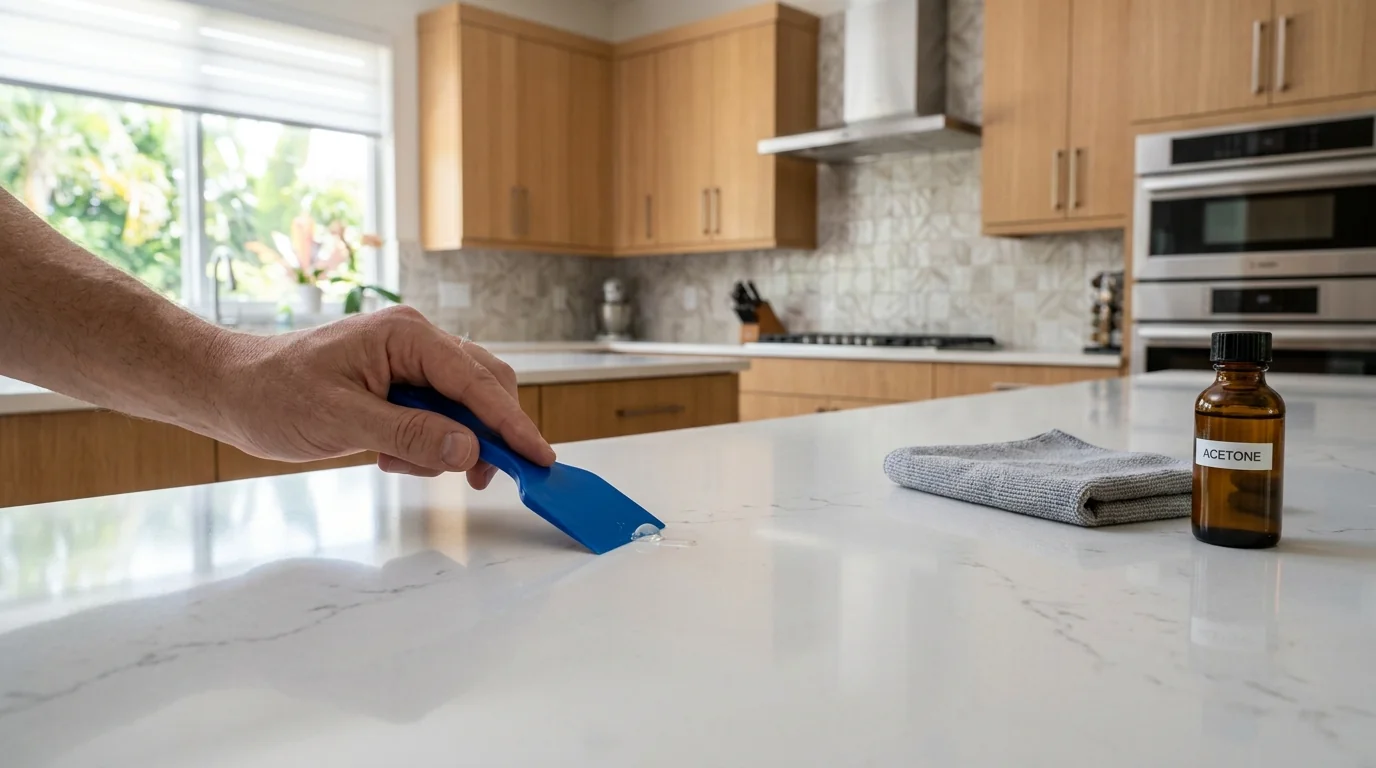
If you need to know how to remove super glue from countertops, the good news is that most spills come off cleanly when you go slow and pick the right method for your surface. The wrong move is grabbing a razor blade or a scouring pad and scrubbing. We get calls every season from homeowners across Boca Raton and Wellington who beat a tiny glue drip and ended up with a permanent scratch or a dull cloudy patch that costs far more to fix than the glue ever would have.
Super glue, or cyanoacrylate, cures into a hard plastic film. On a non-porous counter it sits on top of the surface instead of soaking in, which is exactly why patience beats force. The method changes a lot depending on whether you have quartz, granite, quartzite, laminate, or marble, and a few surfaces really do not tolerate acetone. Below is the material-by-material breakdown our team uses, so you can match the fix to your countertop instead of guessing.
Start Here: The Safe First Move
Before you reach for any solvent, try the gentlest approach on every surface. It works more often than people expect, and it carries almost no risk of damage.
- Soften it with warmth. Soak a cloth in warm, soapy water (a few drops of dish soap), wring it out, and lay it over the glue for three to five minutes. Heat and moisture weaken the bond.
- Lift, do not gouge. Use a plastic putty knife, an old gift card, or a plastic paint scraper held nearly flat against the counter. Push at the edge of the glue bead and it will often peel up as one piece.
- Repeat before escalating. If it lifts partway, re-warm and try again. Two or three rounds of warm water clears most fresh and even fully cured spills without a single drop of chemical.
The tool matters more than anything else in this whole article. A plastic scraper cannot scratch quartz, sealed granite, or laminate. A metal razor blade can, and on soft stone like marble it absolutely will. Keep the blade in the drawer. If warm water and plastic do not finish the job, move to the specific method for your material below.
One more rule before you start: figure out what your counter actually is. Quartz and quartzite sound alike but behave very differently with solvents. If you are not sure, our guide comparing quartz versus quartzite countertops walks through how to tell them apart, and that distinction changes whether acetone is safe.
How to Get Super Glue Off Quartz
Quartz is engineered stone, ground natural quartz bound together with a resin and pigment. That resin binder is the part you have to respect. The mineral is tough, but the resin can dull, discolor, or develop a faint cloudy haze if a harsh solvent sits on it too long. So the rule for quartz is: acetone is allowed, but only briefly and only when warm water fails.
Start with the warm soapy water method above. Most glue lifts off quartz countertops with nothing more. When a stubborn bead remains, here is the safe escalation:
- Dampen a cotton pad or the corner of a soft cloth with a small amount of pure acetone.
- Hold it on the glue for 30 to 60 seconds to soften the film. Do not pour acetone on the surface and do not let it pool.
- Work the softened edge with your plastic scraper, then immediately wipe the area and rinse with soapy water to remove all solvent.
Keep acetone away from any seams where two slabs meet, since the seam adhesive can soften. Never use scouring powder, a green abrasive pad, or a blade on quartz, and skip bleach or oven cleaner entirely, because high-alkaline cleaners attack the resin. If your quartz has a honed or matte finish rather than a polish, be extra conservative with acetone and test a hidden spot first, since solvent marks show more readily on matte surfaces.
Granite and Quartzite Natural Stone
Granite and quartzite are both 100% natural stone, and both are more solvent tolerant than engineered quartz because there is no resin to worry about. Acetone will not hurt the stone itself. The thing you are protecting here is the sealer, the penetrating treatment that keeps these porous surfaces from absorbing stains.
For super glue on sealed granite or quartzite:
- Try warm soapy water and a plastic scraper first, same as always.
- If glue remains, apply acetone to a cotton pad, hold it on the spot for 30 to 60 seconds, then lift with plastic and wipe clean.
- Rinse the area with water and dry it. Because acetone can strip sealer over repeated or heavy use, plan to reseal just that patch afterward.
Resealing is simple. Wipe on a stone-safe penetrating sealer, let it dwell per the label, then buff off the excess. If you are not sure your stone is even sealed, a quick water-drop test tells you: drip a little water on a clean spot and watch whether it beads up (sealed) or darkens into the stone (needs sealing). Florida humidity is hard on sealers, so we touch them up more often than the national average anyway. Our breakdown of the best countertops for Florida humidity covers why maintenance timelines run shorter down here.
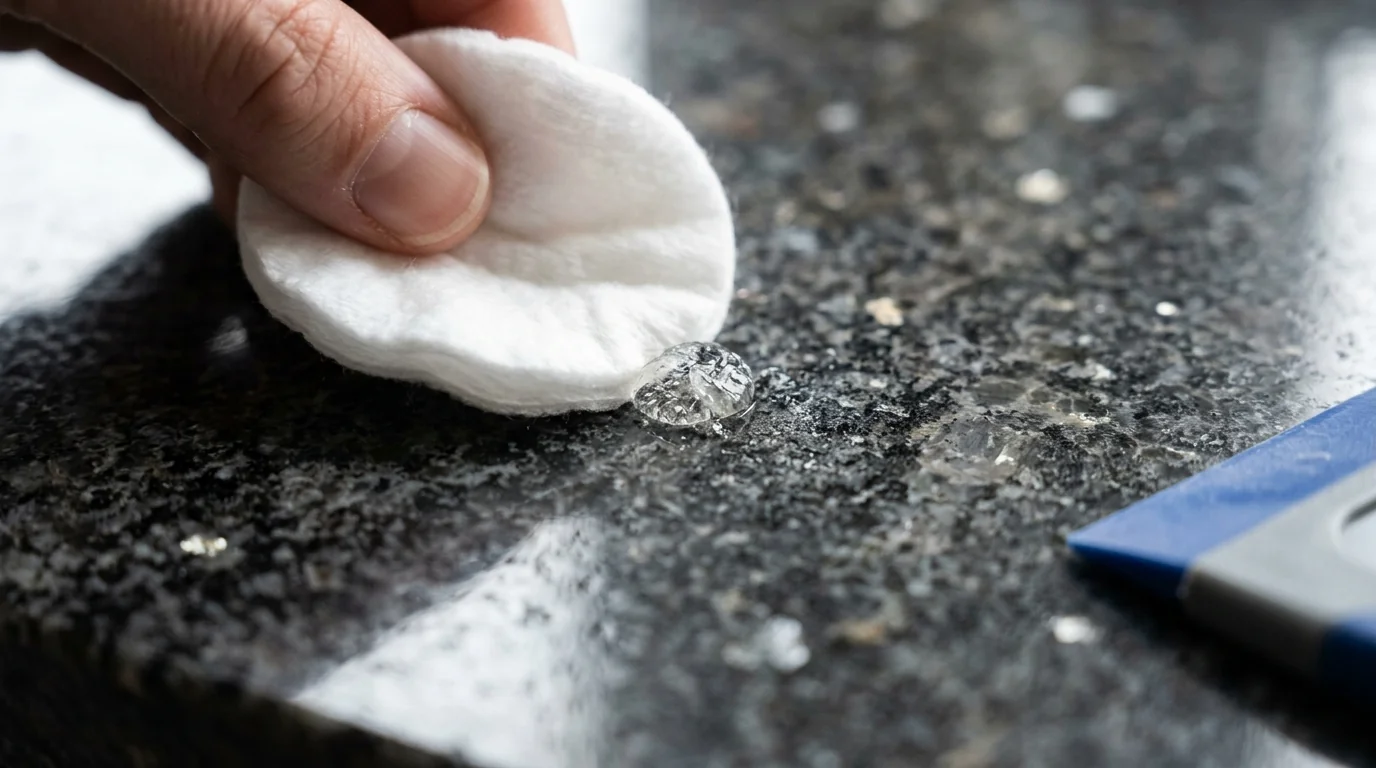
A word on razor blades: many fabricators do carefully use a fresh blade flat against hard, polished granite to flick off paint or glue, and on truly hard granite it can be fine in steady hands. But quartzite varies in hardness, polished finishes scratch, and most homeowners do not have the angle right. We would rather you stick with plastic. The few minutes you save with a blade are not worth a scratch you cannot buff out.
Remove Super Glue From Laminate Countertops
Laminate is where people get into trouble, because the surface looks durable but the decorative print layer on top is thin. Scratch through it and you expose the substrate, which cannot be polished back. So with laminate, you protect the finish above all else.
Here is how to remove super glue from laminate countertops safely:
- Warm soapy water and a plastic scraper come first, and on laminate they handle the large majority of spills. Give the warm cloth a full five minutes to soften the bond.
- If glue stays put, acetone works, but only in quick contact. Dab a little on a cotton pad, press it on the glue for 15 to 20 seconds, lift with plastic, then wipe the acetone off right away. Long contact can dull, whiten, or soften the laminate finish and can creep into the seam at the edge of the counter.
- Skip acetone on dark, colored, or high-gloss laminate, where any dulling shows instantly. On those finishes, lean on warm water, a plastic edge, and patience, and stop if it is not working.
White vinegar is a gentler option that is safe on laminate. Soak a cloth in warm vinegar, lay it over the glue for several minutes, and the mild acid can loosen the bond enough to scrape. It is slower than acetone but far less likely to harm the surface. Never use abrasive cleansers, steel wool, or a melamine eraser sponge on laminate, since all three sand down the print layer and leave a permanent dull halo. If the glue landed right on a seam or a worn edge, it is worth getting a second opinion before you scrub.
Marble and Soft Stone Cautions
Marble, travertine, and other soft calcium-based stones are the surfaces where the standard advice flips. These stones are soft and they react chemically to acids and many solvents. Two real risks here: scratching and etching. Etching is a dull, lighter mark where the polish has been chemically eaten away, and it is permanent without professional refinishing.
For super glue on marble, keep it gentle:
- Use warm water and a microfiber cloth to soften the glue. Lay the cloth over it and wait.
- Lift only with a plastic scraper. A razor blade or any metal tool will scratch marble, full stop.
- Do not use acetone, vinegar, lemon, or any acidic or harsh cleaner on marble. They etch the polish and leave a cloudy patch worse than the glue.
If warm water and plastic will not release the glue from marble, that is your signal to stop and call a stone professional. A pro can usually shave cured glue with the correct technique and re-polish if needed, which is a smaller job than fixing an etch mark you created trying to rush it. The same caution applies to honed limestone and unsealed natural stone of any kind, where solvents wick straight into the surface.
Aftercare and When to Call a Pro
Once the glue is gone, finish the job properly so the spot looks like the rest of the counter:
- Rinse thoroughly. Wipe the whole area with clean water and dry it, especially after using any solvent, so no residue dulls the surface over time.
- Reseal porous stone. If you used acetone on granite, quartzite, or any sealed stone, reapply a penetrating sealer to that patch. It takes ten minutes and prevents future stains.
- Buff and inspect. Dry the area and view it from a low angle in good light. A faint haze on quartz usually wipes away with a soft cloth and a drop of mild dish soap.
Know when the DIY ends. Call a professional when the glue sits directly on a seam, when removal left a visible scratch or etch, when the surface looks cloudy after a solvent, or when you simply cannot identify your material with confidence. A fabricator has polishing pads and the right approach for each stone, and the repair is almost always cheaper than replacement. If a counter is older, already scratched in several places, or you have been wanting an upgrade anyway, a glue mishap can be the nudge to look at new countertop options. Our team helps homeowners across Palm Beach County weigh repair against replacement honestly, and you can always contact us for a straight answer.
The bottom line on how to remove super glue from a counter: warm water and a plastic scraper first, every time. Match any solvent step to your specific material, keep acetone away from quartz seams and off marble entirely, and never reach for a blade or an abrasive pad. Go slow and the glue loses, not your countertop.