Dekton Countertops: Pros, Cons & Cost
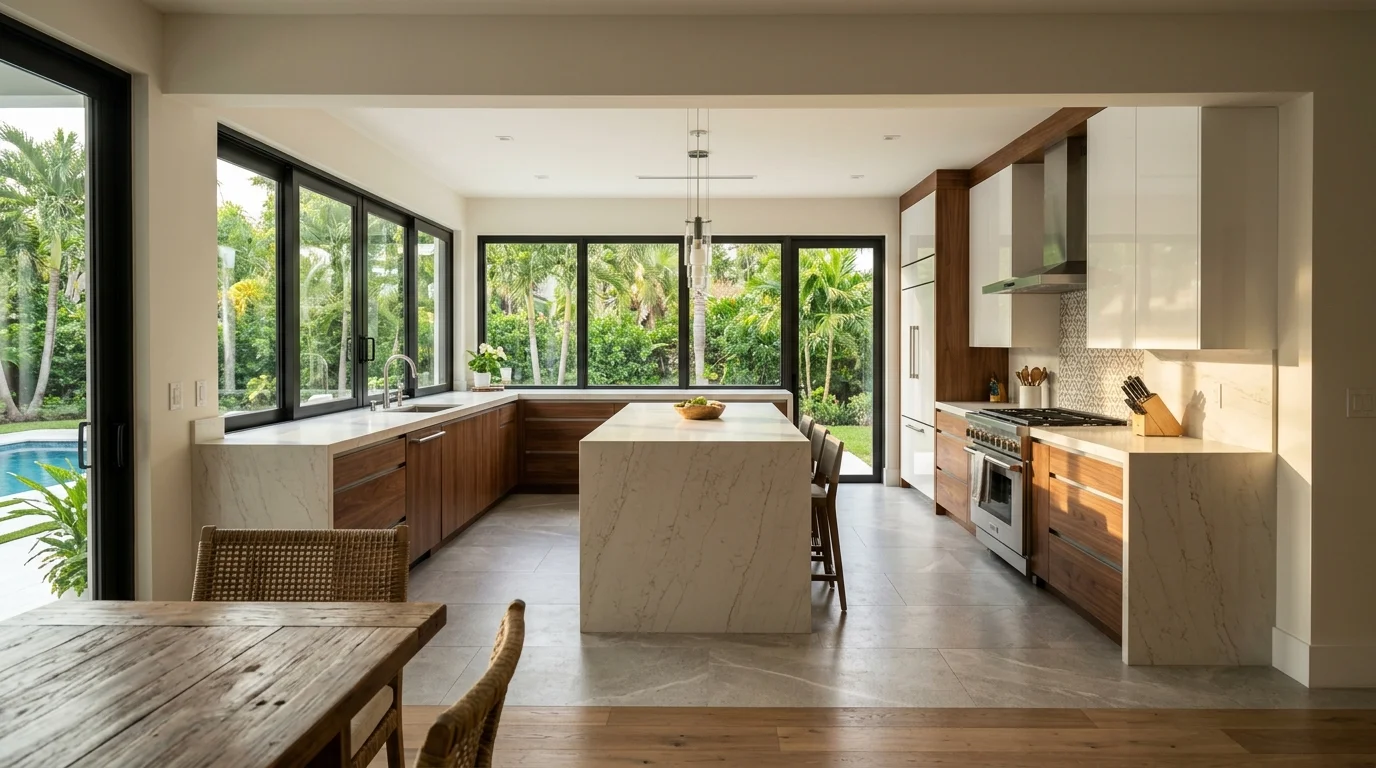
Dekton countertops have become one of the most requested surfaces we work with at South Florida Kitchen & Bath Design. Homeowners across Palm Beach County, from Boca Raton to Wellington to Jupiter, are asking about them, and for good reason. Dekton is an ultra-compact sintered surface that handles Florida's heat, humidity, and relentless UV exposure better than almost anything else on the market. It's not cheap, and it's not for every project. But when it's the right call, it's a spectacular material. Here's everything you need to know before you commit.
What Is Dekton?
Dekton is manufactured by Cosentino, the same company behind Silestone quartz. It's made through a proprietary process called Particle Sintering Technology, essentially, raw materials (glass, porcelain, and quartz) are subjected to extreme heat and pressure to create a surface with near-zero porosity. Think of it as a compressed, ultra-dense slab that borrows the best qualities of glass, porcelain, and natural stone without the weaknesses of any single one.
The result is a material that's technically classified as an ultra-compact surface, not quartz, not porcelain, not granite. It's its own category. Slabs typically come in 12mm and 20mm thicknesses, and Dekton offers a massive color library ranging from concrete-look grays to dramatic book-matched stone looks to clean whites. The matte finishes are especially popular right now, and they hold up better in direct sun than polished surfaces.
One thing homeowners often confuse: Dekton is not the same as quartz. Quartz countertops use a polymer resin binder that can yellow in UV exposure and has a lower heat threshold. Dekton uses no resins. That distinction matters enormously in South Florida. If you want to compare the two side by side, our guide on porcelain vs quartz countertops covers a similar material comparison that applies here.
Pros of Dekton Countertops
Let's be direct: Dekton has a genuinely impressive performance profile. These are the reasons our team recommends it for specific applications, especially in South Florida.
UV resistance is unmatched. This is the big one for Florida. Most engineered surfaces, quartz included, are not rated for outdoor use because UV exposure causes resin binders to break down, yellowing or fading the surface over time. Dekton has no resin binders. It's UV-stable. You can install it on an outdoor kitchen in Delray Beach, leave it exposed to full sun year-round, and it won't discolor. That's a genuine competitive advantage here.
Heat resistance is exceptional. You can set a hot pan directly on Dekton without a trivet. It won't scorch, crack, or discolor. The sintering process essentially pre-subjects the material to temperatures far beyond anything your kitchen will see. That said, we still recommend using trivets as a general habit, thermal shock from repeated extreme cycles isn't something any stone benefits from.
Near-zero porosity. Dekton absorbs almost nothing. Wine, coffee, citrus juice, cooking oils, none of them penetrate the surface. Unlike granite or quartzite, Dekton never needs sealing. Not once. If low maintenance is a priority, this is a major selling point. Check our breakdown of the best countertop materials for Florida's humidity and heatDekton consistently ranks at the top for Florida's climate specifically.
Scratch resistance. Dekton scores extremely high on hardness, harder than granite, harder than quartz. Normal kitchen use won't scratch it. You'd need something like a diamond-tipped blade to mark it intentionally.
Large format slabs. Dekton is available in very large slab sizes, which makes it ideal for slab backsplash applications with no seams, waterfall islands, and expansive kitchen islands without mid-surface joints. The design flexibility is real. Speaking of which, if you're exploring the slab backsplash look, our article on countertop design trends for 2026 covers exactly how that application is being used right now.
Outdoor kitchen performance. For South Florida outdoor kitchens, which get more use here than anywhere in the country, Dekton is genuinely one of the top two or three choices. It handles heat from grills, Florida afternoon downpours, salt air from the coast, and direct UV without complaint. Our page on outdoor kitchen countertops goes deeper on all your options for Florida's specific conditions.
Cons of Dekton Countertops
We don't push materials on clients without being honest about the tradeoffs. Dekton has real ones.
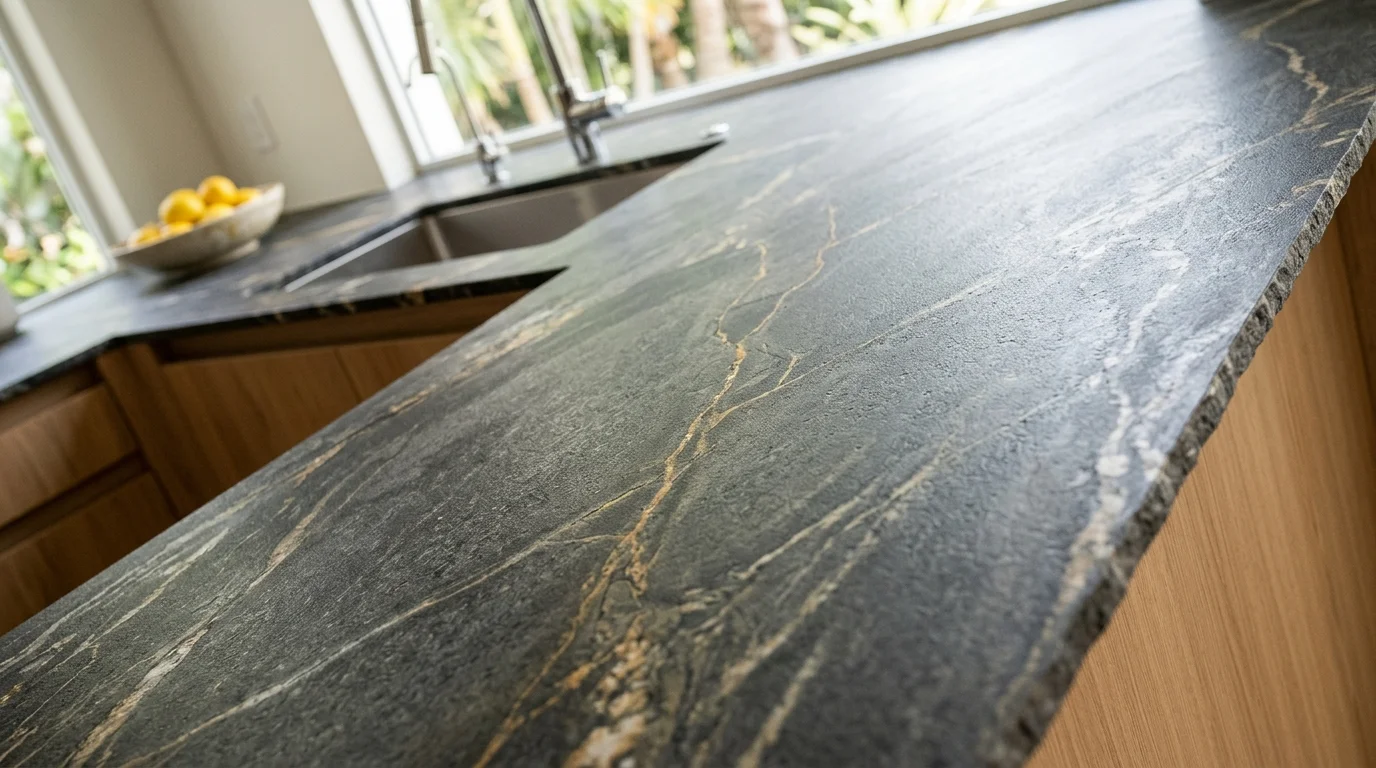
It chips. This is the most important thing to understand before you buy. Dekton's extreme hardness is also its Achilles heel. A hard material with relatively low flexibility will chip at corners and edges if hit sharply, a heavy cast iron skillet dropped at just the right angle, a corner collision during a move. Quartz is more flexible and tends to crack rather than chip, which is more repairable. Dekton chips are difficult to fix cleanly. For this reason, we strongly recommend eased or beveled edge profiles rather than sharp, fragile 90-degree corners. Our guide to countertop edge profiles in Palm Beach County walks through which profiles minimize chip risk.
It's expensive. Material and fabrication costs for Dekton run higher than most quartz and comparable to premium quartzite. Budget accordingly, this is not an entry-level countertop.
Fabrication requires specialized equipment. Not every stone shop in Palm Beach County can cut and finish Dekton properly. The material's hardness demands diamond-tipped tooling, and the risk of cracking during fabrication is higher than with softer stones. Choose your fabricator carefully. Working with a team that has Dekton experience is non-negotiable.
Limited repairability. If Dekton gets a significant chip or crack, repair options are limited compared to quartz or even granite. Touch-up kits exist but rarely produce invisible results. This is a durable material, but durability and invincibility are not the same thing.
Looks can feel "industrial" to some. Dekton's aesthetic leans contemporary to modern. If your home has a traditional, warm, or Mediterranean character, some Dekton collections can feel out of place. That said, the newer wood-look and natural stone-look series have addressed this significantly. It's worth reviewing the full range before deciding the look isn't right for you.
Cost Guide
Here's what homeowners across Palm Beach County, Boca Raton, Wellington, Jupiter, Delray Beach, are actually paying for Dekton countertops in 2025-2026. These figures reflect installed cost including material, fabrication, and standard installation. Edge upgrades, cutouts (sinks, cooktops), and special edge profiles add to the totals.
Dekton typically runs 15-25% more than comparable quartz. If you're weighing the budget implications for a full kitchen project, our kitchen remodel cost guide for Palm Beach County breaks down where countertops fit into the total picture. On the countertop comparison side, see how Dekton pricing stacks up against engineered stone in our quartz countertops cost guide.
South Florida Considerations
Florida punishes the wrong materials. We've seen quartz countertops installed on outdoor kitchens in Jupiter and Boca Raton by contractors unfamiliar with the material's UV limitations, and within 18 months the surfaces had yellowed or the resin had begun to break down. That's an expensive mistake. Dekton doesn't have that problem. For outdoor applications in Palm Beach County specifically, it's one of our top two recommendations (the other being a quality porcelain slab).
Salt air is also a real consideration for homes in coastal Delray Beach or along A1A. Dekton's near-zero porosity means salt air and moisture have nothing to penetrate. It won't corrode, pit, or absorb the brine that coastal air carries. For granite, that's a legitimate long-term concern. For Dekton, it isn't.
Thermal cycling is another Florida-specific factor most homeowners don't think about. Your outdoor countertop goes from a cool overnight to 120°F surface temperature in July sun, then gets hit with cold water from an afternoon thunderstorm. That thermal cycling stresses materials. Dekton handles it. Thinner or more porous surfaces can eventually show micro-fractures under repeated thermal shock.
On the interior side, Dekton is especially popular in Wellington and Palm Beach Gardens homes with contemporary or transitional design profiles. The concrete-look and soft white collections pair beautifully with flat-front or slim shaker cabinetry. If you're working with a white cabinet palette, our article on the best countertops for Florida kitchens covers Dekton alongside the full competitive field.
One practical note for condos: HOA and ARB approval processes in communities across Boca Raton and Delray Beach sometimes require design documentation. Your general contractor handles the permit and approval submissions; our team supplies the design drawings, material specifications, and finish samples needed to complete that package.
Permits for a countertop swap, whether it's Dekton, quartz, or granite, generally don't require a permit if you're keeping the same footprint, layout, and not relocating any plumbing. If your project involves moving a sink or modifying cabinetry in a way that touches electrical or plumbing lines, that's when your GC needs to be involved with the building department. Scope determines the permit requirement, not the material choice.
Bottom line: if you're building or renovating an outdoor kitchen in South Florida, Dekton deserves serious consideration. Indoors, it competes strongly with premium quartz and quartzite. The cost is real, the performance is real, and the maintenance savings over 10-15 years are real. Our team has installed Dekton on everything from Boca Raton waterfront outdoor kitchens to full interior remodels in Wellington estates, and we've seen it perform exactly as advertised in Florida conditions.