Granite Countertop Sealer: How to Seal & How Often
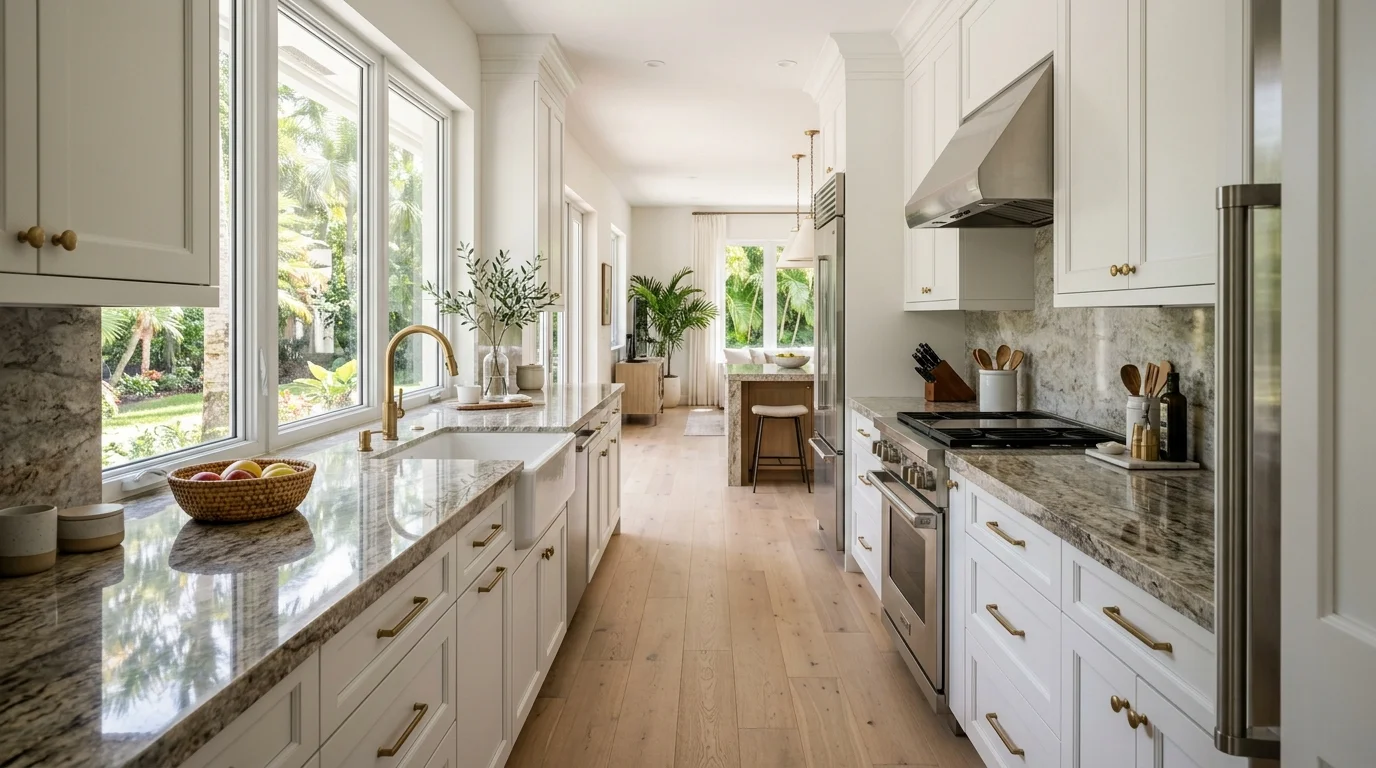
Choosing the right granite countertop sealer, and applying it correctly, is one of the simplest things a homeowner can do to protect a real investment. Granite is a natural stone, which means it's porous. Without a quality sealer, cooking oils, wine, citrus juice, and even water can soak in and leave permanent stains. Our team at South Florida Kitchen & Bath Design installs granite countertops in kitchens across Palm Beach County, Boca Raton, Delray Beach, Wellington, and Jupiter every week. The number one thing we tell every client after installation: seal it right, seal it consistently, and understand what your specific slab actually needs.
Not all granite is created equal. A dark, dense Absolute Black requires almost no sealing. A light, porous Bianco Romano may need sealing twice a year. Skipping this step is one of the more common kitchen remodel mistakes we see homeowners makethey spend good money on beautiful stone and then neglect the maintenance that keeps it looking that way for decades.
Does Your Granite Actually Need Sealing?
Here's the honest answer: not every granite slab needs the same sealing schedule, and some dense varieties barely need sealing at all. Granite is igneous rock, and its porosity depends on the mineral makeup, crystal size, and origin of the stone. Darker granites, think Black Galaxy, Ubatuba, or Nero Impala, tend to be very dense and low-absorption. Lighter granites, Colonial White, Santa Cecilia, White Ice, are typically more porous and absorb liquids faster.
The other variable is finish. Polished granite has a tighter surface that resists penetration better than honed or leathered finishes. If you chose a honed or leathered slab for that matte, organic look, plan on sealing it more frequently. We recommend honed granite clients in Jupiter and Wellington reseal every 6-12 months without exception.
When you're comparing stone options for a new countertop install, it's worth reading about the best countertop materials for Florida's humidity and heat before you commit. Granite can be an excellent choice here, it handles heat far better than engineered stone, but only if it's properly maintained.
The Water Test: How to Know for Sure
Skip the guesswork. This test takes two minutes and tells you exactly whether your granite needs sealing right now.
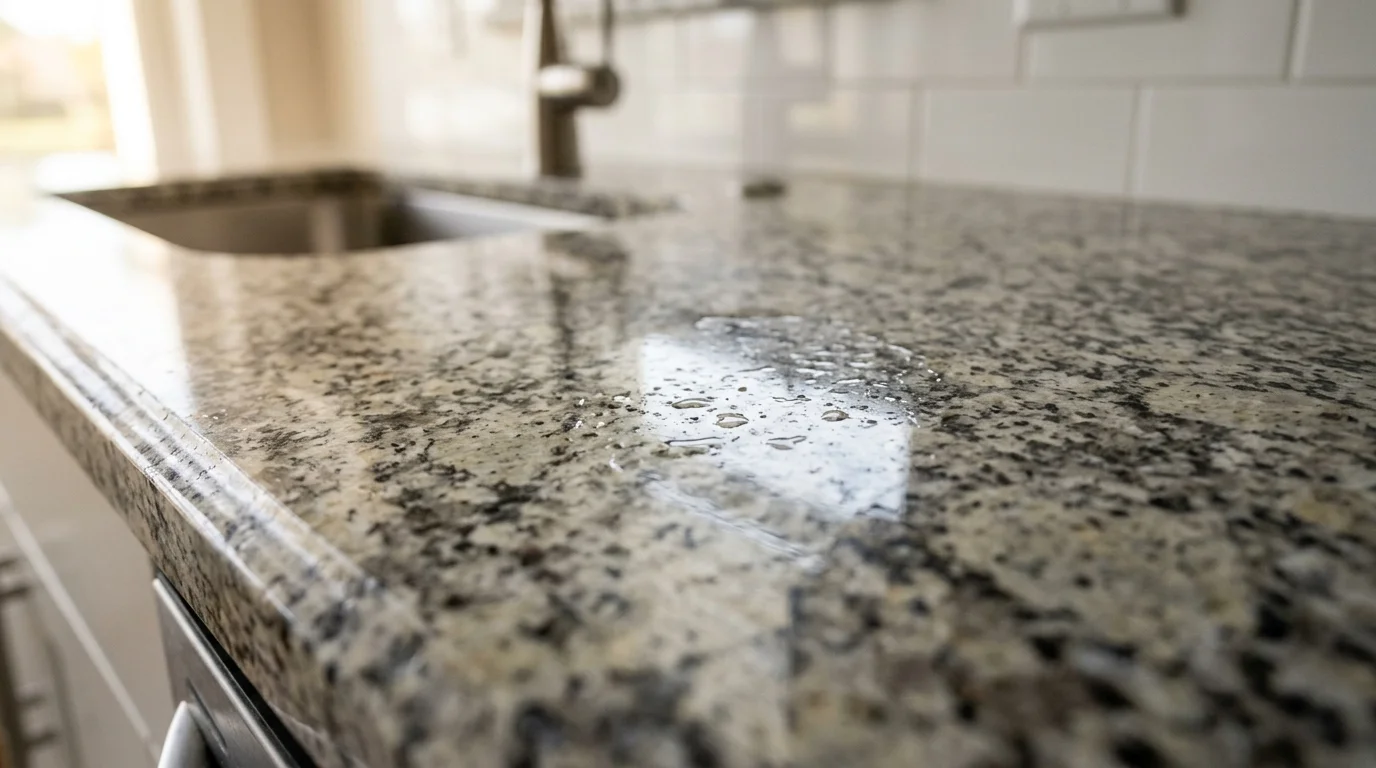
Pour about two tablespoons of water onto a clean, dry section of your granite countertop. Leave it for 15-30 minutes without disturbing it. Then check the surface:
- Water beads up and wipes away clean, your sealer is still doing its job. No action needed.
- Water slightly darkens the stone but evaporates fully within a few minutes, you're getting close. Plan to reseal within the next few months.
- Water soaks in quickly and leaves a dark wet mark that takes more than a few minutes to dry, reseal now. Your granite is absorbing liquids and is vulnerable to staining.
Run the same test in multiple spots: near the sink, by the range, and in the center of the counter. High-traffic areas degrade sealer faster. If any zone fails the test, treat the whole surface, not just the problem area.
You can also do a lemon juice test for acid sensitivity: leave a small drop of lemon juice on the stone for 5 minutes. If it etches or dulls the finish, your sealer has broken down. Note that sealing doesn't prevent etching on polished granite, that's a surface reaction with acid. Sealing prevents absorption-based staining. These are two different problems.
How to Seal Granite Countertops: Step-by-Step
This isn't a complicated job, but the prep work matters more than most people realize. A sealer applied over grease, soap film, or old wax won't bond properly and will wear out faster. Here's how to do it right.
What you'll need: granite-specific impregnating sealer, a clean microfiber cloth (two or three of them), a foam brush or lint-free applicator pad, mild stone cleaner or isopropyl alcohol, and about two hours of uninterrupted counter time.
Step 1, Clear and clean the surface. Remove everything from the countertop. Wipe down with a pH-neutral stone cleaner or diluted isopropyl alcohol. Never use bleach, vinegar, or all-purpose sprays, they strip existing sealer and can etch polished stone. Let the surface dry completely. In South Florida's humidity, "completely dry" means at least 30-60 minutes after cleaning, especially in kitchens near Boca Raton coastal areas where ambient moisture is higher.
Step 2, Apply sealer in sections. Pour a small amount of sealer directly onto the stone or onto your applicator pad. Work in manageable 2-3 square foot sections. Apply in a circular motion, making sure the sealer gets into every inch of the surface without pooling in one spot. For granite with wider crystal structures, you may need to apply slightly more product to ensure full penetration.
Step 3, Let it penetrate. Most quality impregnating sealers need 15-20 minutes of dwell time. Follow the manufacturer's instructions exactly. Stone Care International and similar reputable manufacturers publish specific dwell times on their product data sheets, use those, not generic advice from the back of the bottle.
Step 4, Wipe off the excess. Before the sealer dries on the surface (this is critical, don't leave it too long), buff off any residue with a clean dry microfiber cloth. Work quickly across the full area. Sealer left to dry on the surface creates a hazy film that's a pain to remove.
Step 5, Apply a second coat if needed. Highly porous slabs, White Ice, Colonial White, most light beiges, often absorb the first coat fully and still feel dry after wiping. If that happens, apply a second coat following the same process. Wait the full cure time (usually 24-48 hours) before using the countertop for food prep or setting wet items on it.
Step 6, Test again. After curing, run the water test again. If water beads cleanly, you're done. If not, apply another coat.
Timing matters in our climate. Don't seal granite on a day when you've just run the dishwasher repeatedly or after cooking a big meal that generated a lot of steam, surface moisture compromises adhesion. Early morning in a climate-controlled kitchen is ideal.
Best Granite Sealers for Florida Homes
We recommend impregnating sealers over topical sealers every time. Here's the distinction: an impregnating sealer penetrates below the surface and fills the pores of the stone without changing its appearance. A topical sealer sits on top and creates a film. In Florida's heat, topical sealers peel, cloud, and trap moisture underneath, which is the last thing you want in a Palm Beach County kitchen where humidity already creates challenges.
Our go-to recommendations based on what we see perform well on slabs installed in Delray Beach and Jupiter kitchens:
We lean toward solvent-based impregnators for most South Florida granite installations. They penetrate deeper in humid conditions and cure more reliably than water-based options when ambient humidity is polished. If you're environmentally conscious or sealing in a less-ventilated space, a premium water-based option like Aqua Mix Sealer's Choice Gold is a solid second choice, just make sure you follow the full cure time before using the surface.
Avoid generic "stone and tile" sprays sold in grocery stores. They're usually topical products with minimal penetration, and in our experience they need reapplication every few months. That's money and time you don't need to spend if you start with the right product.
If you're deciding between granite and other natural stone options, understanding how quartzite compares is useful, our article on whether quartzite needs to be sealed covers the differences in porosity and maintenance between the two stones. They're not the same animal, and the sealing approach differs.
South Florida Humidity & Your Granite
The climate here is its own category. Palm Beach County's average relative humidity runs 70-80% year-round, and coastal areas like Boca Raton and Jupiter push higher in summer. That has real implications for granite maintenance.
High humidity means your granite surface is rarely truly dry, even when it looks dry. This affects sealing in two ways. First, moisture in the stone's pores can slow sealer penetration and adhesion if you're not careful about timing. Always seal in a climate-controlled environment, windows closed, AC running. Second, surface moisture from cooking, cleaning, and general kitchen use in a humid home degrades sealers faster than in drier climates. What lasts 3 years in Phoenix might last 18 months in Delray Beach. Run your water test annually regardless of what the sealer label says.
Salt air is the other factor for properties close to the coast. Salt doesn't directly attack sealed granite, but it does get tracked in, deposited on surfaces, and creates micro-contamination that slowly works at your sealer's bond. If you're in a waterfront home in Jupiter or along A1A in Boca, bump up your testing frequency to every 9-12 months.
Kitchens near outdoor living spaces, which are extremely common throughout Palm Beach County, see more foot traffic and surface contamination than interior-only kitchens. If your kitchen opens onto a covered lanai or connects to an outdoor kitchen area, the granite near that transition sees harder use and should be on a more frequent sealing schedule.
One more thing worth mentioning: granite near the cooktop. Sealer in that zone breaks down faster from repeated heat exposure, even though granite itself is heat resistant. We see this consistently on island countertops in Wellington and Boca Raton homes where the cooktop is island-mounted. Spot-test that section separately when you run your annual water check.
If you're still in the planning stage of a kitchen project and haven't landed on your countertop material yet, our comparison of quartz vs quartzite vs granite vs marble breaks down the full picture of what each material demands in terms of upkeep. Granite is excellent, we install it constantly, but it's not a set-it-and-forget-it surface the way quartz is. Go in knowing that.
The good news: when you maintain granite properly, it ages beautifully and actually gets more character over decades of use. We've worked on full kitchen remodels in older Boca Raton homes where the original granite from the early 2000s still looked sharp because the owners had been consistent with sealing. That's what good maintenance buys you. For more on choosing countertop colors that complement South Florida interiors, our countertop color guide walks through the selection process from start to finish.
For an overview of how granite pricing fits into a larger kitchen project budget, see our Palm Beach County kitchen remodel cost guideit breaks down material and installation costs by scope so you can plan realistically.