Does Quartzite Need to Be Sealed?
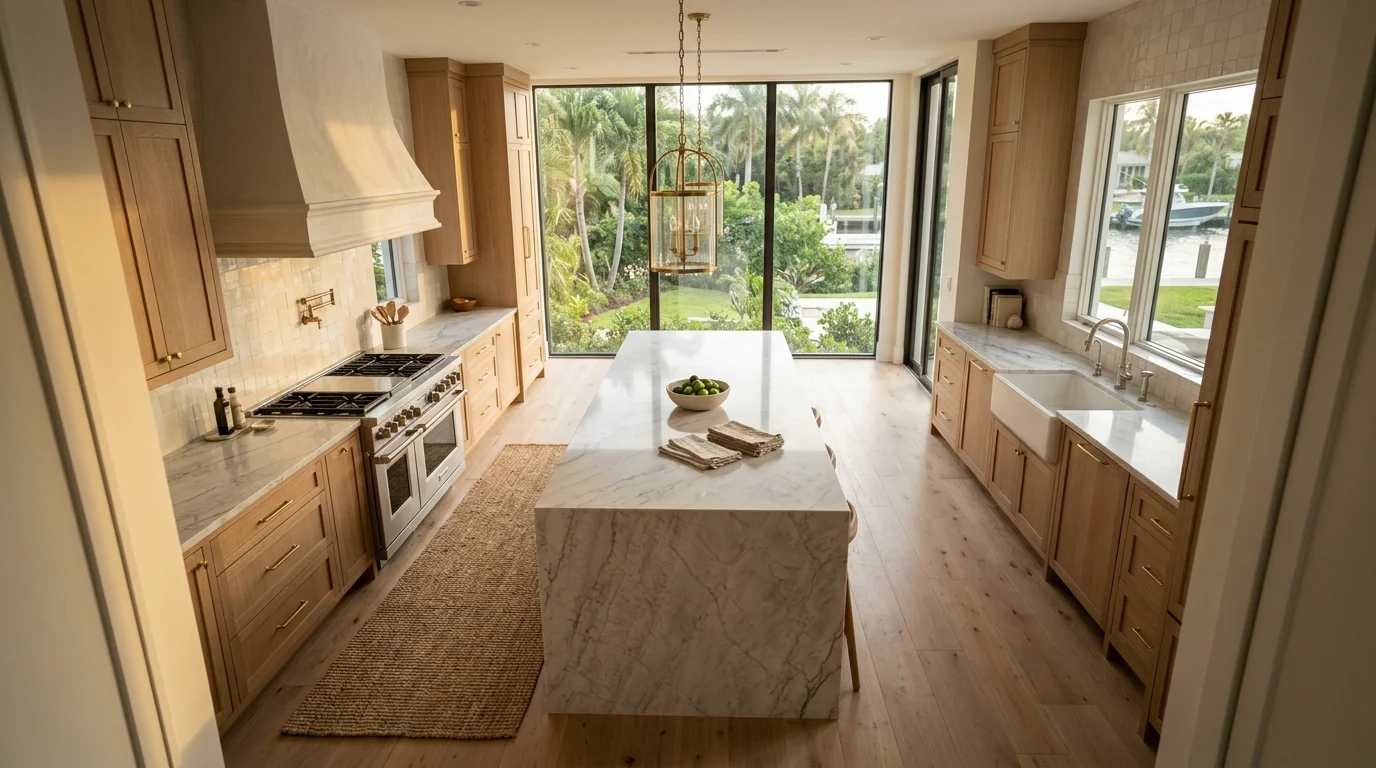
Does quartzite need to be sealed? Yes, and if anyone told you otherwise, they were probably thinking of engineered quartz, not quartzite. Quartzite is a natural stone, and like most natural stones, it is porous. Without a proper sealer, oils, citrus, red wine, and even plain water will work their way into the surface and leave stains that are nearly impossible to remove. We see this constantly on countertops in Boca Raton, Delray Beach, and Wellington kitchens where the homeowner fell in love with the look of a Taj Mahal or Sea Pearl slab but skipped the sealing conversation entirely. That's a mistake. The good news: sealing quartzite is straightforward, inexpensive, and when done correctly, gives you a surface that handles real kitchen life without panic.
The Short Answer
Quartzite needs to be sealed before installation and resealed on a regular schedule after that. How regular depends on the specific slab, how heavily you use the kitchen, and, especially here in South Florida, how much humidity and UV exposure the stone sees. In most Palm Beach County kitchens we work in, we recommend resealing quartzite every one to two years. Some denser slabs can go three years. Some softer, more porous quartzites need attention every six to twelve months.
The key thing to understand: quartzite is not quartz. Engineered quartz vs quartzite is one of the most common points of confusion we encounter at South Florida Kitchen & Bath Design. Quartz is a manufactured product, resin-bound, non-porous, never needs sealing. Quartzite is a metamorphic rock pulled out of the ground, and it behaves like stone because it is stone. Beautiful, durable, and requiring maintenance.
If you are on the fence about which material suits your lifestyle, our breakdown of the best countertop materials for Florida's humidity and heat walks through how each stone category holds up in our climate specifically, worth reading before you commit to any slab.
Porosity Varies by Slab
Not all quartzite is created equal. This is where homeowners get tripped up. The name "quartzite" covers a wide spectrum of metamorphic stones, and their actual porosity, how quickly they absorb liquid, can differ dramatically from one slab to the next.
On the denser end, you have stones like Taj Mahal quartzite. Taj Mahal is one of the tightest, hardest quartzites on the market. It has relatively low porosity compared to softer quartzites, which is part of why it's so popular for high-use kitchens in Jupiter and Palm Beach County. We have a full article on Taj Mahal quartzite kitchens in Palm Beach County if that's the slab you're considering, it covers fabrication, pricing, and care specific to that stone.
On the more porous end, you have stones like White Macaubas, Calacatta Macaubas, and some leathered quartzites. These slabs have more open pore structure and will absorb liquids faster. They look incredible, but they demand more frequent sealing and more careful day-to-day use.
There's also a category of stones sold as quartzite that are actually closer to marble or dolomite. Some "quartzites" on the market haven't fully metamorphosed and still have significant calcite content. Those stones will etch from acids, lemon juice, coffee, vinegar, regardless of sealing. A sealer protects against staining, not etching. If your stone etches easily, talk to your fabricator about whether you actually have true quartzite or a softer stone that was mislabeled.
The bottom line: ask your fabricator or slab yard for the specific MOHS hardness rating and absorption rate of the slab you're buying. Any reputable slab yard in Boca Raton or West Palm Beach should be able to tell you this. If they can't, that's a red flag.
The Water Test: How to Check Your Slab
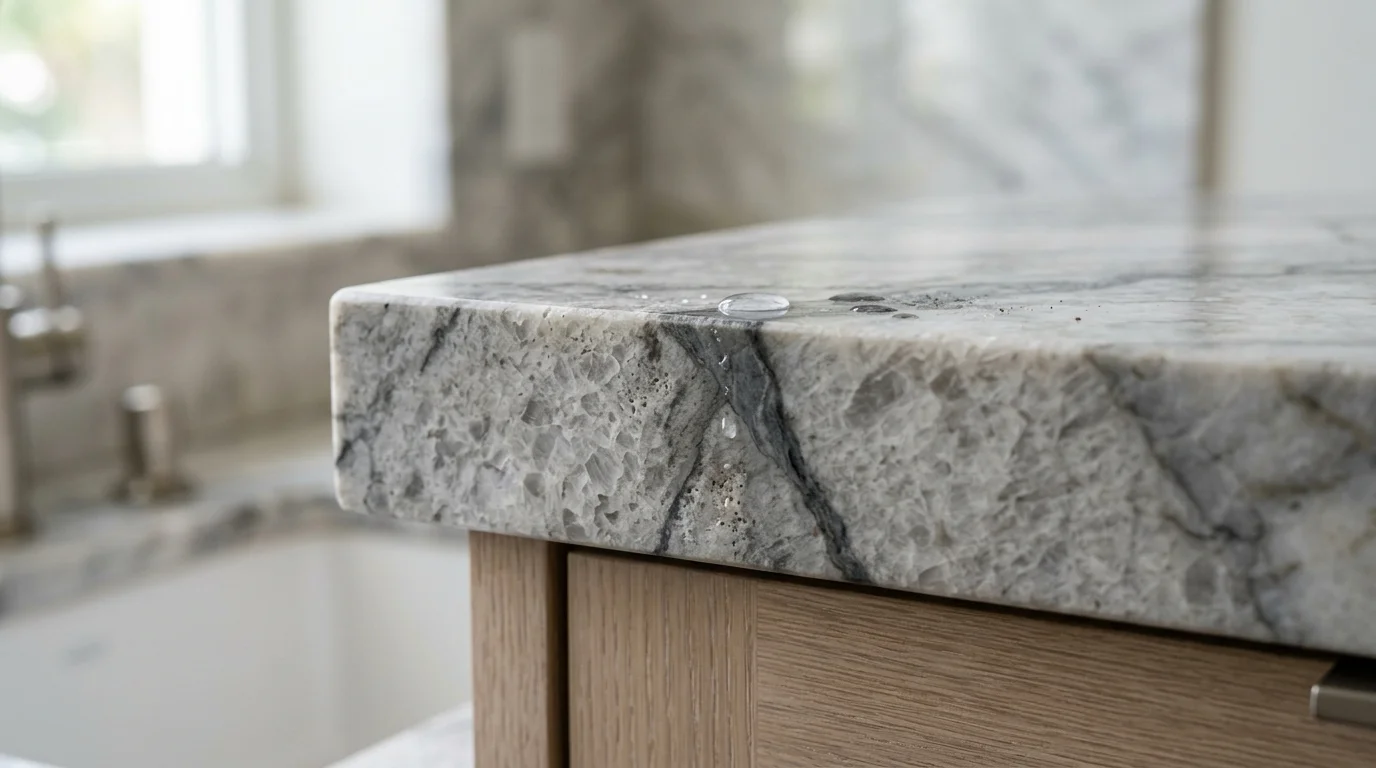
The simplest way to test whether your quartzite needs sealing, or whether an existing seal is still holding, is the water bead test. It takes about fifteen minutes and requires nothing but water.
Pour a small amount of water, about a tablespoon, onto the quartzite surface and let it sit undisturbed. Check it at five minutes, ten minutes, and fifteen minutes. Here's what you're looking for:
If the water beads up and holds its shape the entire time, the sealer is doing its job. You're fine. If the water starts to flatten out and darken the stone slightly at the five-minute or ten-minute mark, the sealer is wearing thin and you should reseal soon. If the stone darkens almost immediately, within a minute or two, the surface is essentially unsealed and needs attention right away.
Run this test in a few different spots on the counter, especially near the sink, around the stove, and in any area that sees heavy daily use. Those zones wear through sealer faster than the rest of the surface.
You can also do a lemon juice spot test to check for etching vulnerability, but be careful, if your stone is porous or mislabeled, that test can leave a mark. Stick to water first.
We recommend running the water bead test once a year minimum, and more often in high-traffic kitchens. It takes two minutes and can save you from a stain that's impossible to fix.
How Often to Seal in Florida's Climate
Florida's climate accelerates wear on stone sealers in ways that most national sealer guides don't account for. High humidity, intense UV from south-facing windows, and year-round cooking activity, South Florida kitchens don't get a rest for six months like a seasonal vacation home up north. That matters when you're setting a sealing schedule.
Our general recommendation for quartzite in Palm Beach County kitchens:
Dense quartzites (Taj Mahal, Sea Pearl, White Macaubas): Reseal every 18 to 24 months under normal household use. If you cook heavily, entertain frequently, or have a lot of direct sunlight on the surface, move that to once a year.
Medium-porosity quartzites: Reseal every 12 months. Run the water bead test at six months to see if you need to go sooner.
Softer or more porous quartzites: Reseal every six to twelve months. These slabs reward attentive homeowners who stay on top of maintenance. Ignore them and you'll be dealing with staining within a year.
Humidity itself doesn't break down a sealer, heat cycling and daily cleaning chemicals do. Many common kitchen cleaners, especially anything with bleach, acidic degreasers, or ammonia, strip impregnating sealers faster than age does. Use a pH-neutral stone cleaner and you'll extend the life of every seal job significantly.
One more factor: outdoor kitchens. If you're putting quartzite on an outdoor kitchen counter here in Wellington or Jupiter, and we see this more and more, expect to reseal annually at minimum. UV exposure degrades sealers faster than anything else. Our guide on outdoor kitchen countertops for Florida covers which stones hold up best outside and what the maintenance commitment actually looks like.
For context on how quartzite compares to other stone options in a full kitchen design, this comparison of quartz, quartzite, granite, and marble lays out the maintenance differences side by side, useful if you're still finalizing your countertop choice.
Best Sealers for Quartzite
Not all sealers are worth your time. For quartzite, you want an impregnating sealer, also called a penetrating sealer, not a topical sealer. Here's the difference: topical sealers sit on the surface and can scratch, peel, or cloud over time. Impregnating sealers penetrate below the surface, fill the pores, and repel liquids from within. They don't change the look of the stone. That's what you want on a natural quartzite countertop.
A few products our team has seen perform well on quartzite in South Florida conditions:
Tenax Proseal: A professional-grade fluoropolymer impregnating sealer. Works well on dense and medium-porosity quartzites. Lasts 3-5 years on tight slabs. This is a fabricator-preferred product and our go-to recommendation for most quartzite slabs.
StoneTech BulletProof Sealer: A widely available, well-tested impregnating sealer that performs reliably on quartzite. Good choice for homeowners who want to reseal themselves. Available at most stone supply stores in Palm Beach County.
Miracle Sealants 511 Impregnator: An entry-level impregnating sealer that gets the job done on denser quartzites. For high-porosity or soft quartzites, step up to a fluoropolymer-based product for better protection.
For outdoor applications or any surface that will see significant UV and rain exposure, look specifically for a sealer rated for exterior use. Not all interior sealers hold up outside.
The Natural Stone Institute publishes technical guidance on sealer selection by stone type, worth bookmarking if you're going deep on stone maintenance.
Application matters as much as product selection. Clean the stone thoroughly, let it dry completely (24 hours minimum after cleaning), apply the sealer in thin, even coats, let each coat penetrate for the dwell time specified on the label, usually five to ten minutes, then buff off any excess before it hazes. Never let sealer dry on the surface. Two thin coats beat one heavy coat every time.
One thing we always tell homeowners in Delray Beach and Boca Raton: have your fabricator apply the first seal at installation. Most reputable fabricators in Palm Beach County include a sealer application with the installation, or offer it as an add-on. Get it done right at the start, then maintain from there.
South Florida Considerations
Quartzite is actually one of the better natural stone choices for South Florida kitchens, tougher than marble, more heat-resistant than most people realize, and capable of handling the humidity as long as it's properly sealed. We see it installed in homes across Jupiter, Wellington, Palm Beach, and throughout Boca Raton, and when it's maintained correctly, it performs beautifully for decades.
A few things specific to our market worth knowing:
Hard water is a real issue in Palm Beach County. The mineral content in our tap water can leave calcium deposits on quartzite that look like etching but are actually scale buildup. Use a pH-neutral cleaner designed for natural stone and wipe up standing water quickly. A good impregnating sealer slows mineral penetration but doesn't stop surface deposits from forming.
South-facing kitchens in Delray Beach and Boca Raton homes get intense afternoon light. UV doesn't damage quartzite itself, but it accelerates sealer breakdown in areas that get direct sun exposure. If your countertops are sun-drenched most of the afternoon, plan on resealing the sun-side zones more frequently than the rest of the surface.
Slab selection matters more here than it does in cooler climates. Because our kitchens stay in active use year-round and the environment puts more stress on stone surfaces, we push clients to choose denser quartzite slabs when possible. The few extra dollars per square foot at the slab yard come back to you in lower maintenance frequency over the life of the countertop.
If you're still comparing stone options and trying to figure out what works best for a South Florida kitchen, our look at countertop design trends for 2026 covers where quartzite sits in the current market alongside other popular materials. And if you want to see how quartzite pairs with different cabinet finishes and kitchen styles, mixing wood and stone in Palm Beach kitchen remodels is worth a look.
At South Florida Kitchen & Bath Design, we've been working with quartzite countertops in Palm Beach County kitchens long enough to have a strong opinion: it's one of the best countertop materials available, but only for homeowners who are willing to seal it properly and stay on top of annual maintenance. Treat it like stone and it rewards you. Ignore it and you'll be dealing with staining that no amount of scrubbing will fix. The sealing conversation should happen before you buy the slab, and if your fabricator or designer isn't bringing it up, ask.
For anyone shopping slabs right now, our guide to the best places to buy countertop slabs in Palm Beach County covers where to find high-quality quartzite locally and what to look for when you're evaluating inventory in person.