How to Choose a Kitchen Backsplash: Material, Color & Pattern Framework
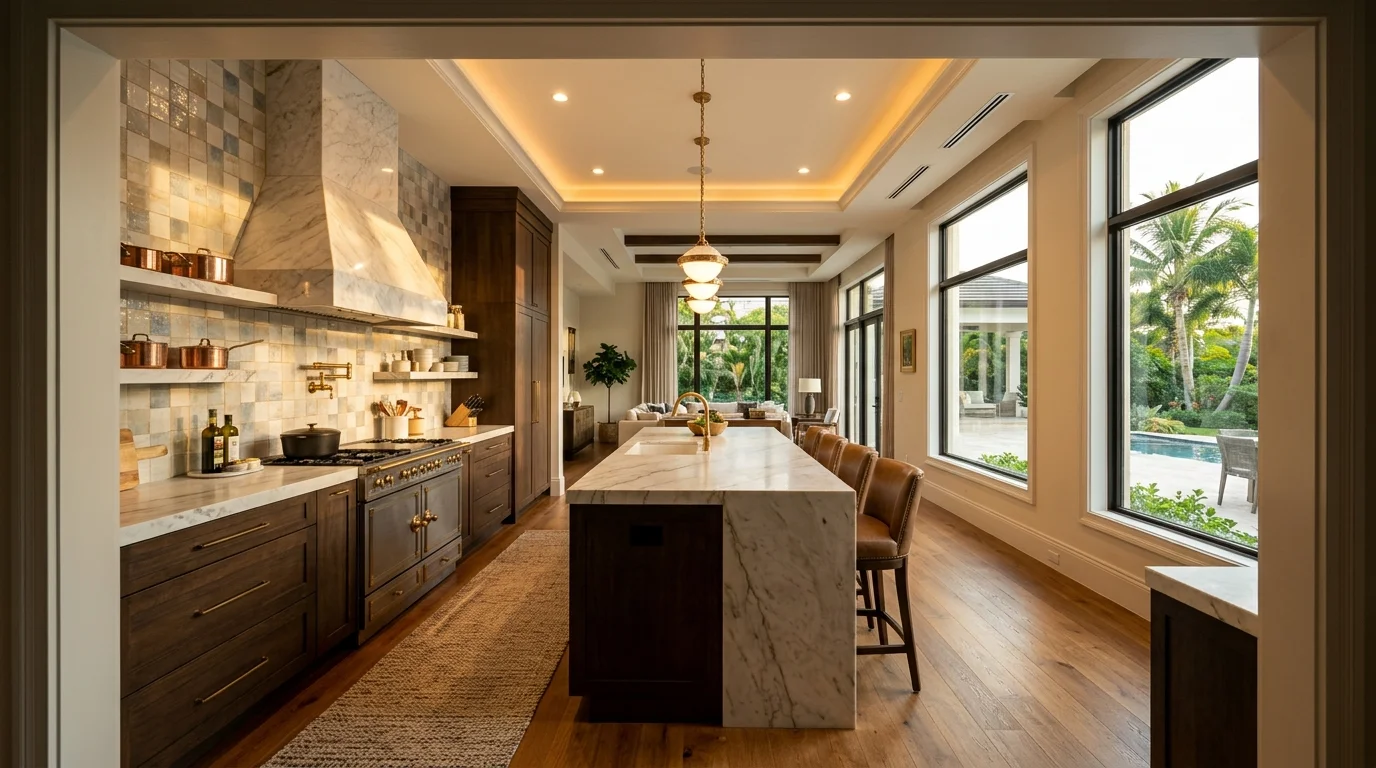
Knowing how to choose a kitchen backsplash is one of the most underestimated skills in a kitchen remodel. It sounds simple. Pick a tile, done. But the backsplash sits at eye level, spans the most visible wall in the kitchen, and has to work with your cabinets, countertops, flooring, and lighting all at once. Get it right and the whole room comes together. Get it wrong and no amount of beautiful cabinetry saves it. We've designed and installed backsplashes across Palm Beach County, from waterfront kitchens in Jupiter to condos in Boca Raton, and the same framework applies every time. Material first. Color second. Pattern third. That's the order. Here's how to work through each step.
Why the Backsplash Decision Matters More Than You Think
Most homeowners treat the backsplash as an afterthought, something to pick after the cabinets and countertops are already locked in. That's backwards. The backsplash is the largest decorative surface in the kitchen. It's the one element that spans an entire wall behind the range and runs the length of your upper cabinet run. It introduces texture, color variation, and pattern to a space that's otherwise dominated by flat horizontal surfaces.
The backsplash also frames the countertop. If you've chosen a busy granite or a dramatic quartzite slab, your backsplash needs to calm down and let the stone lead. If your countertop is a clean white quartz, the backsplash is your chance to bring in character. These two elements need to be chosen as a pair, not independently. That's why we always look at countertop samples alongside backsplash samples in every design meeting.
There's also a practical dimension. The backsplash protects drywall from grease, steam, and water. Behind the range especially, you want a material that cleans easily and won't absorb cooking residue. Good looks matter, but so does maintenance. Some of the most beautiful tile options are also the hardest to keep clean, and in a working kitchen, that reality catches up with you fast.
If you're still deciding between a simple four-inch tile strip behind the counter or going all the way to the upper cabinets, our guide on 4-inch vs full-height backsplash breaks down the pros and cons of each approach in detail.
Choosing the Right Backsplash Material
Material is the first decision, and it drives everything else, cost, durability, grout line width, pattern options, and maintenance requirements. Here's how we evaluate the most common materials we install across South Florida kitchens.
Ceramic and porcelain tile are the workhorses of the category. Porcelain is denser than ceramic, absorbs almost no water, and holds up beautifully in Florida's humidity. It comes in an enormous range of looks, wood grain, stone, solid color, handmade texture. It's also the most budget-friendly path to a good-looking backsplash. We recommend porcelain over ceramic for most kitchens. The cost difference is small and the performance gap is real. Ceramic can chip more easily and absorbs moisture over time, which is a concern in high-humidity South Florida environments.
Natural stonemarble, travertine, quartzite, brings genuine depth and variation that porcelain can't fully replicate. The tradeoff is maintenance. Marble etches when it contacts acids like citrus juice or vinegar. Travertine has natural pits that trap grease. If you want natural stone behind your range, seal it properly and be prepared to reseal periodically. The Tile Council of North America publishes installation and sealing guidelines that apply directly to natural stone backsplash applications.
Zellige tile is having a serious moment right now, and for good reason. These hand-pressed Moroccan clay tiles have an organic, slightly irregular surface that catches light differently than any factory-made tile. Each piece is unique. The result feels artisanal in a way that no other material matches at the price point. That said, zellige is porous and needs sealing. The irregular surface also makes grout lines part of the design, they're not hidden, they're a feature. If you want tight, invisible grout lines, zellige isn't your answer. For a full look at this trend, see our breakdown of zellige tile in 2026 kitchens and bathrooms.
Glass tile reflects light and works especially well in smaller kitchens or galley layouts where you need the room to feel brighter. It's non-porous, easy to clean, and doesn't stain. The downside is that it shows water spots and fingerprints immediately, which is a real issue behind a sink. Glass also requires careful installation, a white thinset and back-buttered application, or the tile looks milky and uneven. When installed correctly, it's sharp. When installed carelessly, it looks cheap.
Slab backsplashescontinuing the countertop material up the wall as a solid slab of quartz, quartzite, or porcelain, are increasingly popular in Palm Beach County luxury kitchens. No grout lines, a dramatic continuous surface, and an easy wipe-down behind the range. The slab backsplash trend for 2026 is worth reviewing if you're considering a high-end finish package. Cost is higher, but the visual impact is significant.
Subway tile never actually goes out of style, but the standard 3x6 white ceramic version has become so common that it now reads as a default rather than a choice. If you want the classic look, consider a variation: a taller 4x12 format, a beveled edge, a handmade surface, or a stacked vertical layout instead of the traditional offset. Small changes in format and setting pattern make a big difference in the final look.
Color and Pattern: How to Get It Right
Once material is chosen, color and pattern are where most homeowners second-guess themselves. The good news is that there's a logical framework for both decisions, and it makes the process much less stressful.
Start with your fixed elements. Your countertop and cabinet colors are almost certainly already chosen or committed. Those two surfaces dominate the kitchen visually. Your backsplash should respond to them, not compete with them. Here's the rule we use: if either the cabinets or the countertop have strong pattern or color variation, the backsplash should be simpler. If both are clean and neutral, the backsplash can carry more visual weight.
White cabinets are the most common starting point in Palm Beach County kitchens. With white cabinets, you have real flexibility, the backsplash can go in almost any direction. Warm-toned zellige, cool gray subway, bold black or navy tile, natural stone with movement, all of it works. Our full guide on backsplash ideas with white cabinets covers specific combinations that work well in Florida light.
Dark cabinets narrow your options somewhat. Very busy tile patterns fight with strong cabinet colors and the kitchen starts to feel visually cluttered. With navy, hunter green, or charcoal cabinets, we typically recommend a lighter backsplash with moderate texture, a cream zellige, a soft white handmade tile, a warm stone slab, to keep the space from closing in. South Florida kitchens tend to get strong natural light, which helps, but it's still a consideration worth taking seriously. For more on working with deep cabinet colors, see our article on dark kitchen cabinet ideas that work in South Florida light.
Pattern and scale. Scale matters as much as color. Large-format tile, anything 12x24 or bigger, reads as modern and clean. Smaller tile, penny rounds, 2x2 squares, small hexagons, brings in more texture and a traditional or handcrafted feeling. Mosaic sheets can be both, depending on how they're composed. The key variable is grout line width. Narrower grout lines (1/16 inch) with rectified tile read as sleek and contemporary. Wider grout lines (1/8 to 3/16 inch) with handmade tile read as artisanal and warm.
Setting pattern changes everything. The same 3x6 subway tile installed in a traditional offset horizontal pattern, a stacked vertical pattern, a herringbone, or a vertical stacked pattern reads completely differently in each configuration. Herringbone adds the most movement and energy. Stacked vertical elongates the wall and reads modern. Traditional offset is classic and relaxed. Don't just choose a tile, choose a setting pattern. They work together.
Grout color is a real decision. White grout with white tile creates a clean, monolithic look. Dark grout with white tile makes the pattern graphic and bold. Matching grout to tile color visually minimizes the grout lines and lets the tile surface do the work. Our opinion: on handmade or textured tile, go with a warm matching grout. On classic subway, slightly contrasting grout gives the layout more definition. On stone tile, match the grout as closely as possible to let the stone read naturally.
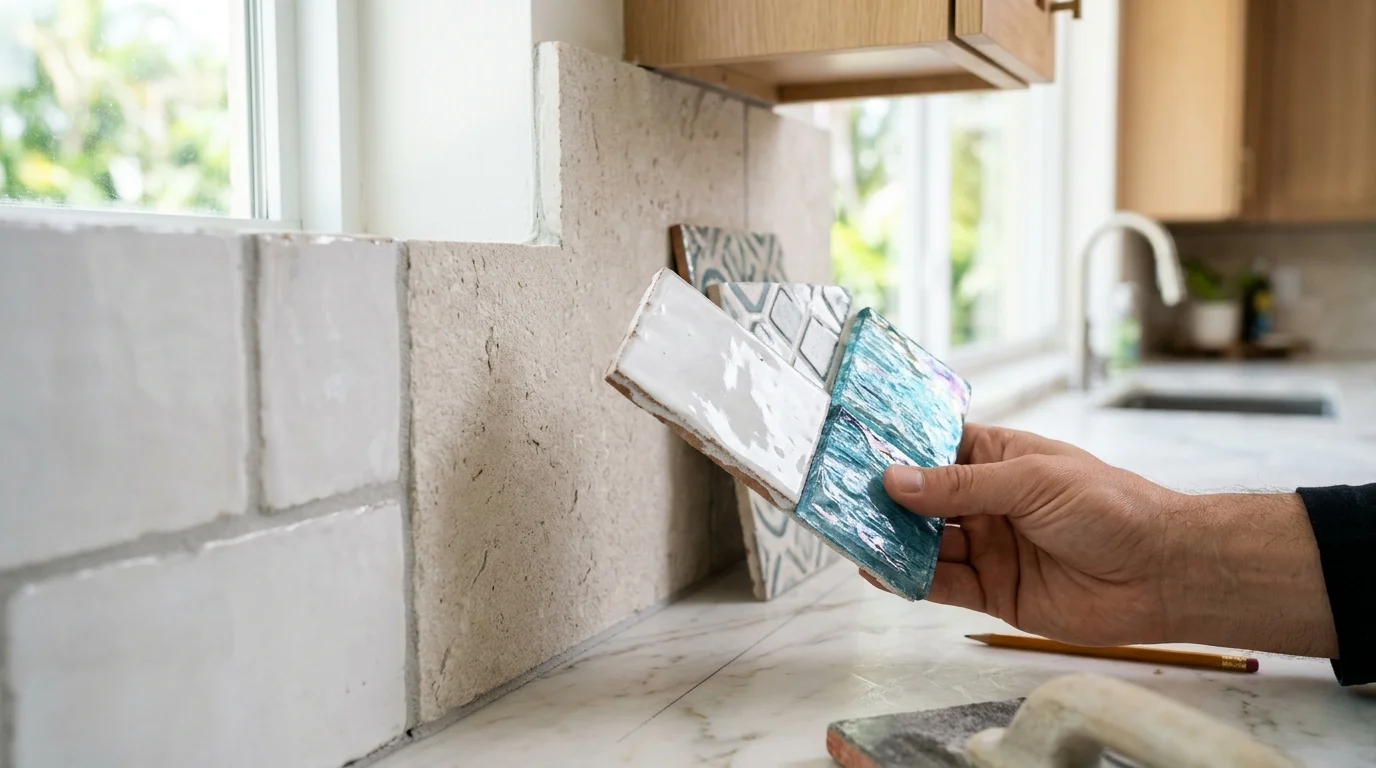
Test before you commit. Always request tile samples. Live with them in your actual kitchen for a few days. South Florida light changes dramatically from morning to late afternoon, and a tile that looks warm and inviting at noon can feel orange or cold under evening kitchen lighting. This matters especially for natural stone, zellige, and any tile with surface variation. We tell every client: the sample board in the showroom is a starting point, not the final answer.
Backsplash Cost Guide for Palm Beach County
Backsplash costs in Palm Beach County vary widely depending on material choice, layout complexity, and total square footage. The average kitchen backsplash runs 30-50 square feet, though full-height installations behind open shelving or extending to the ceiling cover more. Here's what you can expect to pay across different material tiers, with installation included.
These ranges reflect material and installation together. The backsplash is not an area to squeeze the budget on labor, proper prep, levelness, and consistent grout joint spacing are what separate a backsplash that looks like a magazine photo from one that looks like a weekend DIY project. If you want to understand where backsplash work fits into the bigger picture of your kitchen budget, our Palm Beach County kitchen remodel cost guide covers the full scope breakdown.
Permits are generally not required for a straight backsplash tile replacement, it's a finish-only scope. If the project involves relocating the sink, adding outlets behind the tile, or structural changes, those scopes would be handled by your general contractor and may require a permit depending on Palm Beach County building department requirements. You can verify current scope thresholds directly at Palm Beach County Building Division.
South Florida Considerations
Designing a kitchen backsplash in Boca Raton, Delray Beach, Wellington, or Jupiter is not quite the same as designing one in a northern climate. A few specific factors come into play that don't get enough attention in generic design guides.
Natural light is intense and directional. South Florida kitchens get strong sunlight from morning through late afternoon, often from multiple directions. This amplifies warm tile tones and can wash out cool-toned tile. A gloss or polished tile surface reflects that light back into the room, which feels bright in morning but can feel harsh by midday. Matte and honed finishes absorb more light and tend to look more consistent throughout the day. We generally recommend matte finishes for south- and west-facing kitchens in Palm Beach County.
Humidity matters behind the range. Florida's ambient humidity is already higher than most of the country. Add cooking steam and you have a surface that's regularly exposed to moisture. Porous materials, unglazed terracotta, unsealed travertine, natural stone without a fresh seal, will absorb that moisture over time and develop staining, mildew, or efflorescence behind the tile. Fully vitrified porcelain is the safest material choice from a humidity standpoint. If you choose natural stone, seal it before grouting and reseal annually.
Coastal design influences are real. There's a reason that soft blues, warm whites, natural wood tones, and organic textures dominate kitchen design across South Florida. The coastal aesthetic isn't a trend here, it's a reflection of the environment. Backsplash choices that feel fresh and appropriate in Palm Beach County tend to reference that palette: sea glass blues, sandy beiges, warm whites with texture, and organic stone movement. Heavily industrial or dark-urban backsplash concepts can feel disconnected from the light and environment here. That doesn't mean you can't go bold, it just means your bold choices should feel intentional relative to the setting.
HOA and ARB requirements. If you're in a gated community in Wellington, a condo building in Boca Raton, or a planned development anywhere in Palm Beach County, check your HOA documents before finalizing any design. Some associations have requirements around construction hours, material specifications, or even color palettes for kitchens visible from common areas. Your general contractor or GC handles any permit submissions and HOA coordination, we provide design drawings and material samples to support that process when needed.
If you're doing a full kitchen renovation and want to see how the backsplash integrates with a broader design direction, our coastal kitchen design guide for South Florida homes covers how all the finish elements work together. And if you're working through a broader remodel scope, our article on kitchen remodel mistakes to avoid in South Florida includes backsplash selection errors we see on a regular basis, worth a read before you finalize anything.
One more recommendation: don't skip a full material sample review. Bring your cabinet door sample, a countertop sample, and your flooring sample to the tile selection appointment. We do this for every client we work with across Palm Beach County. The only way to know how your backsplash tile actually works with the other materials in your kitchen is to look at them together in real light. Looking at photos online and looking at real samples in your actual kitchen are completely different experiences. The sample step is not optional if you want to get this right.