Zellige Tile: the 2026 Backsplash & Bath Trend
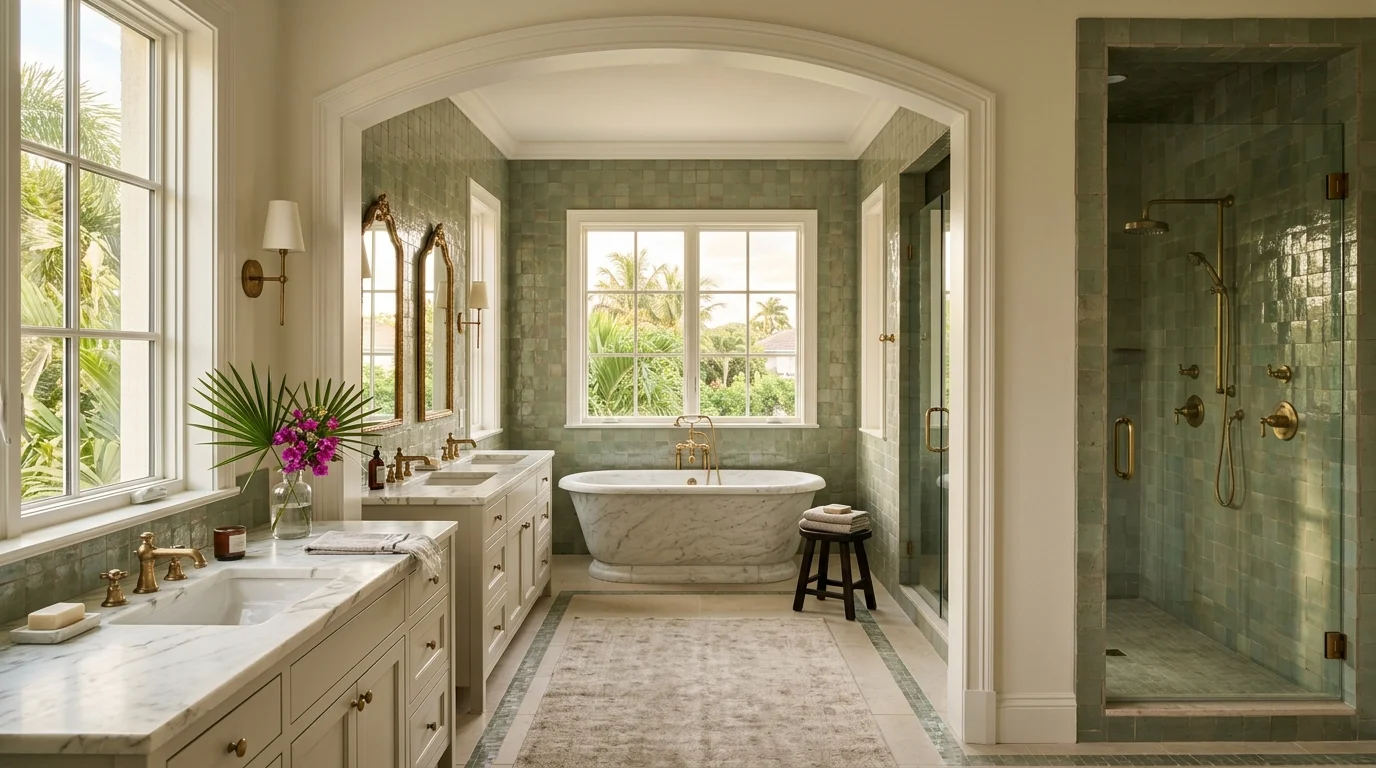
Zellige tile has moved from boutique design blogs straight into the mainstream, and in 2026 it is the single most-requested backsplash and bathroom wall material we see in Palm Beach County kitchens and baths. Homeowners in Boca Raton, Delray Beach, Wellington, and Jupiter are all asking about it. The appeal is easy to understand: each tile is handmade, hand-cut, and fired in traditional Moroccan kilns, which means no two pieces are exactly alike. The slight irregularities in thickness, the depth of the glaze, the gentle undulation across a finished wall, that is the whole point. If you want perfectly uniform tile, zellige is not your material. If you want something with soul, read on.
What Is Zellige Tile?
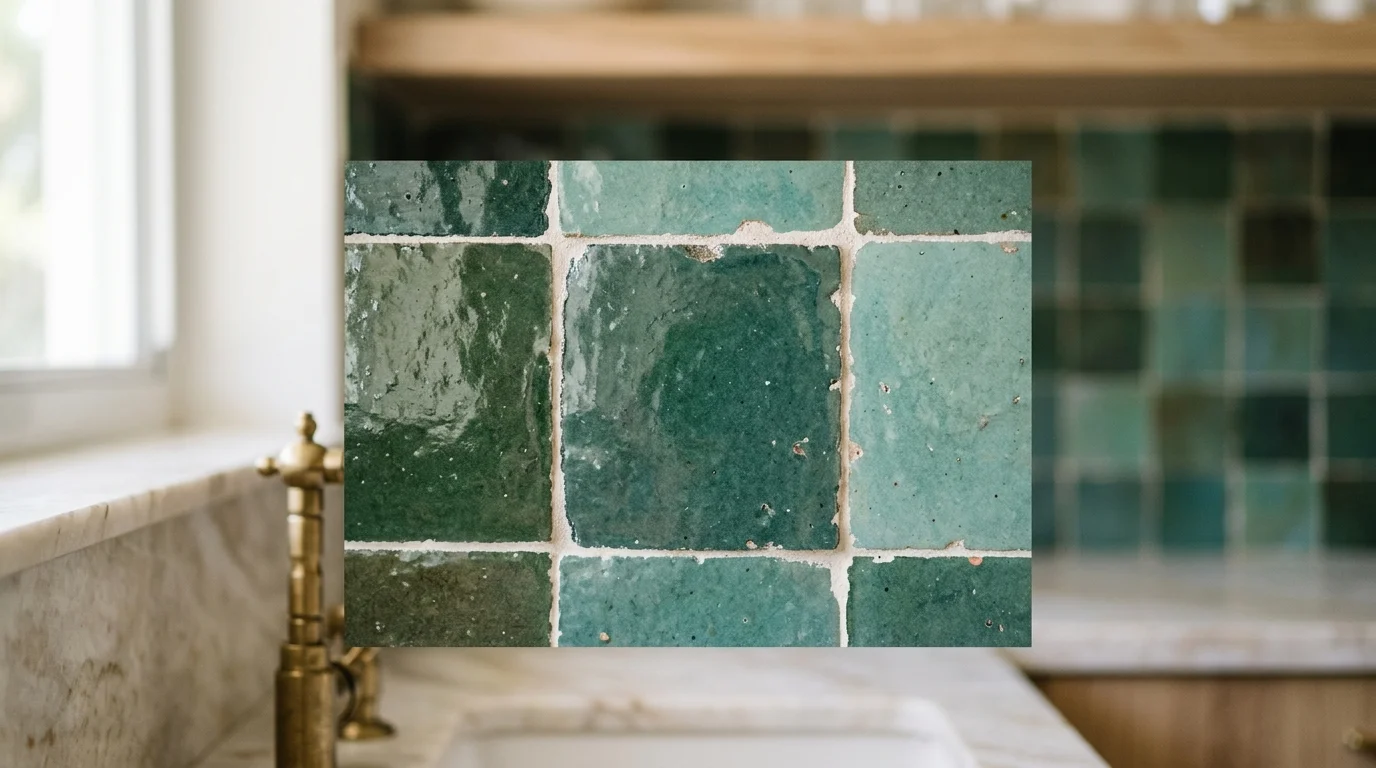
Zellige (pronounced zeh-LEEJ) is a traditional Moroccan terracotta tile coated with an enamel glaze and fired at high temperatures. The process has not changed dramatically in centuries. Artisans hand-pour glaze over raw terracotta, then hand-cut each tile to shape before firing. Because the glaze is applied by hand, it pools and thins at different rates across the surface, creating that signature luminous, jewel-like quality. The tiles catch light differently depending on the angle you're viewing from. At midday with South Florida sun streaming in, a zellige backsplash looks almost like a mosaic of individual gems.
The dimensional face, that subtle warping and variation in plane, is not a defect. It is what makes zellige zellige. Contractors and homeowners who try to achieve a perfectly flat installation with this material miss the point entirely. Our crews set expectations clearly at the start: grout lines will vary slightly, tiles will not sit at identical depths, and that is exactly what you are paying for. Cle Tile, one of the leading importers of authentic Moroccan zellige in the U.S., documents the production process well and is worth reading before you commit to a material.
What separates authentic zellige from the porcelain tiles that mimic its look? Real zellige is terracotta at its core, porous, relatively soft (around a 3 on the Mohs scale), and reactive to acids. The glaze protects the surface, but the edges and unglazed back remain absorbent. That matters for installation and maintenance, and we will get into both.
Where to Use Zellige in Your Home
The short answer: anywhere you want a statement. The longer answer involves thinking through where zellige performs well and where it fights you.
Kitchen backsplashes are the most popular application in Palm Beach County right now, and for good reason. A full-height zellige backsplash behind the range becomes the focal point of the entire kitchen. Pair it with simple flat-front or shaker cabinets and the tile does the work. We have installed zellige from counter to ceiling behind ranges in Boca Raton homes where the rest of the kitchen is deliberately understated, warm white cabinets, a quartzite counter, minimal hardware, and the result is stunning. If you are weighing a 4-inch versus full-height backsplash, zellige is one of the few materials where we almost always recommend going full height. The pattern and texture need room to breathe.
Shower walls are the second-most-requested application. Zellige in a shower feels luxurious in a way that large-format porcelain simply does not. The texture, the glaze variation, the way water moves across an undulating surface, it reads as artisanal rather than mass-produced. That said, installation in a wet area requires more care. Proper waterproofing behind the tile is non-negotiable; you can review the basics in our bathroom waterproofing guide. Because zellige is porous, the grout joints and any unglazed edges must be sealed properly. We also recommend a penetrating sealer on the tile face in shower applications, reapplied annually.
Powder rooms are an underrated zellige opportunity. A small space lets you go bold, floor to ceiling, saturated color, without the commitment of a full primary bath. Because the square footage is modest, the cost stays manageable even at premium zellige price points. For powder room layout inspiration, check out our powder room design ideas for Palm Beach County homes.
Where we advise caution: High-traffic kitchen floors are not a good fit for zellige. The material is soft enough that foot traffic, dropped pots, and dragged chairs will chip the glaze over time. Outdoor applications are also problematic in South Florida, UV exposure will fade the glaze, and freeze-thaw is not the concern here but thermal cycling from extreme heat can stress the terracotta body. Stick to interior walls and backsplashes.
Color & Material Pairings That Work
Zellige comes in dozens of colorways, but the ones dominating 2026 projects in South Florida cluster into a few families. Here is what we are actually specifying and why.
Warm whites and off-whites are the most versatile. A creamy white zellige backsplash works with virtually any cabinet color, navy, sage, warm oak, painted white. The texture provides enough visual interest that you do not need a pattern. It reads clean in photographs but handmade in person. If you are working with white cabinets, an off-white zellige with slight variation in tone prevents the kitchen from feeling sterile.
Terracotta and warm ochres are having a massive moment. These earthy tones pair naturally with the warm wood tones and warm neutrals that dominate 2026 cabinet trends. Against rift-cut white oak or a warm walnut cabinet, a terracotta zellige backsplash feels Mediterranean and collected rather than trendy. It also picks up beautifully on brass and unlacquered brass hardware, a combination we are specifying constantly this year.
Deep teals, sage greens, and dusty blues work best in bathrooms and powder rooms. These saturated glazes have enough depth to carry a small space. In a primary shower surround, a deep teal zellige with white grout joints and brass fixtures is one of the most striking combinations available right now. For fixture ideas to pair with bold tile, our piece on brass as a 2026 finish is worth reading alongside this one.
Countertop pairings: Zellige is forgiving with countertop materials because its own variation absorbs visual complexity. That said, our preference is to keep the counter quieter when the backsplash is zellige. Honed white marble, a simple white quartz, or a light quartzite all work well. Busy veined slabs compete with the tile texture and the result can feel chaotic. We recommend against pairing a heavily veined exotic stone counter with a saturated zellige backsplash, pick one to be the star.
Grout color: This is a decision that changes the entire look. White grout emphasizes the individual tiles and the grid. Tone-on-tone grout (matching the tile color closely) makes the wall read as a continuous textured surface. Dark charcoal grout against a light zellige creates a graphic, almost Moorish grid effect. We let clients mock this up on a sample board before committing, the difference between grout choices on zellige is dramatic.
Cost Guide
Zellige tile costs more than standard ceramic or porcelain, and the installation labor is also priced higher because the material requires more care. Here is what Palm Beach County homeowners should expect in 2026. These are installed costs, material plus labor, unless otherwise noted.
A few things drive cost higher than expected. First, waste factor. Because zellige is hand-cut, sizes vary slightly and cuts at corners and outlets require more material. Budget 15-20% waste on top of your square footage, higher than the 10% rule for standard tile. Second, setting material. Zellige requires a white polymer-modified thinset (gray thinset bleeds through the porous back and discolors the tile). That material costs more than standard thinset. Third, installer experience. Not every tile setter has worked with zellige. The dimensional variation means the installer has to constantly adjust bed thickness to keep the face of the tile within an acceptable range, it is slower, more skilled work. Our crews have handled enough zellige projects in Delray Beach and Jupiter homes to have the process dialed in, but if you are shopping multiple bids, ask specifically about zellige experience.
If authentic zellige pricing is outside your budget but you love the aesthetic, the porcelain alternatives have gotten significantly better. They will not have the same depth or light play, but they are more durable, require no sealing, and install like standard tile. We are honest with clients about the difference, and some choose the alternative deliberately for maintenance reasons. See our comparison of porcelain vs ceramic tile for South Florida bathrooms for broader context on tile material choices.
South Florida Considerations
South Florida's climate does not change the appeal of zellige, but it does affect a few practical decisions.
Humidity and sealing. Palm Beach County's year-round humidity means that any porous material in a bathroom environment needs proper sealing and maintenance. Zellige in a shower must have a quality penetrating sealer applied before grouting and again after grouting is complete. We recommend clients reapply sealer annually in shower applications, more often if the shower gets heavy daily use. In kitchen backsplash applications behind a range, the combination of cooking grease and humidity means grout should be sealed as well, not just the tile. A simple spray-on impregnating sealer once a year keeps the grout from absorbing oils.
Condo and HOA projects. Many of our clients in gated communities and condominiums in Boca Raton and Wellington are replacing existing backsplash tile as part of a kitchen refresh. In most cases, a straight tile swap, same location, no plumbing moved, no walls opened, does not require a permit. But if your remodel involves relocating the sink, changing electrical service capacity, or adding new gas lines, your general contractor will need to pull the appropriate permits through Palm Beach County. For an overview of when permits apply to kitchen work, see our kitchen remodel permit guide for Palm Beach County. The Palm Beach County Building Division is the authoritative source on permit requirements for your specific project scope.
HOA design review. If you live in a community with an architectural review board, common in Wellington, Jupiter, and parts of Boca Raton, exterior-visible changes require approval. Interior backsplash and shower tile typically do not, but confirm with your HOA before ordering material. We supply design drawings and finish samples to support any review process; your GC handles the submission.
Pairing zellige with the right countertop for Florida's climate. Because zellige is a statement material, we often recommend pairing it with low-maintenance countertops. Quartz holds up better than marble in humid kitchens, requires no sealing, and keeps the maintenance conversation simple. If you want natural stone, quartzite is more durable than marble. Our guide to the best countertop materials for Florida's humidity walks through the tradeoffs in detail.
Sourcing locally. Authentic zellige tile is not widely stocked at big-box stores. You will typically need to order through a specialty tile distributor or directly from an importer. Lead times for imported zellige can run 8-16 weeks, which affects your remodel timeline. We factor that into project scheduling. If you are also selecting countertop slabs, coordinating both orders early is important, our guide to buying countertop slabs in Palm Beach County covers local sourcing options that can help you coordinate both in one trip.
Care and cleaning for South Florida homes. Zellige is not difficult to maintain, but it requires the right products. Never use vinegar, citrus-based cleaners, or acidic grout cleaners on zellige, the acid will etch the glaze over time. Use a pH-neutral cleaner. For daily kitchen backsplash maintenance, a damp microfiber cloth handles most cooking residue. For the shower, a squeegee after each use and a weekly spray-down with a pH-neutral tile cleaner keeps the grout clean and the glaze looking fresh. This is less maintenance than marble but more than porcelain, a fair middle ground for a material this beautiful.