How to Clean Marble Countertops Without Etching the Surface
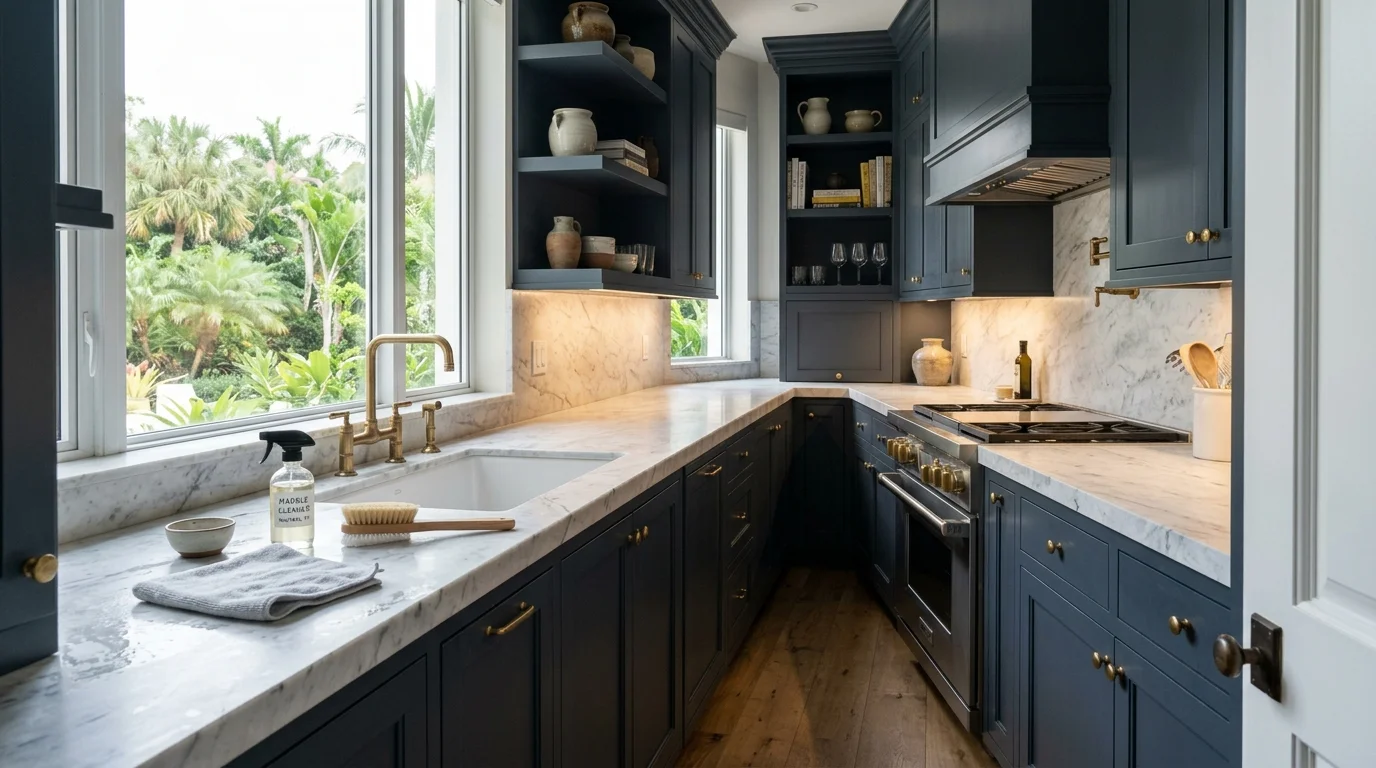
If you've invested in marble countertops, knowing how to clean marble countertops correctly is the difference between a surface that looks stunning for decades and one that turns dull and pitted within a year. Marble is calcium carbonate, a natural stone that reacts chemically with acids. That reaction is called etching, and it's the number one complaint we hear from homeowners in Palm Beach County, Boca Raton, Delray Beach, Wellington, and Jupiter who chose marble and weren't given proper care instructions. This guide covers everything: daily cleaning, stain removal, what products will destroy your surface, and how often to seal.
Why Marble Etches (and Stains)
Etching is not a stain. That's the first thing to understand. A stain is a discoloration caused by a substance penetrating the stone's pores, think red wine, coffee, or oil. An etch is actual surface damage: an acid chemically dissolves the calcium carbonate in the marble, leaving a dull, slightly rough spot that looks like a water mark but won't wipe away.
Common culprits in the kitchen: lemon juice, vinegar, citrus-based cleaners, tomato sauce, wine, and even some sparkling waters. In the bathroom: hairspray residue, certain toothpastes, and acidic toner or skincare products left on a marble vanity top. You set down a glass of orange juice for 30 seconds, you get an etch. That's not an exaggeration, we've seen it happen on brand-new installs.
Staining works differently. Marble is porous, and unsealed (or under-sealed) marble will absorb oils, pigments, and minerals right into the stone. That's why sealing matters so much, and we'll get into that in detail below.
The finish on your marble also matters. Polished marble shows etches most dramatically because the contrast between the glossy surface and the dull etch spot is obvious. Honed marble, a matte finish, hides etches much better, which is why we often recommend honed for heavy-use kitchen surfaces. If you're comparing stone options and wondering how marble stacks up against lower-maintenance alternatives, our breakdown of quartz vs quartzite vs granite vs marble is worth reading before you commit.
Safe Daily Cleaning Routine
Daily marble care is simple. The mistake most people make is reaching for whatever cleaner is under the sink, and that's where the damage starts.
Here's what actually works:
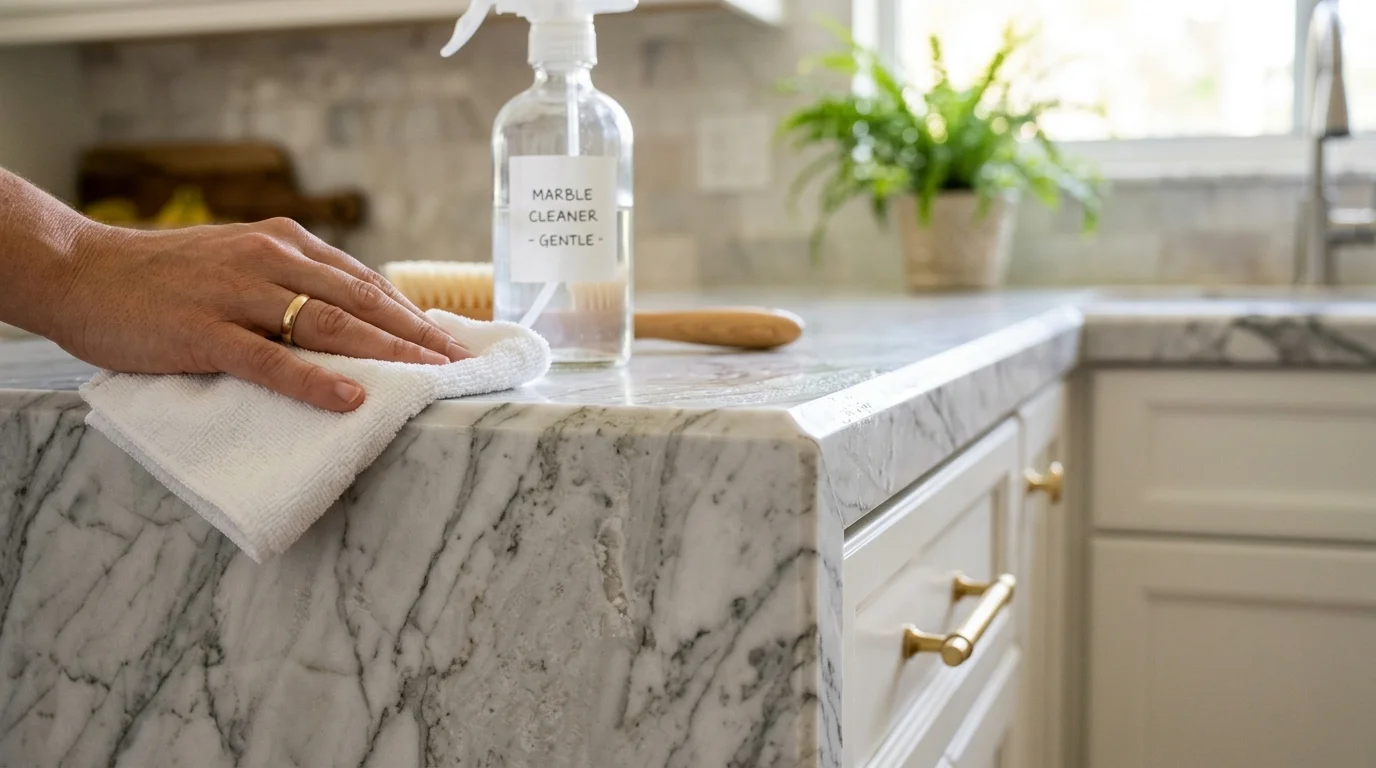
Warm water and a few drops of pH-neutral dish soap. That's it for everyday cleaning. Use a soft microfiber cloth, wipe down the surface, then immediately dry it with a clean cloth. Don't let water sit. In South Florida's hard water environment, standing water leaves mineral deposits that etch the surface over time, different mechanism, same ugly result.
For slightly more thorough cleaning, a spray bottle with warm water and one or two drops of a pH-neutral castile soap works well. Spray, wipe, dry. The drying step is non-negotiable. Wet marble in a humid Florida kitchen or bathroom is an invitation for water spots and eventual mineral etching.
A few habits that protect your marble daily:
- Use coasters under every glass, especially citrus drinks, wine, and sparkling water.
- Put a cutting board down before you cut anything. Always. Even bread.
- Blot spills immediately, don't wipe them, which spreads the liquid. Press a clean cloth down, lift, repeat.
- Keep a dedicated dry microfiber cloth on the counter for quick wipe-downs after cooking.
- Use trivets under hot pots. Marble won't crack from normal heat the way quartz might, but thermal shock can stress the stone over time.
None of this is complicated. The discipline is in doing it consistently, not occasionally.
What NOT to Use on Marble
This list matters more than any cleaning product recommendation we can give you. Avoid these without exception:
Vinegar. A popular DIY cleaner for almost everything. On marble, it etches on contact. The acetic acid in vinegar has a pH around 2.5, marble starts etching at anything below 7. Don't use it. Ever.
Lemon or citrus-based cleaners. Same problem. This includes many "natural" or "green" cleaning products that list citric acid as an ingredient. Read labels. If you see citric acid, keep it away from marble.
Bleach and bleach-based products. At high concentrations, bleach can discolor marble and degrade the sealer. At low concentrations it may seem fine short-term, but it's stripping protection every time you use it.
Hydrogen peroxide. Sometimes recommended for stone, and it can be used carefully for specific stain poultices, but routine use at concentrations above 3% can lighten darker marble and degrade sealer. Don't use it as a daily cleaner.
Abrasive scrubbers or powders. Comet, Bar Keepers Friend, Magic Erasers, steel wool. All of these scratch marble. Polished marble especially shows every scratch. Use soft cloths only.
Multi-surface sprays. Most popular kitchen and bathroom sprays, 409, Fantastik, Lysol Kitchen Pro, are acidic or contain surfactants that strip marble sealer fast. The label might say "safe for stone" but check the pH. Anything below 7 is acidic.
Windex and glass cleaners. These often contain ammonia, which is harsh on stone sealers and can dull the finish over time.
The Marble Institute of America has published care guidelines that align with exactly what we tell our clients, the Natural Stone Institute's care and cleaning resource is a solid reference if you want the technical background on why these products cause damage.
What you CAN buy: dedicated stone cleaners that are pH-neutral and formulated for marble. Brands like Lithofin, StoneTech, and Black Diamond all make marble-safe daily cleaners. They're available at most tile and stone suppliers in Palm Beach County, and they're not expensive, a bottle lasts months with normal use.
Removing Common Stains
First, confirm you're dealing with a stain and not an etch. Run your finger across the spot. If it feels smooth, it's a stain (substance in the pores). If it feels slightly rough or dull compared to the surrounding surface, it's an etch, and stain removal techniques won't fix it. Etches require either professional polishing or living with them.
For actual stains, the go-to method is a poultice. A poultice draws the staining substance out of the pores. Here's how to make and use one:
Oil-based stains (grease, butter, cooking oil, lotion): Mix baking soda with a small amount of dish soap and water to form a thick paste. Apply it over the stain about a quarter-inch thick, cover with plastic wrap, tape the edges down, and let it sit for 24-48 hours. Remove, rinse with warm water, dry thoroughly.
Organic stains (coffee, tea, wine, food coloring): Mix baking soda with a small amount of 3% hydrogen peroxide (the standard drugstore concentration) to form a paste. Same process, apply thick, cover, wait 24 hours, rinse, dry. Don't use stronger peroxide concentrations.
Ink or dye stains: Acetone (nail polish remover) applied carefully with a cotton ball can lift ink from marble. Work quickly, don't let it pool, and rinse immediately with water.
Hard water deposits and mineral buildup: This is common in South Florida because our water is notoriously hard. Do NOT use vinegar or lime remover products, they'll etch the marble while removing the mineral deposit. Instead, use a commercial calcium/lime remover specifically formulated for natural stone, or carefully use a plastic scraper to lift the deposit mechanically before cleaning with a pH-neutral cleaner.
Some stains set deeply and won't respond to a single poultice application. You may need to repeat the process two or three times. If a stain won't budge after several attempts, a stone restoration professional can often remove it mechanically. It's worth the call before assuming the marble is ruined.
For reference, the process we use for granite stain removal follows similar logic, if you have both stone surfaces, our guide on how to clean granite countertops covers the parallel approach for that material.
Sealing Your Marble Countertops
Sealing doesn't make marble acid-proof. This is a critical distinction. A sealer fills the pores of the stone, which slows liquid absorption and gives you more time to wipe up spills before they stain. A sealer does nothing to prevent etching from acid contact. Etching is a surface chemical reaction, not a penetration issue.
That said, sealing is still mandatory for marble in a kitchen or bathroom. Unsealed marble will absorb oil, wine, and colored liquids almost immediately. Sealed marble gives you a window, sometimes 10-15 minutes for a spill, to blot it up without permanent staining.
How often should you seal? It depends on use and the specific marble. As a general rule for kitchen countertops in a Palm Beach County home: seal every 6-12 months. For bathroom vanity tops with less daily contact with food and liquids, once a year is typically sufficient. More porous marbles, Calacatta, Statuario, need sealing more frequently than denser varieties like Nero Marquina.
The water test tells you when it's time. Drip a few drops of water on your marble surface. If the water beads up, the sealer is still active. If it absorbs within a few minutes and darkens the stone, it's time to reseal.
Application process:
- Clean the surface thoroughly and let it dry completely, at least 24 hours after any wet cleaning.
- Apply a penetrating impregnating sealer (not a topical/coating sealer) with a soft cloth or applicator pad, working in sections.
- Let it absorb for the time specified on the product (usually 5-15 minutes).
- Wipe off all excess sealer before it dries. Any sealer left on the surface will haze.
- Allow full cure time before using the surface, typically 24-48 hours.
We recommend penetrating sealers from StoneTech, Aqua Mix, or Tenax for marble. They go into the stone rather than sitting on top, which means they don't alter the appearance or create a plastic-looking film. Our guide on granite countertop sealing explains the penetrating vs. topical sealer distinction in more detail, the same logic applies to marble.
One more thing: if your marble was just installed, it may have been sealed once at the fabricator's shop. That's a starting point, not a permanent solution. Reseal within 6 months of installation for kitchen surfaces.
South Florida Considerations
Marble care in Palm Beach County is a slightly different challenge than in other parts of the country, and it's worth addressing directly.
Hard water. South Florida municipal water is loaded with calcium and magnesium. Every time water evaporates on your marble surface, from cooking steam, splashing, or condensation from cold glasses, it leaves mineral deposits. Over time, those deposits etch and dull polished marble surfaces. Drying your counters after every use isn't optional here, it's the single most impactful daily habit you can build.
Humidity and mold. Our ambient humidity means grout lines around marble tile installations can develop mold faster than in drier climates. Keep surfaces dry and use a pH-neutral cleaner that won't degrade the grout or stone. For bathrooms, run the exhaust fan during and 15 minutes after every shower.
UV exposure. South Florida homes get intense sun exposure, and marble near windows or in outdoor-adjacent spaces can experience some color shift over time. White marbles tend to yellow slightly with prolonged UV exposure; darker marbles can fade. If your marble gets direct sun through large windows, UV-filtering window film is worth considering.
Outdoor marble. Some homeowners in Boca Raton and Jupiter install marble in covered outdoor kitchen areas. We advise against polished marble outdoors, the humidity and ambient moisture accelerate etching and dull the finish fast. Honed or brushed marble holds up better in semi-outdoor environments, though porcelain or quartzite are more practical choices for true outdoor countertops. If you're exploring outdoor material options, our guide on outdoor kitchen countertops covers what actually performs in the Florida climate.
Choosing marble for high-use kitchens. We're honest with our clients: marble in a busy family kitchen requires a level of maintenance commitment that not everyone wants to sign up for. If you love the marble look but want a lower-maintenance alternative, engineered options have come a long way. Our article on the best countertop materials for Florida's humidity and heat lays out the trade-offs clearly.
For homeowners who are committed to marble and want to maximize longevity, we also recommend looking at current countertop trendsthere's a reason honed and leathered finishes are gaining ground in South Florida kitchens. They're beautiful and they hide the day-to-day evidence of life far better than a mirror-polished surface.
Bottom line: marble is a stunning material that rewards attentive owners. The homeowners we see who are happiest with their marble countertops 10 years in are the ones who built a simple daily routine early, pH-neutral cleaner, dry immediately, blot spills fast, reseal regularly. Do those four things consistently and marble holds up beautifully in a South Florida home.