How to Find a Good Kitchen Remodeler in Palm Beach County

Finding the right contractor for your kitchen remodel in Palm Beach County isn't about picking the lowest bid or the flashiest website. It's about finding someone who understands South Florida construction challenges. The right person delivers quality work on schedule and won't disappear when problems arise. Learning how to find a good kitchen remodeler starts with knowing what questions to ask and what warning signs to watch for.
We've worked with hundreds of homeowners across Boca Raton, Delray Beach, Wellington, and Jupiter over the years. The stories we hear about other contractors range from impressive to horrifying. The difference usually comes down to proper vetting upfront.
Skip the research phase, and you'll likely end up with cost overruns, timeline delays, or subpar craftsmanship that haunts you for years. Take time to do this right, and you'll find a contractor who makes the process smooth and delivers results you're proud of.
Research and Vetting Process
Start with the Florida Department of Business and Professional Regulation's contractor license lookup. Any qualified contractor should have current state credentials and clean disciplinary records. We recommend checking this before scheduling your first meeting.
Insurance verification comes next. Ask for certificates of general liability and workers' compensation coverage. Don't just take their word for it. Call the insurance company to confirm active policies. Uninsured contractors create huge liability risks for homeowners.
Local Better Business Bureau ratings give you another data point. Take individual complaints with context. One angry customer doesn't define a business, but patterns of similar issues should raise concerns. Check Google reviews, but focus on detailed reviews over star counts.
Professional associations matter too. Contractors tied to the National Kitchen & Bath Association (NKBA) or local trade groups usually invest more in continuing education and industry standards. It's not required, but it's a positive sign.
Ask for local references in your specific area. A contractor who works mostly in Miami might not understand Palm Beach County building requirements or design preferences. Regional expertise makes a difference in materials selection and construction methods.
Red Flags to Avoid
Door-to-door solicitation is an automatic disqualifier. Legitimate contractors have steady work through referrals and don't need to cold-call neighborhoods. Same goes for unsolicited phone calls or text messages.
Pressure tactics during first meetings signal trouble ahead. Good contractors know that kitchen remodels are major investments that need careful thought. Anyone pushing for immediate signatures or "today only" pricing isn't operating professionally.
Cash-only payment requests create red flags for multiple reasons. Legitimate businesses accept checks and credit cards. Cash-only operations often indicate tax avoidance or financial instability. Plus, you lose payment protections that credit cards provide.
Very low bids compared to other estimates usually mean corners will be cut somewhere. Materials quality, labor hours, or project scope get reduced to hit those numbers. Understanding what goes into contractor pricing helps you spot unrealistic quotes.
Vague or missing written estimates make cost comparisons impossible. Professional contractors give you detailed line items covering materials, labor, permits, and timeline. Verbal estimates or single lump sum numbers aren't enough for major projects.
No local office address or only a P.O. box creates accountability issues. You want someone with local presence who can't disappear overnight if problems arise.
Questions to Ask Contractors
Start with project experience: "How many kitchen remodels have you completed in the past year?" Contractors who mostly do other types of work might lack kitchen-specific expertise. We recommend working with contractors who complete at least 20-30 kitchen projects a year.
Timeline questions reveal planning capabilities: "What's your typical project timeline for a kitchen similar to mine?" and "How do you handle delays due to material delivery or permit issues?" Experienced contractors provide realistic schedules with buffer time built in.
Subcontractor policies matter for quality control: "Which trades do you handle directly versus subcontract out?" and "How do you check subcontractor insurance and quality standards?" Most contractors use specialized subs for plumbing and electrical work, but they should keep oversight.
Change order procedures prevent cost surprises later: "How do you handle modifications or additions during construction?" and "What's your policy on written approval for changes?" Clear change order processes protect both parties when project scope evolves.
Material sourcing affects both quality and timeline: "Where do you buy cabinets and countertops?" and "What happens if materials arrive damaged or incorrect?" Contractors with established supplier relationships handle these issues more smoothly.
Warranty coverage provides long-term protection: "What warranty do you provide on your work?" and "How do you handle callback issues after project completion?" Reputable contractors stand behind their work with written warranties.
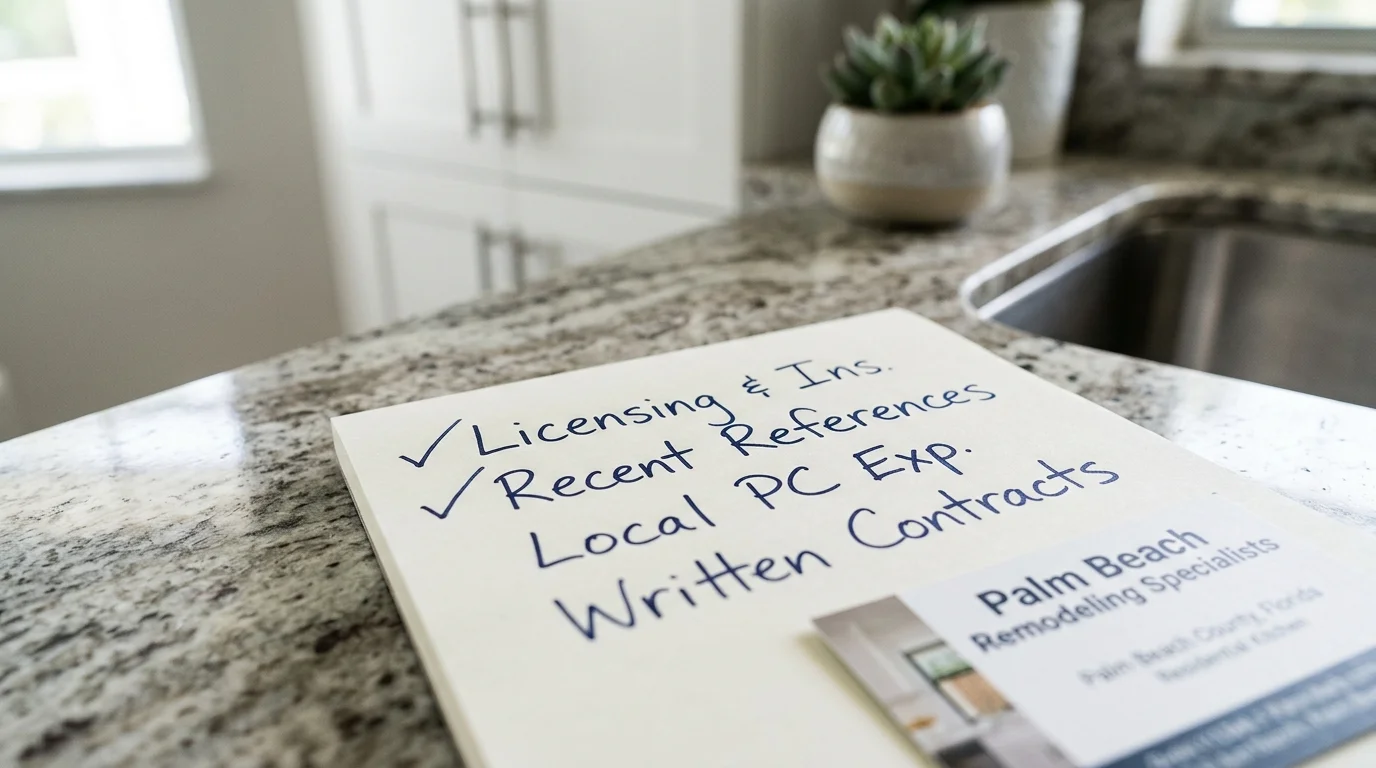
Reviewing Portfolios and References
Quality portfolios show variety in design styles and price points. Be wary of contractors who only show luxury projects if your budget is moderate. Be just as wary of those showing only budget work if you want high-end finishes. Good contractors adapt their approach to different client needs.
Recent work matters more than projects from five years ago. Materials, techniques, and design trends evolve constantly. Focus on kitchens completed within the past 18 months for the most relevant examples.
Detail photos reveal craftsmanship quality better than wide room shots. Look for clean tile cuts, precise cabinet alignments, and smooth paint finishes. Poor detail work usually indicates rushed schedules or inexperienced crews.
When contacting references, ask specific questions about timeline adherence, job site cleanliness, communication quality, and problem resolution. Generic "everything was fine" responses don't give you useful information.
Ask references about unexpected costs or changes during their projects. How did the contractor handle these situations? Transparent communication during challenges separates good contractors from problematic ones.
Drive by recent projects if possible. External appearances often reflect internal work quality. Well-maintained job sites and clean work areas suggest professional operations.
Cost Guide
Kitchen remodeling costs in Palm Beach County vary a lot based on project scope, material selections, and contractor quality. Here's what we usually see across different budget levels:
These ranges reflect current Palm Beach County market conditions. They include material costs plus professional installation. Budget-tier projects focus on functionality improvements with cost-effective materials. Mid-range projects balance quality and value with semi-custom options. Luxury projects feature premium materials and custom craftsmanship.
Big cost variables include cabinet quality levels, countertop material selections, appliance allowances, and electrical/plumbing changes. Detailed cost breakdowns help homeowners understand where their investment goes.
Get written estimates from at least three contractors for accurate cost comparisons. Estimates should include material specifications, labor hours, and completion timelines. Verbal quotes or rough estimates don't give you enough detail to make a decision.
South Florida Considerations
Hurricane building codes affect material selections and installation methods throughout Palm Beach County. Contractors should understand current wind load requirements, impact-resistant window specifications, and proper moisture barriers for coastal conditions.
Humidity management needs specific ventilation strategies and material choices. Countertop materials that handle Florida's climate perform better long-term than options made for drier regions.
HOA approval processes in gated communities need contractors who know architectural review procedures. Many developments in Wellington, Jupiter, and Boca Raton have specific design guidelines and approval timelines that affect project scheduling.
Seasonal construction factors affect timeline planning. Hurricane season brings potential delays. Winter months often bring the best working conditions, but also higher contractor demand from seasonal residents.
Local supplier relationships matter for material availability and delivery schedules. Contractors with established Palm Beach County vendor networks handle supply chain issues better than those bringing in materials from distant markets.
Permit requirements vary by municipality and project scope. Contractors should understand when permits are required and maintain relationships with local building departments for efficient processing.
Salt air exposure affects material durability near coastal areas. Hardware finishes, paint selections, and cabinetry treatments need the right protection against corrosive conditions.