Bathroom Remodel on a Budget in South Florida
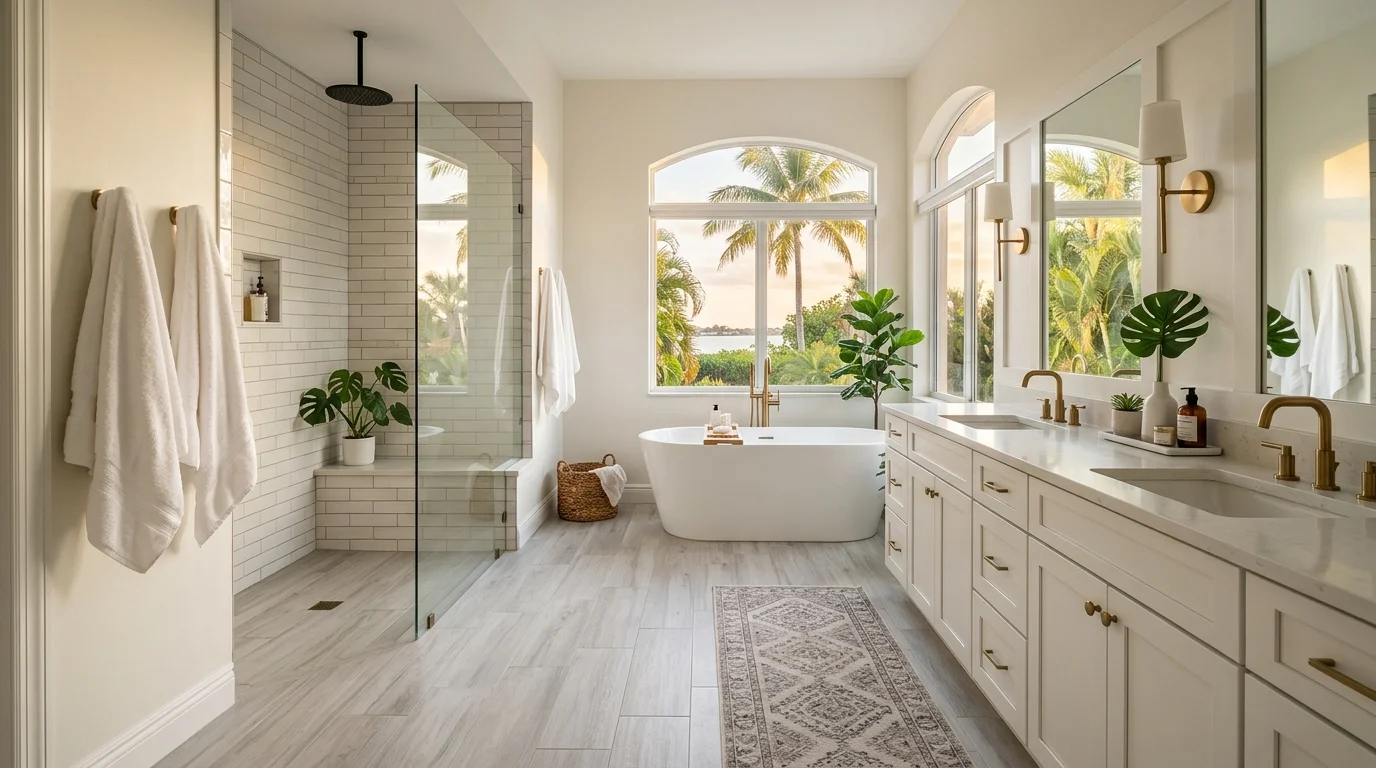
A bathroom remodel on a budget is one of the most common conversations we have with homeowners across Palm Beach County. If you're in Boca Raton refreshing a dated guest bath or in Wellington trying to squeeze more life out of a builder-grade master, the good news is clear: you do not need to gut the whole room to get a result you're proud of. The right sequence of targeted upgrades, reglazing, tile swaps, new fixtures, fresh paint, can transform a bathroom for a few thousand dollars instead of tens of thousands. Here's how we think about it.
Where to Start: Set a Realistic Budget First
Before you pick a single tile or fixture, put a number on paper. Not a vague range, an actual ceiling. That discipline changes every decision that follows.
A useful rule of thumb: your bathroom remodel investment should stay proportional to your home's value. We have a full breakdown of that logic in our post on the 30 percent rule in remodeling, and it applies just as much to bathrooms as kitchens. In short, over-improving a bathroom in a $400,000 Delray Beach home rarely pays back at resale the way the same spend would in a $900,000 Jupiter waterfront property.
Once you have your ceiling, split the budget by priority. Our general recommendation: put the largest share toward anything water-related first, waterproofing, the shower surround, the tub situation. That's where deferred maintenance creates the most expensive surprises. Cosmetics come second. Fixtures and hardware come third. That order matters.
If you want a detailed look at what bathroom work actually costs in this market, our bathroom remodel cost guide for Palm Beach County breaks it down scope by scope. Real numbers, not national averages that have no bearing on what labor and materials cost between Boca Raton and West Palm Beach.
One more thing before you open your wallet: understand what work actually requires a permit in Florida. Permits are required when a project moves major plumbing, relocating a toilet, tub, or shower drain, changes electrical service, or opens up structural walls. A straight cosmetic refresh (new tile over existing substrate, new vanity in the same footprint, paint, hardware) generally does not trigger a permit requirement. When permit-required work is in scope, your general contractor handles that process. We handle the design, cabinetry, tile, and countertop installation.
Affordable Upgrades That Actually Move the Needle
Not every upgrade delivers equal return for equal spend. Here are the ones we consistently recommend to budget-conscious homeowners, ranked roughly by impact per dollar.
Reglazing the tub and tile. This is the single highest-impact, lowest-cost move in a dated bathroom. A professional reglaze on a tub and surrounding tile walls runs roughly $400-$700 in the Palm Beach County market. The result looks close to new for a fraction of replacement cost. We recommend reglazing over replacement any time the substrate is sound and the layout works. The caveat: reglazing is a surface treatment. If you have soft spots in the surround, cracked grout that's let water behind the tile, or a tub that's structurally compromised, reglazing is a bandage over a wound. Check the substrate first.
Painting walls and ceiling. A $60 problem solved with $60 in materials and a Saturday afternoon. South Florida humidity is brutal on bathroom paint, mold-resistant, semi-gloss or satin formulas are non-negotiable here. Flat paint in a bathroom is a mistake we see corrected on remodels all the time. For color direction, cool whites and soft greiges read clean and hold up to the bright Florida light. Warm taupes can work in north-facing bathrooms that don't get direct sun.
Hardware swap. Old builder-grade brass or chrome towel bars, toilet paper holders, and robe hooks age a bathroom fast. A complete hardware set in brushed nickel, matte black, or unlacquered brass costs $150-$400 at most and takes two hours to swap. No demo, no mess, no contractor needed. We have strong opinions on fixture finishes, our post on black bathroom fixtures walks through when that trend makes sense and when it doesn't. For most South Florida homes, brushed nickel stays safer at resale.
Vanity light fixture upgrade. The light over your vanity does more for how the room feels than almost any other single item. A dated Hollywood-strip fixture with globe bulbs makes even a newly tiled bathroom look cheap. Modern vanity bars with integrated LED or compatible with LED A19 bulbs run $100-$350. The swap is usually DIY-able if the junction box is already there and you're comfortable with basic electrical work, if not, an electrician charges $150-$250 for a single fixture swap. Either way, it's worth it. For a deeper dive on lighting choices that suit Palm Beach County bathrooms, read our bathroom lighting ideas guide.
Affordable tile options. You don't need to demo the whole floor to refresh the look. If the existing floor tile is sound and level, consider a tile-over installation with a low-profile porcelain option, there are products specifically designed for this. When you are doing a full floor replacement, porcelain in a 12x24 or 24x24 format is our go-to recommendation for South Florida bathrooms. It handles humidity, it's easy to clean, and the large format makes small bathrooms read bigger. Budget for $3-$6 per square foot on material, plus $6-$10 per square foot on labor in this market. For ideas on how to lay it, our bathroom tile patterns guide covers everything from straight stack to herringbone and when each pattern makes sense for the room size.
Vanity replacement. A stock vanity from a home improvement store, 30" to 48" wide, runs $300-$900 for the cabinet and top combined. Swap in an undermount sink and a simple quartz top and you're still under $1,500 for materials. Labor to remove the old vanity, set the new one, and reconnect plumbing runs $300-$600 when done through your GC. That's a meaningful visual upgrade for under $2,000 total. If you're unsure what size fits your space, our bathroom vanity sizes guide covers standard dimensions so you don't order the wrong cabinet.
Mirror upgrade. The builder-grade frameless mirror glued to the wall is one of the easiest things to change. A framed mirror or a medicine cabinet with a modern profile can be had for $150-$600. Pair it with the new vanity light and the difference is dramatic.
Grout cleaning and recoloring. Before you demo anything, try a professional grout cleaning and recolor. A grout colorant or sealant application on existing tile can make a dingy bathroom look years newer for $200-$500 in labor. We've seen homeowners shocked at how good their existing tile looks once the grout is addressed. It's the most under-appreciated budget move in the playbook.
DIY vs. Pro: Know Where to Draw the Line
The South Florida remodeling market rewards homeowners who know what they can handle themselves, and penalizes those who find out the hard way that they were in over their heads. Here's our honest breakdown.
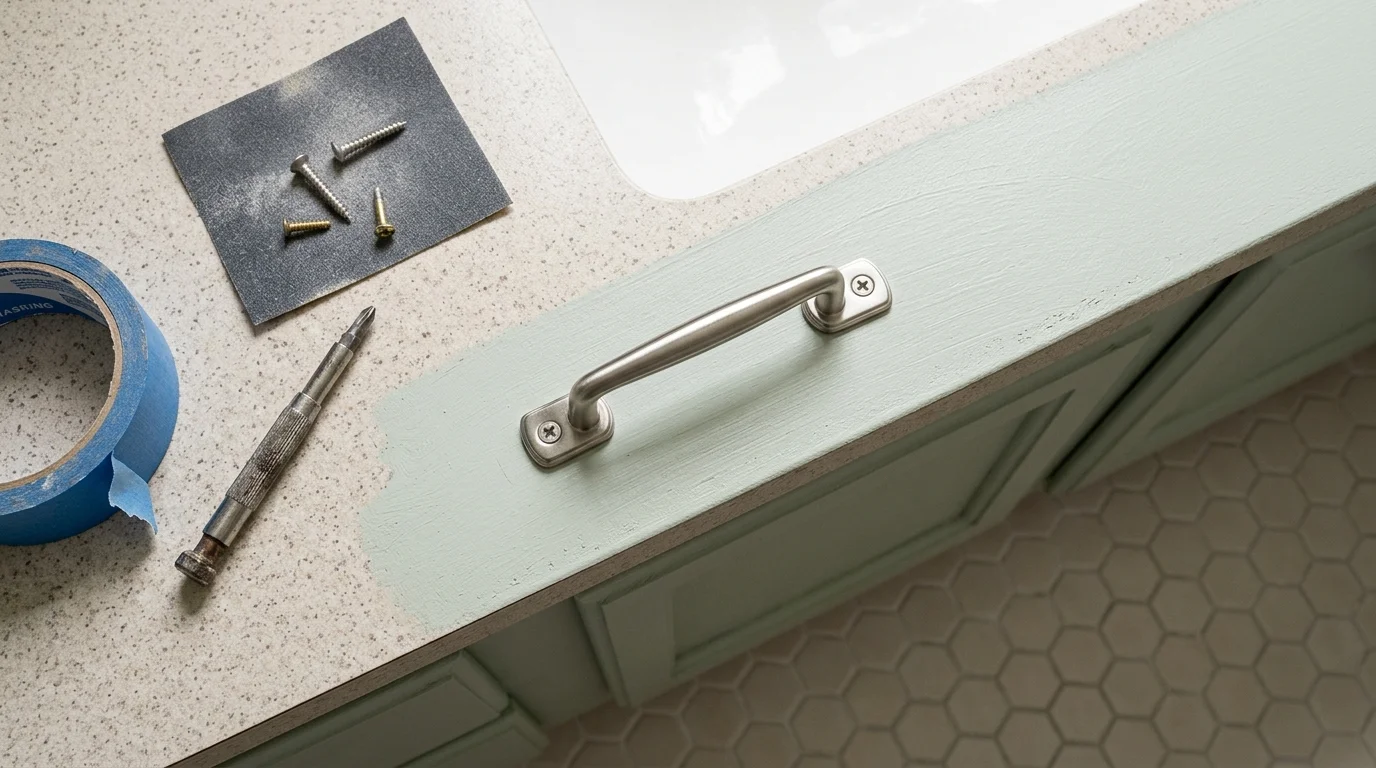
Safe to DIY: painting walls and ceiling, swapping towel bars and toilet paper holders, replacing a light fixture (if you're comfortable killing the breaker and making wire connections), installing a new mirror, caulking around a tub or sink, replacing a toilet seat, and adding peel-and-stick vinyl tile over a sound existing floor.
Leave it to a pro: anything involving the shower waterproofing membrane, full tile removal and reset, vanity plumbing reconnection, and electrical work beyond a direct fixture swap. In Florida's humidity, waterproofing shortcuts are the most expensive mistake a homeowner can make. A failed membrane behind shower tile can mean full wall demo, mold remediation, and a repair bill that dwarfs what you would have spent doing it right the first time. Our bathroom waterproofing guide for Florida homes explains exactly what proper membrane installation looks like and why the Florida climate demands more than what you'd see in a national how-to video.
The gray zone is tile work. Experienced DIYers can set floor tile in a straightforward layout on a solid subfloor. Wall tile, especially in a shower environment, is a different story, the leveling, waterproofing integration, and grouting in tight spaces is harder than it looks and the consequences of getting it wrong are severe. Our general advice: if you've tiled before and you know what you're doing, go for the floor. Hand the shower walls to a professional.
One common mistake we see is homeowners skipping the planning phase, buying materials that don't coordinate, and ending up with a bathroom that looks like three separate decisions rather than one coherent design. Read through our bathroom renovation mistakes to avoid before you start purchasing anything, it will save you money and aggravation.
Also worth noting: Florida's Building Code sets specific requirements around bathroom ventilation, GFCI protection near water sources, and shower waterproofing standards. These aren't optional. If your remodel touches electrical or plumbing, your GC needs to be aware of current code requirements for Palm Beach County.
Cost Guide: Budget Bathroom Upgrades in Palm Beach County
These are real Palm Beach County market ranges, what homeowners in Boca Raton, Delray Beach, Wellington, and Jupiter are actually paying in 2025. National cost estimator sites consistently run 15-25% below what labor costs here. Plan accordingly.
These ranges assume no hidden surprises behind the walls. In South Florida homes built in the 1970s through 1990s, common in Boca Raton, Delray Beach, and older Wellington developments, it's not unusual to open a wall and find moisture damage, outdated galvanized pipe, or tile set over a substrate that wasn't meant to get wet. Budget a 10-15% contingency on any project that involves tile removal or plumbing access.
If your project starts growing in scope, say you want to convert a tub to a walk-in shower, relocate the vanity, or add a niche, you're moving out of budget-remodel territory. Our shower remodel cost guide for Palm Beach County covers that scope specifically, including what drives costs up and how to control them.
For homeowners who want to understand what a full remodel costs so they can make an informed decision about scope, the Remodeling Magazine Cost vs. Value report gives national benchmarks, but remember, South Florida labor runs higher than most national figures suggest.
South Florida Considerations
Remodeling a bathroom in Palm Beach County isn't the same as remodeling one in Ohio or Texas. The climate creates specific challenges that affect material choices, waterproofing standards, and long-term durability. Here's what we tell every homeowner we work with.
Humidity is the enemy of shortcuts. Average relative humidity in Boca Raton and Delray Beach runs 70-80% for much of the year. That means any gap in caulking, any unsealed grout, any inadequate vapor barrier becomes a mold incubator faster than it would in a drier climate. Budget work that skips proper sealing will cost more to fix than it saved. Use a mold-resistant drywall (cement board or moisture-resistant gypsum) in wet areas, period.
Tile is king here for a reason. Carpet in bathrooms, still found in some older Jupiter and Palm Beach Gardens homes, should be removed immediately. Luxury vinyl plank has gotten genuinely good in the past five years and works well in dry zones, but for shower areas and anywhere water splashes regularly, porcelain or ceramic tile is still the correct answer in this climate. Our post on porcelain vs. ceramic tile for South Florida bathrooms breaks down the practical differences when you're choosing on a budget.
Ventilation fans are not optional. Florida code requires exhaust fans in bathrooms without operable windows, and even with windows, running a proper fan is good practice. An undersized or failing fan in a South Florida bathroom is a direct path to mold on the ceiling and walls. If your remodel includes any drywall work, confirm the fan is sized correctly for the room's square footage and that it exhausts to the exterior, not into the attic, which we still see in older homes across Wellington and Lake Worth.
HOA and condo rules matter. If you're in a condominium in Boca Raton or one of the gated communities in Palm Beach Gardens, your association may have rules about what hours work can happen, what materials can be used, and whether you need to submit drawings before starting. Tile demo is noisy. It generates dust. HOA violations and fines are real. Confirm with your association before work begins, not after.
Older homes have older plumbing. Homes built before 1985 in Delray Beach, Boynton Beach, and West Palm Beach often have galvanized steel supply lines that are corroding from the inside. If your water pressure has dropped noticeably or you see rust-colored water when you first run the tap, have a plumber assess the supply lines before you do any cosmetic work. Replacing a vanity and tile, then watching a pipe burst six months later, is a painful and expensive sequence.
Budget remodeling in South Florida rewards homeowners who plan carefully, resist the urge to skip waterproofing steps, and choose materials rated for a humid subtropical climate. The upgrades that deliver the most visible change, reglazing, paint, hardware, lighting, are also the ones that carry the least risk. Start there. Expand scope only once you've confirmed the structure and substrate are sound. That's how you get a bathroom that looks and functions the way you want without a surprise repair bill six months later.