Best Kitchen Sink Material: How to Choose
Choosing the best kitchen sink material is one of those decisions homeowners rush through, then live with for fifteen years. It affects how loud your kitchen sounds when you fill a pot, how much scrubbing you do on Saturday mornings, and whether your countertop cutout looks polished or like an afterthought. At South Florida Kitchen & Bath Design, we've installed hundreds of sinks across Palm Beach County, from Boca Raton condos to Wellington estate kitchens to older ranch homes in Delray Beach, and we have strong opinions about what works and what causes headaches. Here's how stainless steel, fireclay, composite granite, and cast iron stack up against each other in the real world.
Why Sink Material Actually Matters
A sink is the most-used fixture in your kitchen. More than the range. More than the refrigerator. You run water through it dozens of times a day, and the material it's made from determines how it handles that abuse over time.
Material choice ripples outward. It affects your cabinet structure, a cast iron farmhouse sink can weigh 200 pounds and needs dedicated support. It affects your countertop cutout method, fireclay apron-fronts require a modified base cabinet opening that needs to be spec'd before cabinetry is ordered. Get the material decision right early and everything downstream gets easier.
When our team is designing a kitchen, we always nail down the sink style and material before finalizing the countertop edge profile and cabinet configuration. If you're curious about how sink choice interacts with countertop decisions, our guide on undermount vs drop-in sink styles breaks down the mounting-method side of this equation in detail.
The right sink material also comes down to your household's reality. A household that cooks seriously, heavy cast iron pans, constant pot-filling, has different needs than someone who reheats takeout and hand-washes a few glasses. Neither is wrong. But the material should match the life being lived in that kitchen.
The Four Main Materials Compared
Stainless Steel is the most common sink material in American kitchens for good reason: it's durable, lightweight, affordable, and plays well with almost any design style. The grade of stainless matters more than most homeowners realize. Look for 16-gauge steel, the lower the gauge number, the thicker the metal. Cheaper sinks use 20- or 22-gauge, which dents easier and transmits sound like a drum. A quality 16-gauge stainless sink from a brand like Elkay will last decades with minimal fuss. The downsides are real though: stainless shows water spots and scratches over time, and it develops a "lived-in" look that some homeowners love and others hate. It's not a great match for ultra-white or very warm-toned kitchens where you want the sink to disappear into the design.
We recommend stainless for budget-conscious remodels, rental properties, and any kitchen that sees truly heavy daily use. It's the workhorse. Just buy a quality gauge and add a sound-dampening pad underneath.
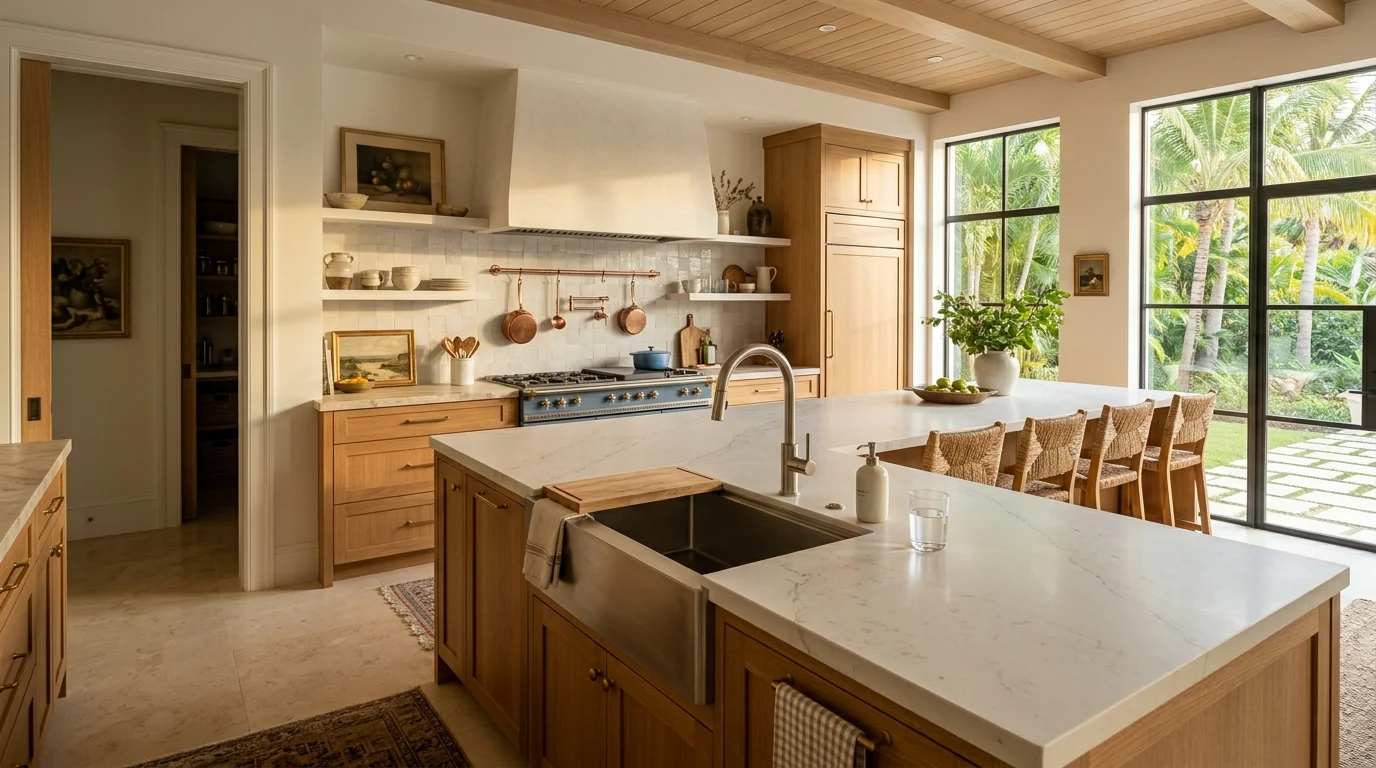
Fireclay is having a long moment, and for good reason. It's a ceramic material fired at extremely high temperatures, which makes it non-porous, chip-resistant, and stain-resistant in ways that traditional porcelain never was. The look is clean, matte white (or occasionally other colors), and it photographs beautifully. Farmhouse and apron-front configurations are almost exclusively fireclay at this point. The weight is significant, plan for reinforced cabinet support, and the price is substantially higher than stainless. Fireclay also chips if you drop something truly heavy directly on it, though day-to-day use is very forgiving. For a coastal farmhouse kitchen in Jupiter or a Mediterranean-style home in Boca Raton, fireclay is often the most coherent aesthetic choice.
Our team recommends fireclay when the homeowner has committed to an apron-front or farmhouse style and the budget supports it. Pair it with a quality faucet and the result is genuinely striking.
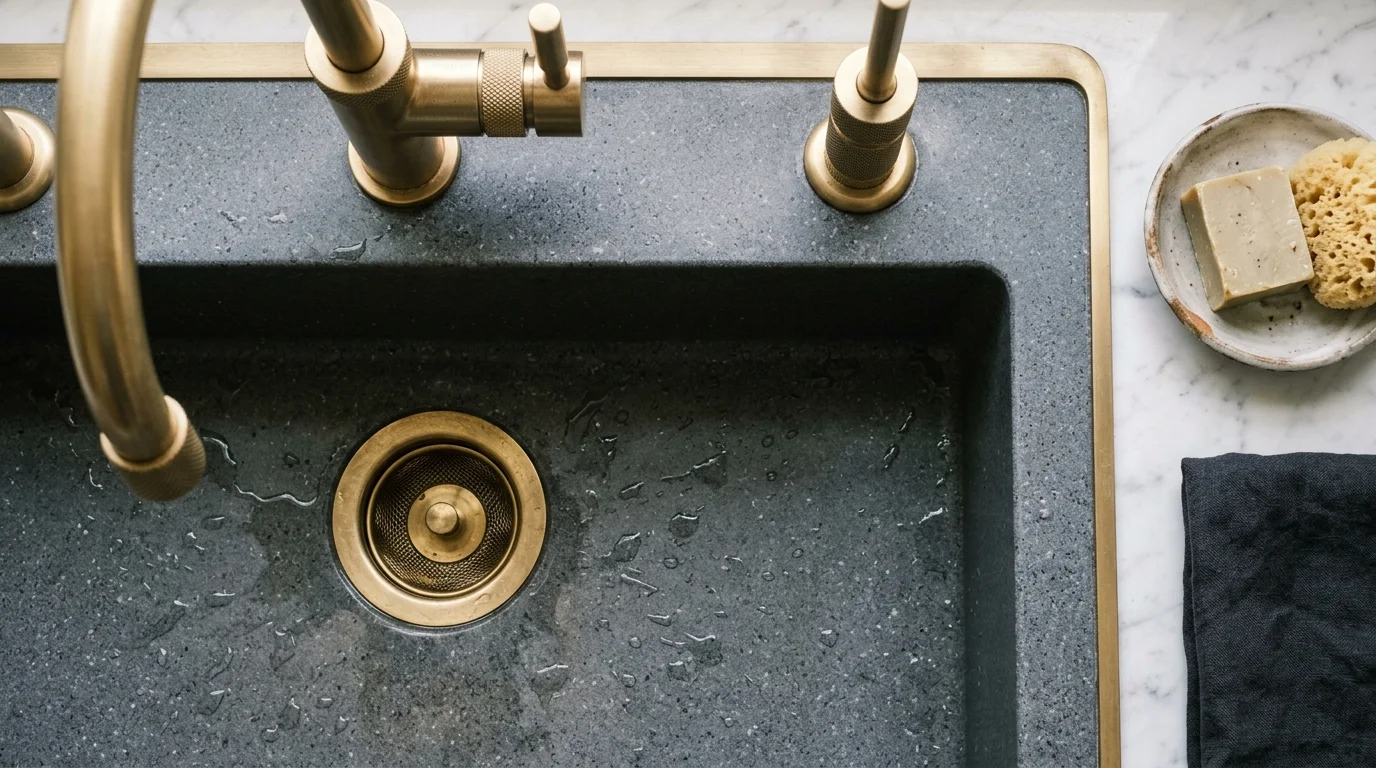
Composite Granitesometimes called granite composite or quartz composite, is made from roughly 80% granite stone dust bound with an acrylic resin. The result is an extremely hard, matte-finish sink that resists scratches, stains, and heat far better than stainless. It comes in a wide range of colors including black, gray, white, and beige, which makes it one of the more versatile options for matching to cabinetry and countertops. It's heavier than stainless but lighter than cast iron or fireclay. The surface is naturally quiet. Composite granite doesn't show water spots the way stainless does, which is a meaningful advantage in South Florida's hard water conditions. The main risk is that the resin can fade or discolor slightly over many years with harsh cleaner exposure, avoid bleach-based products.
We lean toward composite granite for mid-range remodels where the homeowner wants something more refined than stainless but doesn't need the farmhouse look of fireclay. It's a strong, practical pick.
Cast Iron is the original premium sink material, porcelain-enameled cast iron has been around for over a century. The enamel surface is smooth, glossy, and comes in many colors beyond white. It's extremely durable when the enamel is intact, and it holds heat well (great for soaking dishes in hot water). The problems are the weight (some models hit 300 lbs), the enamel chipping risk from direct hard impacts, and the price. You're also somewhat limited in the undermount configuration, cast iron is usually drop-in or apron-front. For older Palm Beach County homes being restored with a classic aesthetic, cast iron can be the right call. For a modern renovation or a condo kitchen, it's usually not worth the structural and cost premium.
Noise, Durability & Maintenance
Noise is the complaint we hear most from homeowners after a sink installation. Thin stainless sings when water hits it. The fix is sound-dampening pads applied to the underside of the sink basin, most quality stainless sinks include them. Still, stainless is objectively the noisiest of the four materials even with dampening. Composite granite is the quietest, followed closely by fireclay and cast iron. If a quiet kitchen is a priority, composite granite wins this category outright.
Durability varies by category. All four materials can last 20-plus years with appropriate care. Stainless will scratch, expect a patina of fine scratches after a few years of real use. A brushed or satin finish hides this much better than a mirror-polished surface. Fireclay resists scratching well but can chip at the edge if you're aggressive with cast iron cookware. Composite granite is very scratch-resistant. Cast iron enamel is scratch-resistant but chips at impact points.
Maintenance is where composite granite and fireclay pull ahead of the pack. Both are low-maintenance surfaces that don't show water spots easily. In South Florida, hard water mineral deposits are a real issue, the water in Wellington, Lake Worth, and parts of Delray Beach leaves calcium buildup on any surface. A stainless sink shows that buildup visibly. A matte composite granite or fireclay surface hides it until your regular cleaning day. That's a meaningful quality-of-life difference.
Stainless requires a specific routine: rinse and dry after each use if you want to keep it looking new. Most families don't do this, and the sink looks fine anyway after a weekly wipe-down with a stainless cleaner. Cast iron enamel is easy to clean but you need to avoid abrasive pads that will dull the gloss. Composite granite and fireclay are both nearly foolproof, warm water and dish soap handle most cleaning, with a monthly deeper clean using a non-bleach cleaner.
When choosing a sink material, also think about how it will interact with your countertop. Our breakdown of the best countertops for Florida kitchens walks through how different stone and engineered surfaces pair with different sink installations.
Cost Guide
Sink material costs vary widely based on configuration (single vs. double bowl, undermount vs. drop-in vs. apron-front) and brand. The figures below reflect Palm Beach County market pricing including the sink unit itself, not installation labor, which your plumber or GC handles separately.
Keep in mind that moving the sink to a new location, say, relocating it to a kitchen island, is a completely different scope of work. That involves your general contractor running new drain and supply lines, which adds $800-$2,500 or more depending on how far the plumbing needs to travel and whether your slab needs to be cut. When scope like that is involved, permits may be required. For a clear breakdown of when permits apply and when they don't, see the Palm Beach County kitchen remodel permit guide.
If you're working within a tighter overall project budget, a quality 16-gauge stainless sink is genuinely the right call. The money saved can go toward better cabinetry hardware, a nicer faucet, or upgraded countertop material. Our guide on kitchen remodeling on a budget in Palm Beach County covers exactly how to make those trade-off decisions.
South Florida Considerations
South Florida kitchens face a few conditions that affect sink material performance in ways the national guides don't mention.
Hard water is the big one. Palm Beach County water, especially in areas served by well systems in western communities like Loxahatchee and The Acreage, has significant mineral content. That mineral buildup shows up as white calcium deposits on any sink surface, but it's most visible on polished stainless and glossy cast iron enamel. Matte composite granite and fireclay hide deposits much better and respond well to a weekly wipe with a diluted white vinegar solution. If hard water is a reality in your home, composite granite is our first recommendation.
Humidity is the other factor. South Florida's persistent high humidity doesn't directly attack the sink itself, but it does affect the cabinet below it. An undermount installation that isn't properly sealed at the countertop-to-sink joint allows moisture to wick down into the cabinet box over time. We always seal undermount sinks with a silicone bead at the joint regardless of material. The cabinet material below should also be moisture-resistant, see our take on kitchen cabinet styles for South Florida for guidance on which construction types hold up in our climate.
Aesthetically, the most popular sink configurations we install in Palm Beach County right now are composite granite undermounts in white or anthracite gray for contemporary kitchens, and fireclay apron-fronts for coastal, farmhouse, and transitional styles. Stainless remains dominant in condos, particularly galley-style units in Boca Raton and Delray Beach high-rises where the builder-grade footprint is small and efficiency matters more than aesthetics.
For homeowners remodeling a coastal-style kitchen in Jupiter or a Mediterranean home in east Boca, the fireclay apron-front reads as intentional and considered. It's a sink that anchors the kitchen design. Our coastal kitchen design guide for South Florida covers how to build a cohesive look around a statement sink.
One more practical note: gated communities in Palm Beach County, from Ibis to Frenchman's Creek to Boca West, sometimes have architectural review processes. Exterior changes require committee approval, but interior sink replacements that don't alter the exterior footprint don't typically require ARB review. Your GC and HOA documents will clarify any community-specific rules.
If you're trying to understand where sink selection fits into the larger picture of kitchen upgrade ROI, our article on which kitchen upgrades add the most value to a Florida home puts it in perspective. A quality sink is a mid-tier investment that buyers notice, but it's rarely the item that moves the needle on appraisal value by itself.