Best Tile for Shower Walls in Florida's Humid Climate
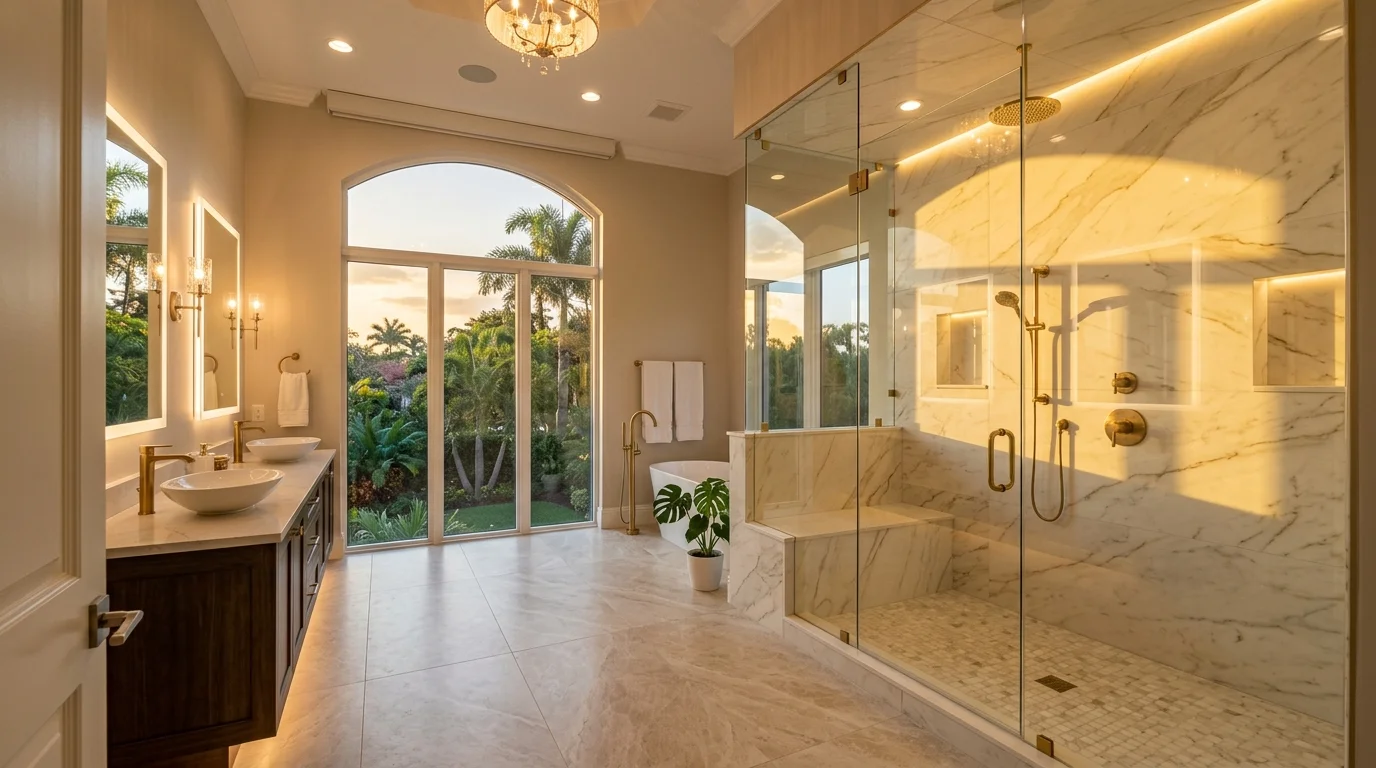
Choosing the best tile for shower walls sounds simple until you factor in South Florida's climate. We're not talking about a bathroom in Denver or Chicago. We're talking about year-round humidity hovering between 70% and 90%, mold pressure that never lets up, and bathrooms that never fully dry out between showers. What works in a dry climate can fail fast here. At South Florida Kitchen & Bath Design, our crews have tiled hundreds of showers across Palm Beach County, in Boca Raton, Delray Beach, Wellington, Jupiter, and beyond, and the material choices we make here are driven by performance first, aesthetics second.
Why Florida's Climate Changes Everything
The core issue is water absorption. Every tile material is rated by how much water it absorbs, this is called the water absorption coefficient, and ASTM C373 is the standard test method used to classify tile by type. The lower the absorption rate, the less water the tile holds, and the less opportunity mold and mildew have to take root behind your wall surface.
In a moderate climate, a tile with a 3% absorption rate might be perfectly fine. In South Florida? That same tile stays damp between uses, and over months and years, you're looking at grout failure, mold growth behind the wall, and eventually water infiltration into the substrate. That's an expensive problem, one our team sees regularly on renovation tear-outs in older Boca Raton and Delray Beach homes where the original builder used the cheapest wall tile available.
The other factor is temperature cycling. Florida's air conditioning runs hard. Your bathroom goes from warm and humid post-shower to cool and dry when the AC kicks in. That daily thermal cycling creates expansion and contraction stress on tile and grout. Materials with higher porosity absorb more moisture, expand more, and crack grout joints faster. This is why the tile spec matters more here than almost anywhere else in the country.
For more on how moisture affects your full bathroom renovation, our bathroom waterproofing guide for Florida homes covers the substrate and membrane side of the equation in depth.
Porcelain: Our Top Pick for Shower Walls
Porcelain tile is our consistent recommendation for shower walls in Florida. Full stop. Here's why.
Porcelain is fired at higher temperatures than ceramic, which compresses the clay body to a water absorption rate of 0.5% or less. That's the vitreous and impervious classification, essentially water just runs off it. In a South Florida shower that's used twice a day, every day, in a climate that never dries out, that low absorption rate is exactly what you want.
Porcelain is also harder than ceramic, which matters on shower walls because it resists the chips and cracks that can open up entry points for moisture. And it handles thermal cycling better. When our crews demo old showers in Wellington or Jupiter homes, the porcelain sections almost always come off in larger pieces while ceramic has often cracked or the glaze has crazed, tiny surface fractures that look minor but let water in over time.
Rectified porcelain is worth the upgrade on shower walls specifically. Rectified tiles are cut to precise dimensions after firing, so the size variation between tiles is minimal. That lets you run very tight grout joints, 1/16" to 1/8", which means less grout surface exposed to moisture and mold. On a large-format shower wall, tight joints also look cleaner and more contemporary. Our team uses rectified large-format porcelain on most of the shower wall projects we do in Palm Beach County.
Large-format options, 24x48, 32x32, even 48x48 slabs, are popular right now, and they work well on shower walls because fewer grout lines means fewer potential failure points. If you're curious how large-format tile performs across the full bathroom, take a look at our guide to large format tile for South Florida bathrooms.
One practical note: porcelain slab panels (not traditional tile, but full porcelain slabs cut like stone) are a growing option we're seeing in higher-end Jupiter and Palm Beach remodels. They virtually eliminate grout lines on shower walls. The material cost is higher, $15-$25 per square foot installed just for the slab material, but the maintenance story is compelling in this climate.
Ceramic, Glass & Natural Stone Compared
Porcelain is our first choice, but it's not the only material on the table. Here's an honest breakdown of the alternatives.
Ceramic tile is the budget-friendly sibling of porcelain. It's fired at lower temperatures, which gives it a water absorption rate typically between 3% and 7%, classified as semi-vitreous. For shower walls in a dry climate, that's acceptable. In South Florida, it's marginal. We don't outright refuse to install ceramic on shower walls, but we push clients toward porcelain whenever the budget allows. If ceramic is the choice, we specify a fully vitreous ceramic (absorption under 3%) and pay extra attention to waterproofing the substrate. The finished tile cost is lower, but the long-term risk is higher. That's a trade-off homeowners need to make with clear eyes.
Glass tile has essentially zero water absorption, it's impervious by nature. From a moisture-resistance standpoint, it's actually better than porcelain. The challenge is installation. Glass tile requires a white polymer-modified thinset, full back-buttering, and an installer who knows how to handle the material without cracking it. It also shows soap scum and water spots more than any other tile type, which in a hard-water area like Palm Beach County means you're wiping it down constantly. We use glass tile as accents, a niche, a band, a feature wall, rather than covering an entire shower in it. The visual payoff is real, but the maintenance commitment is real too.
Natural stonemarble, travertine, limestone, is where we spend the most time managing client expectations. These materials are genuinely beautiful. They're also porous, require sealing, and in a South Florida shower they demand a maintenance discipline most people don't sustain. Marble with a honed finish in a shower used daily will etch, stain, and eventually look tired if it's not sealed every 6-12 months. Travertine is even more porous and has natural voids that trap moisture and mold. We do install natural stone on shower walls, but we're direct with clients about what it takes to maintain it. If someone wants the stone look without the upkeep, rectified porcelain that mimics marble is a better answer for this climate. We use it constantly in Boca Raton and Delray Beach projects and the results are genuinely impressive.
For a detailed comparison of how porcelain stacks up against ceramic specifically in bathroom applications, our article on porcelain vs ceramic tile for South Florida bathrooms goes deeper on the technical differences.
Grout and Waterproofing: The Details That Matter
The best tile in the world underperforms if the grout and waterproofing are wrong. This is where a lot of DIY and budget contractor shower installations fall apart, specifically in South Florida.
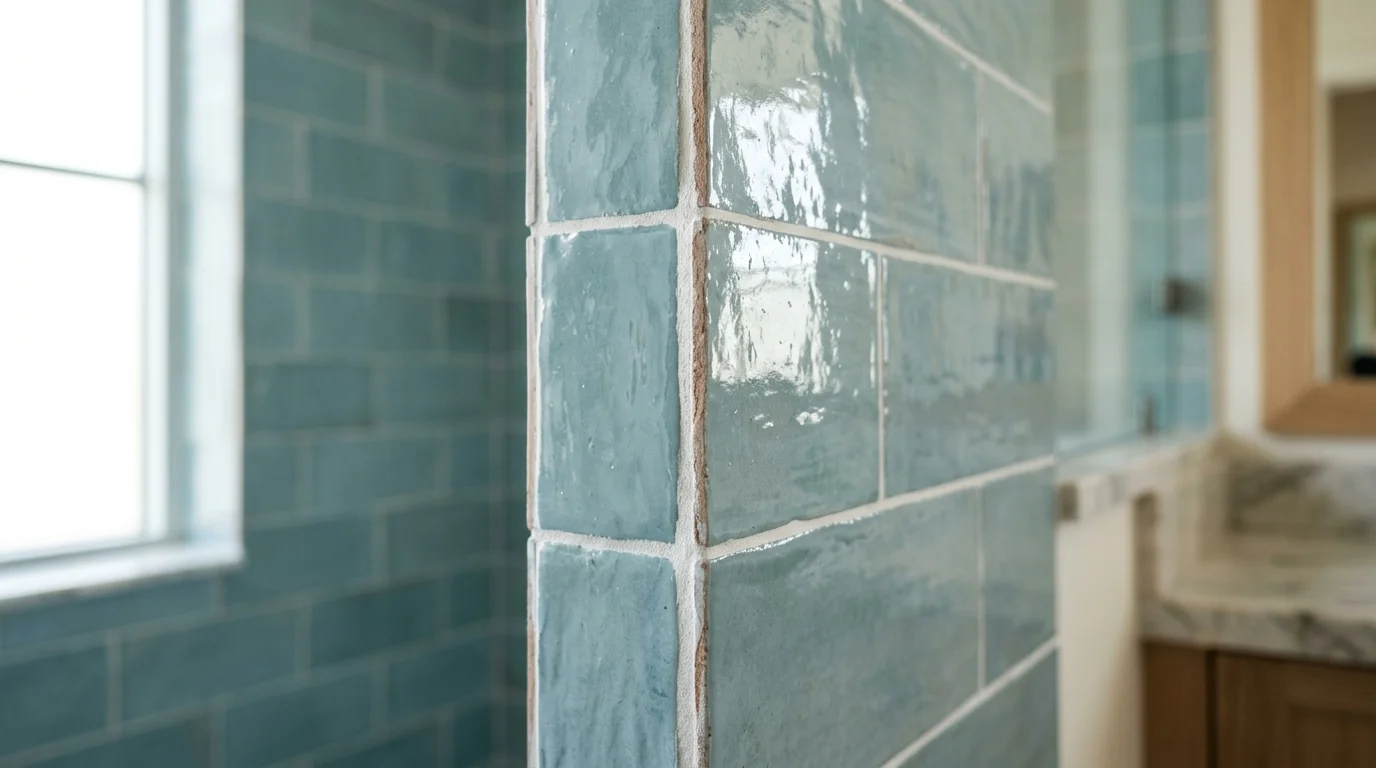
Standard sanded or unsanded cement grout absorbs water and stains. In a Florida shower, it molds. Period. Our strong preference is epoxy grout on shower walls. Epoxy grout is non-porous, doesn't absorb moisture, and resists mold and staining at a level that cement grout simply can't match. It's harder to work with during installation, it sets fast and requires a skilled hand, but the performance difference over 5-10 years is dramatic. When homeowners in Wellington or Jupiter come to us to retile a shower that's 8 years old and looks terrible, it's almost always the grout that failed, not the tile.
The other option worth knowing about is urethane grout (brands like Mapei Flexcolor CQ). It's more forgiving to install than epoxy and still far more moisture-resistant than traditional cement grout. We use both depending on the project and the tile format.
On waterproofing: the tile and grout are the last line of defense, not the first. The substrate behind your shower walls needs a proper waterproofing membrane, products like Schluter KERDI, Laticrete Hydro Ban, or similar sheet/liquid-applied systems. In Florida's climate, skip the membrane and you're gambling on how long it takes for moisture to work through the tile and grout and reach the wall framing. We've seen shower tear-outs in Boca Raton where the framing was actively rotting because a previous contractor skipped this step. Your general contractor or tile installer should be spec'ing a waterproof membrane as standard, not optional.
Shower niche placement and construction also affect how water behaves on your walls. A niche that slopes even slightly wrong holds water and becomes a mold magnet. If you're planning niches in your shower, our guide on shower niche ideas and placement covers design and waterproofing considerations in detail.
Cost Guide
Shower wall tile costs in Palm Beach County vary based on material, format, and complexity of the installation. The ranges below reflect what our clients actually pay, not national averages that don't account for South Florida labor rates and material supply chains.
For a typical 3-wall shower enclosure in a Palm Beach County master bath (roughly 80-100 sq ft of wall surface), expect a full tile-and-install investment of $1,200-$3,500 for mid-range porcelain with epoxy grout and proper waterproofing. Natural stone or large-format slab installs in the same space run $2,500-$5,000+. These numbers don't include demo, backer board, or any plumbing work, those are separate line items your general contractor handles.
For full shower remodel costs including all trades, our shower remodel cost guide for Palm Beach County breaks down the complete picture. And if you're thinking about the broader bathroom budget, our bathroom remodel cost guide for Palm Beach County covers all the moving parts.
South Florida Considerations
A few things specific to Palm Beach County homeowners that don't come up in generic tile guides.
Hard water is a real factor here. Palm Beach County municipal water has significant mineral content, and in showers it leaves calcium deposits on tile surfaces. Glass tile and polished stone show this buildup the fastest. Porcelain with a matte or satin finish is far more forgiving. If you love the look of polished surfaces, budget for a good squeegee habit and periodic acid-based tile cleaners.
HOA and condo considerations matter in communities across Boca Raton, Delray Beach, and the gated communities in Wellington and Palm Beach Gardens. Some HOAs require notice or approval before any bathroom renovation that involves opening walls or relocating plumbing. When projects include structural changes or major plumbing moves, permits are required and your GC coordinates with the building department, but a straight tile swap on existing walls typically doesn't trigger that process. Always verify with your HOA and your GC before starting work.
Mold-resistant backer boards make a meaningful difference in South Florida shower builds. Standard drywall, even moisture-resistant drywall, isn't the right substrate behind shower tile in this climate. Cement board or foam tile backer products (like Schluter KERDI-Board) are the call here. This is a substrate spec, not a tile spec, but it affects how your tile investment performs over time.
Coastal homes in Jupiter, Juno Beach, and along A1A deal with salt air in addition to standard humidity. Salt air is corrosive and accelerates the deterioration of grout and fixture finishes. In these locations, we're even more insistent on epoxy grout and fully sealed tile joints. The maintenance discipline required for natural stone in an inland Delray Beach home is even more demanding in a beachfront Jupiter property.
If you're planning a complete bathroom renovation rather than just a tile update, it's worth looking at the full scope of decisions together. Our bathroom shower tile ideas for South Florida homes covers design directions, and our guide on walk-in shower design ideas for South Florida bathrooms addresses layout and enclosure choices that affect how tile performs and looks in the long run.
One last point on timing: if your bathroom renovation touches plumbing, relocating a showerhead, moving a drain, adding a body spray system, permits are required, and your GC pulls those. The tile installation itself doesn't trigger a permit, but the associated plumbing work does. Plan your project scope with that distinction in mind so there are no surprises on the timeline. For a broader look at what surprises come up in bathroom projects, our piece on hidden costs in bathroom remodels is worth a read before you finalize your budget.