Cabinet Refacing Cost in Palm Beach County
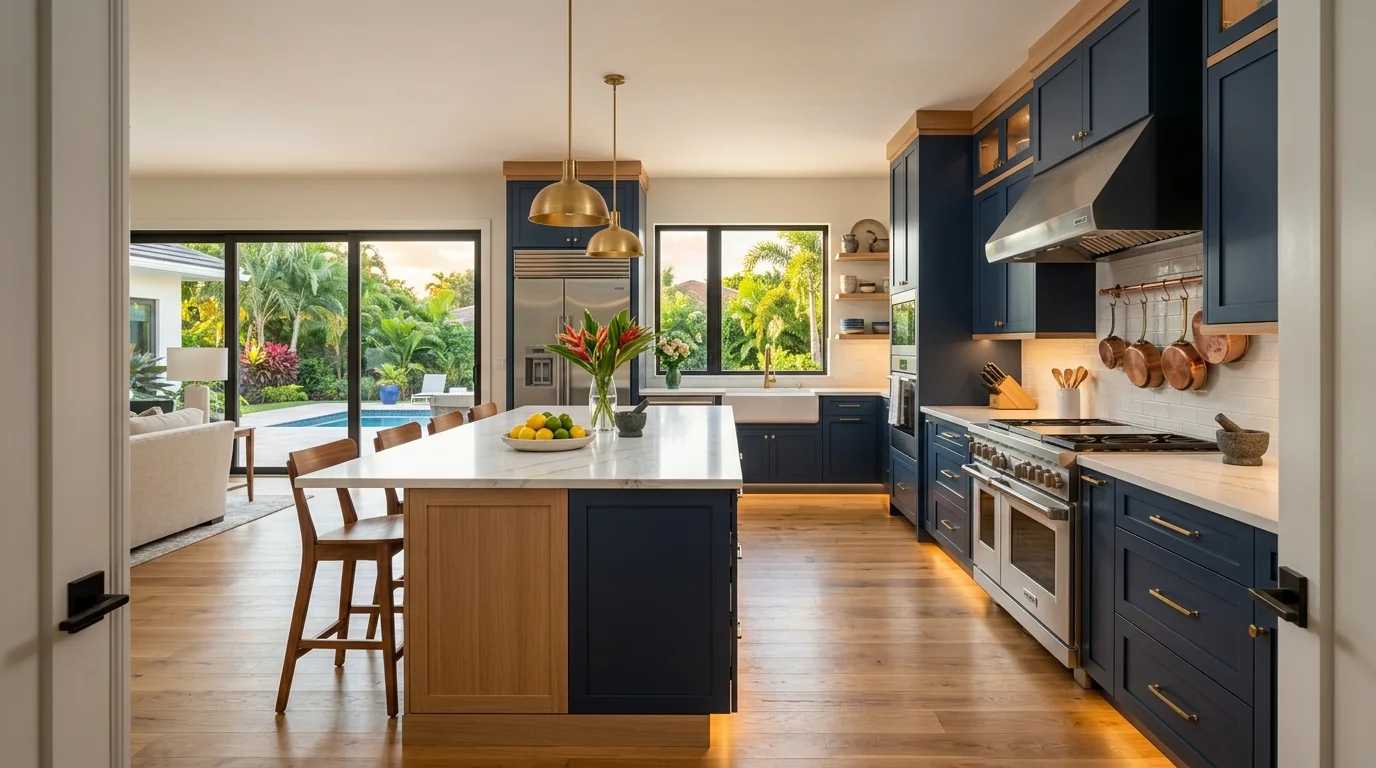
Cabinet refacing cost in Palm Beach County typically runs $4,500-$14,000 for an average kitchen, depending on kitchen size, door style, and the material you choose for the new faces. That's a wide range, and we want to be straight with you about what drives it. At South Florida Kitchen & Bath Design, we work with homeowners across Boca Raton, Delray Beach, Wellington, and Jupiter who want a dramatically different kitchen without the cost, or the disruption, of tearing everything out. Refacing is one of the most misunderstood options in a kitchen refresh. Done right, it looks great. Done with the wrong material in a humid Florida home, it fails fast. Here's exactly what you need to know before you commit.
What Cabinet Refacing Actually Includes
Refacing means keeping your existing cabinet boxes, the plywood or particleboard carcasses bolted to your walls, and replacing everything you see: the doors, drawer fronts, and a thin veneer skin applied over the exposed face frames. Done well, the result is indistinguishable from new cabinetry to anyone who isn't a cabinet installer.
A proper refacing job includes:
- New door fronts in your chosen style and material
- New drawer fronts to match
- Veneer or rigid thermofoil (RTF) skin applied to exposed face frames and end panels
- New hinges (soft-close, typically)
- New hardware, if included in scope
What it does not include: new cabinet boxes, new interior shelving, new drawer boxes, or any layout changes. The footprint stays exactly where it is. If your current layout is inefficient, an awkward peninsula, not enough storage, poor traffic flow, refacing won't fix that. But if the bones are good and the doors just look dated or beat up, refacing is a smart move.
One thing we check before quoting any refacing job: the condition of the existing boxes. Particleboard that has swollen from moisture exposure, delaminated interiors, or boxes that aren't square and plumb anymore aren't good candidates. If the boxes are solid, the investment makes sense. If they're deteriorating, you're better off putting that money toward replacement. We cover the full comparison in our article on cabinet refacing vs. full replacement for Palm Beach County kitchensworth reading before you decide.
Most cabinet refacing projects also don't require permits. You're not moving plumbing, touching electrical panels, or opening walls. It's a finish-level swap. The countertops don't even have to come off in most cases, though many homeowners choose to upgrade them at the same time while the kitchen is already partially disrupted.
Refacing vs. Full Replacement
This is the question every homeowner asks, and our honest answer is: it depends on the boxes and the layout, not just the budget.
Refacing makes sense when your cabinet boxes are structurally sound, your layout works well, and your main complaint is how the kitchen looks. If you have solid plywood boxes with good interiors and you just hate the flat slab doors from 2004, refacing can save you 40-60% compared to full replacement while delivering a very similar visual outcome.
Full replacement makes more sense when boxes are deteriorating, the layout needs to change, you want to go floor-to-ceiling or add a pantry wall, or you want soft-close drawer boxes with dovetail joints throughout. New cabinetry also gives you the flexibility to choose the cabinet style that actually fits South Florida's climate and design preferencesframeless or framed, inset or overlay, full-height upper cabinets, none of which are options with refacing.
The 30% rule in remodeling applies here too. If you're spending more on refacing than the improvement adds to the home's value, it may not be the right call, especially in higher-end neighborhoods in Palm Beach County where buyers expect full custom cabinetry. We walk through that logic in our 30 percent rule in remodeling guide.
One thing we see frequently: homeowners in Wellington and Boca Raton get a refacing quote, decide to upgrade counters at the same time, then add backsplash, then new hardware, and by the time the project is scoped out, they're within striking distance of a full cabinet replacement budget anyway. There's nothing wrong with that progression, but go in with your eyes open about total spend before you commit to refacing alone.
For homeowners thinking about pre-sale updates, refacing can be a smart ROI play if the boxes are solid. For a long-term primary residence where you plan to stay 10+ years, we usually push people toward replacement so you're not doing this again in seven years.
Materials: Thermofoil, Wood Veneer & RTF
The material you choose for your refaced doors is the single biggest factor in how long the job holds up, especially in South Florida's humidity and direct sun exposure.
Thermofoil (RTF, Rigid Thermofoil): A vinyl film heat-pressed over an MDF core. It's the most affordable option and the most popular for budget refacing jobs. Clean look, easy to wipe down, no painting needed. The weakness: heat and UV exposure cause it to delaminate over time. If you have a west-facing kitchen with afternoon sun blasting through windows, thermofoil near those windows will bubble and peel faster than you'd like. RTF typically runs $80-$150 per door front in Palm Beach County before installation.
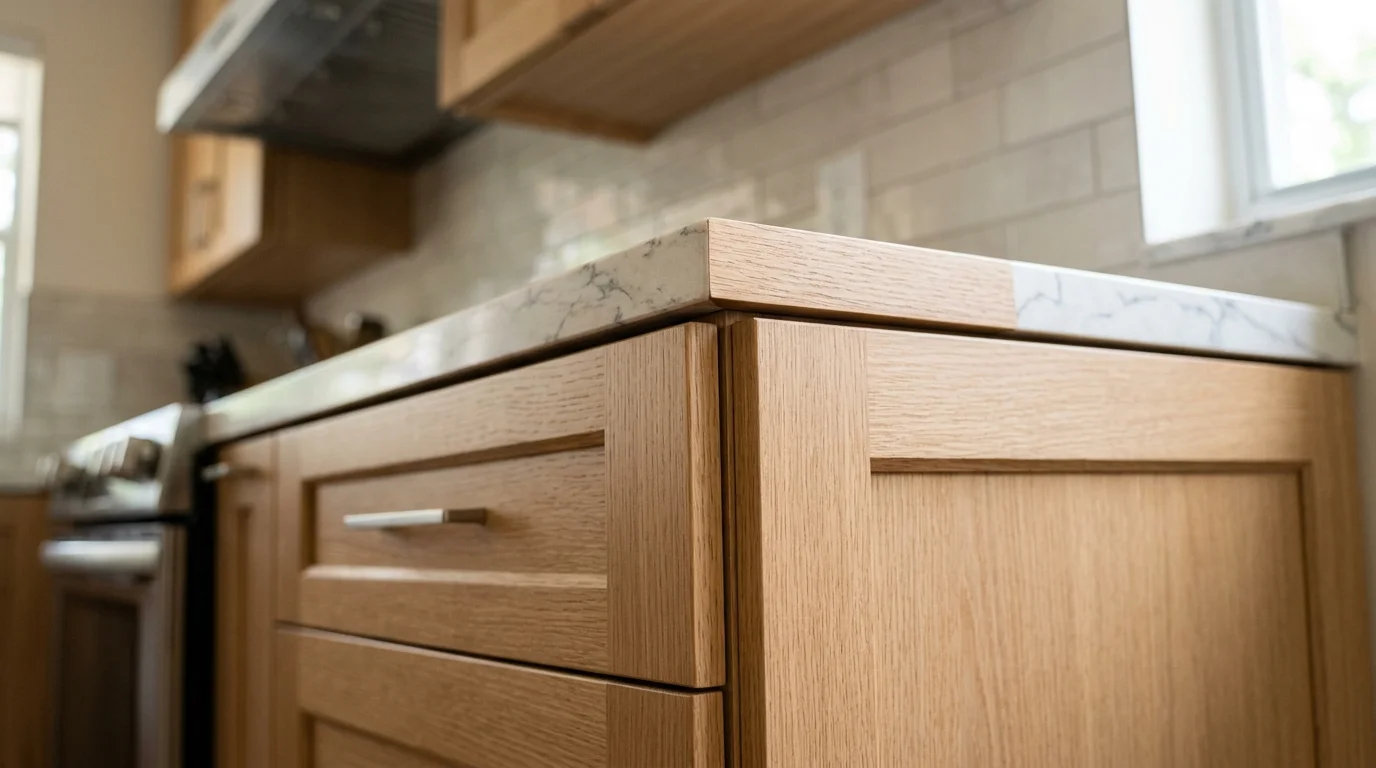
Wood Veneer: Real wood veneer applied over MDF or solid wood. This is the right choice if you want the look and feel of real wood or plan to paint the doors a specific color with a true painted finish. More durable than thermofoil in Florida heat, but it does require periodic painting or sealing to prevent moisture absorption at the edges. Wood veneer door fronts run $120-$250+ per door depending on species and profile complexity. Shaker-style profiles in maple or poplar are the sweet spot for most refacing jobs we do in Delray Beach and Jupiter.
High-Gloss Acrylic: A step above thermofoil, with a harder surface and better UV resistance. Popular in contemporary kitchens where homeowners want a lacquer look without the lacquer price tag. Cost runs $150-$300+ per door and holds up notably better than standard RTF in Florida conditions. If you're going for a clean all-white kitchen design in South Florida, high-gloss acrylic refacing is a compelling option over thermofoil.
For the veneer skin on face frames and end panels, you have matching options in wood veneer, RTF, or PVC. We recommend PVC or high-quality RTF for end panels exposed to direct light or near dishwashers, the moisture exposure is real and wood veneer on end panels near dishwashers swells more often than people expect.
Hardware matters more than people think after a refacing job. New knobs and pulls are the finishing touch that make the whole thing look intentional. If you're not sure what direction to go, our kitchen cabinet hardware guide for Palm Beach County breaks down the options by style and budget.
Cabinet Refacing Cost Guide
The ranges below reflect real Palm Beach County market pricing in 2026. These are installed costs, materials and labor combined. Kitchen size is the biggest driver, followed by door style and material choice. Door count matters more than square footage: a galley kitchen with a lot of uppers can run as much as a larger L-shaped kitchen with fewer total doors.
According to Remodeling Magazine's Cost vs. Value Report, cabinet refacing consistently delivers strong return in coastal markets where full replacement costs are high, a dynamic that's very much true in Palm Beach County.
These are estimates. Your actual quote depends on the exact door count, profile complexity (flat slab vs. shaker vs. raised panel), any glass inserts, and if you're adding new soft-close hinges throughout. Get a firm quote with a door count listed, not just a price per linear foot, which is easy to manipulate. Our article on how to read a contractor quote can help you evaluate what you're actually comparing when bids come in.
If your refacing project ends up within $5,000-$8,000 of a full replacement quote, take a hard look at replacement. That gap closes faster than most people expect once you factor in new hardware, countertops, and any interior organizers.
For homeowners who want a sense of where cabinet refacing fits within a broader kitchen update budget, our kitchen remodel cost guide for Palm Beach County lays out the full picture from refresh-level work up through full custom builds.
South Florida Considerations
Cabinet refacing in South Florida isn't the same calculation as cabinet refacing in Ohio. The climate here, high humidity, intense UV, salt air in coastal areas, puts more stress on door materials than most parts of the country. Here's what that means practically.
Thermofoil delamination is a real issue in Florida. We've seen RTF doors on kitchens in Boca Raton and Delray Beach start to bubble within four to five years when they face west-facing windows with no UV film on the glass. If your kitchen takes direct afternoon sun and you're choosing thermofoil to save money, apply UV-blocking window film first. That's not our scope, but it's a conversation worth having before you invest in RTF doors that could fail prematurely.
Wood veneer faces need proper sealing at the edges, particularly around the dishwasher and sink zones. Steam and moisture migration from a dishwasher over years of use will find any unsealed edge and cause swelling. A good refacing installer will seal every edge, if yours isn't doing that, it's a problem.
Many homes in gated communities across Palm Beach County, from Boca West to Ibis in West Palm Beach, have HOA or ARB approval requirements for exterior changes, but interior kitchen work is almost always outside that scope. Cabinet refacing is interior work and rarely triggers any HOA review. Still, if you're in a building with a condo association that has interior remodeling rules, it's worth checking. Our guide to condo kitchen remodels and HOA requirements in Palm Beach County is a good reference.
On the permit question: cabinet refacing, hardware swaps, and countertop replacements done on the same footprint, without moving any plumbing or electrical, typically don't require permits in Palm Beach County municipalities. If you're adding a countertop outlet, changing a dishwasher location, or anything that touches the electrical or plumbing rough-in, that's a different story and your general contractor will handle permitting for that portion of the work.
One more South Florida-specific point: if you're refacing and upgrading countertops at the same time, the two scopes pair naturally. New door fronts and a new countertop surface give you a kitchen that reads entirely new to anyone walking in. If you're choosing countertop material at the same time, our guide to the best countertop materials for Florida's humidity and heat will help you make the right call for the long term.
Timing matters in South Florida too. Kitchen and bath contractors get busiest October through April when seasonal residents arrive and project schedules fill up fast. If you're planning a refacing project, getting your quote and material selections locked in before season starts will save you weeks of lead time, and likely gives you better scheduling flexibility. Summer is when we typically have more open windows, and material lead times from suppliers tend to be shorter.
If refacing is part of a larger kitchen refresh, say, new doors, new counters, and a backsplash update, that combination can genuinely transform a kitchen that looked dated into something that reads current and polished. For backsplash direction, our kitchen backsplash ideas for Palm Beach County homes covers what's working right now in local design.