Mediterranean Kitchen Design Ideas for South Florida Homes
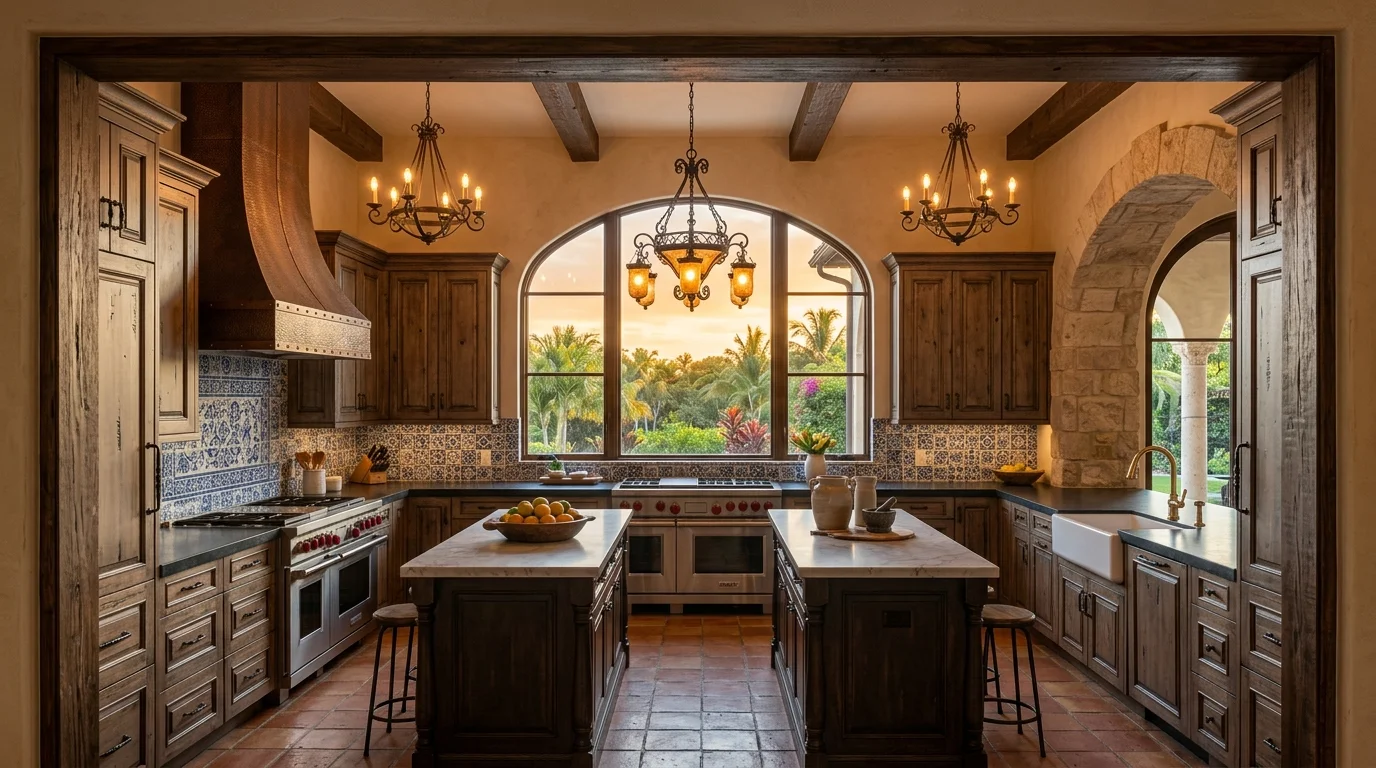
Mediterranean kitchen design brings warmth, character, and Old World charm to South Florida homes. This timeless style combines rustic materials, ornate details, and rich earth tones that complement our region's architectural heritage and year-round sunshine. From Wellington estates to Boca Raton condos, Mediterranean kitchens create inviting spaces that feel both sophisticated and lived-in.
The style originated from coastal European regions where cooking and gathering centered around family life. Natural materials like stone, terra cotta, and aged wood formed the foundation, while decorative elements like hand-painted tiles and wrought iron accents added personality. We see this aesthetic work particularly well in Palm Beach County, where many homes already feature Mediterranean-inspired architecture.
Essential Mediterranean Design Elements
True Mediterranean kitchen design relies on several key elements that create its distinctive character. Arched openings and doorways define the style's architectural foundation. These curves soften the kitchen's lines and create visual flow between spaces.
Natural stone surfaces appear throughout authentic Mediterranean kitchens. Travertine, limestone, and rough-hewn marble counters show beautiful aging patterns over time. Terra cotta tile flooring provides warmth and texture that synthetic materials can't match.
Ornate hardware makes a significant impact in Mediterranean design. Bronze, wrought iron, and antique brass finishes work better than contemporary chrome or brushed nickel. Cabinet hardware selection should emphasize hand-forged appearance over machine precision.
Exposed ceiling beams add rustic character when the architecture allows. Wood species like cypress or reclaimed pine complement the style's emphasis on natural aging. Open shelving displays ceramics and copper cookware as functional decoration.
Mediterranean Color Palette
Mediterranean kitchens embrace warm, earthy colors inspired by sun-drenched landscapes. Terra cotta orange, deep ochre, and burnt sienna form the palette's foundation. These colors appear in tile work, painted walls, and decorative accents.
Cream and warm white balance the deeper tones without feeling stark. Sage green and olive add natural freshness that works well with South Florida's lush outdoor views. Deep blue accents reference the Mediterranean Sea but should be used sparingly as accent colors.
We recommend avoiding cool grays and bright whites that feel too modern for authentic Mediterranean style. The palette should feel sun-warmed and naturally aged rather than crisp and contemporary.
Cabinet Styles and Finishes
Mediterranean cabinets feature substantial construction with decorative details that suggest handcraft origins. Raised panel doors with curved or arched tops create the style's signature look. Distressed finishes show wear patterns that suggest generations of use.
Wood species like cherry, knotty alder, and reclaimed chestnut work well for Mediterranean kitchens. Dark stains in walnut or espresso tones complement the warm color palette. Painted finishes in cream or sage green provide lighter alternatives.
Glass-front upper cabinets display ceramics and glassware as part of the design. Chicken wire or decorative metal inserts add texture to cabinet doors. Open shelving mixed with closed storage creates visual variety while maintaining function.
Cabinet crown molding should be substantial and detailed rather than minimal. Corbels, rope molding, and carved details reference Mediterranean architecture's ornate traditions.
Countertops and Backsplash Options
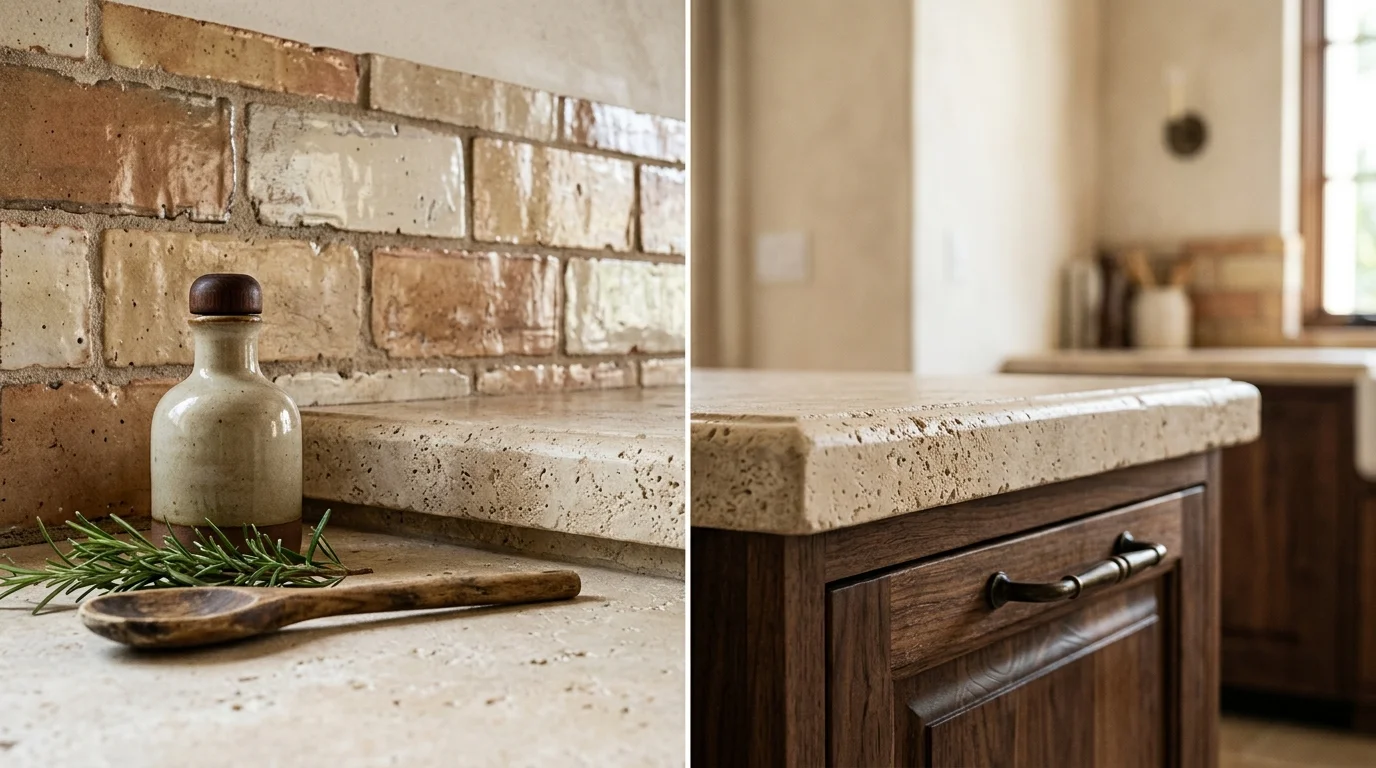
Natural stone countertops define Mediterranean kitchen style. Travertine offers beautiful color variation and natural texture that improves with age. Tumbled marble provides similar character with more color options. Choosing countertops for Florida kitchens requires considering both style and climate performance.
Granite works well when selected in warmer tones like Golden Beach or Venetian Gold. We avoid cool grays and stark whites that fight the Mediterranean aesthetic. Natural edge details emphasize the stone's organic origins.
Backsplash design offers the most opportunity for Mediterranean character. Hand-painted ceramic tiles in geometric or floral patterns create authentic focal points. Terra cotta subway tiles provide texture without overwhelming the space. Natural stone mosaics in warm tones complement stone countertops.
Decorative tile inserts break up large expanses of field tile. Metallic accents in bronze or copper add richness without feeling too contemporary. Backsplash height decisions affect the overall visual impact of decorative tile work.
Cost Guide
Mediterranean kitchen design costs vary significantly based on material authenticity and custom details. Natural stone, hand-painted tiles, and custom millwork command premium pricing but deliver lasting beauty.
Budget Mediterranean kitchens focus on painted cabinets with decorative details, ceramic tile backsplashes with Mediterranean patterns, and granite countertops in warm tones. Mid-range projects incorporate natural stone surfaces, semi-custom cabinetry with authentic details, and higher-quality tile work.
Luxury Mediterranean kitchens feature custom millwork, imported stone materials, hand-painted ceramic tiles, and artisan metalwork. Understanding remodeling costs in Palm Beach County helps set realistic expectations for your project scope.
South Florida Considerations
Mediterranean design adapts well to South Florida's climate and architectural traditions. Many Palm Beach County homes already feature stucco exteriors, tile roofs, and arched openings that complement Mediterranean kitchen styling.
Humidity considerations affect material selection. Natural stone countertops and ceramic tiles handle moisture better than wood surfaces. Proper sealing protects porous materials like travertine and limestone from staining.
Hurricane preparedness influences window and door selections around kitchen areas. Florida Building Code requirements for impact resistance can be met with Mediterranean-style shutters or impact-rated windows that maintain the aesthetic.
Outdoor living integration works naturally with Mediterranean design. Outdoor kitchen extensions use similar materials and colors to create clean indoor-outdoor flow.
Pest control considerations in South Florida affect wood and natural material selections. Proper treatment and regular maintenance preserve Mediterranean elements in our subtropical environment.
Palm Beach County's architectural review processes in certain communities appreciate Mediterranean design elements. Historic districts in Delray Beach and Boca Raton often encourage styles that complement existing neighborhood character.
Cooling costs benefit from Mediterranean design principles. Thermal mass from stone surfaces helps moderate temperature swings. Light-colored tile floors reflect rather than absorb heat from South Florida sunshine.
Lighting and Fixtures That Complete the Look
Lighting is what ties a Mediterranean kitchen together, and it's the piece homeowners most often underestimate. The style leans on warm, layered light rather than a grid of recessed cans. We usually start with a pair of wrought-iron or aged-brass lantern pendants over the island, then fill in with under-cabinet strips at a warm color temperature around 2700K so the stone and tile read rich instead of clinical.
Hardware carries the same warmth. Hand-forged iron pulls, unlacquered brass, and oil-rubbed bronze all suit the look, and they age gracefully, which is part of the appeal. We tell clients near the coast to expect a little patina on raw metals. If that bothers you, a satin brass with a protective finish holds its color longer in the salt air.
Don't overlook the faucet and the range hood, since both become focal points in this style. A bridge faucet in brass or bronze sells the Old-World feel instantly, and a plaster or wood-wrapped hood over the range gives the room its architectural anchor. These pieces cost more than builder-grade fixtures, so we plan them into the budget early rather than treating them as afterthoughts once the cabinets are already in.