Sage Green Kitchen Cabinets: 2026 Ideas
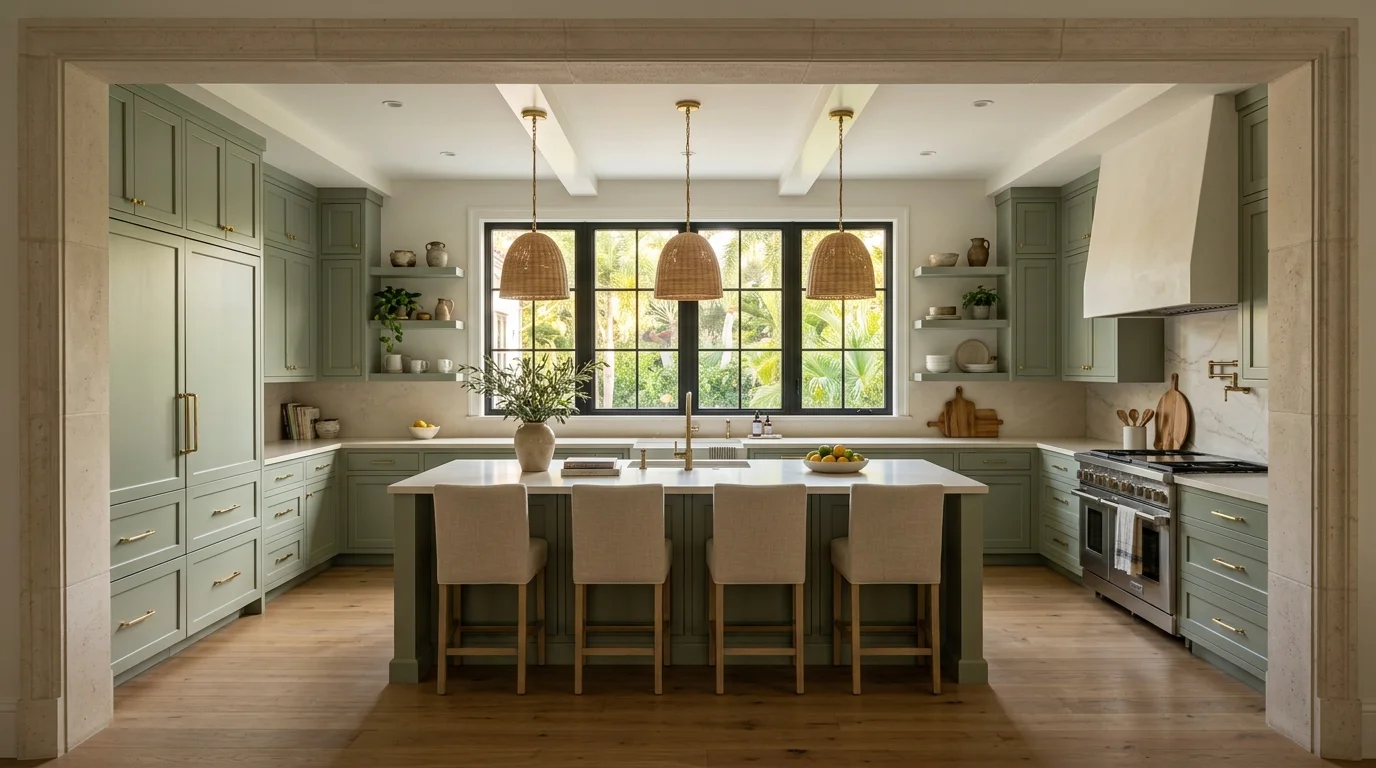
Sage green kitchen cabinets have become the color of choice for Palm Beach County homeowners who want something fresher than white but more grounded than bold blues or dramatic darks. This muted green brings the outdoors in, perfect for our year-round tropical climate. We've installed dozens of sage green kitchens across Wellington, Boca Raton, and Delray Beach over the past two years, and the trend shows no signs of slowing.
The appeal is obvious. Sage green feels organic without being overwhelming. It pairs beautifully with both warm and cool tones. Most importantly for South Florida, it handles our intense natural light better than stark whites that can feel harsh, while still keeping kitchens bright and airy.
Why Sage Green Works in South Florida
Our intense subtropical sun can make pure white cabinets look almost clinical. Sage green softens that effect while still reflecting plenty of light. The color has enough gray undertones to feel sophisticated, but enough green to connect with our lush landscape views.
We recommend sage green particularly for kitchens with western or southern exposure. Those afternoon sun angles can turn white cabinets blinding, but sage green maintains a welcoming warmth throughout the day. It also photographs beautifully, important for resale in our competitive real estate market.
The color works especially well in open concept layouts where the kitchen flows into living areas. Sage green provides definition without creating harsh boundaries between spaces.
Cabinet Finishes and Paint Options
Not all sage greens are created equal. We've tested dozens of paint colors in actual Palm Beach County kitchens, and some perform much better than others in our climate.
Our top sage green paint picks:
Benjamin Moore October Mist (1495): The most popular choice in our recent projects. Perfect balance of green and gray undertones. Holds up beautifully under our harsh UV exposure.
Sherwin-Williams Clary Sage (SW 6178): Slightly more muted than October Mist. Works particularly well in kitchens with abundant natural light.
Farrow & Ball Vert de Terre (No. 234): Premium option with incredible depth. The higher pigment content means better fade resistance, worth the investment for luxury projects.
For cabinet construction, we strongly recommend proper surface preparation and high-quality primers designed for Florida's humidity. Sage green shows imperfections more readily than darker colors, so the prep work matters even more.
Finish-wise, we prefer satin or semi-gloss sheens for sage green cabinets. They're easier to clean and the slight sheen enhances the color's sophistication. Flat or matte finishes can look chalky in sage green, especially under task lighting.
What Colors Work with Sage Green
Sage green's versatility is one of its biggest advantages. Here's what we've learned works best in actual installations:
Warm Whites: Creamy whites like Benjamin Moore Cloud White or Sherwin-Williams Alabaster create beautiful contrast without feeling stark. We use these for walls, trim, and ceiling in most sage green kitchens.
Natural Wood Tones: Walnut, oak, and even teak complement sage green beautifully. We often incorporate wood elements through open shelving, islands, or butcher block accents. The combination feels both modern and timeless.
Warm Grays: Mushroom and greige tones work particularly well for countertops and backsplashes. They bridge the gap between sage green cabinets and other finishes in the space.
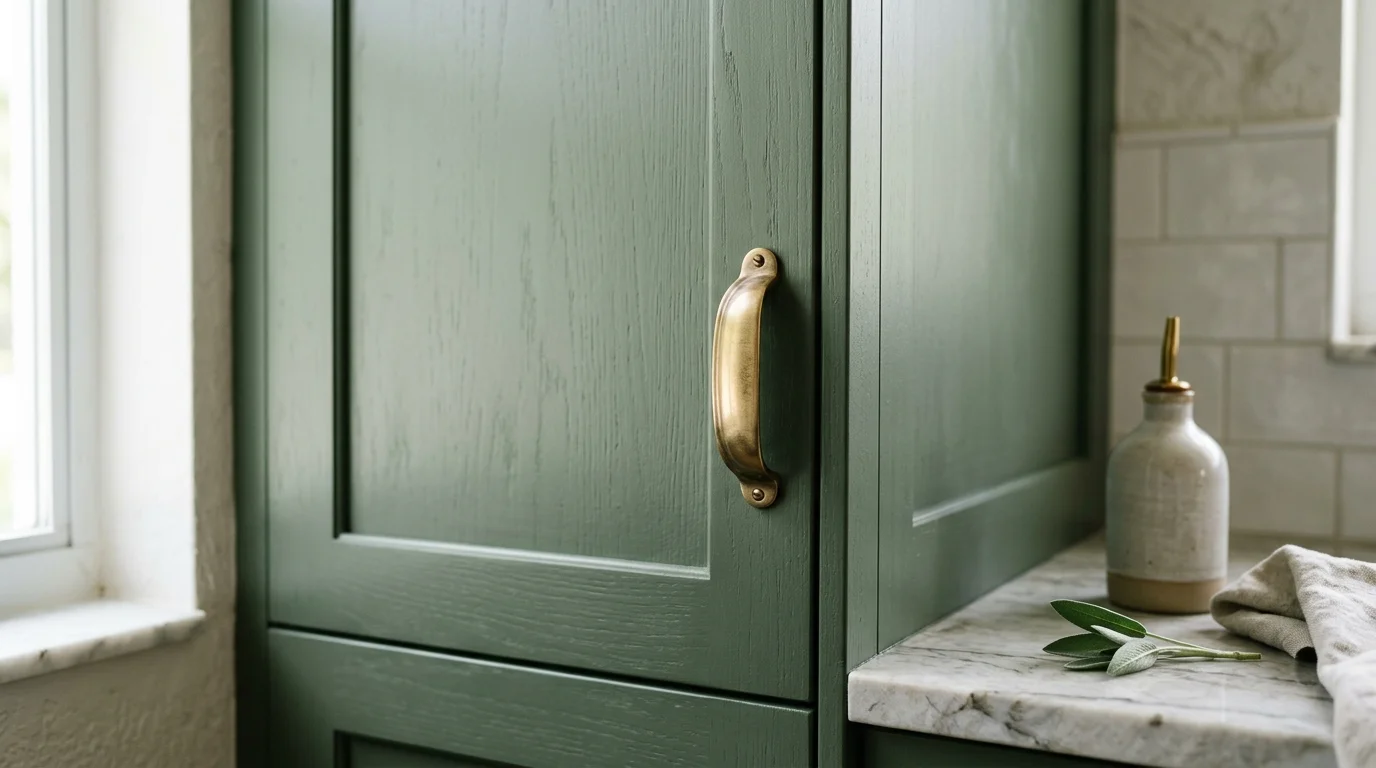
Brass and Warm Metals: This is where sage green really shines. Brass, champagne bronze, and warm gold hardware and fixtures create stunning combinations. The metals add warmth that cool sage green needs.
Colors to avoid: Cool grays can make sage green look muddy. Pure black creates too much contrast and can feel harsh. Stainless steel appliances work fine, but warm metals are always better.
Design Styles That Love Sage Green
Modern Farmhouse: Sage green shaker cabinets with brass hardware and marble countertops hit every modern farmhouse note. We've built dozens of these combinations in Wellington and Jupiter.
Transitional: The color bridges traditional and contemporary beautifully. Sage green flat-panel cabinets with simple lines feel fresh but not trendy.
Coastal Contemporary: Perfect for our oceanside locations. Sage green evokes sea glass and coastal vegetation. Pair with white quartz countertops and brass accents for a sophisticated beach house feel.
Mediterranean Revival: Common in older Palm Beach County homes, this style loves sage green. The color complements terra cotta tiles, wrought iron details, and warm stone surfaces that define Mediterranean kitchens.
Hardware Choices for Sage Green Cabinets
Hardware selection can make or break a sage green kitchen. We've tested numerous combinations in real projects, and these consistently deliver the best results:
Brass: Our number one recommendation. Unlacquered brass develops a beautiful patina over time that complements sage green perfectly. For lower maintenance, choose aged or antique brass finishes.
Champagne Bronze: Delta's champagne bronze or similar warm bronze tones work beautifully. They're more durable than brass and coordinate well with popular faucet finishes.
Warm Nickel: Brushed nickel with warm undertones can work, but avoid cool-toned versions. The warmth is critical for sage green to feel cohesive.
Style-wise, mixing knobs and pulls works well with sage green cabinets. The color is sophisticated enough to handle the variety. We typically use knobs on doors and pulls on drawers, keeping the same finish throughout.
Cost Guide
Sage green kitchen projects vary widely based on cabinet quality, countertop selections, and scope of work. Here's what we're seeing in current Palm Beach County projects:
The sage green color itself doesn't add cost, standard paint prices apply. However, achieving the perfect sage green often requires premium paint lines with better color consistency and fade resistance. That's particularly important in South Florida's intense UV environment.
Quality matters more with sage green than with white cabinets. Imperfections, brush marks, and uneven coverage show more readily. Factor in proper surface preparation and professional application for best results.
South Florida Considerations
Sage green performs differently in our climate than in northern markets. Here's what we've learned from hundreds of installations across Palm Beach County:
UV Protection: Sage green fades faster than white or very dark colors. We recommend UV-blocking window treatments or films for kitchens with significant western exposure. The investment in high-quality paint with UV inhibitors pays off within two years.
Humidity Response: Light green colors can show humidity staining more readily than whites. Proper ventilation becomes even more critical. We recommend upgraded exhaust fans in sage green kitchens, especially in coastal areas with higher moisture levels.
Cooling Coordination: Sage green works beautifully with the white and beige tones common in South Florida architecture. It complements both Spanish and British Colonial styles prevalent in older neighborhoods throughout Boca Raton and Delray Beach.
For coastal kitchen designs, sage green bridges indoor and outdoor living spaces beautifully. The color coordinates with pool areas, outdoor kitchens, and tropical landscaping better than stark whites or cool grays.
Maintenance in our climate requires specific attention. Monthly cleaning with appropriate products maintains the color's vibrancy. We provide detailed care instructions with every sage green kitchen installation.
According to the National Association of Home Builders, colored kitchen cabinets like sage green are among the most requested features in luxury remodels, particularly in resort markets like ours.