How to Clean Quartz Countertops the Right Way
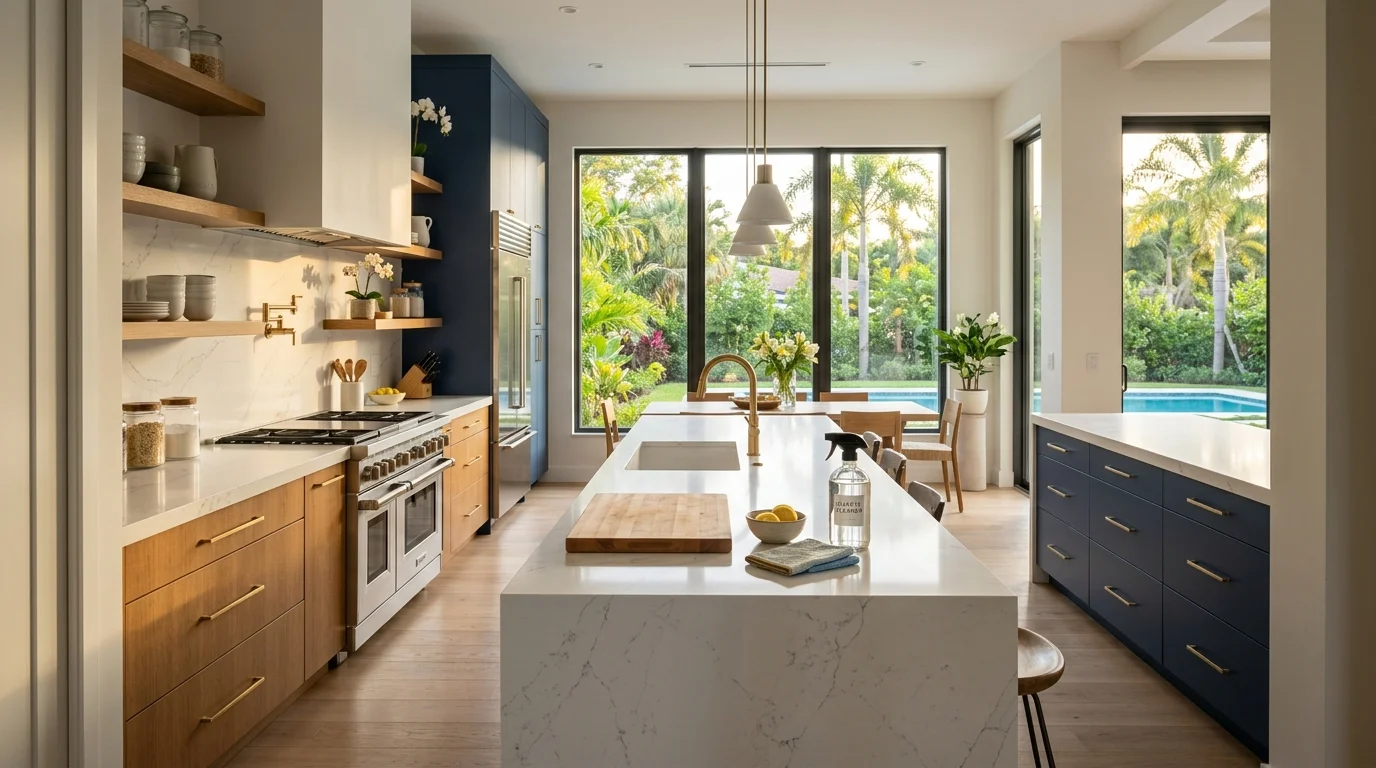
Knowing how to clean quartz countertops correctly is the difference between a surface that looks brand new for twenty years and one that goes dull, stained, or hazy within the first two. Quartz is the most popular countertop material we install across Palm Beach County, from Jupiter kitchens to Boca Raton bath vanities, and the number one question homeowners ask after installation is how to keep it looking the way it did on day one. The answer is simpler than most people expect, but there are a few rules you have to follow, and breaking them can cause damage that no amount of cleaning will reverse.
Why Your Cleaning Method Matters
Quartz countertops are engineered stone, roughly 90-94% ground natural quartz crystals bound together with polymer resins and pigments. That resin binder is what makes quartz non-porous and stain resistant. It's also what makes it vulnerable to certain chemicals. Damage the resin and you damage the surface permanently. No sealing treatment will fix it, because quartz doesn't need to be sealed in the first place, the resin already does that job.
The non-porous nature of quartz means liquids don't absorb into the surface the way they do with marble or granite. That's a big advantage. But it also creates a false sense of security. Homeowners assume that because quartz is tough, it can handle anything. It can't. Harsh alkaline cleaners, acidic solutions, and high heat all attack the resin over time. Once that surface starts to cloud or pit, you're looking at a professional polish, or a full countertop replacement.
Manufacturers like Caesarstone publish specific care guidelines for a reason. We tell every homeowner in Delray Beach and Wellington the same thing: read your manufacturer's care sheet before you reach for any cleaning product.
Daily Cleaning Routine
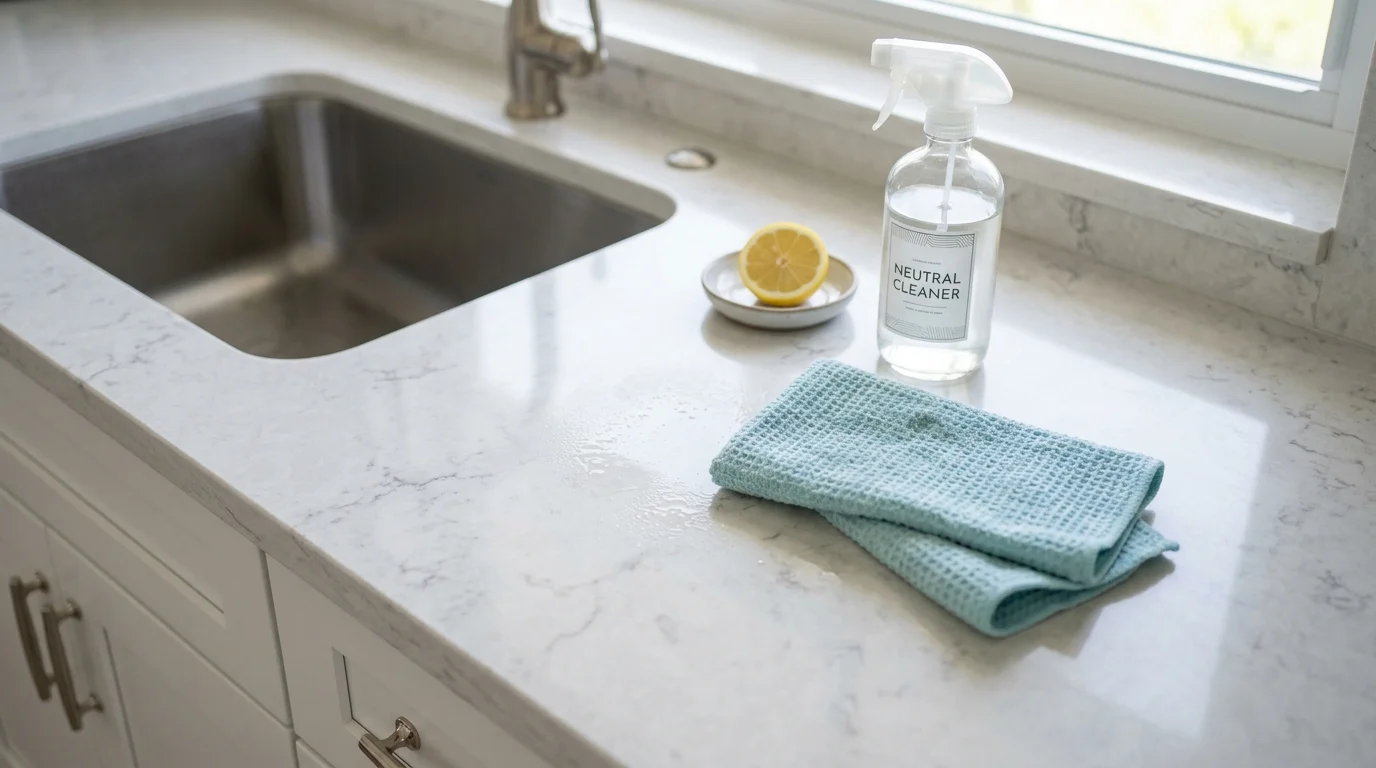
Keep it simple. For everyday messes, crumbs, water spots, coffee rings, cooking splatter, all you need is warm water, a few drops of mild dish soap, and a soft microfiber cloth or non-scratch sponge. Wipe down the surface, rinse with clean water, and dry it off. That's it.
Don't let liquids pool and sit. Even though quartz is non-porous, prolonged exposure to certain foods and liquids, citrus juice, wine, tomato sauce, can cause surface dulling, especially near the resin. Wipe spills as soon as they happen. Don't leave a wet sponge sitting on the counter overnight.
For daily maintenance:
- Warm water + a drop of dish soap on a soft cloth
- Wipe in broad, even strokes
- Rinse any soap residue off completely
- Dry with a clean microfiber towel, don't air dry, because water spots show
- For stubborn water spots or mineral deposits (especially common in South Florida's hard water), a damp cloth with a small amount of isopropyl alcohol works well
This routine takes two minutes. Do it consistently and your quartz will look the same at year fifteen as it did at install. Skip it, and you'll be scrubbing baked-on residue weekly and wondering why the surface looks tired.
If you have quartz on a bathroom vanity, the same rules apply. Hard water is a real issue in Palm Beach County, mineral buildup from faucet splash can leave white haze near the sink edge. A weekly wipe-down with a diluted isopropyl solution keeps that under control without touching the resin.
What to Avoid on Quartz
This is where most homeowners get into trouble. The products that seem like they should work, the heavy-duty degreasers, the bleach sprays, the "natural" vinegar solutions, are exactly what you should not use on quartz countertops.
Bleach and bleach-based cleaners. Bleach is alkaline. High-pH cleaners break down the polymer resin that holds quartz together. You won't see the damage immediately, it shows up as a gradual cloudiness or discoloration over months of repeated use. Some of the whiter quartz slabs we install in popular white quartz kitchens are especially prone to yellowing if regularly exposed to bleach.
Vinegar and other acidic cleaners. Vinegar is often marketed as a "natural" cleaner, and it is, but it's also acidic (pH around 2.5). Repeated acid exposure degrades the resin surface. Skip the vinegar, citrus-based sprays, and any cleaner with a low pH.
Abrasive scrubbers. Steel wool, Scotch-Brite green pads, and powdered cleansers scratch the polished surface. Once scratched, quartz loses its sheen and becomes more prone to holding stains in the micro-abrasions.
High-alkaline degreasers. Products like oven cleaner, heavy-duty degreasers, or industrial-strength bathroom cleaners will strip the resin finish. We've seen countertops come back to us with permanent dull patches right where someone sprayed a commercial degreaser and let it sit.
High heat. This isn't a cleaning product issue, but it belongs here: don't set hot pans directly on quartz. The resin can crack or discolor from thermal shock. Use a trivet. Always.
Nail polish remover (acetone). A spot or two to remove a specific stain can be okay, we address that in the stain section below, but repeated use or soaking will damage the finish. And while we're on the subject, check out our guide on what else you shouldn't do on quartz countertops, including cutting directly on the surface.
Removing Grease and Dried Stains
Even with good daily habits, things happen. Bacon grease splatters and cools. Tomato sauce dries on over a weekend. A candle drips wax. Here's how to handle the most common problem situations without damaging the surface.
Grease and cooking oil. For fresh grease, dish soap and warm water handle it fine. For dried, caked-on grease, apply a small amount of a degreaser that is specifically formulated as quartz-safe, Bar Keepers Friend Soft Cleanser (used gently, not scrubbed) or a purpose-built stone cleaner. Apply, let it sit for 30-60 seconds, then wipe with a soft cloth. Don't scrub in circles, work in straight strokes to avoid micro-scratching.
Dried food residue. Use a plastic scraper or a wooden spatula to gently lift the dried material. Don't use a metal spatula or knife, metal scratches. Once the bulk is removed, clean the residue with warm soapy water.
Wax and gum. Let it harden completely, then use a plastic scraper to chip it off carefully. Clean any remaining residue with isopropyl alcohol on a soft cloth.
Permanent marker and ink. A small amount of isopropyl alcohol (rubbing alcohol) on a soft cloth will usually lift ink stains without damaging the surface. Apply to the cloth, not directly to the countertop, and blot, don't rub aggressively.
Tough set-in stains. If you've got a stain that dish soap and isopropyl aren't touching, a paste of baking soda and water can work as a mild, low-abrasion option. Apply the paste, let it sit for a few minutes, then wipe gently. This is about as aggressive as we recommend going without risking surface damage. For anything worse than that, deep dye stains, chemical discoloration, the options get limited fast. Our full breakdown on removing stubborn stains from quartz countertops goes deeper on specific stain types.
What about acetone for stains? A targeted application, a few drops on a cloth, applied briefly, can cut through paint, nail polish, or adhesive. But use it sparingly and rinse thoroughly afterward. Don't let acetone pool or soak. And if someone has used super glue near your countertop, we have a separate guide on removing super glue from countertops without wrecking the surface.
Disinfecting Quartz Safely
After cooking raw meat or handling anything that needs real disinfection, not just cleaning, you want to kill bacteria, not just wipe it away. This is where a lot of quartz care guides fall short, because they tell you what not to use but don't give you a clear answer on what actually works.
Here's what we recommend: a diluted solution of isopropyl alcohol (70% concentration) applied with a soft cloth. Wipe the surface, let it sit for about 30 seconds, then wipe clean. This effectively disinfects without attacking the resin binder the way bleach or quaternary ammonium compounds can.
You can also use a disinfectant spray specifically labeled as safe for engineered stone or quartz surfaces. Check the label, the product should explicitly say it's safe for quartz. Some Lysol spray formulations are acceptable for brief contact; others aren't. When in doubt, check the manufacturer's care guide for your specific quartz brand.
What you should not use for disinfecting: undiluted bleach, Clorox wipes (most contain high concentrations of bleach or harsh surfactants), or hospital-grade quaternary ammonium disinfectants. These are common in professional cleaning kits but they will dull quartz over repeated applications.
One thing worth noting: quartz's non-porous surface already makes it inherently more hygienic than natural stone options that require sealing. Bacteria can't penetrate the surface the way it can with an unsealed granite or a porous marble. That's one of the practical reasons our team in Boca Raton, Jupiter, and Delray Beach kitchens recommends quartz so often for families, especially around the perimeter counters near the sink. If you're comparing materials for hygiene and humidity resistance, our guide on the best countertop materials for Florida's humidity lays out how quartz stacks up against granite, quartzite, and marble in real South Florida conditions.
South Florida Considerations
Cleaning quartz in Palm Beach County comes with a few local wrinkles that homeowners in cooler, drier climates don't deal with.
Hard water buildup. Our water across Palm Beach County, Wellington, Lake Worth, Boynton Beach, is notoriously hard. Mineral deposits from tap water splash show up fast on polished quartz, especially around the sink. A weekly wipe-down with diluted isopropyl alcohol keeps calcium and magnesium deposits from building up into a haze that's harder to remove. Don't wait until it becomes a scrubbing job.
Humidity and condensation. We run air conditioning almost year-round down here, which means temperature differentials between the countertop surface and warm outdoor air create condensation, especially when doors or windows are open. This isn't a cleaning emergency, but you don't want standing water sitting in seams near the sink or along the backsplash edge. Wipe it up promptly.
Sunlight exposure. South Florida kitchens with western or southern exposure get serious afternoon sun. Extended UV exposure over years can yellow certain quartz formulations, particularly whiter slabs with lighter resin content. This isn't a cleaning issue, it's a material selection and window treatment issue, but it's worth knowing. If your kitchen faces west and you're choosing between quartz colors, ask about UV stability. And if you're pairing your quartz with a backsplash, take a look at backsplash ideas that work with white cabinets and lighter quartz tones, since the right tile can actually reduce the visual impact of any surface changes over time.
Outdoor kitchens. Quartz is not recommended for outdoor countertop applications in South Florida. The combination of UV, humidity, and temperature swings attacks the resin binder aggressively. If you're building an outdoor kitchen in Boca Raton or a covered lanai in Wellington, look at outdoor-rated countertop materials instead, porcelain and Dekton are far better suited to Florida's outdoor conditions.
Cleaning products to stock. Keep these on hand for a South Florida quartz kitchen: a quality microfiber cloth (several, wash them, don't let them get gummy), mild dish soap, 70% isopropyl alcohol, a plastic scraper, and a stone-safe spray cleaner for weekly wipe-downs. That's the full kit. You don't need a cabinet full of specialty products.
If you're still in the planning stage and comparing quartz to other countertop options, our comparison of quartz countertop pros and cons gives you the full picture, durability, cost, maintenance, and where it falls short.