Do Quartz Countertops Need to Be Sealed?
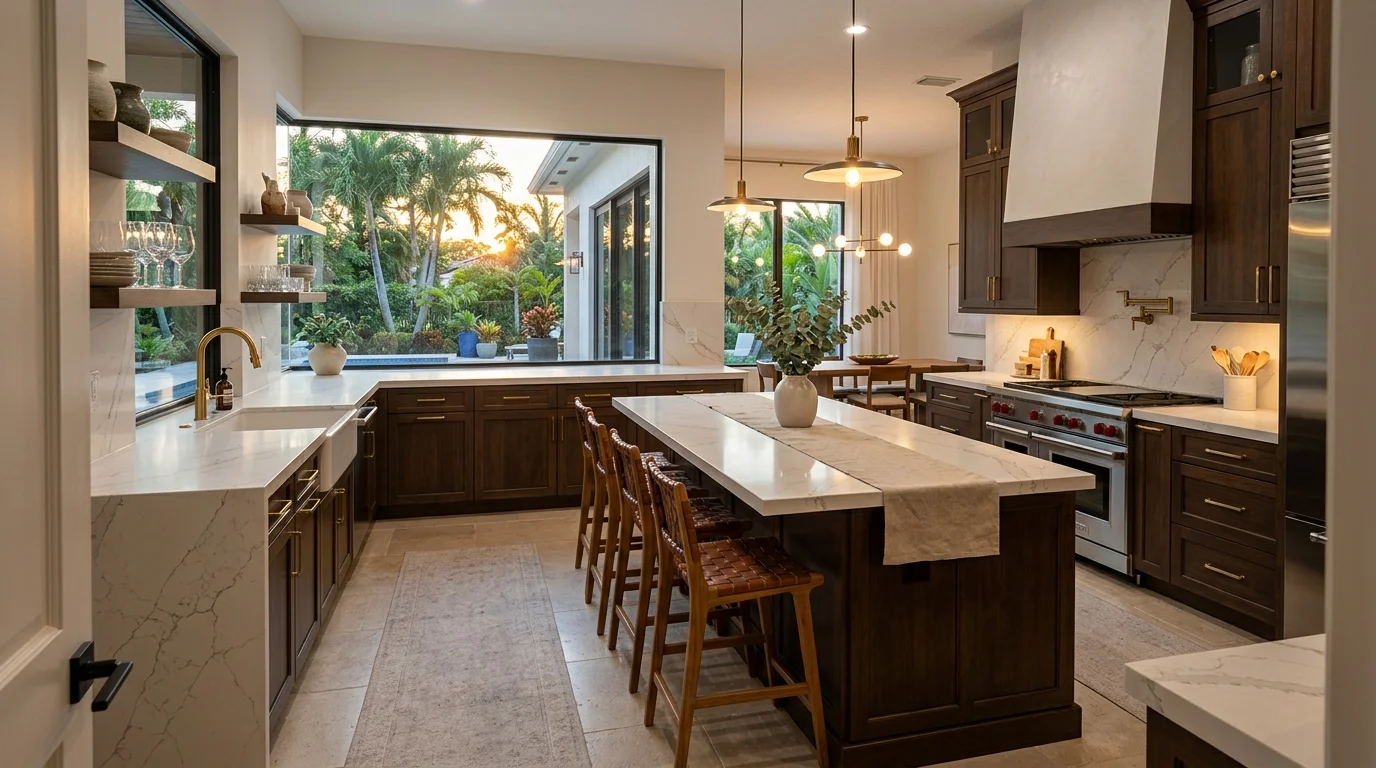
The question we hear almost every week in our Palm Beach County showroom: do quartz countertops need to be sealed? The answer is no. Not when you install them. Not annually. Not ever. Quartz is an engineered stone, roughly 90-95% crushed natural quartz bound together with polymer resins, and that manufacturing process produces a non-porous surface that simply doesn't absorb liquids the way natural stone does. No sealer required, no maintenance schedule to track, no debate. If a salesperson or contractor is telling you otherwise, get a second opinion.
The Short Answer
Quartz countertops do not need to be sealed. Period. The polymer resin that bonds the quartz crystals together fills every pore in the material during manufacturing. The result is a surface with essentially zero porosity. Water, wine, citrus juice, cooking oil, none of it penetrates. It just sits on top until you wipe it away.
That's fundamentally different from natural stone like granite or marble, both of which are genuinely porous and will absorb liquids over time without a sealer protecting them. Quartz skips that problem entirely by design. It's one of the main reasons so many homeowners in Boca Raton and Delray Beach choose it for busy kitchens. Low drama, high performance.
Our team has installed quartz in hundreds of kitchens across Palm Beach County, countertops that are now five, eight, ten years old and have never seen a drop of sealer. They look exactly as they should. That's what you're paying for when you choose quartz: a surface that takes care of itself in the ways that matter most.
Why Quartz Doesn't Need Sealing
Understanding why matters, because it helps you make smarter decisions when you're comparing countertop materials. Natural stone, granite, marble, quartzite, is pulled from the earth and cut into slabs. It has a crystal structure with natural voids, micro-fissures, and pores running through it. Liquids find those pathways and work their way in. Sealer temporarily blocks those pathways, but it wears off. That's why granite needs resealing every one to three years.
Quartz countertops are manufactured differently. Manufacturers like Cambria combine ground quartz crystals with pigments and polymer resins under intense pressure and heat. The resin fills every gap. The finished slab has no open pores for liquid to enter. No pores means no need for sealer, not because quartz is particularly hard (though it is), but because there's simply nowhere for liquid to go.
This also means sealing quartz wouldn't accomplish anything. A sealer is designed to bond to and fill porous stone. On a non-porous surface, it either sits on top and creates a hazy film or just beads off. Applying sealer to quartz is wasted product and wasted effort. Save your money.
If you're weighing your options and want to see how quartz stacks up against every major countertop material, our guide on best countertops for Florida kitchens covers the full picture, durability, cost, and what actually holds up in our climate.
Quartz vs. Granite vs. Marble: Who Needs Sealing?
Here's where homeowners get confused, especially when they're comparing multiple materials at once. Each stone has a completely different relationship with sealer. Getting this wrong costs money and can damage a surface you've spent thousands on.
Quartz: No sealer needed. Never. The resin binder makes the surface impervious to liquid absorption. The only thing that can damage quartz is prolonged exposure to direct UV sunlight (more on that below) and high heat directly on the surface. Neither has anything to do with sealing.
Granite: Yes, granite needs sealer, and more often than most people think. The frequency depends on the specific granite slab; some denser granites only need resealing every two to three years, while more porous varieties need it annually. Our guide to granite countertop sealer application and frequency walks through exactly how to test your granite and when to reseal. Unsealed granite will absorb oil and dark liquids and can stain permanently.
Marble: Marble is the highest-maintenance countertop surface we install. It's calcium carbonate, which means it doesn't just stain, it etches when it contacts acids. Lemon juice, vinegar, wine, tomato sauce: all of these cause chemical etching that sealer can't prevent (sealer only protects against staining, not etching). You still need to seal marble, but you also need to accept that it will show wear over time. If you're not ready for that commitment, marble is not your material. Read more about how to clean marble countertops without causing etching before you commit.
Quartzite: Quartzite is natural stone, not engineered, and it absolutely needs sealing despite the name confusion with quartz. Many homeowners in Wellington and Jupiter get these two materials mixed up at the showroom. They look similar on the surface, but quartzite behaves like granite: porous, needs annual or biannual sealing, and is susceptible to staining without proper care. Our separate article on whether quartzite needs to be sealed covers that in full detail.
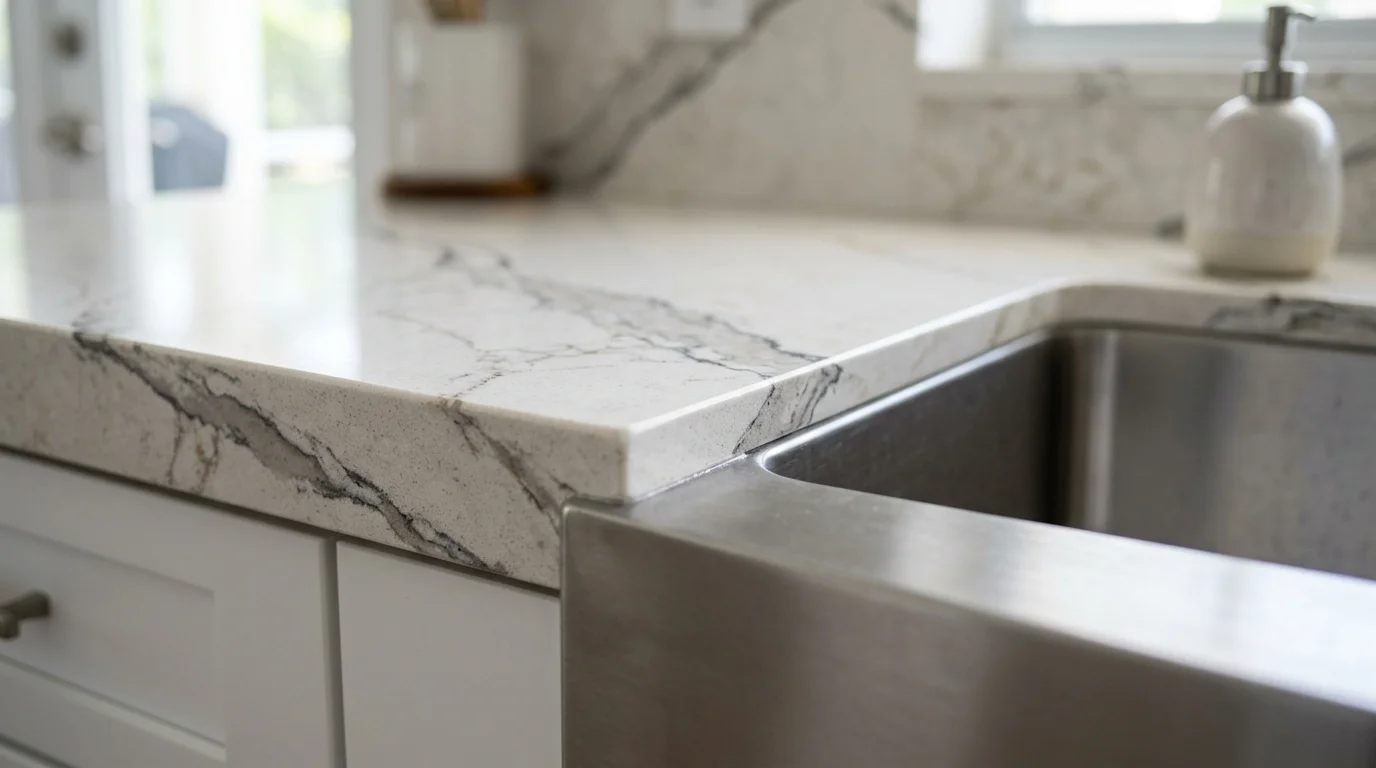
Care That Actually Matters for Quartz
Quartz doesn't need sealing, but it's not completely maintenance-free. There are specific things that will damage quartz, and knowing them upfront saves you from expensive repairs or full slab replacement later.
Heat is the real enemy. Quartz is not heat-proof. The polymer resin that makes it non-porous has a lower heat tolerance than natural stone. Setting a hot pan directly from the stove or oven onto a quartz surface can cause discoloration, cracking, or surface damage that cannot be repaired, it requires slab replacement. Always use trivets and hot pads. This is the single most common way we see homeowners damage quartz countertops.
Direct sunlight causes fading. Quartz is not UV-stable. In South Florida, where we get intense sun year-round, quartz installed near large windows or in outdoor settings will fade and discolor over time. If your kitchen gets strong afternoon sun through west-facing windows, discuss UV exposure with our team before selecting a quartz color. Lighter quartz colors tend to show less UV degradation than darker or more saturated tones. Quartz is also not suitable for true outdoor kitchen applications, for that, look at porcelain or granite.
Harsh chemicals damage the resin surface. Skip bleach-based cleaners, oven cleaners, nail polish remover, paint thinner, and highly alkaline degreasers. These can break down the polymer resin binder. Use mild dish soap and warm water for daily cleaning. For tougher messes, dried food, grease buildup, a plastic scraper and a non-abrasive cleaner work fine. If you end up with something stubborn like adhesive or dried spill, our article on how to remove stains from quartz countertops covers the right approach without causing damage.
Sharp objects can scratch. Quartz is hard, but it's not scratch-proof. Dragging knives, keys, or abrasive pads across the surface will leave marks. Use a cutting board. The finish on quartz, particularly polished finishes, will show fine scratches over time under certain lighting conditions, though this is mostly an aesthetic issue rather than a structural one.
Don't use it as a cutting surface. Beyond scratching the quartz, cutting directly on any countertop surface is bad practice. Cutting boards exist for a reason.
Daily care is simple: warm water and mild dish soap, wiped with a soft cloth. That's the routine for quartz. No annual sealing appointments, no specialty products to stock under the sink, no stress. For homeowners in busy Delray Beach households or Wellington families with young kids, that ease of maintenance is genuinely worth something.
If you're deciding between quartz and porcelain for your countertop, another popular option for Florida homes, our comparison of porcelain vs. quartz countertops breaks down the key differences in durability, heat resistance, and outdoor suitability.
South Florida Considerations
Living in Palm Beach County means your countertops face conditions that don't show up in general countertop guides written for national audiences. Here's what matters specifically for our market.
Humidity doesn't affect quartz. The high humidity we deal with throughout Boca Raton, Jupiter, and the coast has zero effect on quartz surfaces. Unlike natural wood countertops or butcher block, quartz won't swell, warp, or develop mold growth from humidity penetrating the material. The non-porous surface keeps moisture out the same way it keeps stains out. That's a meaningful advantage in a market where humidity-related material failures are a real concern.
UV exposure is a bigger deal here than anywhere else. Florida sun is brutal. Quartz manufacturers formulate their products for interior use with typical light exposure. Our climate pushes that. If your kitchen has a large glass slider, a wall of south or west-facing windows, or you're remodeling a condo with panoramic ocean views in Boca, bring this up during your material selection. Some quartz lines are more UV-resistant than others. Our team will flag this when it's relevant to your specific project layout.
Quartz for outdoor kitchens: don't do it. We say this clearly because we see it attempted. Quartz is not rated for outdoor use. Porcelain or sealed granite are the right materials for outdoor kitchens in South Florida. If you're planning an outdoor kitchen addition, check out our guide on outdoor kitchen countertops best suited for Floridait covers which materials can actually handle our climate outside.
What quartz costs in Palm Beach County. Quartz countertops in our market typically run $65-$125 per square foot installed, depending on the brand, thickness, edge profile, and complexity of the layout. Entry-level brands like MSI or Viatera start lower; premium brands like Silestone, Cambria, and Calacatta-look slabs sit at the top of the range. For a full breakdown by brand and slab type, see our detailed guide on quartz countertop costs in Palm Beach County.
One more thing worth mentioning: if you're comparing quartz to natural quartzite, the natural stone that looks similar but behaves completely differently, make sure you understand what you're buying before you commit. The name confusion between quartz and quartzite costs homeowners real money when they end up with a slab that needs annual sealing instead of the maintenance-free surface they thought they were getting. Our breakdown of quartz vs. quartzite countertops puts both materials side by side so you can see exactly what you're choosing.