How to Remove Stains From Quartz Countertops
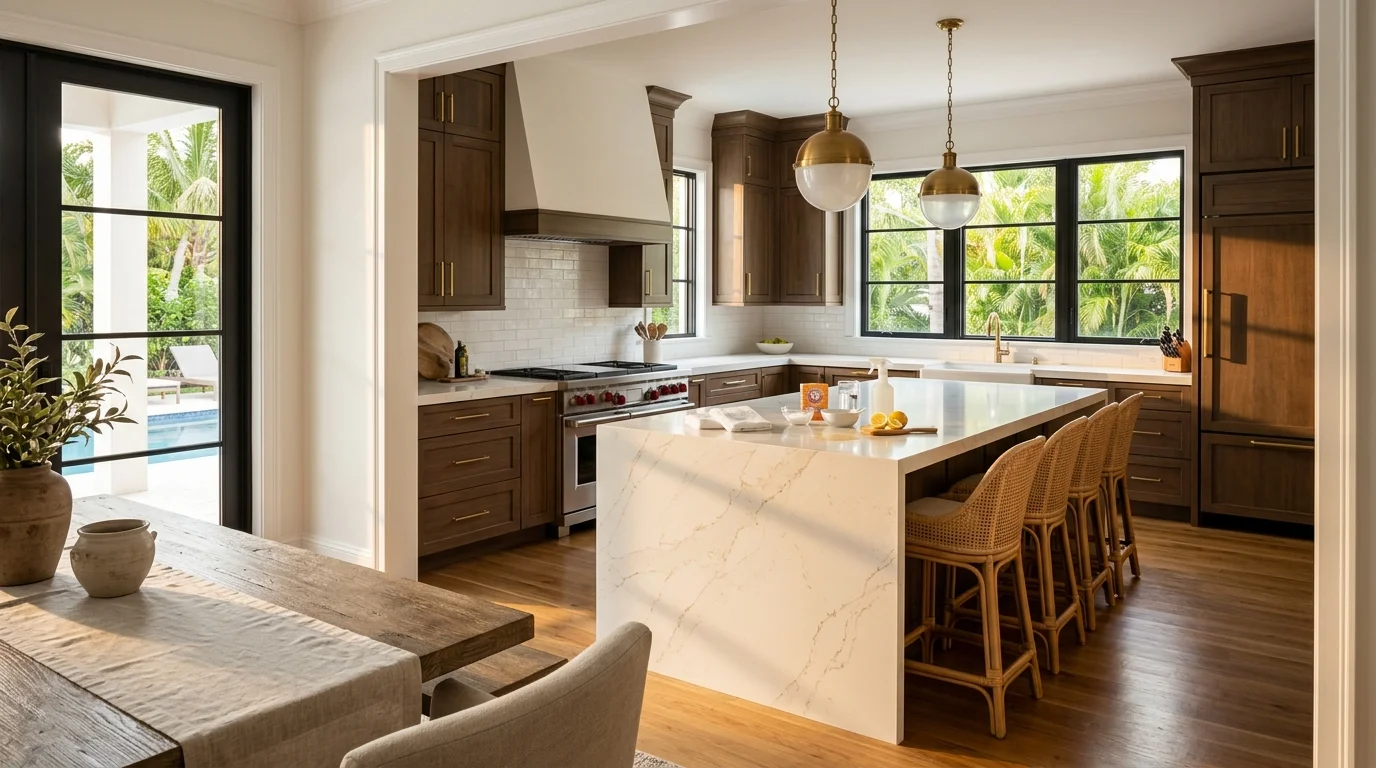
Knowing how to remove stains from quartz countertops properly can save you from panic — and from making the surface worse. We get calls all the time from homeowners in Boca Raton, Delray Beach, and Wellington who scrubbed a coffee ring with the wrong cleaner and ended up dulling a finish that cost them good money. Quartz is one of the most popular countertop materials in South Florida for a reason: it's hard, consistent, and far less needy than marble or granite. But it is not stain-proof. Surface stains absolutely happen, and a few of them can be stubborn if you don't tackle them the right way.
Why Quartz Stains Differently Than Stone
Quartz countertops are engineered — roughly 90–95% crushed quartz bound with polymer resins. That resin binder is what makes quartz non-porous. Liquids do not soak in the way they do with granite or marble. So when you see a stain on quartz, it's almost always a surface film, not a deep penetration. That's actually good news: most stains respond to targeted treatment without professional help.
The flip side? That same resin binder has limits. It doesn't love prolonged exposure to high-pH chemicals (like bleach or oven cleaner), and it can discolor from sustained heat. This is a fundamentally different situation from removing stains from granite, where the stone is porous and poultices are often necessary to draw pigment out from below the surface. On quartz, you're almost always working on top of the surface — which means the right solvent or gentle abrasive (emphasis on gentle) is your best tool.
One more thing worth noting: quartz is not the same as quartzite. Quartzite is a natural metamorphic stone that IS porous and does require sealing. If you're unsure which surface you have, the cleaning and stain-removal approach differs significantly. Check out our breakdown of quartz vs. quartzite countertops if you need to sort that out first.
Stain-by-Stain Removal Guide
Not all stains are created equal. Here's what we recommend for each common culprit, based on what actually works on the quartz surfaces our team installs and services across Palm Beach County.
Dried Food (Grease, Sauce, Crusted Residue)
Let warm water soften the crust for a minute or two before you touch it. Then use a plastic scraper — not metal — to lift the bulk of the debris. Follow up with a few drops of dish soap on a damp microfiber cloth, working in small circles. Rinse clean with water. That's it for most food stains. Don't reach for anything stronger first.
Coffee and Tea Film
Coffee and tea leave a tannin film that dries to a brownish haze. A damp cloth with a small amount of isopropyl alcohol (70%) cuts through this quickly. Apply, let it sit for 30 seconds, wipe away. If the stain has been sitting for days and has really set, try a non-abrasive surface cleaner like Method All-Purpose Cleaner or a dedicated stone-and-quartz cleaner — both are pH-neutral and safe for the resin binder. Don't scrub hard; let the chemistry do the work.
Red Wine
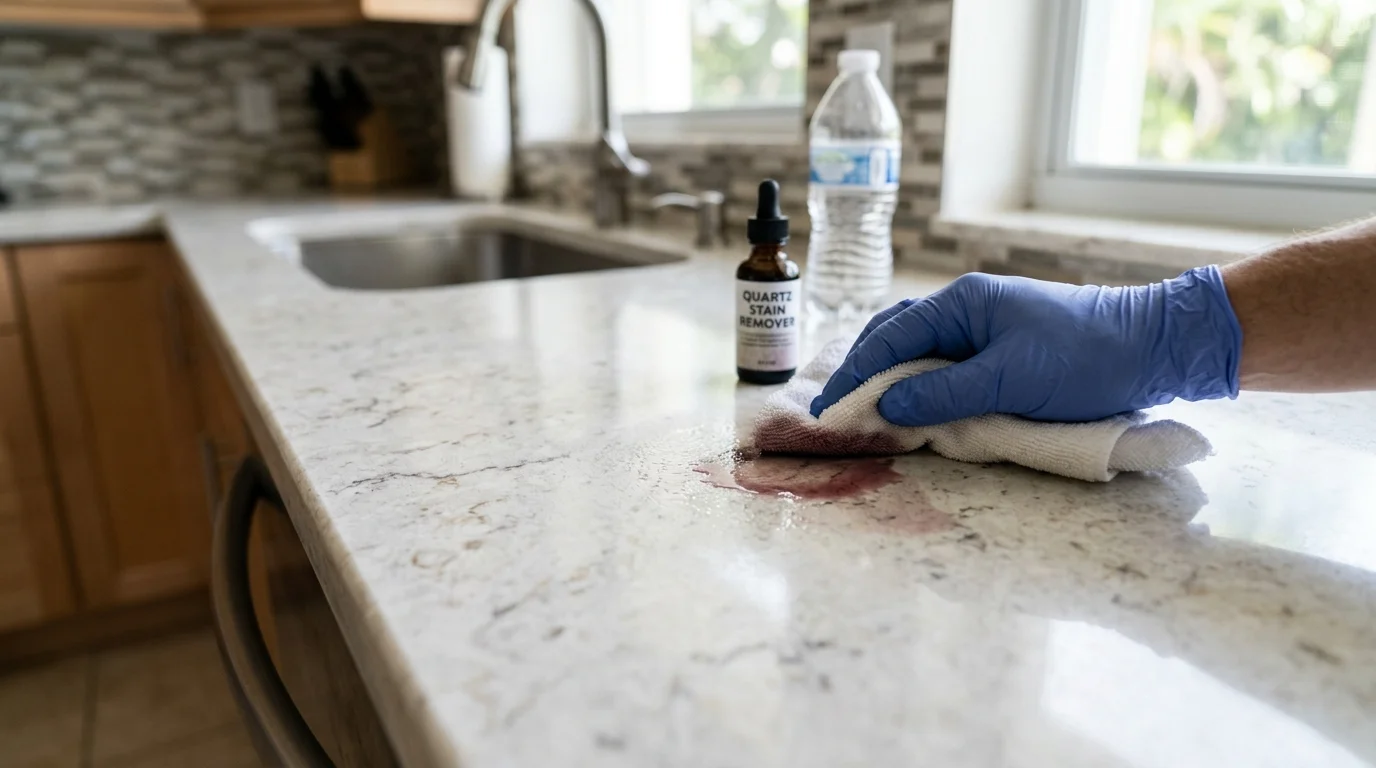
Red wine is the one that sends people into problem-solving mode at midnight. Act fast if you can — a fresh wine spill wipes away with a damp cloth. If it dried, the same isopropyl alcohol method works for light staining. For a more set-in wine stain, mix a small amount of hydrogen peroxide (3% — standard drugstore variety) with a few drops of dish soap, apply to the stain, cover loosely with plastic wrap, and let it sit for 5–10 minutes. Wipe clean with water. This works because hydrogen peroxide is a mild oxidizing agent that lifts pigment without attacking the resin the way bleach would.
Hard Water and Mineral Deposits
This is the biggest ongoing issue for South Florida homeowners, particularly near the sink. Our water in Palm Beach County, Jupiter, and Wellington is notoriously hard — high in calcium and magnesium. Over time, mineral deposits build up as a chalky white or gray haze around faucet bases and drain areas. The fix is mild acidity: diluted white vinegar (1 part vinegar to 3 parts water) applied with a soft cloth. Let it sit for no more than 2–3 minutes, then rinse thoroughly. Do not let straight vinegar sit on quartz for extended periods — the acidity can eventually affect the finish with repeated exposure. If the buildup is severe, a product like Bring It On Cleaner is formulated specifically for mineral deposits on engineered surfaces and is safer than DIY acid solutions.
Heat Marks and Discoloration
Heat marks are a different animal. Quartz is heat-resistant to a point — brief contact with warm pots is typically fine. But sustained heat from a cast iron skillet straight off the stove, a slow cooker sitting in one spot, or a hot pan left on the surface for several minutes can discolor or even crack the resin. The result is often a white or yellowish discolored patch. Here's the hard truth: heat damage to quartz is usually permanent. No cleaning product reverses a thermally damaged resin binder. If the mark is very light, some homeowners have had partial success with a very fine (0000) steel wool used extremely gently — but this risks dulling the finish further if done wrong. If the heat mark is significant, you're looking at a repair or panel replacement. We've seen this more times than we'd like to count on quartz islands in Jupiter and Boca Raton kitchens.
Adhesive, Tape Residue, and Glue
Construction tape, price tag residue, children's sticker adhesive, even silicone caulk overspray — all common calls. Isopropyl alcohol or a product like Goo Gone (the original, not the spray gel) breaks down most adhesive residues safely on quartz. Apply a small amount to a cloth first, not directly to the surface. Rub gently, let the solvent work, then wipe away. For dried silicone specifically, a plastic scraper to remove the bulk first, followed by isopropyl alcohol for the film, is the right sequence. For super glue specifically, we have a dedicated article on how to remove super glue from countertops that goes deeper on that scenario.
Ink, Marker, and Dye Transfers
Permanent marker, highlighters, and fabric dye can stain quartz surfaces. Rubbing alcohol is your first move. For more stubborn ink, nail polish remover (acetone) applied sparingly to a cotton ball — not poured directly — can work. Use it quickly, rinse immediately, and don't repeat more than once or twice in the same spot. Acetone in small amounts is generally safe for quartz, but prolonged or repeated use degrades the resin finish over time.
What NOT to Use on Quartz
This section matters as much as the removal guide above. We've seen good quartz surfaces ruined not by the original stain, but by the homeowner's attempt to fix it. Here's what to keep off your quartz countertops entirely:
Bleach and Bleach-Based Cleaners
Bleach is high-pH (around 12–13). The resin binder in quartz is sensitive to alkaline extremes. Repeated bleach use — or even a single prolonged application — can cause the surface to discolor, yellow, or lose its finish. This includes products like Clorox wipes (which contain sodium hypochlorite). They're convenient, but they're not safe for quartz with repeated use.
Abrasive Scrubbers and Powders
Scouring pads, steel wool (anything other than the finest 0000 grade used very carefully), and abrasive cleaning powders like Comet will scratch the quartz surface. The scratches are often not immediately obvious, but over time they accumulate into a dull, hazy look — especially on polished finishes. Stick to soft microfiber cloths or soft sponges.
High-pH Cleaners
This includes oven cleaners, drain cleaners, and many industrial degreasers. Anything with a pH above 10 should stay off quartz surfaces. Always check the label. If a product says "not for use on natural stone," treat that as a signal to be cautious on quartz as well — the resin is often more sensitive than the stone itself.
Concentrated Acids
Full-strength vinegar, lemon juice applied directly, or citrus-based cleaners left to sit will etch the resin finish. Small amounts diluted and rinsed quickly are manageable — but don't use them regularly, and never let them pool.
Magic Erasers
Melamine foam (Magic Eraser) is a micro-abrasive. It works by physically sanding away the surface layer. On quartz, this removes the polished finish and creates dull patches. We see this mistake frequently — the eraser seems gentle because it's soft, but it's not safe for polished quartz surfaces.
If you're also dealing with stains on other countertop materials in your home, our guides on removing stains from marble countertops and how to clean granite countertops properly cover the material-specific approaches for those surfaces.
When Stains Mean Damage: Repair vs. Replace
Most surface stains come off with the methods above. But sometimes what looks like a stain is actually physical or thermal damage to the resin itself — and that changes the conversation. Here's how to think through what you're actually dealing with, and what it might cost to address it in the Palm Beach County market:
If you're at the point of considering a replacement — or just want to understand what quartz actually costs in this market — our quartz countertops cost guide for Palm Beach County breaks down pricing by material grade, edge profile, and square footage in detail. And if you're comparing quartz against other surface options, the best countertops for Florida kitchens article gives you an honest side-by-side.
One more thing on the repair side: Florida's building code does not require permits for countertop replacements in most circumstances — a straight swap of countertop material on an existing layout, without moving plumbing or modifying cabinetry structurally, is generally a permit-free job. If your situation involves more than a countertop swap, that's a conversation to have with your general contractor.
South Florida Considerations
Living in Palm Beach County, Boca Raton, Delray Beach, or Jupiter adds a few layers to quartz maintenance that homeowners in drier climates don't deal with as much.
Hard water is the big one. South Florida municipal water is classified as hard to very hard in most areas, and even filtered water in many homes still carries enough mineral content to leave deposits on surfaces around the sink over time. This isn't a flaw in your quartz — it's just South Florida. Our recommendation: wipe down the sink perimeter and faucet base a few times a week with a damp cloth. That 30-second habit prevents the mineral buildup from becoming the 20-minute scrubbing project later.
Heat and sun exposure matter more here than up north. If your quartz countertop runs near a window or sliding glass door that gets direct afternoon sun — common in south-facing kitchens in Wellington and coastal Boca Raton homes — prolonged UV exposure can eventually cause very slight color shifts in some quartz colors, particularly lighter tones. Most major quartz manufacturers factor in UV stability in their resin formulas, but it's worth confirming with your specific brand if your countertops get significant direct sun. Keeping that area out of sustained direct sun with a shade or window treatment helps.
Humidity doesn't affect quartz the way it affects wood or stone — the non-porous surface doesn't absorb moisture. But it does mean that mold and mildew can develop in grout lines or at caulk joints around quartz installations if those joints aren't maintained. If you're seeing dark staining at the seam where your quartz meets the backsplash or sink, that's almost certainly mold in the caulk, not a stain on the quartz itself. The fix is recaulking, not countertop cleaning.
If you're in a coastal area — Jupiter Inlet Colony, Highland Beach, Manalapan — salt air doesn't directly affect quartz surfaces, but it does accelerate corrosion on any metal fixtures nearby, and that oxidation can sometimes transfer onto countertop surfaces near faucets. The fix is the same mineral-stain approach: diluted vinegar, quick rinse, dry thoroughly.
Our team works with quartz installations across Palm Beach County regularly, and the material genuinely holds up well in this climate when it's cared for properly. If you're evaluating whether quartz is the right choice for your next remodel — or comparing it to other durable options — take a look at our thoughts on the best countertop materials for Florida's humidity and heat. The climate here does influence which materials earn their keep over time.